
Diseases
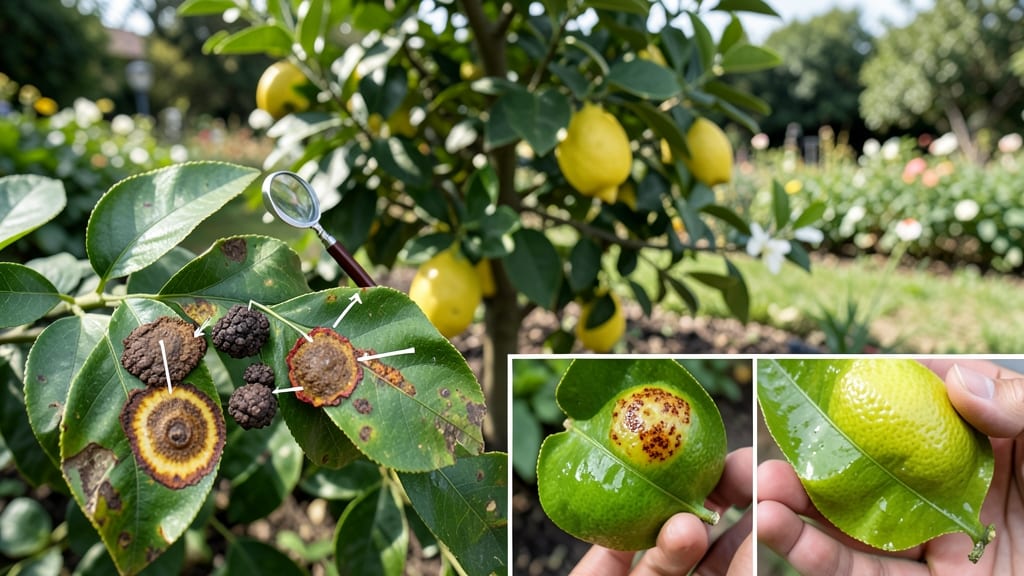
Your citrus tree’s leaves shouldn’t look like a crime scene—spots, yellowing, or blisters mean disease is already winning. 🌿 Citrus leaf diseases like canker, greasy spot, and melanose spread fast, but catching them early means you can save your tree with simple treatments and smart prevention.
Most problems start with water splashing leaves or poor airflow between branches. I’ve seen canker turn a healthy tree into a skeleton in weeks, but proper pruning and copper sprays can stop it.
The key is acting fast—once those telltale spots appear, you’ve got a 2-3 week window to treat before the disease takes over.
You’ll learn to spot each disease by its symptoms—oily black spots for greasy spot, raised blisters for canker—and which treatments work best. Organic options like neem oil and baking soda sprays can handle mild cases, while severe infections might need fungicides.
The goal? A tree that stays lush and productive all season.
This works for backyards, containers, or even dwarf citrus—just adjust the treatment scale. We’ll cover when to call in a pro (hint: if the trunk starts oozing) and how to keep your tree healthy long after the last spot disappears.
Root Causes Of Citrus Leaf Troubles
Citrus trees are tough, but their leaves are surprisingly vulnerable to a mix of environmental stressors, microbial invaders, and even human mistakes. Understanding why these diseases take hold is the first step to stopping them before they ruin your harvest. Let’s break down the science behind the damage.
Fungi like Phytophthora, Alternaria, and Colletotrichum thrive when humidity and temperature align just right. Here’s how it happens:
- Stagnant water: Overwatering or poor drainage creates soggy soil, giving fungi a perfect breeding ground. Phytophthora (a water mold) spreads rapidly in waterlogged roots, then creeps up to leaves, causing brown, greasy spots.
- High humidity: Fungal spores float in damp air and land on leaves, especially in tight foliage. Alternaria leaf spot, for example, erupts in hot, muggy summers when spores germinate within 24 hours.
- Slow-drying leaves: Morning dew or afternoon showers keep leaves wet for hours—ideal for Colletotrichum (anthracnose) to infect through tiny wounds or stomata (leaf pores).
💡 Pro Tip: Space trees for airflow and water at the base (not overhead) to keep leaves dry. Prune for sunlight penetration—fungi hate competition!
Bacterial diseases like citrus canker (caused by Xanthomonas) and greasy spot (from Pseudomonas) spread when bacteria find an open door:
- Physical damage: Pruning cuts, hail, or insect bites create entry points. Xanthomonas oozes through these wounds, forming raised, crusty lesions that ooze when wet.
- Contaminated tools: Knives, shears, or even gloves can carry bacteria from infected to healthy trees. A single swipe is enough to introduce Pseudomonas, which causes yellow spots with greasy edges.
- Splashing water: Rain or irrigation can fling bacteria from infected leaves onto healthy ones. This is why greasy spot often appears in lower canopies first.
🔥 Action Step: Sterilize pruners with 70% isopropyl alcohol between cuts, and avoid overhead watering during outbreaks.
Insects like aphids, mites, and scale don’t just feed—they damage leaves, making trees susceptible to secondary infections. Here’s how:
- Sap-sucking pests: Aphids and mites pierce leaves to feed, leaving behind honeydew—a sticky mess that attracts sooty mold (a black fungal growth). Sooty mold blocks sunlight, stressing the tree and inviting other pathogens.
- Scale insects: These armored pests create wounds as they feed, opening the door for Alternaria or Phytophthora. Infested trees also produce weak, yellowing leaves that drop prematurely.
- Root damage: Nematodes or root borers weaken the tree’s immune system, making it easier for fungal root rots (Armillaria) to spread upward to the foliage.
🎯 Prevention Tip: Monitor for pests regularly and treat infestations early with horticultural oil or neem oil to break their life cycle.
Healthy soil = healthy leaves. When citrus trees lack key nutrients or suffer from toxicity, their leaves become prime targets:
- Nitrogen deficiency: Leaves turn yellow (chlorosis) and weaken, making them easier prey for fungal spores. Alternaria loves stressed tissue.
- Zinc or manganese deficiency: These micronutrients help leaves resist disease. Without them, leaves develop interveinal chlorosis (yellowing between veins), signaling poor immunity.
- Salt or aluminum buildup: Over-fertilizing or poor drainage can cause toxicity, stunting root growth and reducing the tree’s ability to fight off Phytophthora.
🌡️ Soil Check: Test your soil every 2–3 years and amend with compost or chelated micronutrients to keep pH (6.0–7.0) and fertility optimal.
Most citrus leaf diseases are opportunistic—they wait for the right moment to strike. By addressing these root causes, you’re essentially locking the door before the burglar arrives. Next up: How to spot trouble early.
Fixing Citrus Leaf Issues Fast
Citrus trees are resilient, but when leaf diseases strike, quick action can save your harvest—and your tree. Below are practical, step-by-step solutions tailored to the most common causes of citrus leaf problems, from fungal infections to nutrient deficiencies. Each fix includes prevention tips to keep your tree thriving long-term.
Fungal spores thrive in warm, humid conditions, turning leaves into a sad, spotted mess. Here’s how to stop the spread and restore your tree’s health.
🔥 Step 1: Remove Infected Leaves & Fruit
- 👨🍳 Prune aggressively: Snip off all yellowing, spotted, or crinkled leaves and any infected fruit.
Dispose of them in the trash (not compost)—fungi can survive in yard waste! - ✂️ Sterilize tools: Wipe pruners with 70% rubbing alcohol or a 10% bleach solution between cuts to avoid cross-contamination.
🌡️ Step 2: Apply Fungicide (The Right Way)
- 💡 Early treatment is key: Use a copper-based fungicide (like Copper Sulfate) or a biological option (e.g., Serenade Garden or Neem Oil).
For severe cases, fixed copper fungicides (like Kocide) work best. - 🎯 Application tips: - Spray early morning or late evening to avoid burning leaves. - Cover both leaf surfaces thoroughly—fungi hide on undersides! - Reapply every 7–14 days during rainy or humid seasons.
🌱 Step 3: Improve Airflow & Drainage
- ✨ Thin the canopy: If branches are too dense, prune to open up the tree—this reduces humidity and slows fungal growth.
- 💧 Fix watering habits: Water at the base of the tree (not overhead) and avoid late-day watering to let leaves dry quickly.
💡 Prevention Pro Tip:
- Sanitize tools before and after pruning.
- Plant resistant varieties (e.g., ‘Meyer’ lemons or ‘Satsuma’ mandarins) if fungal diseases are recurrent in your area.
Citrus trees need balanced nutrition—too much or too little of certain nutrients can make leaves look sad. Here’s how to diagnose and fix common deficiencies.
📊 Step 1: Identify the Problem
Use this quick guide to spot the issue:
| Symptom | Likely Cause | Fix It With |
|---|---|---|
| Yellow between veins | Iron deficiency (chlorosis) | Iron chelate or sulfur-based fertilizer |
| Purple/red leaves | Phosphorus deficiency | Bone meal or phosphorus-rich fertilizer |
| Brown leaf edges | Magnesium deficiency | Epsom salt (1 tbsp per gallon of water) |
| Small, pale leaves | Nitrogen deficiency | Balanced citrus fertilizer (e.g., 10-10-10) |
🍳 Step 2: Apply the Right Fertilizer
- 🌱 For chlorosis (yellowing): Mix 1/4 cup iron sulfate in a gallon of water and spray on leaves every 2–3 weeks until green returns.
- 💪 For general health: Use a slow-release citrus fertilizer (like Citrus-Tone) in early spring and summer, following package rates.
- 🌿 Organic option: Work compost or worm castings into the soil around the tree’s drip line for a long-term nutrient boost.
💧 Step 3: Adjust Soil pH (If Needed)
- 🌡️ Test your soil: Citrus thrives in slightly acidic soil (pH 6.0–7.0).
If your soil is too alkaline (common in many regions), add sulfur to lower pH. - ✨ Quick fix: Sprinkle elemental sulfur around the tree and water it in. Retest soil in 3–6 months.
💡 Prevention Pro Tip:
- Fertilize regularly but avoid overdoing it—too much nitrogen can burn roots.
- Mulch properly: Use wood chips or pine bark (2–3 inches deep) to retain moisture and improve soil health.
Pests weaken trees, making them more susceptible to diseases. Here’s how to kick them out for good.
🔪 Step 1: Blast Them Off
- 💦 Strong water spray: Use a hose with a nozzle to blast pests off leaves (works best for aphids and spider mites).
- 🍎 Oil spray for scale: Mix horticultural oil (like Safer Brand 3-in-1 Oil) with water and spray thoroughly, including under leaves.
🐝 Step 2: Introduce Beneficial Insects
- 🐞 Ladybugs, lacewings, and parasitic wasps love munching on pests. Buy them from a garden center or attract them with neem oil sprays (which repel pests but are safe for beneficial bugs).
🌿 Step 3: Prevent Future Infestations
- 🌡️ Monitor regularly: Check leaf undersides and new growth weekly for early signs.
- 🍃 Keep the area clean: Remove fallen leaves and debris where pests hide.
- 🎯 Use reflective mulch: Silver or aluminum mulch confuses pests and can reduce spider mite populations.
💡 Prevention Pro Tip:
- Avoid broad-spectrum pesticides—they kill beneficial insects too!
- Plant companion plants like marigolds or basil to repel pests naturally.
Even after treating the problem, proactive care keeps citrus trees strong:
- 💧 Water deeply but infrequently: 1–2 inches per week (more in extreme heat).
- ☀️ Provide shade in hot climates: Use shade cloth to prevent leaf scorch.
- 🌱 Prune for sunlight: Ensure lower branches get airflow to prevent fungal buildup.
Final Thought: Most citrus leaf issues are preventable with good hygiene, proper nutrition, and timely action. Once you spot the problem, act fast—your tree will thank you with glossy, healthy leaves and a bountiful harvest! 🍊✨
Frequently asked questions
What’s the difference between citrus canker and greasy spot?
Citrus canker creates raised, crusty lesions with yellow halos that ooze when wet, while greasy spot shows up as oily, black spots with yellow edges. Canker spreads through contaminated tools and wind, while greasy spot thrives in humid conditions and splashing water. Both require copper fungicides, but canker may need bacterial-specific treatments.
Can I save my citrus tree if half the leaves are infected?
Yes, but act fast! Remove all infected leaves and fruit immediately, then apply a copper fungicide (like Kocide) every 7-10 days for 3 weeks. Thin the canopy to improve airflow, and avoid overhead watering. If the trunk shows lesions or oozing, consult an arborist—advanced cases may need systemic treatments.
Why do my citrus leaves turn yellow between the veins?
This classic sign of iron deficiency (chlorosis) often happens when soil pH is too high (above 7.0). Test your soil and amend with iron chelate or sulfur to lower pH. For quick fixes, spray leaves with a 1/4 cup iron sulfate per gallon of water every 2-3 weeks until green returns.
Is neem oil safe for treating citrus leaf diseases?
Neem oil works best for preventive care and mild fungal issues like greasy spot. Mix 1 teaspoon neem oil + 1/2 teaspoon mild soap per quart of water and spray leaves thoroughly. For bacterial diseases (canker), neem alone won’t cure it—but it helps reduce secondary infections. Always apply in early morning or evening to avoid leaf burn.
When should I call a professional for citrus leaf diseases?
Consult an arborist if you see: oozing lesions on the trunk, rapid leaf drop, or blackened stems. These signs may indicate advanced bacterial canker or root rot. Professionals can test for pathogens and prescribe systemic fungicides or antibiotics that aren’t available to home gardeners. Early intervention saves your tree!