
Trees
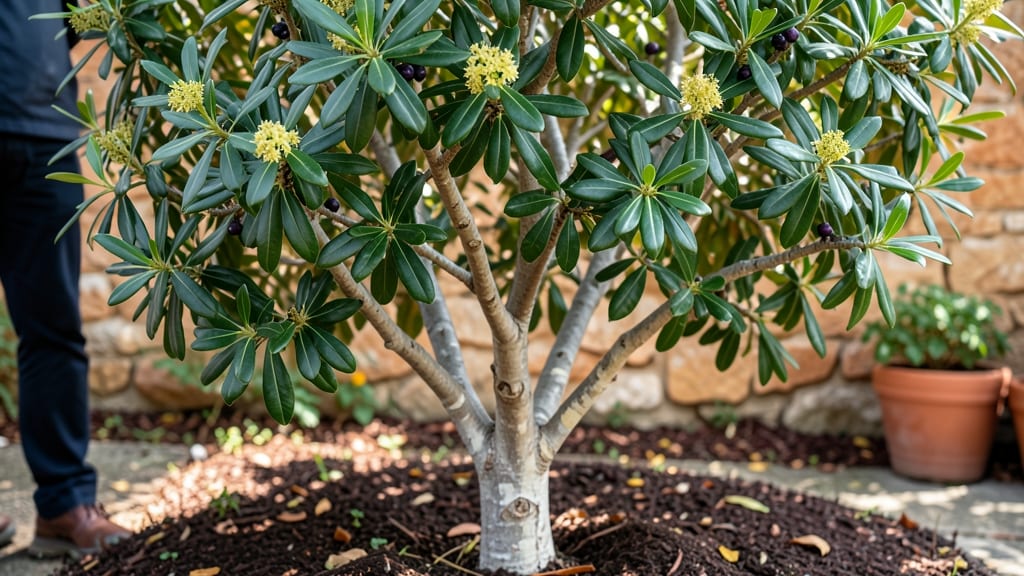
Bay leaf trees grow anywhere from 10 to 40 feet tall—depending on the variety and how you prune them—making them a versatile choice for everything from kitchen gardens to backyard borders.
If you’re dreaming of fragrant bay leaves but wondering whether your garden—or even your balcony—can accommodate a bay leaf tree, you’re not alone. These Mediterranean staples can range from compact shrubs to towering trees, but their growth habits depend on variety, pruning, and growing conditions.
For example, the classic Sweet Bay (Laurus nobilis) can reach 20 to 40 feet in ideal conditions, while dwarf varieties stay under 10 feet, perfect for containers. The key to managing their height lies in understanding your climate, soil, and pruning strategy.
In this guide, I’ll break down the height ranges by variety, share expert tips for controlling growth, and help you decide if a bay leaf tree is the right fit for your space—whether you’ve got a sprawling yard or just a sunny windowsill.

Bay leaf tree height by variety: sweet vs. California Bay
Choosing a bay leaf tree for your garden starts with understanding their height potential. The two most popular varieties—Sweet Bay (Laurus nobilis) and California Bay (Umbellularia californica)—offer dramatically different growth patterns.
Sweet Bay typically reaches 10–20 feet in ideal conditions, while California Bay can soar to 40–60 feet in the wild. Your space and climate will determine which variety thrives best.
If you’re working with limited space, Sweet Bay is your best bet for a manageable height. It grows at a moderate pace of 1–2 feet per year, making it easier to control with pruning.
California Bay, on the other hand, grows 3–5 feet annually and demands more room. Both varieties, however, reward patience with fragrant, culinary-quality leaves—but their height differences can’t be ignored.
Before planting, check your USDA hardiness zone. Sweet Bay thrives in zones 7–10, while California Bay prefers zones 7–9. Coastal climates with humidity and mild winters suit both, but California Bay tolerates slightly drier conditions.
If you’re in a container garden, Sweet Bay is the clear winner for height management.
Pruning plays a critical role in controlling Sweet Bay’s height. If left unchecked, it can easily exceed 20 feet, but regular trimming keeps it at a manageable 6–10 feet.
California Bay, however, is nearly impossible to prune into a small tree—its rapid growth and tall, columnar shape make it a backyard or woodland staple rather than a patio plant.
For urban gardens or small yards, consider dwarf Sweet Bay varieties like ‘Angustifolia’ or ‘Aurea’, which max out at 8–12 feet. These varieties retain the aromatic leaves but grow at a slower pace, perfect for container gardening or tight spaces.
Just ensure your pot is at least 18–24 inches wide to accommodate root growth.
Soil type also influences height. Both varieties prefer well-draining, slightly acidic soil (pH 5.0–6.5), but clay-heavy soils can stunt growth. Amend with compost or sand if your soil is dense.
Overwatering is another common mistake—root rot can slow growth or even kill young trees, so prioritize deep but infrequent watering.
If you’re growing bay leaves for culinary use, focus on younger leaves for the best flavor. Both varieties produce harvestable leaves year-round, but Sweet Bay’s compact size makes it easier to access branches.
California Bay’s towering height means you’ll need a ladder—or a very tall chef—to reach the top leaves!
Before planting, measure your space and research local microclimates. A California Bay in a small yard will quickly outgrow its welcome, while a Sweet Bay in a windy, exposed area may struggle to reach its full potential.
With the right variety and care, you’ll enjoy fresh bay leaves for decades—just plan for their eventual height.
🌿
How to control Bay leaf tree height: pruning and growing tips
Bay leaf trees (Laurus nobilis) have a natural tendency to grow tall—some varieties reaching 40 feet in ideal conditions. But with the right techniques, you can keep them compact, even in small gardens or containers.
The key lies in pruning timing, container selection, and understanding how sunlight and soil influence their growth rate.
Pruning is the most effective way to manage height, but it’s not just about cutting branches. When and how you prune makes all the difference. For example, late winter or early spring pruning encourages bushier growth, while summer pruning can slow vertical growth.
Even small adjustments—like trimming 1/3 of new growth—can keep your tree at a manageable 6-10 feet height.
Watch Out for Over-Pruning!
Bay leaf trees can rebound aggressively if pruned too harshly. Never remove more than 25% of foliage in a single session, or you risk stunted growth or weak branches. Dwarf varieties are especially sensitive—stick to light trims for compact growth.
Container gardening is another game-changer for controlling height. Choose a large pot (at least 24 inches wide) with drainage holes to restrict root growth naturally. Root-bound trees grow slower and stay shorter.
Use a well-draining potting mix with perlite or sand to prevent root rot, which can stress the tree and lead to uneven growth.
Sunlight plays a surprising role in height control. While bay leaf trees thrive in full sun (6+ hours daily), partial shade can slow their vertical growth.
If your tree is growing too tall, consider moving it to a slightly shadier spot—just ensure it still gets 4-5 hours of morning sun to maintain leaf quality. Poor soil can also accelerate growth; amend with compost or organic matter to encourage balanced, slower development.
Common mistakes like pruning at the wrong time (e.g., mid-winter) or over-fertilizing with nitrogen can lead to rapid, unchecked growth. Always use a balanced fertilizer (10-10-10) and prune just before new growth begins.
For dwarf varieties like 'Angustifolia', expect heights of 8-12 feet even with minimal pruning—ideal for small yards or urban gardens.
With these tips, you can enjoy fragrant bay leaves without sacrificing garden space. Start with regular pruning, container limits, and sunlight adjustments, and watch your tree stay at your desired height—whether that’s a 6-foot shrub or a 12-foot specimen. Happy growing! 🌿