
Watering
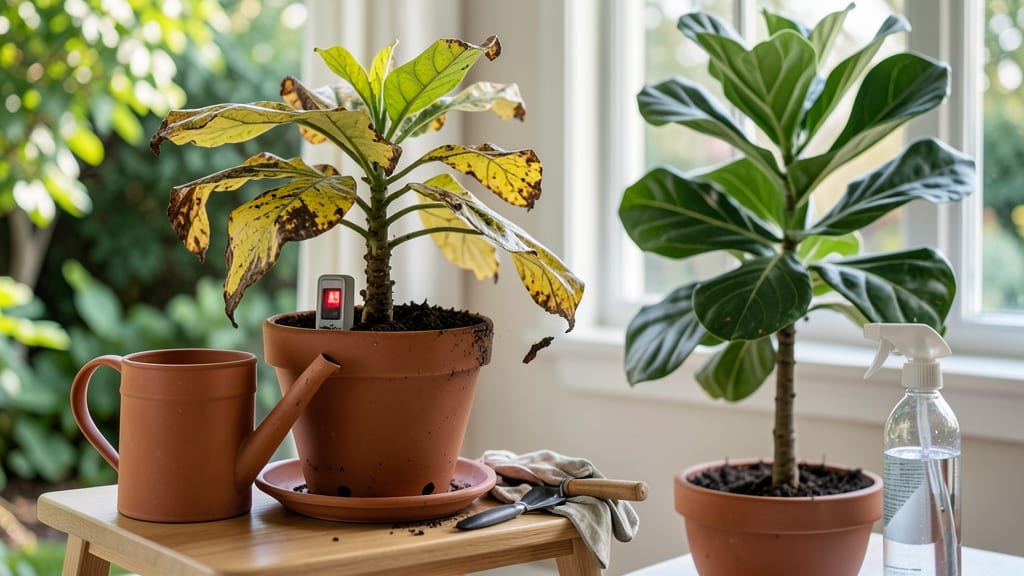
Your fiddle leaf fig’s drooping leaves and mushy stems mean it’s had too much water—but how to fix an overwatered fiddle leaf fig is easier than you think. 🌱 The key is acting fast: stop watering immediately, check the roots, and give it fresh, well-draining soil.
Most people panic here, but the right steps bring them back to life within weeks.
First, gently remove the plant from its pot and inspect the roots. Healthy roots are firm and white, while overwatered ones turn brown, mushy, and smell foul.
Trim any damaged roots with clean scissors, then repot in a container with drainage holes and a mix of potting soil and perlite (or orchid bark). This combo prevents future soggy soil.
After repotting, water only when the top 2 inches of soil feel completely dry—stick your finger in to check. Place your fig in bright, indirect light (no harsh sun) and avoid misting the leaves.
Within 2-4 weeks, you’ll see new growth as the roots recover. The secret? Consistency in watering and soil health.
To keep this from happening again, water less often but deeply each time, and always use pots with drainage. My fiddle leaf figs thrive now because I treat watering like a schedule—not a daily ritual. You’ll get there too, and your plant will thank you with glossy, happy leaves.
Root Causes of Overwatering
Your fiddle leaf fig (Ficus lyrata) is a stunning tropical beauty—but it’s also a plant that hates soggy feet.
When roots sit in waterlogged soil for too long, they suffocate, leading to root rot, a fungal or bacterial infection that starves the plant of oxygen and nutrients. Understanding why this happens is the first step to preventing it. Let’s break down the real culprits behind overwatering mishaps.
Fiddle leaf figs thrive in well-draining soil and only need water when the top 2–3 inches of soil are completely dry. Overwatering often stems from a simple habit: watering on a strict schedule (like every week) without checking soil moisture. Here’s why this backfires:
- Poor soil aeration: Compacted or heavy clay soil holds excess water, cutting off oxygen to roots. Fiddle leaf figs prefer chunky, airy mixes (like 50% potting soil + 30% perlite + 20% orchid bark) to prevent this.
- No evaporation window: Watering before the topsoil dries leaves roots in a permanent damp state, creating the perfect breeding ground for Pythium or Phytophthora fungi.
- Seasonal ignorance: In winter, growth slows, and water needs drop by 30–50%. Yet, many keep summer watering habits year-round.
Pro Tip: 🌡️ Use your finger as a moisture meter—stick it into the soil. If it feels damp past the first knuckle, wait. For extra precision, invest in a moisture meter ($10–$15) to avoid guesswork.
A pot without drainage holes is like giving your fiddle leaf fig a bathtub instead of a shower. Here’s how poor drainage sabotages roots:
| Problem | Why It Matters |
|---|---|
| No drainage holes | Water pools at the bottom, creating anaerobic conditions where roots can’t breathe. Fungal spores thrive here. |
| Glazed or plastic pots | These materials trapped moisture longer than terracotta or ceramic. Terracotta’s porous nature helps wick away excess water. |
| Overpotting | Large pots hold more water than roots can absorb before it sits stagnant. For a 12" fiddle leaf fig, a 14–16" pot max is ideal. |
Fix It: If your pot lacks holes, repot immediately into one with drainage. Line the bottom with pebbles or broken pottery to create a reservoir layer—this lets excess water escape while keeping roots hydrated.
Humidity, temperature, and even light levels influence how fast soil dries. Here’s how your environment might be tricking you into overwatering:
- High humidity (60%+): Slow evaporation means soil stays wet longer. In bathrooms or kitchens, reduce watering by 20–30%.
- Low light: Plants in dim corners transpire less (lose less water through leaves), so they need less frequent watering. Move yours near a bright, indirect window.
- Cold drafts: Roots grow slower in temps below 60°F (15°C). If your home is chilly, cut back on water until warmth returns.
Pro Tip: 🌡️ Use a hygrometer to monitor humidity. Aim for 40–60%—a humidifier can help in dry climates, but never let soil stay soggy.
Fiddle leaf figs are not desert plants, but they’re also not tropical rainforest giants that need constant moisture. Common misconceptions lead to overwatering:
- "Big leaves = needs lots of water": Large leaves don’t equal thirsty roots. The plant’s root system dictates water needs, not foliage.
- "It’s wilting, so it’s thirsty": Wilting can signal both underwatering and overwatering. Check soil moisture first—if it’s wet, the plant is drowning, not dehydrating.
- "Misting = hydration": Misting doesn’t reach roots and can encourage fungal growth on leaves. Focus on deep watering at the base.
Test This: 🔍 Lift your pot—if it feels heavy, it’s overwatered. If it’s light, it’s likely dry. Adjust your routine based on this simple check.
Revive Your Fiddle Leaf Fig Fast
Now that you know the signs and causes of overwatering, let’s roll up our sleeves and get your fiddle leaf fig back to its happy, healthy self! The good news? With the right steps, you can often reverse root rot and save your plant—even if it looks dire.
Below are targeted solutions based on the most common causes of overwatered fiddle leaf figs, along with prevention tips to keep your plant thriving long-term.
Cause: Overwatering without letting the soil dry out. Fix: The first rule of recovery? Cut off the water. No more hydration until you’ve assessed and fixed the root damage.
- Check the soil moisture by sticking your finger 1-2 inches deep.
If it’s still damp, wait another 3-5 days before checking again. - Move your plant to a spot with indirect light (but avoid harsh sunlight, which can stress already weak roots). - Skip fertilizers for now—roots need to heal before absorbing nutrients.
💡 Pro Tip: If your plant is in a saucer or cache pot, empty any standing water immediately. Stagnant water is a root rot magnet!
Cause: Root rot from prolonged soggy soil. Fix: You’ll need to inspect the roots to determine how severe the damage is. Here’s how:
- Gently remove the plant from its pot and shake off excess soil (don’t wash it off—you’ll lose too much root structure).
- Inspect the roots: - Healthy roots are firm, white, or light tan. - Rotten roots are mushy, dark brown/black, and may smell foul.
- Trim the bad roots with sterilized scissors or pruning shears (wipe them with rubbing alcohol between cuts). - Cut 1/4 inch above the rotten section to ensure you’re removing all the damaged tissue.
🔥 Warning: If more than 50% of the roots are rotten, recovery will be harder—but not impossible! See the next step for next-level care.
Cause: Poor drainage or compacted soil trapping moisture. Fix: Now it’s time to give your fiddle leaf fig a fresh start with the right conditions.
🛒 What You’ll Need:
- A clean pot (1-2 inches larger than the current one, with drainage holes).
- Fresh potting mix designed for fiddle leaf figs or a well-draining blend (e.g., 50% potting soil + 30% perlite + 20% orchid bark).
- Optional: A rooting hormone (if you’ve trimmed heavily) to encourage regrowth.
👨🍳 Step-by-Step Repotting:
- Wipe the pot with rubbing alcohol to kill any lingering bacteria or fungi.
- Add a layer of fresh soil (about 1 inch) at the bottom of the pot.
- Place your plant in the pot, ensuring the crown (where the stem meets the roots) sits just above the soil line (burying it can cause further rot).
- Fill in with soil, gently pressing down to secure the plant (but don’t compact it too tightly).
- Water lightly—just enough to moisten the soil, then wait 5-7 days before watering again.
✨ Prevention Tip: Add a layer of gravel or pebbles at the bottom of the pot (or use a cache pot) to improve drainage and prevent future soggy soil.
Cause: Stress from improper light, humidity, or temperature. Fix: Your fiddle leaf fig needs gentle, supportive care while it recovers.
- Light: Provide bright, indirect light (east or north-facing windows are ideal).
Avoid direct sun, which can scorch weak leaves. - Humidity: Increase humidity to 40-50% using a humidifier, pebble tray, or grouping plants together. - Temperature: Keep it in a stable environment (65-75°F) and avoid drafts (like AC vents or cold windows). - Fertilizer: Wait 4-6 weeks before resuming feeding.
Start with a diluted, balanced fertilizer (half-strength) to avoid overwhelming the roots.
🌡️ Monitor Closely: Check the soil moisture every 3-5 days and water only when the top 1-2 inches are dry. Overwatering is the #1 killer of recovering plants!
Once your fiddle leaf fig is on the mend, lock in these habits to prevent future overwatering:
- Watering Schedule: Stick to a bi-weekly watering routine (or less in winter) and always check soil moisture before watering.
- Pot Choice: Use pots with drainage holes and consider terracotta (which dries out faster than plastic).
- Soil Mix: Avoid heavy, clay-based soils—opt for chunky, airy mixes with perlite, orchid bark, or coco coir.
- Drainage Layer: Add a 1-inch layer of perlite or pumice at the bottom of the pot to improve drainage.
- Self-Watering Systems: If you travel often, consider a smart watering system or a self-watering pot with a moisture meter.
🎯 Final Check: If your plant is still struggling after 4-6 weeks, it may need more aggressive treatment, like a hydroponic setup or air layering to propagate new growth. But with these steps, most overwatered fiddle leaf figs bounce back beautifully!
Now that you’ve got the tools to rescue your plant, stay patient and consistent—your fiddle leaf fig will thank you with lush, vibrant leaves in no time! 🌿💚
Frequently asked questions
How do I know if my fiddle leaf fig has root rot?
Check for mushy, dark brown/black roots that smell foul when removed from the soil. Healthy roots are firm and white. Also look for yellowing leaves, wilting despite wet soil, or a plant that feels heavy when lifted—this means it’s waterlogged. Act fast if you spot these signs!
Can I save a fiddle leaf fig with 70% rotten roots?
Yes, but it requires aggressive action. Trim all mushy roots, repot in fresh, well-draining soil, and place the plant in bright indirect light. Expect slower recovery—focus on new root growth from the healthy stems. Avoid fertilizing for 6+ weeks to prevent further stress.
Why does my fiddle leaf fig keep getting overwatered?
Most cases stem from ignoring soil moisture or using pots without drainage. Check soil 2 inches deep before watering—if damp, wait. Also, avoid plastic pots (they trap moisture) and opt for terracotta or containers with holes. Season matters too: cut watering by 50% in winter.
How often should I water after fixing overwatering?
Wait until the top 2 inches of soil are bone-dry—usually every 2-3 weeks in summer, every 4-6 weeks in winter. Use your finger as a guide: if it feels dry at that depth, it’s time. Overwatering is easier to prevent than fix, so err on the side of underwatering!
Will my fiddle leaf fig grow back if I cut off all the yellow leaves?
Pruning yellow leaves helps the plant focus energy on recovery, but new growth depends on healthy roots. Trim only dead or severely damaged leaves—never more than 1/3 of the foliage at once. The plant will redirect nutrients to new leaves as roots heal, typically within 4-8 weeks.