
Vegetables
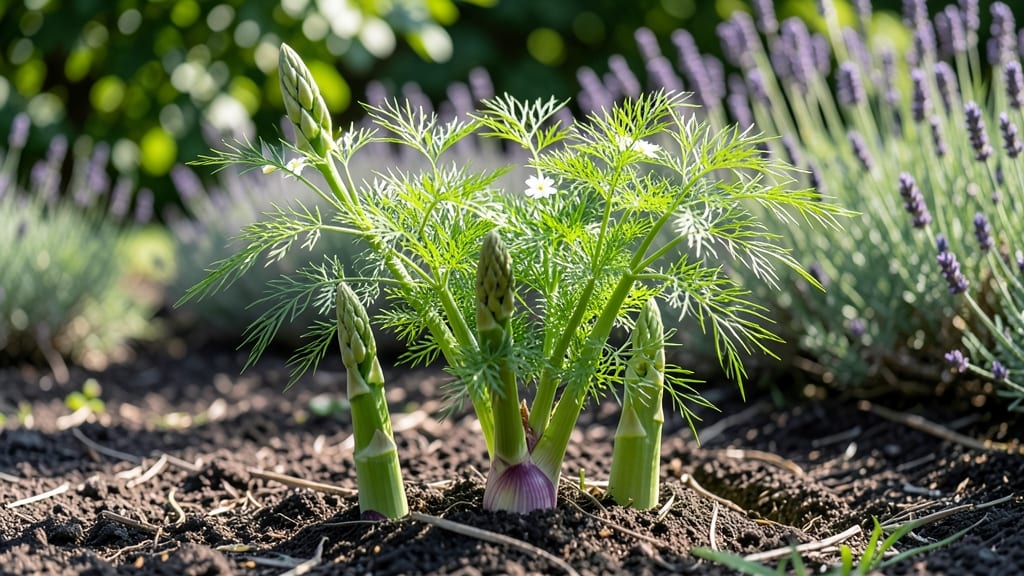
Asparagus isn't classified as a leafy green—it's a shoot vegetable harvested from the perennial asparagus plant before its leaves fully develop. The edible spears are actually immature stems, not leaves, even though the plant produces fern-like foliage.
This distinction matters more than you might think. 🌱 While leafy greens like spinach or kale come from mature leaves, asparagus grows from underground stems that push through the soil.
The plant's classification as a monocot (like lilies) rather than a dicot (like most greens) explains why it behaves differently in cooking—it holds its shape better when roasted and has a firmer texture than delicate leafy vegetables.
The confusion often comes from how we visually categorize produce. Many people group asparagus with greens because of its vibrant color and healthy reputation, but its botanical structure and nutritional profile actually align more closely with other stem vegetables like celery or fennel.
This is why recipes calling for "green vegetables" sometimes exclude asparagus despite its color.
💡 In This Article
- Botanical Classification of Asparagus vs Leafy Greens
- Nutritional and Culinary Role of Asparagus in Green Vegetable Diets
Botanical classification of asparagus vs leafy greens
Asparagus belongs to the genus Asparagus in the family Asparagaceae, making it a monocotyledon—meaning it produces seeds with a single cotyledon (seed leaf). This places it in the same botanical family as lilies and onions, not the dicotyledonous plants that produce most leafy greens like spinach or kale.
The edible spears are actually immature stems that emerge from the plant's underground crown, or "crown," which is why they have a woody texture when mature.
The confusion arises because asparagus plants produce fern-like foliage after harvesting, but these leaves are not the edible part. The spears grow from buds on the crown, pushing upward through the soil at a rate of about 1-2 inches per day during warm seasons.
Unlike leafy greens, which grow from mature leaves, asparagus is harvested in its pre-leaf stage—typically when spears reach 6-8 inches tall but before the buds open into leaves. 🌱 This early harvesting is what gives asparagus its tender, crisp texture.
Leafy greens, on the other hand, are dicotyledonous plants that develop broad, flat leaves rich in chlorophyll. Their leaves contain multiple veins and are typically harvested once fully mature, often with stems attached.
Asparagus, despite its green color, lacks these characteristics—its stems have a fibrous, segmented structure with tiny scale-like leaves (cladodes) that don't resemble typical leafy greens. This structural difference explains why asparagus behaves uniquely in cooking, retaining its shape when roasted while leafy greens often wilt.
The horticultural distinction also affects how these plants are cultivated. Asparagus requires 2-3 years to establish a mature crown before spears can be harvested, while leafy greens like arugula or Swiss chard can be ready in as little as 4-6 weeks.
This slow growth cycle is another clue that asparagus is fundamentally different from rapid-growing leafy vegetables. The plant's perennial nature means it can produce spears for decades with proper care, unlike annual leafy greens that must be replanted each season.
Even the plant's reproductive strategy differs. Asparagus produces small, white flowers that develop into red berries containing seeds, while leafy greens typically reproduce through leaf propagation or seed dispersal from larger, more visible flowers.
These botanical differences extend to their nutritional profiles, where asparagus stands out with higher levels of folate and prebiotic fiber compared to many leafy greens. 🌿
Understanding this classification helps explain why asparagus is often grouped separately in grocery stores—typically near other stem vegetables like celery or rhubarb rather than in the produce section with leafy greens.
The plant's unique growth pattern and structure make it a fascinating case study in how botanical classification influences both culinary use and nutritional value.