
Trees
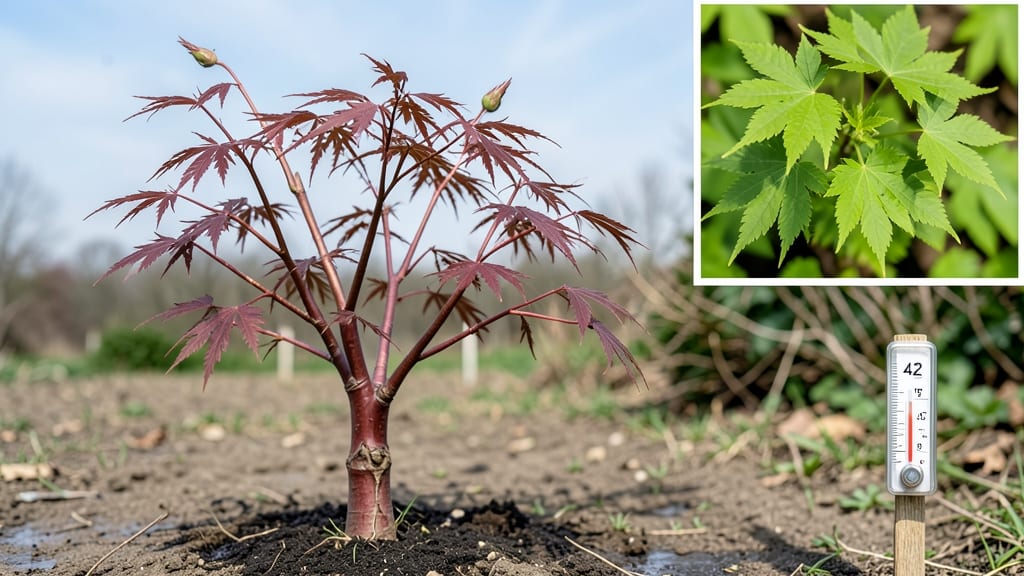
When a maple not leafing out refuses to leaf out, it’s often a silent cry for help from its roots. 🌳 I’ve seen this happen after harsh winters or droughts—sometimes it’s just stress, other times something more serious.
The good news? Most cases respond well to targeted care, and you can often revive a struggling maple with just a few focused steps.
Root stress is the #1 culprit, usually triggered by dry soil, compacted roots, or sudden temperature swings. Late frosts can also trick the tree into thinking winter isn’t over.
Other red flags include wilting leaves, discolored bark, or fungal growth at the base—signs the tree’s struggling to pull nutrients from the ground.
Here’s where the revival begins: deep watering, aerating compacted soil, and a nutrient boost tailored to maples. Within weeks, you’ll often see fresh buds pushing through—proof the tree’s fighting back. The key is acting fast before secondary stress sets in.
For stubborn cases or signs of disease (like verticillium wilt), don’t wait—consult an arborist before the damage spreads. But in most cases, this 3-step approach brings maples back to life season after season.
Root Stress Behind Bare Branches
When your maple’s branches stand bare despite spring’s arrival, the issue often traces back to root health—the unsung hero of tree vitality. Maple trees (Acer spp.) rely on a delicate balance of water, nutrients, and energy stored in their roots to fuel leaf emergence.
When roots struggle, the tree conserves resources, delaying or preventing foliage growth. Here’s why roots might be failing—and how to spot the signs:
Maple roots are sensitive to soil temperature extremes and poor drainage. If winter’s chill lingers or spring rains turn your yard into a swamp, roots suffocate or freeze, disrupting nutrient uptake.
- Cold shock: Soil temps below 40°F (4°C) slow root activity. Prolonged cold (like late frosts) can kill fine root hairs critical for water absorption. - Waterlogging: Roots need oxygen to function.
Soggy soil (common in clay-heavy areas) forces roots to "drown," starving them of the energy needed to push leaves. - Signs: Check for mushy, gray roots or yellowing leaves (if any appear) after heavy rain.
Actionable fix: Test soil drainage with a simple percolation test—dig a 12-inch hole, fill with water, and time how long it drains. If it takes >6 hours, amend with compost or sand.
Maples are heavy feeders, especially for nitrogen, potassium, and micronutrients like magnesium. If roots can’t access these, the tree prioritizes survival over new growth.
- Nitrogen (N): The "leaf greener" nutrient. Low N = pale, sparse leaves. Test soil pH—maples thrive in 6.0–7.5; acidic soil (<5.5) locks out nutrients. - Potassium (K): Boosts root resilience.
Deficiency shows as weak stems or yellow edges on leaves (if they appear). - Magnesium (Mg): Critical for chlorophyll. A deficiency causes interveinal yellowing (yellow between veins).
Actionable fix: Conduct a soil test ($20–$50 via local extension offices). If deficient, apply a balanced fertilizer (e.g., 10-10-10) in early spring, watering deeply to reach roots.
Underground invaders or pathogens can sever root systems, leaving the tree unable to support leaves. Common culprits:
| Pest/Disease | Signs | Treatment |
|---|---|---|
| Root rot (Phytophthora) | Mushy roots, foul odor, wilting | Improve drainage, fungicide (e.g., copper sulfate) |
| Grubs (Japanese beetle larvae) | Chewed roots, ants on trunk | Apply beneficial nematodes or grub killer in fall |
| Vascular wilt (Verticillium) | Sudden leaf drop, dark streaks in wood | Remove infected trees, sterilize tools |
Actionable fix: Inspect roots during early spring (after soil thaws). Look for galls, tunnels, or blackened tissue. If pests are present, treat before new growth starts.
Maples despise compacted soil, extreme heat, or wind exposure. Roots stressed by their environment conserve energy, delaying leaf-out.
- Compacted soil: Heavy foot traffic or machinery crushes roots, reducing water/oxygen flow. Test: Press your thumb into soil—if it’s harder than a brick, amend with compost or gypsum.
- Heat stress: Urban maples (like Acer saccharinum) suffer from asphalt radiant heat, which dehydrates roots. Fix: Mulch 3–4 inches deep with wood chips to insulate soil.
- Windburn: Young maples in open areas lose moisture faster. Solution: Plant near a windbreak (e.g., shrubs) or stake if needed.
Sometimes, the tree itself is the problem. Abscisic acid (a stress hormone) can delay leaf-out if roots sense drought, disease, or mechanical damage. Even if soil looks fine, root tips may be dead, cutting off signals to produce leaves.
How to check:
- Gently scratch a small section of bark near the root flare (base of trunk). If you see dark, mushy tissue, roots are compromised.
- Pro tip: If the tree is <10 years old, it may still be establishing roots—patience is key!
Key takeaway: Root issues are silent killers—by the time branches go bare, damage is often severe. Act now by testing soil, improving drainage, and feeding roots before summer heat sets in. 🌱🔍
Revive Your Maple Tree Now
If your maple isn’t leafing out, don’t panic—there’s hope! The key is identifying the root cause and acting fast. Below, we break down practical, step-by-step solutions tailored to common issues, plus prevention tips to keep your tree thriving. Let’s get your maple back to its vibrant best!
If your maple is just late to leaf out (not dead!), it may be waiting for the right conditions.
❄️ Check the Weather & Wait It Out
- Cause: Cold snaps or late frosts can delay bud break.
- Fix:
- Monitor local forecasts for consistent warm temps (above 50°F/10°C) for at least 3–5 days.
- Avoid pruning in late winter—wait until after leaves emerge to prevent stress.
- Prevention Tip: 🌡️ Mulch heavily in late fall to insulate roots and protect against temperature swings.
💧 Hydrate Like It’s a Drought
- Cause: Dry soil slows growth, especially for young or newly planted maples.
- Fix:
- Deep water 1–2 times per week (1–2 inches of water per session).
- Use a soaker hose or drip irrigation to avoid runoff.
- Test soil moisture: Stick your finger 6 inches deep—if dry, water immediately.
- Prevention Tip: ✨ Install a rain gauge near the tree to track moisture levels and adjust watering.
If the problem runs deeper (literally), soil health and root damage may be to blame.
🕳️ Fix Compacted or Poor-Draining Soil
- Cause: Clay-heavy or waterlogged soil suffocates roots, starving the tree of nutrients.
- Fix:
- Aerate the soil with a garden fork or root aerator (rent one if needed).
- Amend the soil with:
- Compost (2–3 inches mixed into the top 6 inches).
- Perlite or sand (for drainage—avoid heavy amendments like peat moss).
- Raised beds (for severe cases) can help if your yard floods easily.
- Prevention Tip: 💡 Plant in well-draining areas—avoid low spots where water pools.
🍄 Combat Fungal or Root Rot
- Cause: Overwatering, poor drainage, or fungal infections (like Phytophthora) can kill roots.
- Fix:
- Stop watering immediately if soil is soggy—let it dry out.
- Apply fungicide (copper-based or systemic like Mycorrhizal fungi) to promote root health.
- Prune affected roots (if visible) with sterilized shears and treat cuts with pruning sealant.
- Prevention Tip: 🌿 Improve airflow by thinning nearby plants and avoiding mulch piles against the trunk.
Pests and pathogens can silently drain a tree’s energy, halting leaf production.
🐜 Treat for Common Maple Pests
- Cause: Aphids, scale insects, or borers suck sap, weakening the tree.
- Fix:
- Hose off soft-bodied pests (aphids, mites) with a strong water spray.
- Apply horticultural oil (like Neem oil) or insecticidal soap in early spring before buds swell.
- For borers, inject systemic insecticide (consult a arborist for severe cases).
- Prevention Tip: 🔍 Inspect trees yearly in late winter—catch pests early!
🍄 Erase Fungal Infections
- Cause: Diseases like tar spot or anthracnose can discolor leaves and stunt growth.
- Fix:
- Remove and destroy infected leaves/debris (don’t compost them!).
- Spray with fungicide (copper fungicide or propiconazole) before buds swell in spring.
- Thin the canopy to improve airflow (prune in late winter/early spring).
- Prevention Tip: 🌳 Space trees properly (20–30 ft apart for maples) to reduce humidity and disease spread.
Even healthy soil can lack the right nutrients for a struggling maple.
🍽️ Feed with the Right Fertilizer
- Cause: Nutrient deficiencies (especially iron, nitrogen, or potassium) slow growth.
- Fix:
- Test soil (use a DIY kit or send to a lab for accuracy).
- Apply slow-release fertilizer in early spring:
- For nitrogen: Blood meal or fish emulsion (follow package rates).
- For micronutrients: Iron chelate (for yellowing leaves) or Epsom salt (for magnesium).
- Avoid over-fertilizing—maples prefer balanced (10-10-10) or low-nitrogen feeds.
- Prevention Tip: 📊 Fertilize in early spring (March–April) and avoid fall applications—it encourages late growth vulnerable to frost.
🌱 Boost with Organic Amendments
- Cause: Poor soil structure limits nutrient uptake.
- Fix:
- Top-dress with compost (2–3 inches) in early spring.
- Add worm castings for natural micronutrients.
- Use liquid seaweed extract (every 4–6 weeks) for growth hormones.
- Prevention Tip: 🌱 Mulch annually with wood chips (3–4 inches deep, keep 6 inches from the trunk).
If your maple shows no improvement after 4–6 weeks or has large dead branches, it’s time to call an arborist.
They can: - Diagnose hidden root rot or internal borer damage. - Perform cabling/bracing if the tree is structurally weak. - Recommend soil injections or mycorrhizal treatments for stubborn cases.
Pro Tip: 🎯 Track progress with photos! Snap pictures weekly to monitor leaf emergence and adjust treatments as needed. Patience is key—some maples take 2–3 seasons to fully recover!
Frequently asked questions
Is my maple tree dead if it’s not leafing out?
Not necessarily! Many maples delay leafing due to root stress from cold snaps, drought, or poor soil. Look for green buds or fresh growth—if you see any, the tree is alive. Check for sap when you scratch the bark (greenish = alive; brown = dead). If branches snap easily, it may be struggling.
How long should I wait before taking action?
Give your maple 2–3 weeks after consistent warm weather (50°F+/10°C+) before intervening. If no buds appear by late May, act fast—root issues worsen in summer heat. Young trees (<10 years) may take longer to recover, but mature maples should show signs within 4–6 weeks of proper care.
Can I prune my maple if it’s not leafing out?
Only prune dead or diseased branches—never healthy wood. Wait until after leaves emerge to assess damage. Avoid heavy pruning in late winter/early spring, as it stresses the tree further. If you must prune now, focus on removing less than 25% of the canopy and sterilize tools to prevent infections.
What’s the fastest way to revive a stressed maple?
Combine deep watering (1–2 inches weekly) with soil aeration and a balanced fertilizer (10-10-10). For urgent results, inject mycorrhizal fungi into the root zone—it boosts nutrient absorption. Monitor progress weekly, and avoid fertilizing if soil is waterlogged (roots need oxygen!).
Should I remove my maple if it won’t leaf out?
Only remove it if the trunk is soft, oozing sap, or covered in fungal growth—signs of irreversible decay. Many "dead" maples recover with targeted care. Consult an arborist if you spot dark streaks in the wood (vascular wilt) or large hollow areas, as these may indicate terminal disease. Otherwise, give it one more season to respond.