
Aphids
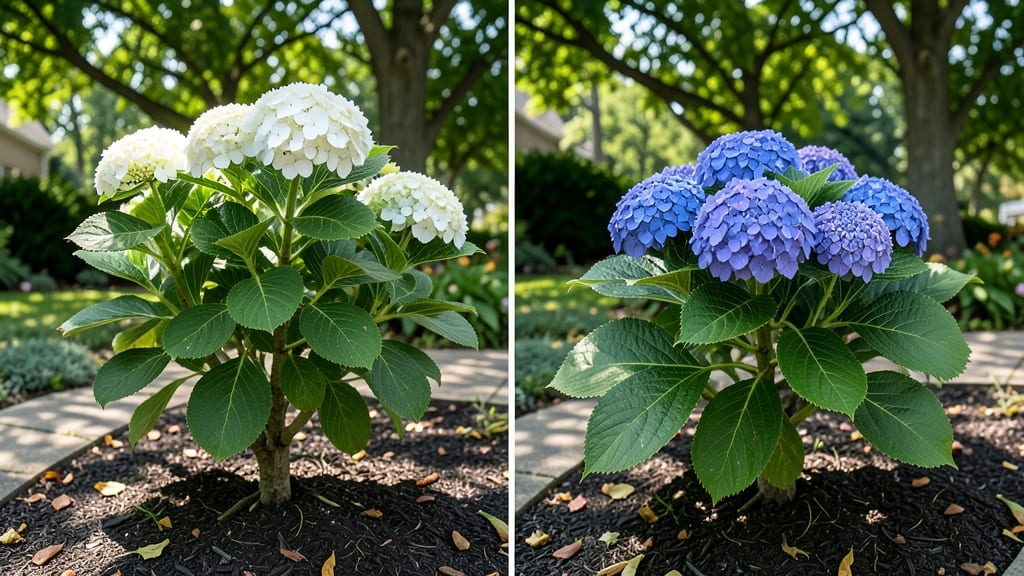
Deciding between smooth hydrangea and bigleaf hydrangea comes down to leaf shape, pruning needs, and the blooms you crave. 🌿 I've grown both for years, and the differences—especially in how they respond to pruning—will change how you garden these shrubs forever.
Smooth hydrangeas (like 'Annabelle') thrive in full sun, handle tougher soils, and bloom on new wood, meaning you can prune anytime. Their large, rounded leaves and white blooms create a bold statement, but they're also surprisingly low-maintenance.
Bigleaf hydrangeas, on the other hand, prefer shade and rich soil to produce those iconic blue or pink pom-poms—but their blooms only appear on old wood, so timing your pruning is critical.
You'll notice smooth hydrangeas rebloom reliably after pruning, while bigleaf varieties need careful winter care to protect their flower buds. Both handle pests similarly, but smooth hydrangeas tolerate heat and drought better, making them the winner in hotter climates.
Bigleaf varieties, though, offer more color variety and larger blooms that last longer in vases. The choice boils down to your garden's light, your patience for pruning, and whether you prefer bold white blooms or showy blue/pink pom-poms. Either way, you can't go wrong with these two standouts!
The first product explained
Meet the Hydrangea arborescens—the star of the Smooth Hydrangea family! 🌿✨ Known for its glossy, deep green leaves and stunning white blooms, this variety is a garden favorite for its hardiness, low-maintenance charm, and vibrant seasonal displays. Whether you're a seasoned gardener or a beginner eager to add some floral flair to your yard, this plant delivers big results with minimal fuss.
📏 Key Specs & Features
Here’s what makes Hydrangea arborescens a standout:
- Growth Habit: Deciduous shrub, reaching 3–5 feet tall and wide at maturity.
- Leaf Shape: Oval to elliptical, with a smooth, slightly pointed edge—no serrated teeth to complicate pruning!
- Bloom Time: Summer to early fall (June–September), producing large, rounded flower heads in pure white (some varieties offer pink or blue with soil pH adjustments).
- Hardiness: Thrives in USDA Zones 4–9, making it adaptable to cold winters and hot summers.
- Sunlight Needs: Partial shade to full sun (morning sun + afternoon shade is ideal to prevent leaf scorch).
- Soil Preference: Well-draining, slightly acidic to neutral soil (pH 6.0–7.0). Tolerates clay but dislikes soggy roots.
- Pruning Perks: Blooms on new wood, so you can prune late winter or early spring without fear of sacrificing flowers!
🎯 Target Users
This hydrangea is perfect for:
- 🌸 Beginner gardeners—its forgiving nature and straightforward care make it a great first shrub.
- 🏡 Homeowners looking to add year-round interest (even the skeletal structure of winter branches has charm!).
- 🎨 Landscape designers who love textural contrast—pair it with ferns, hostas, or ornamental grasses for a lush, layered look.
- 🐝 Pollinator-friendly gardeners—its blooms attract bees and butterflies!
- 🏡 Small-space gardeners—compact varieties like 'Annabelle' or 'Grandiflora' fit perfectly in pots or tight borders.
💰 Price Point & Where to Buy
Ready to bring home a Hydrangea arborescens? Here’s what to expect:
- Nursery Price: $25–$50 for a 3–5 gallon container (bare-root options may be cheaper in early spring).
- Best Places to Shop:
- Local nurseries or garden centers (support small businesses + see the plant in person!).
- Online retailers like Wayfair, The Home Depot, or Proven Winners (great for variety and reviews).
- Specialty hydrangea growers (e.g., Monrovia or White Flower Farm for rare cultivars).
- Pro Tip: 💡 Buy in early spring for the best selection of healthy, established plants. Avoid overwatered or root-bound specimens!
The second product explained
Meet the Bigleaf Hydrangea (Hydrangea macrophylla)—the showstopper of the garden world! 🌸 If Smooth Hydrangea is the elegant minimalist, then this beauty is the bold, statement-making queen of the hydrangea family. Let’s dive into why gardeners obsess over this lush, leafy giant and how it stacks up against its smoother cousin.
🌿 Key Specs & Features
Bigleaf Hydrangeas are hardy in USDA Zones 5-9, thriving in partial shade to full sun (though they’ll reward you with more blooms in dappled light). Here’s what makes them irresistible:
- Leaf Shape: Large, rounded leaves (3–8 inches long) with a deeply serrated edge—think lush, tropical vibes.
- Flower Clusters: Massive mophead or lacecap blooms (4–12 inches wide!) that change color based on soil pH (blue in acidic, pink in alkaline).
- Bloom Time: Late spring to fall (with some varieties reblooming if pruned correctly).
- Height/Spread: Typically 3–6 feet tall and wide, but some dwarf varieties stay compact.
- Fragrance: Some cultivars (like ‘Annabelle’) emit a subtle, sweet scent.
🎯 Who’s It For?
Bigleaf Hydrangeas are the perfect pick for:
- Gardeners who love dramatic, long-lasting blooms and don’t mind a little maintenance.
- Those in humid climates (they handle heat and moisture like a champ!).
- Homeowners who want year-round interest—even the leaves turn stunning shades of red or purple in fall.
- DIYers who enjoy experimenting with soil pH to tweak flower colors.
💰 Price Point & Value
Bigleaf Hydrangeas are mid-range in cost, with prices varying by size and cultivar:
- Container-grown (1-gallon): $25–$50
- Field-grown (bare root): $15–$30 (best for budget-conscious gardeners!).
- Premium cultivars (e.g., ‘Endless Summer’): $40–$80+ for reblooming varieties.
💡 Pro Tip: Buy multiple colors to create a garden rainbow—just adjust your soil pH with lime (for pink) or aluminum sulfate (for blue)!
⚠️ Watch Out For...
While stunning, Bigleaf Hydrangeas need more care than Smooth Hydrangeas, especially:
- Pruning: Wait until spring (after blooms fade) to avoid cutting off next year’s flowers.
- Watering: They hate drought—keep soil consistently moist.
- Pests: Watch for aphids, scale, or spider mites (common in lush foliage).
Head-to-head comparison
Ready to dive into the leafy showdown? 🌿 Whether you're a gardening newbie or a seasoned green thumb, understanding the differences between smooth hydrangea and bigleaf hydrangea will help you prune like a pro and keep those blooms popping!
Below, we break down their key differences in a side-by-side comparison—so you can pick the perfect hydrangea for your garden (or know which one to prune with extra care).
🌸 Leaf Shape & Size: The First Clue
The most obvious difference between these two hydrangeas is their leaves—and this isn’t just for show! Leaf shape impacts growth habits, pruning needs, and even how the plant handles pests like aphids. Here’s how they stack up:
| Feature | Smooth Hydrangea (Hydrangea arborescens) | Bigleaf Hydrangea (Hydrangea macrophylla) |
|---|---|---|
| Leaf Shape | Oval to elliptical, smooth edges (no serrations), and slightly waxy texture. | Broad, rounded leaves with serrated edges, giving them a "big" look (hence the name!). |
| Leaf Size | Smaller leaves, typically 2–5 inches long. | Much larger leaves, often 4–8 inches long. |
| Growth Habit | More upright and compact; grows in clumps rather than sprawling. | More spreading and bushy; can grow wider than tall if unchecked. |
| Pruning Impact | Prune right after blooming (late spring/early summer) to encourage next year’s flowers. | Prune late winter/early spring (before buds swell) to shape and promote blooms. |
🌺 Flower Power: Blooms & Color Game
If you’re growing hydrangeas for their show-stopping flowers, this is where the real magic happens. But here’s the twist: these two types bloom differently, and their flower types affect pruning strategies.
- Smooth Hydrangea:
- Produces sterile flowers (the big, showy blooms) on new wood (current year’s growth).
- Flowers appear late spring to summer and last until frost.
- Colors: White (most common), but some cultivars like 'Annabelle' stay snow-white, while 'Endless Summer' can turn pinkish in acidic soil.
- Bigleaf Hydrangea:
- Flowers can be sterile (showy) or fertile (seed-bearing), depending on the cultivar.
- Blooms on old wood (last year’s growth) and new wood (depending on the type).
- Colors: Blue, pink, purple, or white, and they change with soil pH (add lime for blue, aluminum sulfate for pink!).
Pro Tip: 💡 If you prune a smooth hydrangea too late (after summer), you’ll cut off next year’s blooms! Bigleaf hydrangeas are trickier—some bloom on old wood, so prune carefully to avoid sacrificing flowers.
🌱 Growth Speed & Mature Size: Space Planning
Planning your garden layout? These hydrangeas grow at very different paces, so choose based on your space and patience level!
| Feature | Smooth Hydrangea | Bigleaf Hydrangea |
|---|---|---|
| Growth Rate | Moderate—grows about 1–2 feet per year. | Slower—typically 6–12 inches per year. |
| Mature Height | 3–5 feet tall (some dwarf varieties stay under 2 feet). | 3–6 feet tall (can reach 8 feet with sprawling branches). |
| Spread | 3–5 feet wide (compact and neat). | 4–6 feet wide (can spread wider if not pruned). |
| Best For | Small gardens, containers, or foundation plantings. | Borders, hedges, or statement shrubs in larger landscapes. |
💰 Price & Availability: Budget Breakdown
Your wallet will thank you for knowing the cost differences—especially if you’re planning to buy multiple plants!
- Smooth Hydrangea:
- Generally more affordable—you’ll find bare-root plants for $15–$30 and container-grown for $25–$50.
- Popular cultivars like 'Annabelle' or 'Incrediball' are widely available at big-box stores, nurseries, and online.
- Pro Tip: 🌡️ Buy in early spring for the best selection and prices!
- Bigleaf Hydrangea:
- Can be pricier, especially rare cultivars—expect $20–$50 for bare-root and $40–$100+ for container-grown.
- Some premium varieties (like 'Nikko Blue' or 'Endless Summer') may cost more due to their unique blooms.
- Best bought from specialty nurseries or online retailers for guaranteed quality.
🛡️ Durability & Care: Low-Maintenance vs. Fussy?
Not all hydrangeas are created equal when it comes to survival skills. Here’s how they hold up to the elements and pests.
| Feature | Smooth Hydrangea | Bigleaf Hydrangea | ||||||||||||||
|---|---|---|---|---|---|---|---|---|---|---|---|---|---|---|---|---|
| Cold Hardiness | Zones 3–9
Which one should you choose?So, which hydrangea reigns supreme in your garden? The answer depends on your goals, patience, and gardening style—but here’s the verdict to help you decide like a pro! 🌿✨ 🌸 Pick Smooth Hydrangea (H. arborescens) If...
🌺 Pick Bigleaf Hydrangea (H. macrophylla) If...
🌿 Pro Tip for Hybrid Gardeners:Why not both? Plant Smooth hydrangeas as structural focal points (like ‘White Dome’) and Bigleaf varieties for color drama (like ‘Endless Summer’). Layer them in borders for season-long interest—spring blooms from Smooth + summer-to-fall show from Bigleaf! 💡
Final thought: Smooth hydrangeas are the easygoing roommates of the garden, while Bigleaf varieties are the dramatic divas. Choose based on your time, space, and style—and remember, hydrangeas reward patience with stunning blooms! 🌸💖 |