
Leaf Blower

Fighting tomato leaf worms without chemicals? These 10 organic control methods—backed by experienced gardeners—protect your plants while maintaining a thriving, chemical-free garden ecosystem.
Handpicking Worms During Early Morning
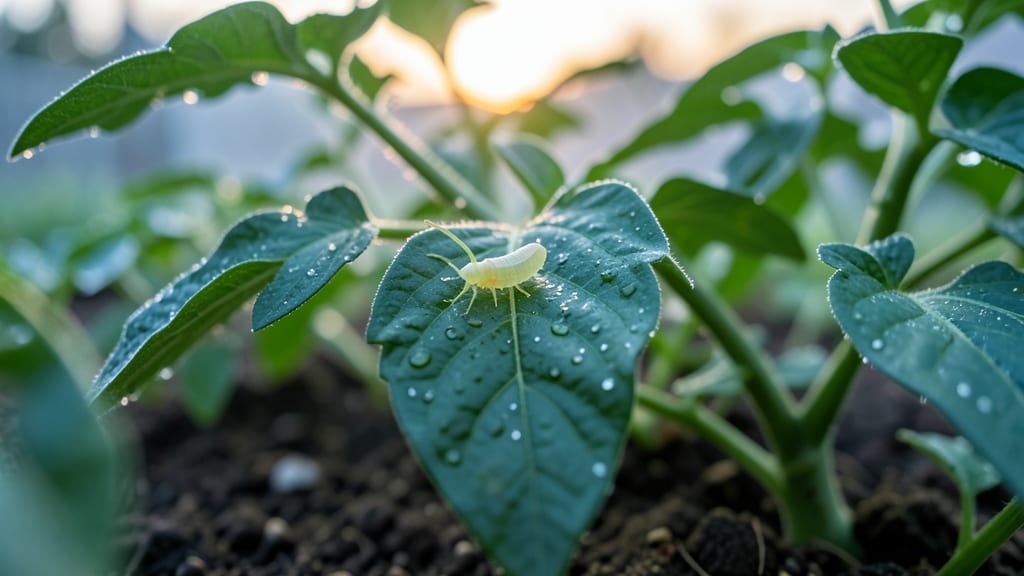
When tomato leaf worms first appear, they’re most vulnerable in the early morning hours—slow-moving and easy to spot against dew-kissed leaves. This is your best chance to manually remove them before their numbers explode, saving your plants without resorting to harsh chemicals.
Start by wearing gloves and a small container (like a jar with soapy water) to collect the worms. Focus on the undersides of leaves and new growth where they hide. A flashlight can help reveal hidden larvae in shaded areas. For best results, check plants before 8 AM when dew keeps them sluggish and easy to grasp.
This method is perfect for small gardens or container growers who want instant control. It’s also ideal for organic certification since it requires no pesticides. Plus, removing worms early prevents them from skewering leaves and stunting your tomato plants. 🌱
Neem Oil Spray Application
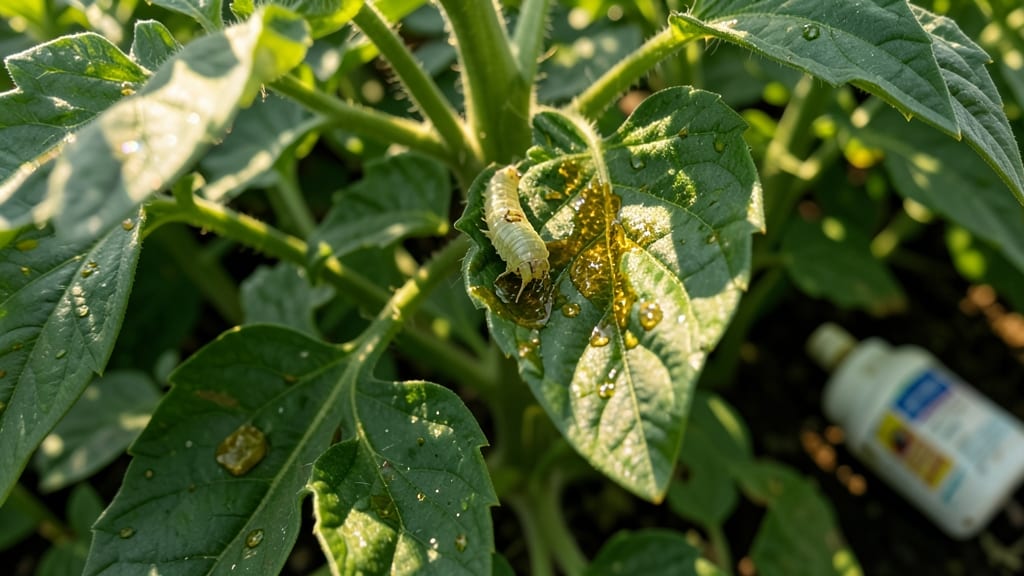
When tomato leaf worms strike, neem oil isn’t just another spray—it’s a systemic disruptor that starves their appetite and halts their life cycle without harming your garden’s allies. Unlike chemical pesticides, this natural oil works by coating leaves with a compound that worms can’t digest, forcing them to stop feeding within hours.
For best results, mix 1 teaspoon of neem oil with 1 quart of water and a drop of dish soap (as an emulsifier) in a spray bottle. Apply it evening or early morning when temperatures are below 85°F to avoid burning plants. Reapply every 7-10 days or after rain, focusing on the undersides of leaves where worms hide. This method also deters aphids, spider mites, and whiteflies—making it a multi-purpose shield for your organic garden.
Perfect for gardeners who refuse to compromise on chemical-free protection, neem oil is especially valuable for those with pollinator-friendly gardens or certified organic plots. It’s the secret weapon that keeps your tomatoes thriving while preserving the balance of your ecosystem. 🌿
Diatomaceous Earth Barrier

Tired of chemical sprays leaving residue on your tomatoes? Diatomaceous earth offers a chemical-free, physical barrier that works by dehydrating tomato leaf worms on contact—no harmful ingredients required.
Apply a thin layer of food-grade diatomaceous earth around your greenhouse plants or container gardens, focusing on leaf surfaces and soil. Reapply after rain or watering, as moisture reduces its effectiveness. This method is especially useful for small-scale growers who prefer organic solutions without disrupting beneficial insects.
Best for gardeners who want a low-maintenance solution that’s safe for pets and kids. Just remember: it’s most effective in dry conditions! 🌿
Bacillus Thuringiensis (Bt) Bacteria
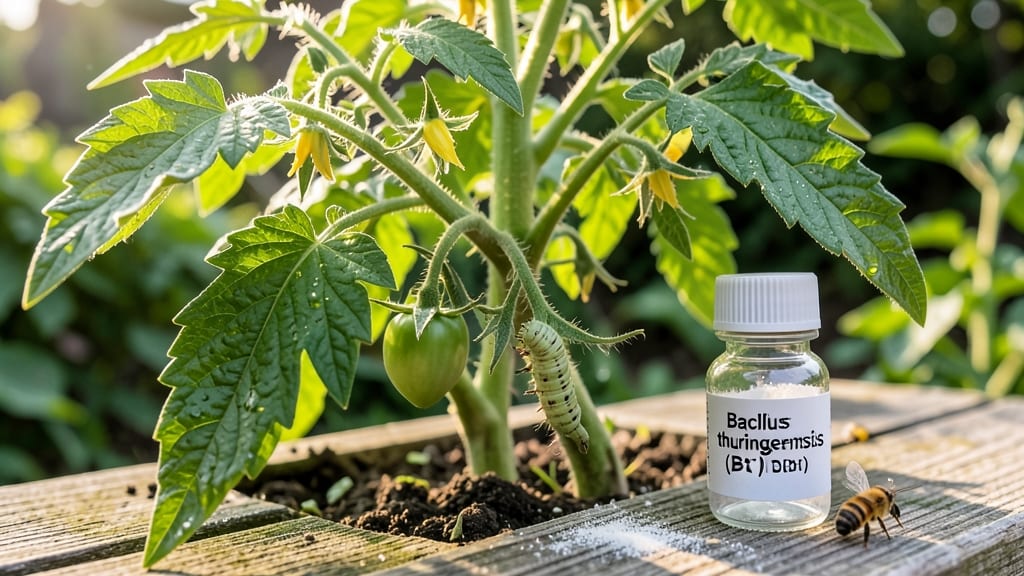
When tomato leaf worms strike, you need a solution that’s as precise as it is powerful—Bacillus thuringiensis (Bt) delivers exactly that. This natural bacteria targets only caterpillar pests, leaving bees, butterflies, and other beneficial insects untouched while delivering organic certification approval.
Apply Bt as a foliar spray during the early evening when tomato leaf worms are most active but before nighttime predators like bats take over. The bacteria disrupts their digestive systems, causing them to stop feeding within hours. For best results, reapply every 7-10 days or after heavy rain, as it breaks down quickly in sunlight.
Perfect for organic gardeners and those with pollinator-friendly spaces, Bt is the go-to microbial defense when chemical sprays feel too heavy-handed. Your tomatoes—and the ecosystem—will thank you. 🌱
Yellow Sticky Traps
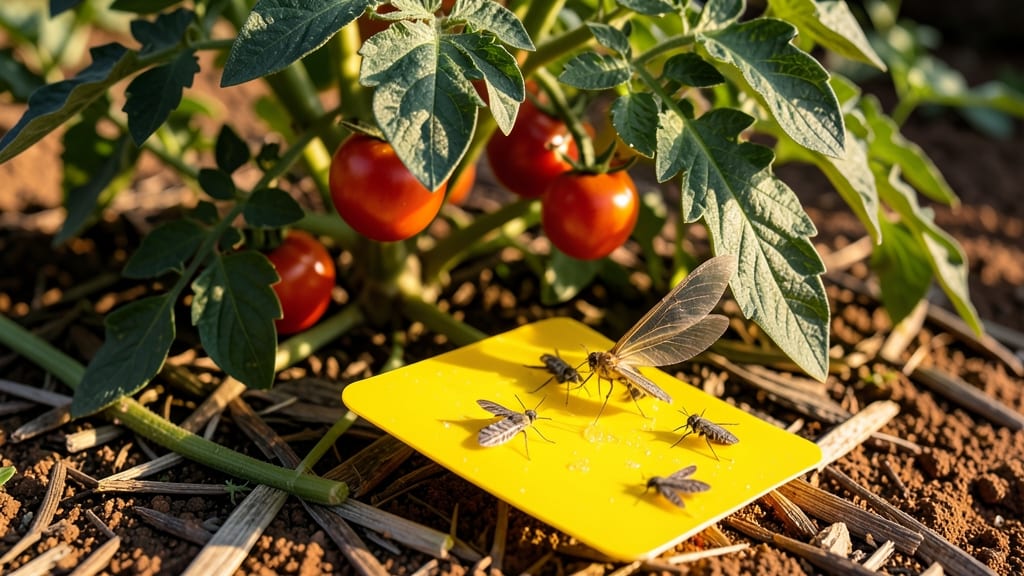
Stop tomato leaf worms before they even hatch by intercepting their parents—the adult moths. Yellow sticky traps are a passive, chemical-free way to monitor and reduce moth populations in large garden spaces, giving you early warning before infestations begin.
Place these bright yellow cards among your tomato plants during the late afternoon when moths are most active. The traps work by mimicking the color of tomato leaves, luring adult moths to land and get stuck. For best results, replace traps every 2-3 weeks or when they become fully covered in insects. This method is especially effective in large gardens where you can strategically place multiple traps to create a barrier.
Gardeners with sprawling tomato beds or community gardens will find this approach invaluable for early detection and prevention. It’s a simple, low-cost tool that fits seamlessly into organic pest management routines. 🌟
Companion Planting With Basil

Want to protect your heirloom tomatoes from tomato leaf worms without harsh chemicals? Planting basil nearby does more than just enhance flavor—it acts as a natural deterrent by masking the scents that attract moths. The strong aroma of basil confuses the pests, making them less likely to lay eggs on your tomato plants.
For best results, interplant basil every 2-3 feet around your tomato plants, especially varieties like Genovese or Purple Ruffles, which have the strongest fragrance. The dual benefit? Your tomatoes will taste even sweeter when harvested alongside basil. This method is particularly effective for organic gardeners who prioritize both pest control and flavor.
This low-maintenance strategy works best in warm climates where both plants thrive, but even cooler regions can enjoy the flavor boost. 🌱
Row Covers For Young Plants

When your young tomato seedlings are most vulnerable to tomato leaf worms, a lightweight row cover acts like an invisible shield—blocking moths entirely while letting sunlight and water through. This physical barrier is especially critical during the early growing season, when worms are most active and seedlings can't defend themselves.
Made from breathable fabric, row covers create a 100% moth-proof zone without chemicals. Secure them with clips or bricks to prevent gaps, and remove briefly during pollination if growing for fruit. For maximum protection, install covers at planting time and keep them on until plants are established (about 6-8 weeks).
This method is perfect for urban gardeners with limited space or anyone growing high-value heirloom tomatoes. It’s the only solution that stops infestations before they start—no sprays or sprays needed. 🌱
Beauveria Bassiana Fungal Spray
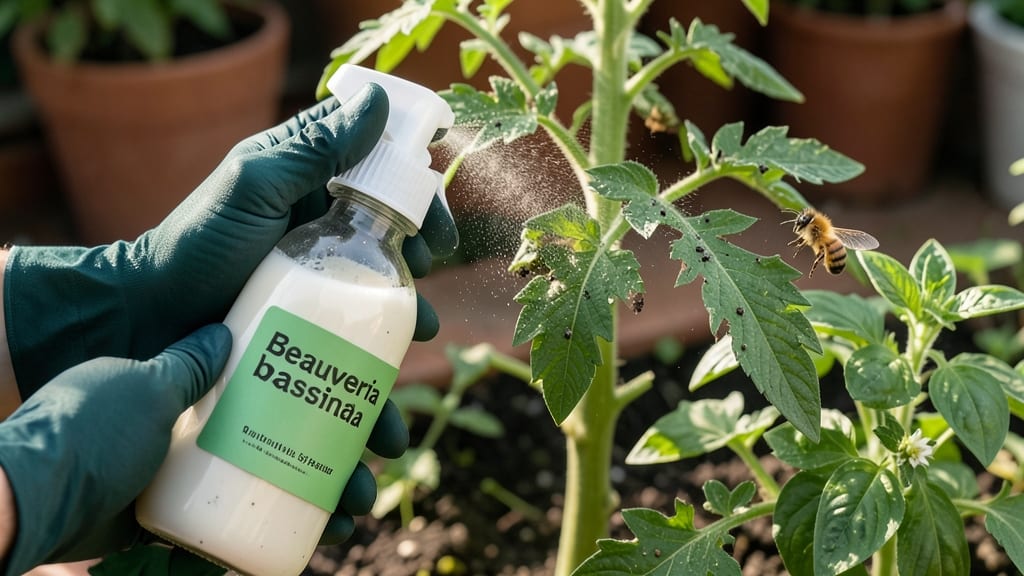
When tomato leaf worms keep returning no matter what you try, Beauveria bassiana fungal spray offers a biological solution that actually works. Unlike chemical pesticides, this natural pathogen specifically targets caterpillar pests while leaving your plants, pollinators, and beneficial insects untouched.
Simply spray the Beauveria bassiana suspension on infected plants or as a preventive measure during evening hours (to avoid harming bees). The fungus infects the worms within 24-48 hours, causing them to stop feeding and eventually die. It’s especially effective in organic gardens where chemical controls are restricted, and it can be reapplied every 7-10 days during outbreaks.
This method is perfect for gardeners who want a long-term, eco-friendly solution without disrupting their garden’s balance. 🌿
Garlic And Chili Pepper Spray

Tired of store-bought sprays that disrupt your garden’s natural balance? A garlic and chili pepper spray is your secret weapon—using ingredients you already have to create a potent, chemical-free repellent that tomato leaf worms can’t resist.
Blend 4 cloves of garlic, 1-2 chopped chili peppers (like jalapeño or cayenne), and 1 quart of water into a fine paste. Strain through cheesecloth, add a drop of dish soap as a surfactant, and spray directly on leaves (especially undersides where worms hide). Reapply every 5-7 days or after rain. The strong aroma and capsaicin confuse worms’ scent receptors, making your plants less appealing to lay eggs.
This spray is perfect for small-scale gardeners or anyone avoiding synthetic pesticides—it won’t harm edible crops, compost, or beneficial insects like ladybugs. Plus, it’s a zero-waste solution that puts kitchen scraps to work. 🌱
Encouraging Natural Predators Like Birds

If you're tired of constantly battling tomato leaf worms with sprays and traps, it’s time to let nature do the work for you. By inviting birds and parasitic wasps into your garden, you’re creating a self-sustaining ecosystem that keeps worm populations in check—without any effort on your part after the initial setup.
Start by planting native shrubs and trees like serviceberry or elderberry to attract birds, which feast on tomato leaf worms and their eggs. For wasps, add small patches of wildflowers like dill, fennel, or yarrow—their nectar draws beneficial species that lay eggs inside worm larvae. Place birdhouses and insect hotels strategically near your tomato plants to encourage year-round residency.
This method is perfect for gardeners who want a long-term, chemical-free solution that also boosts biodiversity. Once established, your garden will become a thriving habitat where predators keep pests naturally balanced. 🌿