
Pests
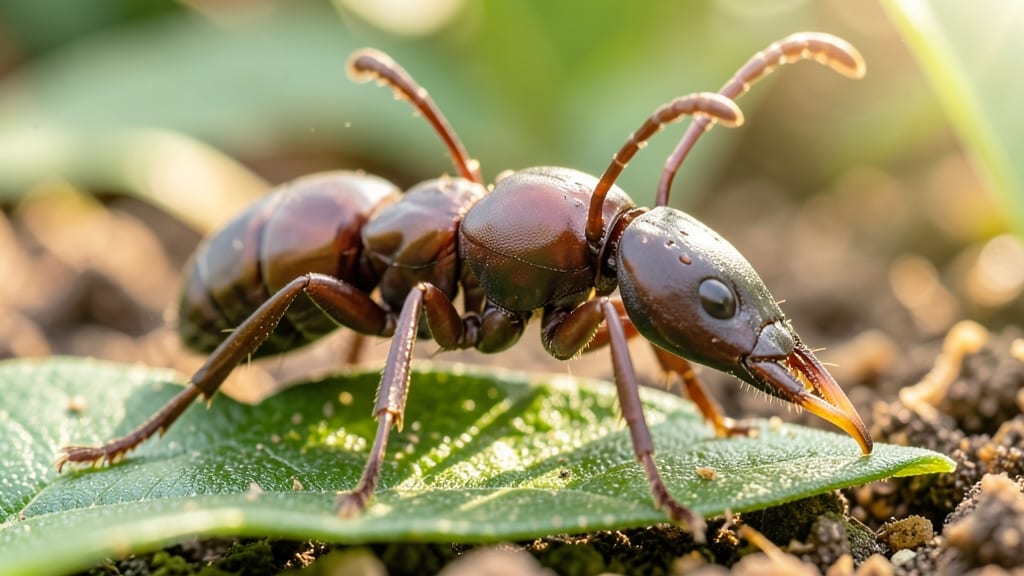
Leaf cutter ants harvest leaves to create underground fungal gardens, serving as farmers that cultivate nutrient-rich fungus to feed their colonies and support their survival in tropical environments.
These tiny but mighty insects are nature's original agriculturalists, with colonies containing millions of workers that specialize in leaf collection, fungal maintenance, and waste management. 🌱 The fungus they cultivate provides essential nutrients, while the ants protect their gardens from competing microbes.
What's fascinating is how they've evolved this mutualistic relationship—without the fungus, the ants starve, and without the ants, the fungus would overgrow and die. This intricate system has been perfected over millions of years, making them one of the most successful insect societies on Earth.
Beyond their agricultural prowess, leaf cutter ants play a crucial role in their ecosystems. They accelerate decomposition by breaking down organic matter, enriching soil with nutrients, and even controlling pest populations. In tropical regions, their tunnels aerate the soil, creating pathways for water and roots.
However, their leaf-cutting habits can sometimes become a nuisance for gardeners, as they may damage plants. Understanding their behavior helps in finding balanced solutions—like encouraging their presence in non-critical areas or using natural deterrents when needed.
💡 In This Article
- How Leaf Cutter Ants Cultivate Fungus Gardens
- Impact of Leaf Cutter Ants on Gardens and Ecosystems
How leaf cutter ants cultivate fungus gardens
Leaf cutter ants have perfected a sophisticated agricultural system where they act as both farmers and caretakers. The process begins with specialized worker ants, called "foragers," that cut pieces of leaves—typically 1-2 millimeters wide—using their powerful mandibles.
These foragers carry the leaf fragments back to their underground chambers, which can extend up to 20 feet deep, creating a complex network of tunnels and chambers. 🌱 Inside these chambers, the ants inoculate the leaf pieces with fungal spores they carry on their bodies, initiating growth of a white, cottony fungus called Leucoagaricus gongylophorus.
The ants maintain their fungal gardens with meticulous care, regulating temperature and humidity to optimize growth. They chew the leaf material into a pulp-like substrate, which the fungus decomposes into a nutrient-rich food source.
Worker ants also prune the fungal growth, removing overgrown or contaminated patches to prevent mold and bacterial infections. This level of maintenance ensures the fungus remains healthy and productive, providing a steady food supply for the colony.
The ants even "weed" their gardens by removing competing microbes, a behavior that showcases their advanced agricultural techniques.
What makes this system even more remarkable is the division of labor within the colony. Different worker castes handle specific tasks: some collect leaves, others tend to the fungus, and a few maintain the nest structure.
The queen ant, which can live for over 20 years, lays thousands of eggs daily, ensuring the colony's growth and continuity. This highly organized society allows them to sustain millions of individuals in a single nest, all working together to cultivate their fungal food source. 🔥
The ants' fungal gardens aren't just a food source—they're a carefully balanced ecosystem. The fungus they cultivate is specialized and cannot survive without the ants' care. In return, the ants rely entirely on the fungus for nutrition, as they cannot digest the leaves they collect.
This mutualistic relationship has evolved over millions of years, making leaf cutter ants one of the most successful agricultural societies on the planet. Their ability to cultivate and maintain these gardens has allowed them to thrive in diverse tropical environments, from rainforests to savannas.
Interestingly, leaf cutter ants also manage waste in their gardens by incorporating frass (insect excrement) and dead fungal material back into the substrate. This recycling process enriches the soil with nutrients, further enhancing the productivity of their fungal gardens.
The ants' ability to recycle waste demonstrates their efficiency as ecosystem engineers, ensuring minimal resource waste in their underground farms. This closed-loop system is a testament to their advanced agricultural practices, which even some human farming methods could learn from. ✨
One of the most fascinating aspects of their farming is how they protect their gardens from invaders. Leaf cutter ants have evolved chemical defenses, producing antibiotics and antifungal compounds that keep harmful microbes at bay.
They also use their mandibles to combat fungal competitors, ensuring their Leucoagaricus gongylophorus remains the dominant species in their gardens. This combination of chemical and physical defenses highlights their adaptability and resilience as farmers. 💫
The entire process—from leaf collection to fungal maintenance—is a testament to the ants' ingenuity. Their ability to cultivate and sustain these underground gardens has made them one of the most successful insect species on Earth, with colonies spanning across Central and South America.
By studying their agricultural practices, scientists have gained insights into sustainable farming techniques that could be applied to human agriculture. 🌟