
Pruning
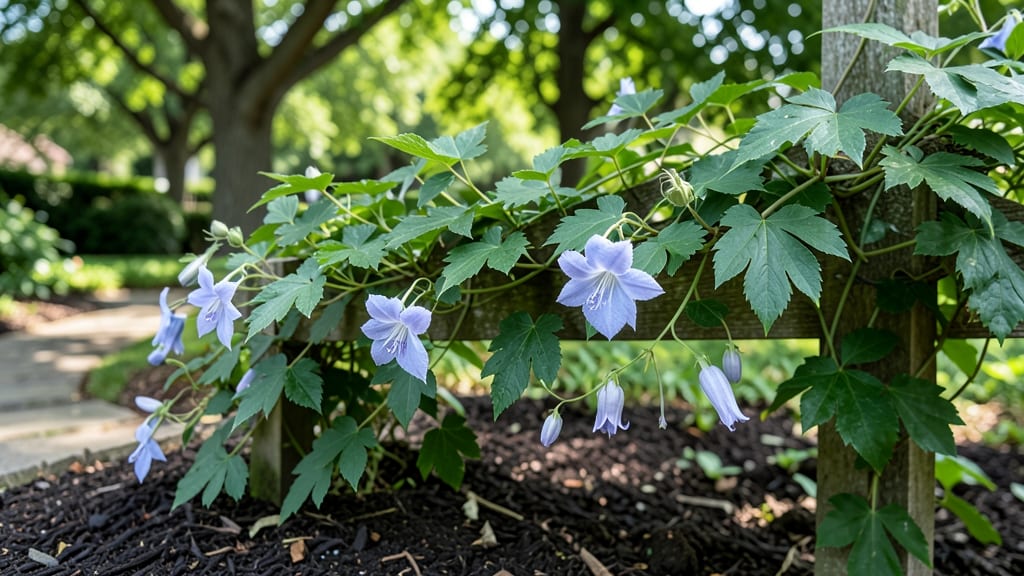
Those three-leafed vines you're pruning could be the secret to a fuller, blooming garden all year. ✂️ I've spent years perfecting the technique that turns leggy, sparse growth into thick, productive bushes—whether you're working with morning glories, sweet peas, or even the occasional wild vine creeping into your yard.
The key is understanding what those three leaves actually tell you: where new growth emerges, how the plant stores energy, and exactly where to cut to encourage branching. Most gardeners prune too late or too aggressively, which triggers more stretching than blooming.
I'll show you the 3-step pruning rhythm that works for any trifoliate vine, even the stubborn ones.
By summer's end, you'll have vines so bushy they'll block weeds and attract pollinators while producing nonstop blooms. The difference between a sparse vine and a thriving one comes down to timing and technique—no fancy tools required. Even my black thumb can't mess this up.
Works for container gardens, trellises, or ground covers—just adjust the pruning schedule for your climate. Let's get those vines branching out like crazy.
Genetic and Environmental Triggers
When you spot vines producing clusters of three leaves instead of the usual five or seven, it’s often your plant’s way of signaling a shift in its conditions—or its DNA.
Understanding these triggers helps you adjust care routines to encourage the lush, bushy growth you love. Here’s why it happens, broken down by science-backed causes.
Some vine species, like Clematis or Passiflora, naturally exhibit trifoliate (three-leafed) growth as part of their genetic makeup. This isn’t a flaw—it’s a survival trait!
- Species Variability: Certain cultivars, such as Clematis montana or Passiflora incarnata, may default to trifoliate leaves due to ancestral adaptations. If your vine’s parent stock had this trait, it’s likely inherited.
- Hybrid Crosses: When two plants with different leaf structures are bred, offspring may exhibit a mix—sometimes resulting in occasional three-leafed shoots. This is common in Wisteria hybrids.
Actionable Tip: Research your vine’s species and cultivar. If trifoliate growth is hardwired, focus on optimizing other conditions (like sunlight or pruning) to maximize blooms and bushiness.
Leaves are solar panels for your vine—they convert light into energy. When light conditions swing too extreme, the plant’s growth patterns can shift, including leaf structure.
- Excessive Sun Exposure: Intense UV rays can cause photoinhibition, where chlorophyll production stalls. The vine may produce smaller, simpler leaves (like trifoliate ones) to reduce water loss and protect itself.
- Shade Deficiency: Vines like Passiflora need partial shade to thrive. Too little light leads to etiolation, where stems elongate and leaves simplify to conserve energy.
Actionable Tip:
- 🌿 Morning Sun, Afternoon Shade: Place your vine where it gets 3–6 hours of direct sunlight, then dappled shade. Use sheer curtains or lattice screens if needed.
- 📏 Monitor Leaf Color: Yellowing or bleached leaves = too much sun. Pale, sparse leaves = not enough. Adjust placement gradually.
Water and nutrients are the backbone of leaf development. When roots struggle, the vine’s growth priorities shift—often resulting in simplified leaf structures.
| Issue | Effect on Leaves | Solution |
|---|---|---|
| Overwatering | Roots suffocate, limiting nutrient uptake. Leaves may turn trifoliate as the vine redirects energy to root recovery. | ✅ Use well-draining soil (add perlite or sand). Water only when the top 2 inches of soil are dry. |
| Underwatering | Stress triggers abscisic acid production, which can simplify leaf structure to conserve moisture. | ✅ Deep water 1–2 times per week (depending on climate). Mulch to retain moisture. |
| Nitrogen Deficiency | Nitrogen is critical for leaf expansion. Without it, new leaves may stay small and trifoliate. | 💡 Use a balanced fertilizer (10-10-10) in spring. Top-dress with compost for slow-release nitrogen. |
| Potassium or Magnesium Lack | These minerals regulate enzyme activity in leaves. Deficiencies can lead to distorted or simplified foliage. | 🌱 Test soil pH (ideal: 6.0–7.0). Amend with Epsom salt (for magnesium) or wood ash (for potassium). |
Pruning is like giving your vine a haircut—do it wrong, and it sends mixed signals about growth priorities. Over-pruning or poor timing can trigger trifoliate shoots as the plant scrambles to recover.
- Late-Season Pruning: Cutting back in fall or winter forces the vine to focus on root and stem repair rather than leaf development. New growth may default to simpler forms.
- Removing Too Many Mature Leaves: Older leaves are energy reservoirs. Stripping them can starve new shoots, leading to underdeveloped, trifoliate foliage.
- Not Pruning at All: Overgrown vines produce long, leggy stems with fewer, smaller leaves. The plant may revert to trifoliate growth to conserve resources.
Actionable Tip:
- ⏰ Prune in Early Spring: Trim back by 1/3 before new growth starts. Avoid heavy cuts after mid-summer.
- 🌿 Focus on Structure: Remove only dead, diseased, or crossing stems. Keep 2–3 strong canes for flowering.
- 🔄 Renewal Pruning: Every 2–3 years, cut back one-third of the oldest stems to encourage vigorous new growth.
Pests like spider mites or diseases such as powdery mildew don’t just damage leaves—they hijack your vine’s energy. When fighting for survival, the plant may produce trifoliate leaves as a low-energy adaptation.
- Sap-Sucking Pests (Aphids, Scale): These insects inject toxins that disrupt cell division in leaves, leading to malformed or simplified structures.
- Fungal Infections (Powdery Mildew, Rust): Fungi clog stomata (leaf pores), reducing photosynthesis. The vine may produce smaller, trifoliate leaves to minimize water loss.
- Bacterial Leaf Spot: Causes leaf tissue to die back, forcing new growth to be more compact and efficient.
Actionable Tip:
- 🦟 Inspect Regularly: Check undersides of leaves and stems weekly. Look for webbing (mites), sticky residue (aphids), or white powder (mildew).
- 🧴 Neem Oil or Soap Spray: Mix 1 tbsp neem oil + 1 tsp mild dish soap in 1 quart water. Spray every 7–10 days for pests.
- 🌧️ Improve Airflow: Thin out dense foliage and space vines 3–4 feet apart to reduce humidity and fungal spread.
Quick Fixes for Taming Unruly Vines
If your three-leafed vines are growing wild, leggy, or sparse, don’t panic—there’s a solution! With the right pruning techniques, you can encourage bushier growth, more blooms, and a healthier plant. Below, we break down common issues and actionable fixes, plus tips to keep your vines thriving year-round.
Cause: Too much energy is going into long, sprawling stems instead of dense foliage and flowers. Fix:
- Prune Back Long Stems 🔪⏰
- Trim back overgrown vines by one-third to redirect energy toward bushier growth.
- Focus on the longest, leggiest stems first—they’re stealing nutrients from the plant.
- Use clean, sharp pruners to avoid damaging the plant (dull tools crush stems, inviting disease).
- Pinch New Growth 🌱👨🍳
- When new shoots appear, pinch off the top 2-3 inches to encourage branching.
- Do this early in the growing season (spring) for the best results.
Prevention Tips: ✔ Fertilize lightly in early spring with a balanced, low-nitrogen fertilizer (e.g., 5-10-10) to promote blooms over leafy growth. ✔ Space plants properly at planting—overcrowding leads to competition, while too much space encourages sprawl. ✔ Train vines on a trellis or support structure to control growth direction naturally.
Cause: Too much pruning at the wrong time, poor nutrition, or lack of sunlight. Fix:
- Prune for Blooms 🌺🔥
- Deadhead spent flowers regularly to encourage new blooms (snip just above a set of leaves).
- Avoid heavy pruning in late summer—this can cut off next year’s flower buds.
- Shape lightly in early spring, focusing on removing old wood (3+ years) to make room for new growth.
- Boost Flower Production 💪🌿
- Fertilize with phosphorus (the middle number in NPK ratios, e.g., 10-20-10) to promote blooming.
- Ensure 6+ hours of sunlight daily—shady spots lead to fewer flowers.
- Water consistently but avoid overwatering (soggy soil stresses plants).
Prevention Tips: ✔ Prune strategically: Aim for an open, airy shape—this allows sunlight to reach inner stems, triggering more blooms. ✔ Mulch around the base with compost or aged bark to retain moisture and nutrients. ✔ Rotate pruning tools between plants to prevent disease spread.
Cause: Nutrient deficiency, over-pruning, or root stress. Fix:
- Revitalize with a Trim 🌿💡
- Cut back weak, yellowing stems to their base—this removes energy drains.
- If the plant looks over-pruned, stop cutting and focus on feeding instead.
- Feed for Recovery 🍽️💪
- Use a balanced liquid fertilizer (e.g., fish emulsion or seaweed extract) to replenish nutrients.
- Avoid high-nitrogen fertilizers—they encourage leafy growth at the expense of flowers.
Prevention Tips: ✔ Prune gradually—never remove more than one-third of the plant in a single session. ✔ Test soil pH (ideal range: 6.0–7.0 for most vines). Adjust with lime (to raise pH) or sulfur (to lower it). ✔ Check for pests (aphids, spider mites) that weaken vines—treat with neem oil if needed.
Cause: Cold snaps, frost, or improper winter care. Fix:
- Prune After Last Frost ❄️🔪
- Wait until spring (after the last frost date) to prune—cutting back in winter can expose tender stems to cold.
- Remove dead, brown stems at the base to make room for new growth.
- Protect Sensitive Varieties ❄️🛡️
- For tender vines, mound mulch or straw around the base for insulation.
- In extreme climates, cover plants with frost cloth during hard freezes.
Prevention Tips: ✔ Choose cold-hardy varieties if you live in a frosty zone (e.g., some clematis or honeysuckle types). ✔ Water deeply before winter to help roots withstand freezing temps. ✔ Avoid heavy pruning in fall—this can stress the plant before dormancy.
- Prune in layers: Start with dead/diseased wood, then shape, then encourage blooms.
- Keep a pruning journal: Note what you cut and when—this helps track growth patterns.
- Rotate supports: If using trellises, reposition them yearly to prevent one-sided growth.
With these fixes, your three-leafed vines will be bushier, blooming longer, and easier to manage—no more wild tangles! 🌿✨
Frequently asked questions
Why do some vines naturally grow with three leaves instead of five or seven?
Many vine species, like clematis or passionflower, have trifoliate (three-leafed) growth as part of their genetic makeup. This is especially common in Clematis montana or Passiflora incarnata, where it's a natural adaptation. Hybrid varieties may also show this trait when bred from parents with different leaf structures.
Can I safely prune my three-leafed vines in winter?
Never prune in winter! Wait until after the last frost in spring to avoid damaging tender new growth. Winter pruning exposes stems to cold, which can kill the plant. Focus on removing dead stems first, then shape the plant once it's actively growing again.
How do I tell if my vine's three-leafed growth is normal or a sign of stress?
Check for other symptoms: healthy trifoliate vines will still have vibrant leaves and regular blooms. Stress-related three-leafed growth often comes with yellowing leaves, sparse foliage, or weak stems. If you see these signs, adjust sunlight, water, or nutrients first before pruning.
What's the best way to encourage bushier growth in my three-leafed vines?
Use the pinch-and-prune method: In early spring, pinch off the top 2-3 inches of new growth to encourage branching. Then trim back one-third of the longest stems to redirect energy. Use a balanced, low-nitrogen fertilizer (like 5-10-10) to promote blooms over leafy growth.
Are there any toxic three-leafed vines I should avoid?
Yes! Poison ivy has three shiny leaves with a smooth edge and grows as a vine. It causes severe rashes - never touch it without gloves. If you're unsure about a vine, check for these red flags: red stems, white berries, or a rash after contact. When in doubt, consult a local nursery or extension service.