
Plants
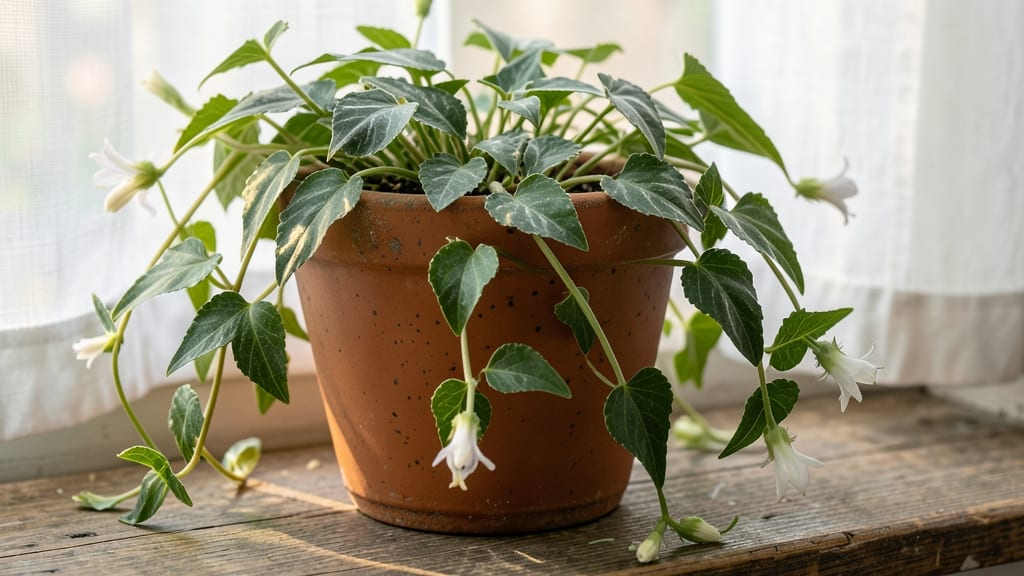
A 3-pointed leaf vine thrives with bright indirect light, well-draining soil mixed with perlite or sand, and steady moisture that keeps roots damp but never waterlogged. Regular pruning of overgrown stems and monthly feeding with balanced fertilizer during growing seasons promotes dense, vibrant foliage.
A 3-pointed leaf vine—often called Tradescantia paludosa—originates from tropical regions where dappled sunlight filters through dense canopies. 🌿 This explains why direct sun burns its leaves while bright indirect light keeps them lush and glossy.
The soil mix mimics its natural habitat: sandy, fast-draining mediums prevent root rot while retaining just enough moisture. For best results, group plants together to raise humidity naturally, or use a pebble tray with water beneath the pot.
This vine's care routine mirrors its growth habits: it grows rapidly in spring and summer but slows in cooler months. Pruning isn't just about aesthetics—it encourages bushier growth by redirecting energy to new shoots.
I recommend using clean, sharp scissors to snip just above leaf nodes, and composting the clippings for propagation. For fertilization, a balanced 10-10-10 mix works well, but I've found organic options like fish emulsion provide a gentler nutrient boost without risking salt buildup.
💡 In This Article
- Optimal Light and Soil Conditions for 3-Pointed Leaf Vine
- Step-by-Step Care Guide: Watering, Pruning, and Fertilizing
Optimal light and soil conditions for 3-Pointed leaf vine
The 3-pointed leaf vine, scientifically known as Tradescantia paludosa, thrives under bright indirect light because its native tropical habitats receive filtered sunlight through dense foliage. Direct sun causes leaf scorch—visible as crispy brown edges—due to excessive UV exposure, while too little light leads to elongated, pale stems.
The ideal spot mimics the dappled light of a forest understory, such as near an east-facing window or under sheer curtains on a south-facing window. 🌿
Soil pH between 6.0 and 7.0 is critical for nutrient uptake, as this vine prefers slightly acidic to neutral conditions. The root system benefits from a well-draining mix of 50% potting soil, 30% perlite or coarse sand, and 20% coco coir to prevent waterlogging.
Perlite creates air pockets that mimic the sandy soils of its natural wetland edges, while coco coir retains just enough moisture to keep roots hydrated without suffocating them.
Humidity plays a surprising role in leaf health—this vine’s native swampy environments maintain 60-70% humidity. In dry indoor settings, leaves develop brown tips from transpiration stress. To replicate tropical humidity, place the pot on a pebble tray filled with water or group plants together to create a microclimate.
A daily misting can also help, though avoid wetting the leaves to prevent fungal issues like powdery mildew.
Container choice matters too: terracotta pots with drainage holes are ideal because they allow excess water to escape while the porous material wicks away moisture. For larger specimens, a 12-inch diameter pot provides enough root space, but avoid oversizing—roots left too wet in excess soil become prone to rot.
Always check soil moisture by sticking your finger 1-2 inches deep; if dry, it’s time to water.
One common mistake is assuming "more light is better." While this vine loves brightness, morning sun with afternoon shade is the golden rule. I’ve seen leaves bleach out when exposed to 6+ hours of direct midday sun, especially in summer.
Rotate the pot quarter-turns weekly to ensure even light exposure, which prevents lopsided growth and keeps the foliage uniformly vibrant.