
Pests and Diseases
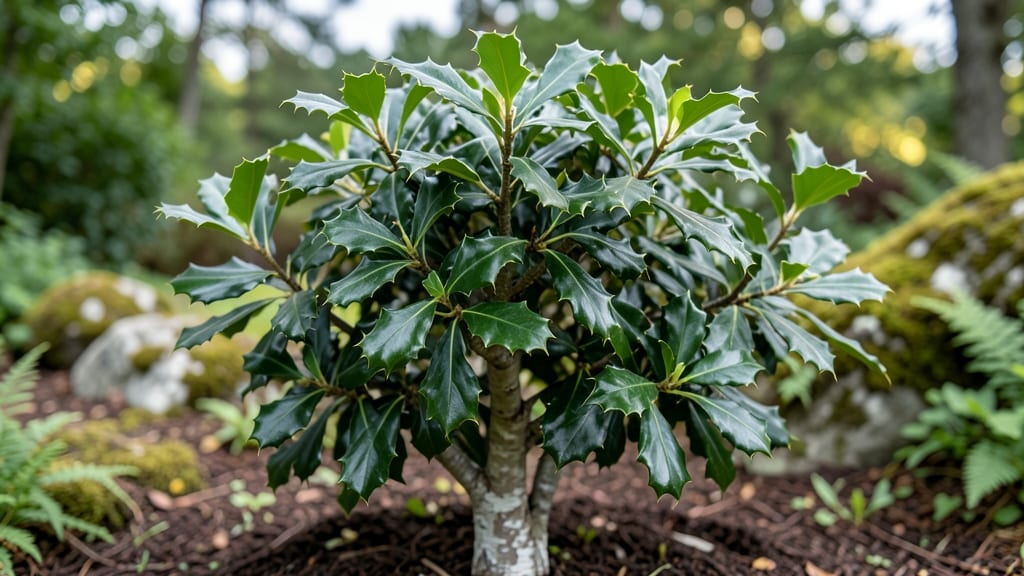
The holly leaf shape features glossy, spiny-edged oval leaves with sharp tips, typically appearing in paired arrangements along the stem. These distinctive characteristics, including their waxy surface and jagged edges, help easily identify holly from other evergreens.
Holly leaves aren't just pretty—their unique shape serves important survival functions. 🌿 The sharp serrations act as natural defenses against herbivores, while the glossy coating helps conserve moisture in their native wooded habitats.
Unlike boxwood's smooth edges or laurel's leathery texture, holly leaves stand out with their bold, almost thorn-like appearance. This makes them instantly recognizable even to casual gardeners.
What's fascinating is how these features change with seasons. New growth often appears softer before hardening into those signature spiky edges. The paired arrangement along the stem creates a distinctive pattern that's quite different from magnolia's single leaves or boxwood's more rounded shapes.
These visual cues make holly leaves one of the easiest evergreens to identify at a glance.
💡 In This Article
- Distinctive Traits of Holly Leaf Anatomy
- How to Differentiate Holly Leaves from Common Lookalikes
Distinctive traits of holly leaf anatomy
The holly leaf's iconic shape isn't just for show—it's a brilliant evolutionary adaptation.
Those sharp, spiny edges serve as a built-in defense mechanism against hungry herbivores, making them difficult to chew through. 🌿 The serrations create tiny wounds that deter insects and small mammals, while the waxy coating acts like a natural raincoat, reducing water loss during dry periods.
This dual-purpose design explains why holly thrives in its native temperate woodlands where moisture conservation and predator avoidance are critical.
Botanists classify holly leaves as "simple" leaves with an oval shape that typically measures between 2-4 inches long and 1-2 inches wide. The glossy surface comes from a thick cuticle layer that reflects light, creating that signature shine.
What's particularly interesting is the leaf arrangement—most holly species display paired leaves along the stem, creating a symmetrical pattern that's unique among evergreens. This paired structure helps maximize sunlight capture while maintaining the plant's compact growth habit, which is ideal for understory plants competing for light.
The pointed tips you notice are actually modified leaf structures called "apices" that channel water efficiently during rain. This design prevents water pooling that could lead to fungal infections. 💧 Compare this to boxwood leaves, which have smooth, rounded edges and lack these defensive adaptations.
The holly's leaf structure is so specialized that even the vein pattern—with prominent midribs and secondary veins—contributes to its strength and durability. These anatomical features work together to create a leaf that's both functional and visually striking.
Seasonal variations add another layer to holly's distinctive appearance. New growth often emerges with softer edges that gradually harden into those sharp serrations over 4-6 weeks. The glossiness increases as the cuticle matures, creating the polished look we associate with holly.
This seasonal transformation helps holly maintain its defensive capabilities throughout the year, adapting to both summer heat and winter cold. The paired arrangement remains consistent, though leaf size may vary slightly between species like the American holly (2-4 inches) and English holly (1-3 inches).
What makes holly leaves particularly fascinating is how their shape influences their role in the ecosystem.
The spiny edges create microhabitats that support beneficial insects, while the glossy surface reflects UV light that could harm delicate plant tissues. 🌱 This combination of defensive and adaptive features explains why holly has become such a dominant plant in its native range—it's not just surviving, but thriving through these clever evolutionary adaptations.
The result is a leaf that's both beautiful and highly functional, making holly one of nature's most interesting botanical creations.
Understanding these anatomical traits helps explain why holly stands out among evergreens. While boxwood and laurel focus on dense growth and leathery textures, holly prioritizes defense and moisture control through its distinctive leaf shape.
This specialization is what makes holly leaves so instantly recognizable—and so effective at their ecological role. 🌿