
Pests and Diseases
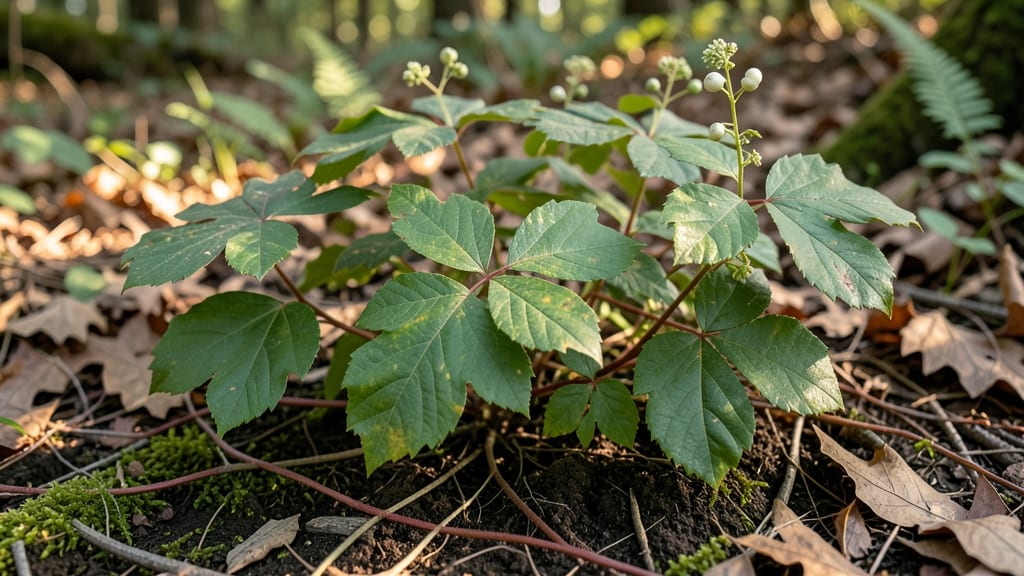
To identify 5-leaf poison ivy, look for its distinctive three-leaf clusters with smooth, shiny green leaves, white berries, and a glossy vine or bushy growth. The classic 'leaves of three, let it be' rule helps you quickly tell it apart from harmless plants like Virginia creeper or boxelder.
This plant's three-leaf clusters are its trademark, but the real giveaway is how the leaves grow directly from the stem rather than branching out like Virginia creeper's five-leaf groupings. 🌿 The white berries that appear in fall are another dead giveaway—they're toxic too!
I've seen people mistake poison ivy for harmless plants in shaded areas, so always check the leaf arrangement and stem attachment before touching anything unfamiliar. The oil urushiol causes the itchy rash, so even dead plants can trigger reactions if they're crushed or disturbed.
What's interesting is how sunlight affects its appearance—young leaves often start out reddish before turning green, and the plant may develop a reddish tint in fall. This color shift can make identification trickier, especially if you're not familiar with its growth patterns.
The 'leaves of three' rule isn't just folklore—it's rooted in the plant's botanical structure that makes it instantly recognizable once you know what to look for.
💡 In This Article
- Poison Ivy Leaf Patterns and Plant Anatomy
- Safely Removing Poison Ivy from Gardens and Landscapes
Poison ivy leaf patterns and plant anatomy
The three-leaf clusters of poison ivy are actually compound leaves with each leaflet measuring 2-5 inches long and 1-4 inches wide. The middle leaflet typically attaches directly to the stem via a long petiole, while the side leaflets connect via shorter stalks.
This arrangement creates a Y-shaped pattern when viewed from above, which is a key distinguishing feature from lookalikes like Virginia creeper that have five leaflets with a more symmetrical spread.
Sunlight dramatically alters poison ivy's appearance—young leaves often emerge reddish-purple in spring before turning glossy green, while mature plants develop a yellowish-green hue in fall.
The leaves' smooth edges and slightly waxy texture help them repel water, which is why they stay shiny even after rain. 🌿 Microscopically, the leaf edges have tiny glandular hairs that secrete urushiol oil, the compound responsible for allergic reactions.
This oil remains potent even on dead plants for up to 5 years.
The plant's growth habit varies by environment—it can appear as a woody vine climbing trees, a low shrub in sunny areas, or a ground cover in shaded forests. White berries (0.2-0.3 inches diameter) appear in fall and persist through winter, serving as a winter identification marker.
The 'leaves of three' rule works scientifically because this specific leaf arrangement is unique to poison ivy species in North America, making it an evolutionary adaptation for easy recognition by animals (and humans) to avoid.
What most people overlook is the stem attachment—poison ivy's leaf clusters grow directly from the main stem without branching, while lookalikes like boxelder have leaves that branch out. The urushiol oil concentration is highest in roots and stems, which is why even small stem fragments can cause severe reactions.
This oil doesn't wash off with water—it requires soap and alcohol for removal.
Seasonal changes create common misidentifications: In spring, the reddish new leaves might be mistaken for harmless wild strawberries, while fall's yellow-green foliage can resemble harmless sumac.
The key is always checking for the three-leaf clusters and smooth-edged leaflets—never just color. 🌿 Even experienced gardeners sometimes confuse it with Virginia creeper, which has five leaflets and toothed edges.
For a definitive test, rub a leaf between your fingers—if it leaves a yellowish residue (urushiol), it's poison ivy. However, this test carries risk, so visual identification is always safer.
The plant's glossy appearance comes from a waxy cuticle that helps it conserve water, while its rapid growth rate (up to 1 foot per year) allows it to quickly dominate disturbed areas.