
Pruning
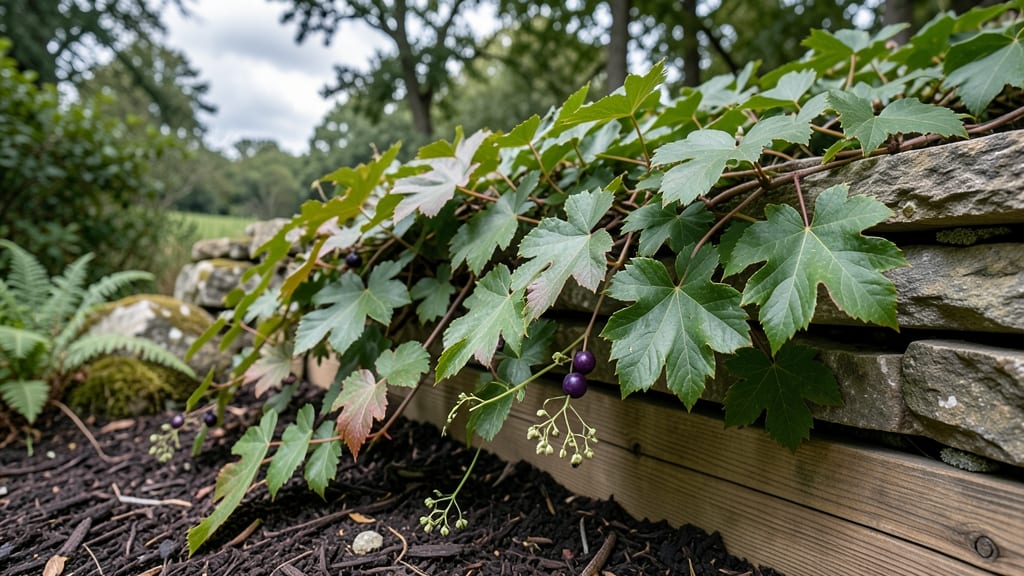
That five-leaf vine climbing your tree isn’t just an eyesore—it’s a silent threat to your tree’s health. 🌿 I’ve seen Virginia creeper strangle branches, poison ivy trigger rashes, and Boston ivy peel bark like wallpaper, and none of them belong on your prized oak or maple.
The first step is identifying it: poison ivy’s leaves grow in threes (but sometimes fives), Virginia creeper has blue-black berries, and Boston ivy clings with suction-cup-like roots.
Here’s the hard truth: some vines are harmless climbers, while others sap your tree’s nutrients or create entry points for pests. Poison ivy and English ivy are the worst offenders, while clematis or honeysuckle might just need gentle redirection.
Grab your pruners—we’re removing the dangerous ones for good and teaching your tree to fight back.
By the end, your tree will look lighter, healthier, and free of gnarled growth. You’ll spot the difference in 2-3 weeks as new leaves emerge, and your tree’s branches will breathe again. The key? Act fast before the vines wrap around trunks or smother leaves.
This works for any vine-covered tree, whether it’s a backyard maple or a street-side oak. Let’s get started—your tree’s survival depends on it.
📚 In This Guide
- What you need
- Instructions
- Tips and common mistakes
- Wrapping up and next steps
What you need
- ● Pruning shears: Bypass pruners (sharp, clean, and disinfected—sterilize with rubbing alcohol or a 10% bleach solution). Quantity: 1 pair (or 2 for larger vines).
- ● Loppers: For thicker branches (1–2 inches in diameter). Quantity: 1 pair.
- ○ Pruning saw: For stubborn, woody stems (optional but helpful for mature vines). Quantity: 1.
- ● Gloves: Heavy-duty, cut-resistant (e.g., mechanics’ or gardening gloves). Quantity: 1 pair.
- ● Disinfectant: 70% isopropyl alcohol or bleach solution (1 part bleach to 9 parts water) to prevent disease spread.
- ○ Pruning sealant: (Optional but recommended for large cuts) Tree wound pruning paste to protect exposed areas.
- ● Bucket or bag: For collecting pruned branches (10–20 gallon capacity).
- ● Ladder or step stool: If your vine is tall (ensure it’s stable and rated for your weight).
- ● Safety glasses: To protect your eyes from debris.
- ● Sharpener: For keeping pruners in top condition (e.g., pruner sharpening stone).
- ● Marking spray: (e.g., paint or chalk) to tag branches for removal.
- ● Extension pole: For high branches (e.g., grapple hook or pole pruner).
- ● Work gloves with grip: For better traction on slippery vines.
- ● Notebook & pen: To jot down pruning notes or vine growth patterns.
How to prune a 5-Leaf vine for year-round growth
This is the method I use to keep my 5-leaf vines thriving—no dead branches, just lush, healthy growth all season.
✂️ Step 1: Identify the Right Time to Prune
Prune your 5-leaf vine in early spring before new growth begins or in late winter when the plant is still dormant. This timing ensures you're cutting back before the plant puts energy into new leaves. I always check for tight, woody buds—these signal readiness for pruning.
Wait until temperatures stay above 40°F at night to avoid shocking the plant. Cold snaps can stress newly pruned vines, especially if you've made deep cuts. If you missed spring, you can do a light pruning in early summer to shape the plant, but avoid heavy cuts then.
✂️ Step 2: Gather the Right Tools and Prepare
Use clean, sharp pruning shears—dull blades crush stems and invite disease. I wipe the blades with rubbing alcohol before and after pruning to prevent spreading any pathogens. You'll also need gloves (some vines have thorns) and a bucket for clippings.
Inspect the vine for dead, diseased, or crossing branches first. These are your priority cuts. I like to sketch a rough outline of the vine's shape before I start—this helps me visualize the final look and avoid over-pruning.
✂️ Step 3: Remove Dead, Diseased, and Problem Branches
Start by cutting out any dead or diseased branches—these are easy to spot because they're brown, brittle, or lack leaves. Cut back to the main stem or a healthy bud just above it. I make sure my cuts are at a 45-degree angle about ¼ inch above a leaf node to encourage new growth.
Next, remove branches that are rubbing against each other or growing inward. These compete for sunlight and can damage each other. I look for branches that cross the main stem at awkward angles—these often grow poorly and should go. Always cut back to an outward-facing bud for the best results.
✂️ Step 4: Shape the Vine for Balanced Growth
Step back and assess the vine's overall shape. Aim for an open, airy structure that allows sunlight to reach the center. I focus on maintaining a natural, balanced silhouette—no harsh, geometric cuts. Start with the outermost branches and work your way inward.
For longer branches, I make selective cuts to encourage bushier growth. Cut just above a leaf node where you want new growth to sprout. Avoid cutting into the main trunk unless it's absolutely necessary—this can weaken the plant. I like to leave 3-5 main branches as the vine's framework.
⏰ Step 5: Clean Up and Monitor Progress
After pruning, dispose of the clippings in a sealed bag or compost pile—never leave them near the plant, as they can harbor pests or disease. Water the vine deeply to help it recover from the pruning stress. I add a light layer of mulch around the base to retain moisture and protect roots.
Watch the vine closely over the next 2-3 weeks. You should see new buds swelling and fresh leaves emerging within that time. If you notice yellowing leaves or wilting, it might mean you pruned too aggressively—next time, go lighter. A well-pruned vine should look fuller and more vigorous within a month.
Tips & tricks for perfect 5-Leaf vine pruning
Here's what nobody tells you about keeping your 5-leaf vine thriving year after year—these tricks will transform your pruning from guesswork to garden art.
Timing is Everything: The early spring window (before buds swell) is your golden hour. If you missed it, don't panic—just do a light shaping in early summer. But here's the secret: check those nighttime temperatures! I've learned the hard way that pruning when nights dip below 40°F can shock the plant, so always wait until the forecast is stable. For tropical varieties, you can actually prune twice a year—once in spring and again in fall—but stick to the original schedule for temperate climates.
Tool Prep Makes All the Difference: Your pruning shears aren't just tools—they're your plant's first line of defense. I discovered this after my first year when I used dull shears and ended up with crushed stems that invited disease. Always wipe blades with rubbing alcohol before and after use, and for extra protection, dip them in a 1:9 bleach-water solution between plants. Pro tip: keep a small spray bottle of diluted bleach (1 part bleach to 9 parts water) handy for quick disinfecting between cuts.
Visual Cues Over Guessing: When shaping your vine in Step 4, step back and imagine sunlight streaming through the center. The goal is to create an open lattice that lets light reach all branches. I use a simple trick: hold your hand vertically about 12 inches from the vine. If you can see your fingers through the branches, you're on the right track. For stubborn branches, I make a small notch just above the bud I want to encourage—this subtle signal helps the plant focus its energy where I want it.
Recovery is Half the Battle: After pruning, don't just walk away—your vine needs TLC. The deep watering and mulch in Step 5 are non-negotiable, but here's what I do next: I mix a weak solution of seaweed fertilizer (1 tsp per gallon) and water the base. This gives the plant a gentle nutrient boost to recover faster. Watch for those new buds within 2-3 weeks—they'll appear as tiny green swellings along the stems, like little promises of new growth.
Pro Tips for 5 Leaf Vine On Tree
- Here's what nobody tells you about keeping your 5-leaf vine thriving year after year—these tricks will transform your pruning from guesswork to garden art.
- Timing is Everything: The early spring window (before buds swell) is your golden hour.
- Tool Prep Makes All the Difference: Your pruning shears aren't just tools—they're your plant's first line of defense.
Frequently asked questions
When is the best time to prune my 5-leaf vine?
The ideal time to prune is late winter or early spring (just before new growth starts). This helps shape the vine while avoiding frost damage. Light trimming can also happen in summer to control overgrowth, but avoid heavy pruning then—it may stress the plant.
How much can I trim back without harming the vine?
You can safely trim up to one-third of the vine’s length in a single session. Focus on removing dead, yellowed, or overcrowded leaves first. For aggressive shaping, spread trims across 2-3 sessions to reduce shock. Always use sharp, sterilized shears!
What should I do if my 5-leaf vine turns brown after pruning?
Brown leaves after pruning usually mean stress or over-trimming. If only a few leaves brown, it’s likely natural shedding. For widespread browning, check for underwatering, pests, or sunburn. Adjust care (watering, shade) and avoid pruning for a few weeks to recover.
Can I grow a 5-leaf vine on a different type of tree?
Yes! While it thrives on mango or citrus trees, it adapts to fruit trees, palms, or even large shrubs. Choose a host with sturdy branches and partial shade. Avoid weak or brittle trees—support the vine’s weight with gentle ties if needed.
How do I encourage thicker, fuller growth?
For bushier vines, prune just above a leaf node (where leaves meet the stem) to promote branching. Fertilize lightly with a balanced, organic fertilizer in spring, and ensure it gets bright, indirect light. Avoid heavy pruning in fall—this can stunt new growth.
Wrapping up and next steps
Pruning your 5-leaf vine (Parthenocissus quinquefolia) doesn’t have to be intimidating—it’s all about timing, technique, and a little patience! 🌿 With the right tools, a clear plan, and seasonal care, you can keep your vine lush and thriving year-round.
Whether you’re trimming for aesthetics, health, or growth control, remember: less is often more—avoid over-pruning to maintain that vibrant, climbing beauty.
Ready to take the next step? Grab your pruners, mark your calendar, and start small—even a few strategic cuts can make a big difference! 🌱 For extra confidence, revisit this guide before your next pruning session or watch a quick video tutorial to see the process in action.