
Plants
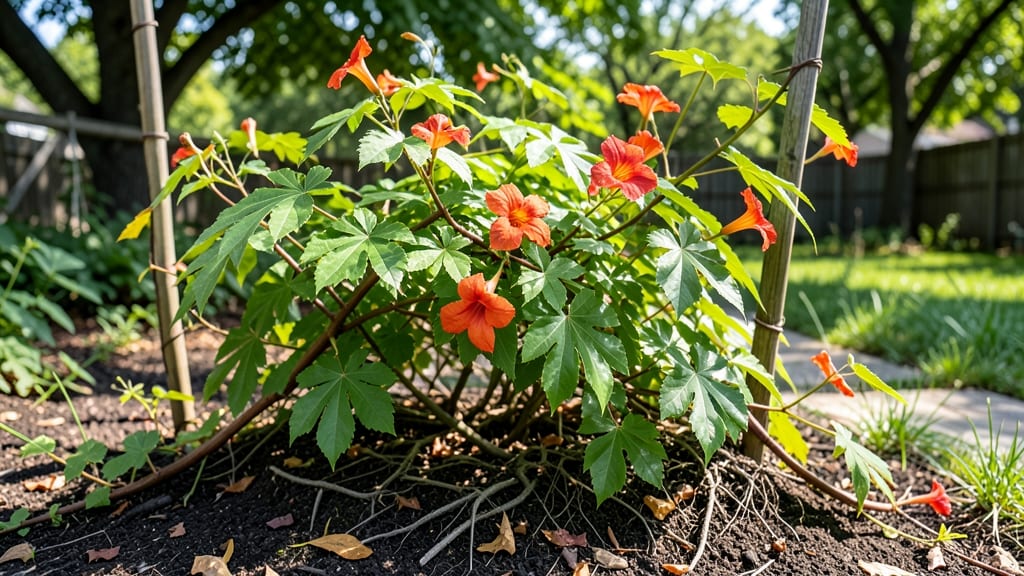
That five-lobed leaf vine climbing your trellis isn't just pretty—it's the ultimate low-maintenance tropical star. 🌿 I've grown Cobaea scandens for years, and it thrives where other vines struggle, with those signature bell-shaped flowers that hummingbirds adore.
The secret? It loves warmth, humidity, and a little neglect—perfect for gardeners who want drama without the fuss.
Start with well-draining soil and a sunny spot (morning sun, afternoon shade works best). Plant seeds or cuttings in spring after the last frost, and watch it scramble upward with 6-foot-per-season growth.
Water consistently but let the top inch dry between drinks—overwatering is the #1 killer. Mulch to keep roots cool, and you'll have a lush canopy by summer.
By midsummer, you'll be rewarded with clusters of vibrant purple or white flowers that last for weeks, followed by unique seed pods that add texture. The leaves stay glossy and healthy with minimal pruning—just trim back leggy growth in early spring to encourage bushier vines.
It's the kind of plant that makes neighbors ask, "What is that?"
Common challenges? Watch for aphids (spray with soapy water) and powdery mildew in humid climates (improve airflow). With the right spot, this vine handles pests like a champ. For more trouble-shooting, check out our guide on tropical vine care—this beauty is worth the extra attention.
Understanding Leaf Shape Shifts
The iconic five-lobed leaves of the Parthenocissus quinquefolia (Virginia creeper) or Hedera helix (English ivy) are a signature trait—but sometimes, those leaves don’t develop as expected. Whether you’re growing a tropical vine or a hardy climber, leaf shape anomalies can stem from a mix of environmental, genetic, and cultural factors.
Let’s break down the real culprits behind why your vine’s leaves might not form the classic five lobes.
Not all vines are created equal—especially when it comes to seeds or cuttings.
Some plants may inherit atypical leaf structures due to: - Hybridization: Crossbreeding with other species (e.g., Parthenocissus hybrids) can dilute the classic five-lobed pattern, resulting in 3-7 lobes or deeply serrated edges instead. - Mutations: Rare genetic quirks can cause split, fused, or asymmetrical lobes, making leaves look more like maple or oak than the expected vine. - Low-Quality Propagation: Nursery-grown plants from unverified sources may carry inconsistencies in leaf morphology due to poor breeding practices.
✨ Pro Tip: If you’re growing from seed, expect more variability—cuttings from a proven five-lobed parent plant will yield more predictable results.
Extreme or inconsistent temperatures disrupt cellular growth, leading to deformed or underdeveloped lobes.
Key triggers include: - Cold Snaps: Young leaves emerging in late spring or early fall (when nights are chilly) may fail to fully unfurl, resulting in small, crinkled, or lobeless leaves. - Heatwaves: High daytime temps (above 90°F/32°C) combined with low humidity cause leaf scorch, where edges brown and lobes curl inward or shrink. - Frost Damage: If your vine is tender (e.g., Hedera canariensis), a single frost can kill emerging buds, forcing the plant to produce simpler, three-lobed leaves as a survival tactic.
💡 Actionable Fix: Use row covers in early spring or mulch heavily to moderate soil temps. For potted vines, move them to a shaded, temperature-stable spot during heatwaves.
Water and nutrients are the building blocks of leaf structure. When they’re off, your vine’s lobes may stunt, split, or vanish entirely.
Common offenders: - Overwatering: Root rot (from soggy soil) starves the plant of oxygen, leading to yellowing leaves with weak, underdeveloped lobes or entirely smooth-edged foliage. - Underwatering: Drought stress causes leaves to shrivel and pucker, with lobes merging into a single, lobeless shape as the plant conserves water. - Nitrogen Deficiency: Without enough nitrogen (N), leaves turn pale green or yellow, and lobes fail to deepen, resulting in shallow, indistinct indentations. - Magnesium or Calcium Shortages: These minerals help cell wall formation.
A deficiency can cause interveinal chlorosis (yellowing between veins) and split or brittle lobes.
📊 Quick Test: Run a soil pH test—ideal range for most vines is 6.0–7.0. Amend with compost or a balanced fertilizer (10-10-10) if needed.
Light is the director of leaf development.
Too much or too little sends your vine’s growth off-script: - Excessive Sun (Burn): Direct afternoon sun can bleach or crisp leaf edges, causing lobes to darken unevenly or drop prematurely. - Low Light (Etiolation): In shady conditions, vines stretch (etiolation) and produce larger, paler leaves with fewer, shallower lobes—almost like a three-lobed "shadow vine." - Sudden Light Changes: Moving a houseplant from low light to bright indirect (or vice versa) can shock the plant, leading to aborted leaf formation mid-growth.
🌿 Solution: Gradually acclimate potted vines to new light levels over 1–2 weeks. For outdoor plants, dappled shade (e.g., under trees) is ideal.
Hidden invaders can sap energy or physically damage emerging leaves, altering their shape:
- Spider Mites: These tiny sap-suckers cause stippling and curling, leading to deformed, lobeless leaves as the plant diverts resources to repair damage.
- Scale Insects: They excrete honeydew, which fosters sooty mold—a black fungus that blocks sunlight, stunting lobe development.
- Fungal Infections (e.g., Powdery Mildew): A white, powdery coating on leaves smothers stomata, causing puckered, lobeless growth as the plant struggles to breathe.
🔥 Prevention: Spray leaves with neem oil (for pests) or baking soda solution (1 tsp/L water) for fungal issues. Prune infected leaves immediately to stop spread.
When roots circle the pot or compete for space, the vine’s nutrient and water uptake suffers, leading to:
- Root-Bound Stress: Compacted roots can’t support normal growth, resulting in smaller leaves with fewer lobes (a survival mechanism to reduce water loss).
- Overcrowded Containers: If multiple vines share a pot, they fight for resources, causing asymmetrical or malformed leaves.
- Physical Damage: Crushed or bruised roots (from repotting mishaps) can halt leaf development, producing abnormal shapes until the plant recovers.
👨🍳 Fix It: Repot into a container 2–3 inches larger with well-draining soil. Gently tease out circling roots before replanting.
Reviving Your 5-Lobed Vine
When your 5-lobed leaf vine (like the hardy Dischidia major or Hoya varieties) starts looking less than its vibrant best, don’t panic—most issues have simple fixes. Below, we’ve broken down common problems into clear, actionable steps, so you can bring your tropical beauty back to life with minimal effort. 🌿✨
Cause: Overwatering, underwatering, or poor drainage. Fix:
- Check the soil: Stick your finger 1–2 inches deep. If it’s soggy, your vine is drowning. If dry as a bone, it’s thirsty.
- Adjust watering: Water only when the top 1–2 inches of soil feel dry. These vines prefer drier conditions—think "soak and dry" rather than "keep moist."
- Upgrade the pot: Ensure it has drainage holes and use a well-draining mix (cactus/succulent soil + perlite works well).
- Trim damaged leaves: Snip off yellow or mushy leaves with clean scissors to redirect energy to healthy growth.
Prevention Tips: ✅ Use a moisture meter to avoid guesswork. ✅ Water in the morning so excess moisture evaporates by night. ✅ Repot every 2–3 years to refresh the soil.
Cause: Low humidity, underwatering, or fluoride/chlorine in tap water. Fix:
- Boost humidity: Place the pot on a pebble tray with water or use a humidifier nearby. These vines love 50–70% humidity—mimic their tropical home!
- Switch to filtered water: Let tap water sit out for 24 hours to reduce chemicals, or use rainwater if possible.
- Mist lightly in the morning (avoid evening misting to prevent fungal issues).
- Check for pests: Brown edges can also signal spider mites—wipe leaves with neem oil if you spot webbing.
Prevention Tips: 💡 Group plants together to create a microclimate. 💡 Wipe leaves monthly with a damp cloth to remove dust (helps with photosynthesis!).
Cause: Shock from repotting, temperature swings, or root rot. Fix:
- Ease into repotting: If you recently moved it, wait 2–3 weeks before fertilizing. Handle roots gently—trim only mushy, black roots.
- Stabilize temperatures: Keep it away from drafts (AC, heaters, or cold windows). Ideal range: 65–80°F.
- Root check: If roots are rotting, repot in fresh soil and reduce watering. Add a fungicide (like copper-based) if needed.
- Support the vine: Use a moss pole or trellis to give it structure—falling leaves can signal stress from lack of support.
Prevention Tips: ✨ Repot in spring (growth season) for best recovery. ✨ Avoid fertilizing in winter—it stresses the plant.
Cause: Dry air, weak plant, or bringing infected plants home. Fix:
- Isolate the plant immediately to prevent spreading.
- Blast pests off: Spray leaves with soapy water (1 tsp mild soap per quart of water) or rubbing alcohol (70% isopropyl).
- Neem oil treatment: Mix 1 tsp neem oil + 1 tsp mild soap per liter of water, spray thoroughly, and repeat weekly for 2 weeks.
- Introduce beneficial insects: Ladybugs or lacewings eat mites naturally (great for long-term prevention).
Prevention Tips: 🎯 Inspect new plants before bringing them home. 🎯 Keep leaves dust-free—pests love hiding spots!
Cause: Lack of light, poor nutrition, or root-bound conditions. Fix: - Light check: Move to bright, indirect light (east or north-facing windows are ideal).
If leaves stretch (etiolation), it’s not getting enough light. - Fertilize lightly: Use a balanced liquid fertilizer (10-10-10) diluted to half strength every 4–6 weeks in spring/summer.
Skip in fall/winter. - Repot if root-bound: If roots circle the pot, upgrade by 1–2 inches and trim congested roots. - Prune strategically: Trim leggy stems to encourage bushier growth.
Prevention Tips: 💪 Rotate the pot monthly for even light exposure. 💪 Avoid over-fertilizing—it burns roots!
Cause: Bacterial/fungal infection, root rot, or sudden stress (like a draft). Fix: - Diagnose the issue: - Root rot? Smells foul? Repot in fresh soil and reduce watering drastically. - Fungal infection? Brown spots with yellow halos?
Remove affected leaves and spray with copper fungicide. - Bacterial? Black, oozy stems? Prune infected parts below the damage and sterilize tools with rubbing alcohol. - Quarantine the plant until it recovers. - Boost recovery: Move to a shady spot temporarily to reduce stress.
Prevention Tips: 🌡️ Sterilize pruning tools before and after use. 🌡️ Avoid overhead watering—water at the base to prevent fungal spores.
If your vine is severely struggling (e.g., root rot, pest overload), try this:
- Trim back ⅓ of the plant to remove damaged parts.
- Repot in fresh, sterile soil with perlite for drainage.
- Hold off on watering for 3–5 days to let wounds heal.
- Place in bright, indirect light and resume light watering.
Most vines bounce back surprisingly fast—just give them time and patience! 🌿💚
Frequently asked questions
What are the most common 5-lobed leaf vines for home gardens?
The two most popular varieties are Cobaea scandens (Cup-and-Saucer Vine) with its delicate bell-shaped flowers, and Parthenocissus quinquefolia (Virginia Creeper), known for its brilliant fall colors. For tropical climates, Hedera helix (English Ivy) varieties also feature classic five-lobed leaves and thrive in shaded areas.
How fast does a 5-lobed leaf vine typically grow?
Most varieties grow aggressively—expect 6–10 feet per season under ideal conditions! Fast-growing types like Cobaea can climb trellises or fences quickly, while slower growers like Hoya varieties may take 2–3 years to reach similar heights. Prune regularly to control spread and encourage bushier growth.
Can I grow a 5-lobed leaf vine indoors?
Yes, but choose compact varieties like Hoya carnosa or Philodendron hederaceum (Heartleaf Philodendron). Place near bright, indirect light and keep humidity high (50–70%) with pebble trays or misting. Avoid drafts—these vines prefer stable 65–80°F temperatures year-round.
Why are my vine's leaves developing fewer lobes than expected?
Leaf shape can change due to genetic variations, poor lighting, or nutrient deficiencies. If your vine is getting too little light, leaves may stretch with fewer lobes. Check soil pH (ideal: 6.0–7.0) and add compost if needed. For potted plants, repot every 2–3 years to prevent root-bound stress.
How do I prune a 5-lobed leaf vine for bushier growth?
Prune in early spring before new growth begins. Cut back leggy stems by ⅓ to encourage branching. For climbing varieties, trim tips to redirect energy downward. Always use clean, sharp shears and sterilize with rubbing alcohol to prevent disease. Avoid heavy pruning in fall—let the plant rest.