
Pests and Diseases
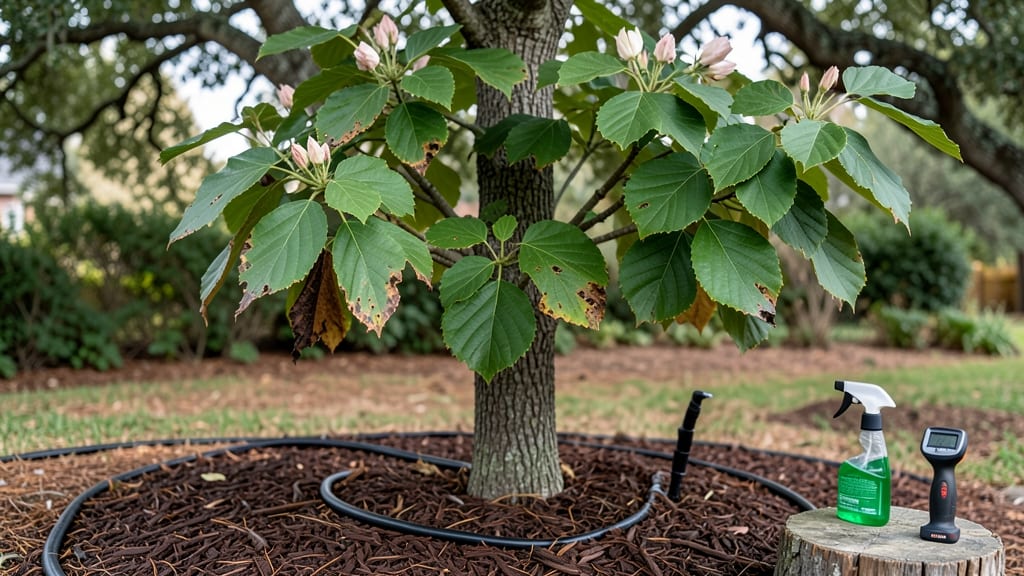
Your dogwood’s leaves are turning crispy at the edges—dogwood leaf scorch strikes fast, but copper spray can stop it in its tracks. 🌿 I’ve seen this fungal spot ruin entire trees in a single season, but with the right approach, you can revive your dogwood’s health and keep those iconic white blooms coming back every spring.
The culprit is usually a fungal infection like anthracnose or bacterial leaf scorch, often worsened by wet foliage or poor air circulation. The good news? Copper spray—whether homemade or store-bought—is a fail-safe treatment that disrupts fungal growth without harming bees or beneficial insects.
Just apply it at the right time, and you’ll see new growth pushing through within 4-6 weeks.
What you’ll end up with is a dogwood that looks lush and disease-free, with vibrant green leaves and no more brown, scorched patches. The key is timing: spray in early spring before new growth appears, then again after heavy rains or fungal outbreaks.
Prune affected branches in late winter to improve airflow and reduce future infections.
Works for both ornamental and flowering dogwoods, and the same copper spray method prevents other fungal issues like powdery mildew. Here’s how to make it work—no guesswork, just results.
📚 In This Guide
- What you need
- Instructions
- Tips and common mistakes
- Wrapping up and next steps
What you need
- ● Copper fungicide: Choose a fixed copper (like copper sulfate) or chelated copper (e.g., Copper Soap or Bonide Copper Fungicide). 1–2 lbs per 100 gallons of water (follow product label for exact ratios).
- ● Garden sprayer: A hose-end sprayer (for large trees) or a backpack sprayer (for precision). Ensure it holds at least 2–5 gallons of solution.
- ● Water: 100 gallons (or adjust proportionally for smaller batches). Use clean, rainwater or tap water (avoid hard water if possible).
- ● Protective gear: Nitrile or rubber gardening gloves (copper can irritate skin).
- ● Long sleeves and closed-toe shoes (to avoid copper exposure).
- ● Safety goggles (if spraying near eyes or windy conditions).
- ● Ladder or extension pole: For reaching high branches (ensure it’s stable and rated for your height).
- ● Pruners or shears: Clean, sharp bypass pruners (to remove severely infected leaves/stems).
- ● Surfactant: A mild horticultural oil or soap (e.g., Dyna-Gro 7-7-7) to help the copper adhere to leaves. 1 tsp per gallon of solution.
- ● pH test kit: To check water pH (ideal range: 5.0–7.0 for copper effectiveness).
- ● Label or marker: To tag your sprayer with the mix date (copper solutions degrade over time).
- ● Old towel or tarp: To cover nearby plants or protect surfaces from overspray.
How to treat dogwood leaf scorch with a copper spray solution
This fungal disease can defoliate your dogwood in weeks—here's how to stop it fast.
🌿 Step 1: Identify and Confirm Leaf Scorch Symptoms
Start by examining your dogwood's leaves for the classic signs of leaf scorch: brown, scorched edges that spread inward, leaving only the midrib green. The disease often begins on lower branches and works upward. Check the undersides of leaves too—you may spot tiny black fungal spores or spots.
Real talk: If you see these symptoms, you're dealing with a fungal infection called Marssonina or Discula, both of which thrive in wet, humid conditions. The sooner you act, the better—once leaves drop, the fungus spreads to next year's buds. Don't wait until the whole tree looks like it's sunburned.
💧 Step 2: Prepare the Copper Spray Solution
Mix 1 tablespoon of copper fungicide (like copper sulfate or copper hydroxide) with 1 gallon of water in a clean sprayer. Stir well to dissolve completely—undissolved particles can damage leaves. I like to add a few drops of mild dish soap (not detergent) to help the solution stick to the leaves.
Here's the thing—copper is non-toxic to plants when used correctly, but it can burn foliage if overused. Start with a half-strength solution (½ tablespoon per gallon) for the first application, then increase if needed. Test on a small branch first to ensure your dogwood tolerates it.
✂️ Step 3: Apply the Spray Thoroughly
Spray the solution evenly on all leaf surfaces, focusing on the undersides where spores hide. Use a fine mist setting to avoid runoff—you want the copper to cling, not drip. Cover the entire canopy, including new growth, since the fungus can reinfect fresh leaves. Work on a calm day so the spray doesn’t blow away.
I schedule applications for early morning or late evening when temperatures are below 85°F. Direct sunlight can cause copper to dry too quickly, reducing effectiveness. Reapply every 7-10 days until new leaves emerge without scorch marks.
☀️ Step 4: Improve Airflow and Reduce Humidity
Prune out any dead, diseased branches immediately—sterilize your pruners with rubbing alcohol between cuts. Thin the canopy slightly to let air circulate, which dries leaves faster and discourages fungal growth. Remove fallen leaves from the base of the tree to eliminate spore sources.
Water at the base, not overhead, to keep foliage dry. If your dogwood is in a shady, damp spot, consider moving it to at least 6 hours of sunlight daily. The fungus loves humidity, so improving airflow is half the battle.
⏰ Step 5: Monitor and Prevent Recurrence
After treatment, watch for new scorch spots weekly. If symptoms return, repeat the copper spray and check your watering habits—overhead irrigation is the #1 way to reinfect trees. In late fall, rake up all debris around the tree and apply 2-3 inches of mulch to protect roots over winter.
This is the moment that matters: A healthy dogwood should have vibrant green leaves by mid-summer. If you see improvement but not full recovery, consider a second round of copper in early spring before new growth starts. Prevention is key—next season, focus on airflow and proper watering to keep the fungus at bay.
Tips & tricks for treating dogwood leaf scorch
Took me a while to figure these out, so here goes—these tricks will help you tackle leaf scorch like a pro and keep your dogwood thriving.
Symptom Spotlight: In Step 1, when checking for leaf scorch, focus on the youngest leaves first—they often show symptoms before older ones. Use a 10x magnifying glass to inspect leaf undersides for those tiny black fungal spores. Early detection means faster treatment and better recovery. I keep a magnifying glass in my gardening toolkit just for this purpose!
Copper Solution Safety: When mixing your 1 tablespoon of copper fungicide per gallon of water in Step 2, wear gloves and avoid inhaling the powder. Copper can be irritating to skin and lungs, so work outdoors with good ventilation. For extra safety, add the copper to a small amount of water first to create a slurry before adding the rest—this helps prevent clumping.
Application Technique: In Step 3, use a hose-end sprayer for large trees—it makes coverage much easier. Start spraying from the top and work downward to avoid missing branches. For stubborn spots, reapply after 24 hours to ensure full coverage. I've found that a second application within 24 hours gives better control over severe infections.
Pruning Strategy: When pruning diseased branches in Step 4, cut back to healthy wood—don't just trim off the brown parts. Sterilize your pruners between cuts with rubbing alcohol to prevent spreading the fungus. I like to bag the diseased branches and dispose of them in the trash (not compost) to contain the spores completely.
Pro Tips for Dogwood Leaf Scorch
- Took me a while to figure these out, so here goes—these tricks will help you tackle leaf scorch like a pro and keep your dogwood thriving.
- Symptom Spotlight: In Step 1, when checking for leaf scorch, focus on the youngest leaves first—they often show symptoms before older ones.
- Copper Solution Safety: When mixing your 1 tablespoon of copper fungicide per gallon of water in Step 2, wear gloves and avoid inhaling the powder.
Frequently asked questions
about dogwood leaf scorch can help you tackle this fungal issue with confidence. Here are some common concerns and quick answers:What causes dogwood leaf scorch, and how is it different from other leaf diseases?
Dogwood leaf scorch is primarily caused by the Discosia artocreas fungus, which thrives in wet, humid conditions. Unlike bacterial leaf spot (which causes yellow halos) or powdery mildew (white, powdery patches), leaf scorch appears as brown, dead patches along leaf edges, often with a scalloped or "burned" look. Early diagnosis is key!
When is the best time to treat dogwood leaf scorch with copper spray?
Apply copper fungicide before symptoms appear—ideally in early spring (March-April) or after pruning (late winter). For existing infections, treat at first signs of browning (late spring to early summer). Repeat every 2-4 weeks during wet seasons or after heavy rains to prevent reinfection.
Will pruning help stop the spread of dogwood leaf scorch?
Yes! Prune infected leaves and branches (sterilize tools with rubbing alcohol between cuts) to reduce fungal spores. Remove only dead/diseased wood—avoid over-pruning, as dogwoods are sensitive. Focus on improving air circulation by thinning dense foliage to prevent future outbreaks.
Can I save my dogwood tree if it’s already heavily scorch-damaged?
Mild cases often recover with proper copper treatment and care, but severe damage may weaken the tree. Improve soil drainage, water deeply but infrequently, and fertilize with balanced, slow-release fertilizer in early spring. If 50%+ of leaves are dead or the trunk shows signs of decay, consult an arborist.
Are there natural alternatives to copper spray for dogwood leaf scorch?
While copper is the most effective, you can try baking soda spray (1 tbsp baking soda + 1 tsp dish soap + 1 gallon water) or neem oil (mix 2 tbsp neem oil + 1 tsp soap per gallon). However, these are less reliable—copper remains the gold standard for fungal control. Always test sprays on a small leaf first!
Why does my dogwood keep getting leaf scorch even after treatment?
Repeated infections often stem from poor growing conditions. Check for:
- Overhead watering (keep water at the base).
- Compacted or waterlogged soil (amend with compost).
- Lack of air circulation (prune dense branches).
- Stress from drought or pests (mulch and monitor for mites/beetles).
Wrapping up and next steps
Dogwood leaf scorch may seem daunting, but with the right approach—like using a copper spray solution—you can protect your trees and restore their health. 🌿 Remember, early action is key, so stay vigilant and monitor your trees regularly.
Now that you’re armed with knowledge, grab your sprayer and get to work! Your dogwoods will thank you with vibrant, scorch-free foliage for seasons to come.