
Pests and Diseases
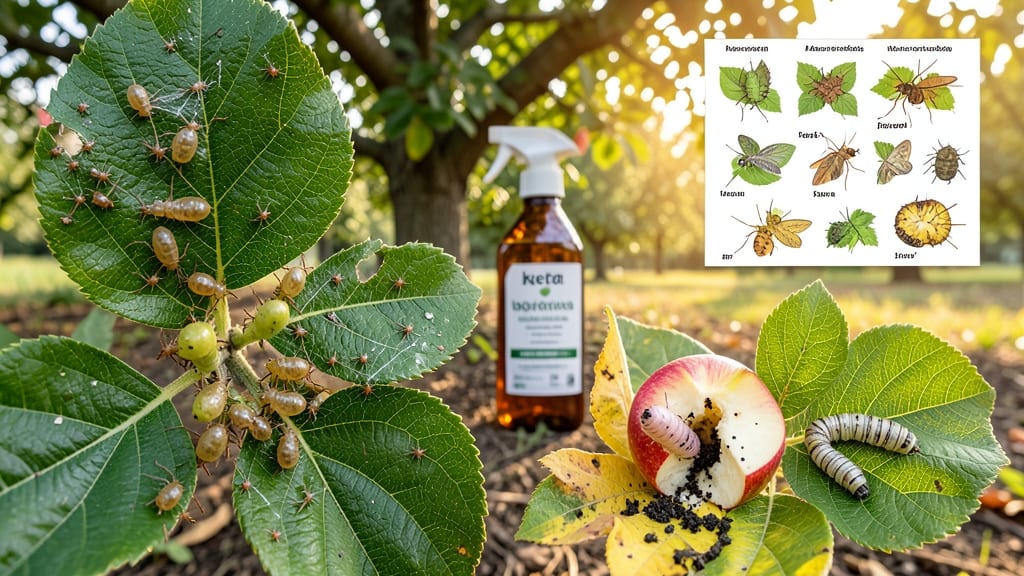
Apple leaf pests can turn your tree’s lush canopy into a skeleton in weeks—unless you act fast. 🌿 I’ve battled aphids, mites, and leafhoppers on my own trees, and these natural sprays cut infestations before they spread.
The key? Spotting the early signs (tiny webs, speckled leaves, or sticky residue) and hitting them with targeted solutions.
Most gardeners reach for harsh chemicals first, but I’ve found that neem oil, insecticidal soap, and garlic spray work just as well—without harming bees or your soil. These sprays disrupt pests’ life cycles while letting beneficial insects thrive.
The best part? You can mix them at home in under 10 minutes with ingredients you likely already have.
Within 3–5 days of treatment, you’ll see fewer pests and healthier foliage. Regular checks (especially after rain) keep new infestations from taking hold. My trees now stay vibrant all season, and I haven’t had to resort to chemical sprays since switching to these methods.
Works for backyard orchards, urban trees, and even container-grown apples. Here’s how to identify the pests and apply the right spray for your situation.
Understanding the Root Causes
Apple trees are resilient, but their leaves become prime real estate for pests when certain conditions align. These tiny invaders don’t just appear out of nowhere—they’re drawn by a mix of environmental triggers, tree stress, and even human activity.
Let’s break down the key factors that turn your apple leaves into a pest buffet.
When apple trees are overcrowded—whether by other trees, weeds, or even competing grass—their natural defenses weaken. Poor air circulation and blocked sunlight create the perfect storm for pests like aphids, mites, and leafhoppers.
- Why it happens: Stressed trees produce less sap, a natural pest deterrent. Weakened leaves become easier targets for insects seeking nutrients.
- Actionable insight: Prune regularly to improve airflow and sunlight exposure. Mulch properly (but not too thickly) to retain moisture without suffocating roots.
A malnourished or diseased apple tree is like an open invitation for pests. Nutrient deficiencies (especially nitrogen or potassium) or fungal infections (like apple scab) make leaves more vulnerable to infestations.
- Why it happens: Healthy trees have stronger cuticles and higher sugar content in leaves, which repels many pests. When nutrients are lacking, leaves become softer and more appealing. - Actionable insight: Conduct a soil test and amend with organic matter (compost or worm castings).
Use balanced fertilizers in early spring to boost tree vigor before pests arrive.
Many apple leaf pests thrive in warm, humid conditions.
For example: - Aphids multiply rapidly in temperatures above 70°F (21°C) with high humidity. - Coddling moth larvae (which feed on leaves and fruit) are most active in hot, damp summers. - Spider mites flourish in dry heat but can still devastate leaves when humidity spikes.
- Why it happens: Warmth accelerates insect metabolism and reproduction rates, while humidity slows natural predators (like ladybugs) from controlling populations.
- Actionable insight: Monitor weather patterns and act early. Use shade cloth or drip irrigation to reduce leaf moisture if pests are a recurring issue.
Apple orchards aren’t just battlegrounds for pests—they’re ecosystems. When natural predators (ladybugs, lacewings, parasitic wasps, and birds) are absent or overworked, pests take over.
- Why it happens: Pesticide use (even broad-spectrum organic sprays) can wipe out beneficial insects faster than pests.
Monoculture farming (planting only apple trees) also reduces biodiversity, leaving fewer allies to keep pests in check. - Actionable insight: Plant companion flowers (like dill, fennel, or yarrow) near your apple trees to attract predatory insects. Avoid over-spraying and time applications to protect beneficial bugs.
Sometimes, well-meaning actions backfire.
For example: - Neglecting sanitation: Leaving fallen leaves, mummified fruit, or old mulch piles over winter provides hiding spots for overwintering pests. - Improper pruning tools: Sharing or not sterilizing pruners can spread diseases and pest eggs between trees. - Ignoring early signs: Waiting until leaves are skeletonized to act gives pests a head start in reproducing.
- Why it happens: Pests like the oblongscale insect or san jose scale lay eggs in crevices, and these go undisturbed if debris isn’t cleared.
- Actionable insight: Clean up debris in fall, sterilize tools with rubbing alcohol, and inspect trees weekly during peak pest seasons (spring and early summer).
Rising temperatures and unpredictable weather patterns are expanding the range of some pests. For instance:
- Woolly aphids (which wrap themselves in cottony masses) are becoming more common in northern regions as winters grow milder.
- Late-season infestations of leafrollers are extending into fall due to warmer nights.
- Why it happens: Milder winters mean fewer pests die off, and longer growing seasons give them more time to reproduce.
- Actionable insight: Stay updated on local pest reports from agricultural extensions. Adjust monitoring schedules to account for shifted life cycles.
Pests rarely act alone—they’re usually a symptom of multiple underlying issues. For example, if you’re battling aphids and mites simultaneously, the problem might stem from: 1. Over-fertilization (too much nitrogen = soft leaves).
- Drought stress (roots can’t support the canopy).
- Lack of predator habitat (no flowers for ladybugs).
Solution: Audit your tree’s health holistically. Address soil, water, and biodiversity before reaching for sprays. Often, fixing the root cause eliminates 80% of the pest problem!
Fixing Apple Leaf Problems Fast
Apple trees are resilient, but pests like aphids, mites, and caterpillars can turn lush green leaves into a chewed-up mess if left unchecked. The good news? With the right approach, you can reverse damage, protect your harvest, and keep your tree thriving—without harsh chemicals.
Below, we’ll map the most common apple leaf pests to targeted, natural solutions, plus prevention tips to keep your orchard pest-free for years.
Signs: Sticky residue ("honeydew"), curled leaves, ants (they love aphids). Why it happens: These sap-suckers cluster on new growth, weakening leaves and spreading viruses.
How to Fix It
- Blast them off 💦
- Use a strong stream of water from your hose to dislodge aphids from leaves and stems. Repeat every 2–3 days until gone.
- Spray with soapy water 🧼
- Mix 1 tbsp mild castile soap or insecticidal soap with 1 quart water. Spray directly on infested areas (test on a small leaf first).
- Introduce predator bugs 🐞
- Ladybugs, lacewings, and parasitic wasps eat aphids for breakfast. Buy them online or attract them with dill, fennel, or marigolds planted nearby.
- Neem oil spray 🌿 (for severe cases)
- Mix 1 tsp neem oil + 1 tsp mild soap + 1 quart water. Spray in the early morning or evening (avoid direct sun). Reapply every 5–7 days.
💡 Prevention Tip:
- Prune your tree in late winter to remove overwintering eggs.
- Encourage birds by adding a shallow water source—they snack on aphids!
Signs: Tiny yellow dots, fine webbing, leaves turn bronze or gray. Why it happens: These microscopic pests thrive in hot, dry conditions and multiply fast.
How to Fix It
- Shower your tree 🚿
- Mites hate water. Hose down leaves (especially undersides) every 2–3 days for 2 weeks.
- Neem oil or horticultural oil 🌱
- Mix 2 tbsp neem oil + 1 tsp soap + 1 gallon water. Spray thoroughly, covering all leaf surfaces. Reapply every 5–7 days.
- Predatory mites to the rescue 🦹♂️
- Release persimmon or six-spotted thrips (sold online)—they devour spider mites without harming your tree.
- Increase humidity 🌧️
- Mites love dry air. Mulch around the base with straw or wood chips, and water deeply in the morning.
💡 Prevention Tip:
- Avoid over-fertilizing with nitrogen—it attracts mites.
- Inspect new plants before bringing them home (mites hitchhike on leaves!).
Signs: Ragged holes, rolled or tied leaves, frass (tiny black droppings). Why it happens: Caterpillars (like tent caterpillars or codling moth larvae) munch leaves and fruit, causing major damage.
How to Fix It
- Handpick & drop in soapy water 👨🍳
- Wear gloves and drop caterpillars into a bucket of soapy water (they drown instantly). Do this early morning when they’re sluggish.
- Bacillus thuringiensis (Bt) spray 🦠
- This natural bacteria kills caterpillars without harming bees or birds. Mix as directed and spray every 7–10 days during outbreaks.
- Diatomaceous earth (DE) 🏖️
- Sprinkle food-grade DE on leaves (especially undersides). It dries out caterpillars in 48 hours. Reapply after rain.
- Pheromone traps 🎣
- Hang codling moth traps in spring to break their mating cycle and reduce egg-laying.
💡 Prevention Tip:
- Remove fallen leaves in autumn (they hide overwintering eggs).
- Use row covers for young trees to block egg-laying moths.
Signs: Black spots (scab), white powdery patches (mildew), yellowing leaves. Why it happens: Fungi thrive in wet, humid conditions and weaken leaves, making them vulnerable to pests.
How to Fix It
- Baking soda spray 🍞
- Mix 1 tbsp baking soda + 1 tsp soap + 1 gallon water. Spray every 7–10 days to prevent mildew.
- Copper fungicide (organic option) 🛡️
- Use copper soap or copper fungicide (follow label rates) to stop scab and mildew in wet seasons.
- Improve airflow 🌬️
- Prune to open the canopy and space trees 15–20 feet apart.
- Compost tea or potassium bicarbonate 🌱
- Brew compost tea (rich in beneficial microbes) or spray 1 tbsp potassium bicarbonate + 1 tsp soap + 1 gallon water for prevention.
💡 Prevention Tip:
- Water at the base (not overhead) to keep leaves dry.
- Clean up debris in autumn to starve fungi of food.
- Inspect weekly 👀 – Catch problems early before they spread.
- Encourage beneficial insects 🐝 – Plant lavender, yarrow, or alyssum near your tree.
- Use reflective mulch 🪞 – Aluminum foil or silver mulch confuses pests like aphids and mites.
- Rotate natural sprays 🔄 – Pests build resistance, so alternate between soapy water, neem, and Bt.
Final Thought: Most apple leaf pests can be beaten back naturally with consistency and the right tools. Start with water blasts and handpicking, then move to targeted sprays if needed.
Your tree will reward you with healthier leaves, better fruit, and fewer headaches—all without toxic chemicals! 🍏🌿
Frequently asked questions
What are the most common apple leaf pests I should watch for?
The top culprits are aphids (sticky honeydew), spider mites (tiny yellow specks), leafhoppers (small jumping insects), and caterpillars (ragged holes in leaves). Fungal issues like apple scab also mimic pest damage with black spots. Check undersides of leaves weekly during spring and summer.
Can I use neem oil on apple trees when fruit is still developing?
Yes, but with caution! Neem oil is safe for developing fruit when used correctly. Apply only in early morning or evening to avoid harming bees, and never spray when fruit is ripe or ready to harvest. Always mix with 1 tsp mild soap per quart for better adhesion.
How do I tell if my apple tree's problems are pests vs. disease?
Pests usually leave physical damage (holes, webs, or chewed edges), while diseases show discoloration (spots, powdery patches) or abnormal growth. Check for honeydew (pests) or fungal spores (disease) under leaves. If in doubt, take a photo and compare to online guides from your local agricultural extension.
Will homemade garlic spray really work against apple pests?
A garlic spray (blend 1 chopped garlic bulb + 1 quart water, steep overnight, strain, and add 1 tsp soap) repels many pests with its sulfur compounds. Spray every 5–7 days during outbreaks. It’s especially effective against aphids, mites, and soft-bodied insects—just reapply after rain.
How often should I inspect my apple tree for early signs of pests?
Check your tree weekly during active growing seasons (spring through early fall), focusing on new growth and undersides of leaves. Increase inspections to every 3–4 days after rain or when you notice the first signs (like ants on your tree, which often indicate aphids). Early detection is key to preventing full-blown infestations!