
Pests
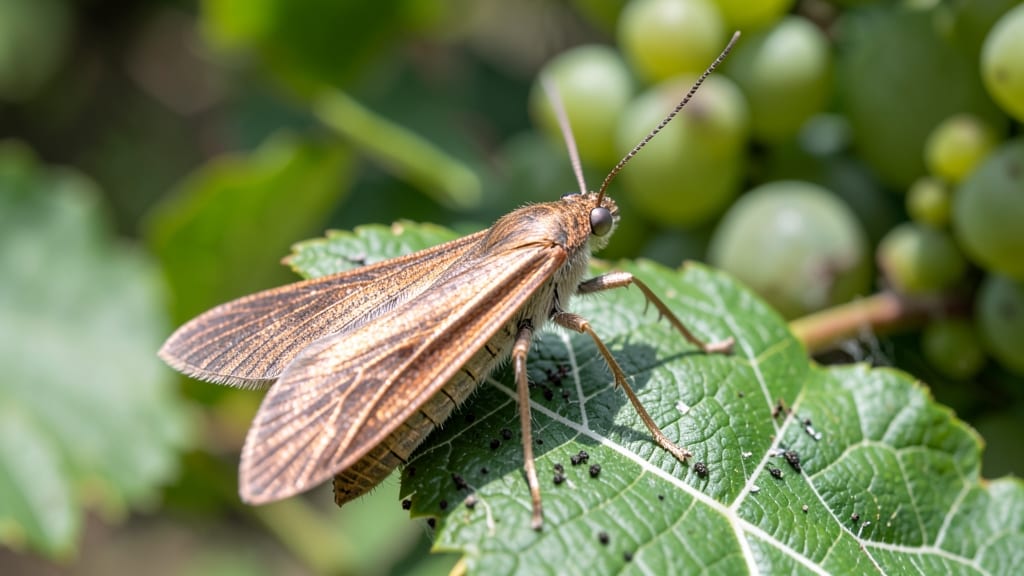
Those tiny white moths that turn grape leaves into lace are the grape leaf skeletonizer moth—and they strike fast. ✨ I’ve watched entire vines go from lush green to skeletonized in just a few weeks, but the good news is that organic traps and sprays can stop them before they ruin your harvest.
The damage starts small: tiny holes in leaves that expand into skeletal remains if left unchecked. The key is acting early—once the moths establish, they’re harder to control. My go-to method combines pheromone traps (to catch males before they mate) and neem oil sprays (to disrupt their life cycle).
Within a week of starting treatments, you’ll see new growth filling in where the damage was. The leaves stay green, the vines stay strong, and you avoid the heartbreak of a skeletonized harvest. This method works for backyard vines, community gardens, and small-scale farms alike.
Fair warning: timing is everything. Start monitoring in early summer when the first moths appear, and keep traps up until fall. The sooner you act, the faster you’ll see those leaves recover their full, healthy look.
Root Causes Behind Leaf Damage
The grape leaf skeletonizer moth (Hemileuca maia) isn’t just a random pest—it’s a highly strategic invader that exploits specific conditions in vineyards to thrive. Understanding why these moths target grape leaves helps you disrupt their lifecycle before they cause irreversible harm.
Below, we break down the key factors that turn your vines into a buffet for these destructive caterpillars.
The skeletonizer moth’s larvae prefer weak hosts. When grapevines are stressed—due to poor spacing, nutrient deficiencies, or water imbalances—they produce tender, nutrient-rich leaves that caterpillars love. Here’s how it plays out:
- Nutrient Deficiency: Vines lacking nitrogen or potassium produce softer, more palatable leaves. A soil test revealing low organic matter or imbalanced pH (below 6.0 or above 7.5) signals trouble.
- Water Stress: Drought or overwatering weakens vines, making them easier targets. Pro tip: Irrigate deeply but infrequently (1–1.5 inches per week) to encourage root strength.
- Competition for Space: Overplanted vines compete for sunlight and resources, stunting growth. Aim for 6–8 feet between rows and 4–6 feet within rows to reduce stress.
Actionable Fix: Boost vine health with compost (rich in nitrogen) and mulch to retain moisture. Prune to improve airflow—skeletonizer moths avoid dense, healthy canopies.
These moths don’t just appear—they multiply exponentially when conditions are right. A single female can lay 200–300 eggs in a season, and their larvae pupate in soil, emerging as adults when temperatures hit 65°F+. Key triggers:
- Warm, Dry Climates: Southern U.S. vineyards (especially Texas, California, and the Southeast) see 2–3 generations per year due to mild winters and long growing seasons.
- Lack of Natural Predators: Birds and parasitic wasps (like Apanteles species) keep populations in check—but if you’ve used broad-spectrum pesticides, these predators vanish.
- Monoculture Plantings: Large, uniform grape fields offer no escape for moths. Diverse ecosystems (even nearby wildflowers) disrupt their dominance.
Actionable Fix: Introduce beneficial nematodes (e.g., Steinernema carpocapsae) to target pupae in soil. Plant native flowers (like milkweed or goldenrod) to attract predator insects.
Skeletonizer moths hide and overwinter in leaf litter, pruned debris, and weedy areas near vines. If you’re not maintaining clean rows, you’re essentially giving them a free hotel. Their lifecycle includes:
- Egg Laying: Females deposit eggs on undersides of leaves or in crevices of bark. Overgrown grass or unremoved grape clusters provide perfect hiding spots.
- Pupation Sites: Larvae crawl into soil or mulch to pupate, emerging as adults when conditions are ideal.
- Second-Generation Outbreaks: If you missed the first wave, eggs from late-season moths may hatch the following spring, doubling damage.
Actionable Fix:
- 🔥 Clear debris: Remove all pruned material and leaf litter from vineyards before harvest.
- 🌡️ Mulch strategically: Use straw or wood chips (not thick layers), and fluff it annually to deter pupating larvae.
- ✨ Trap crops: Plant a small patch of blackberry or raspberry bushes 50+ feet from vines to lure moths away.
Temperature and moisture create the perfect storm for skeletonizer moths. Their activity peaks when:
| Stage | Trigger | Risk Window |
|---|---|---|
| Egg Hatch | Soil temps ≥ 55°F + rainfall | Late spring (April–May) |
| Larval Feeding | Consistent 70–85°F days | Summer (June–August) |
| Pupation | Dry soil + dropping temps (60°F) | Fall (September–October) |
Actionable Fix: Monitor degree-day accumulations (use a degree-day calculator) to predict outbreaks. Apply organic sprays (like Bt kurstaki) preventatively when temps hit 500°F days post-budbreak.
By tackling these root causes—vine health, moth biology, sanitation, and timing—you’ll starve the skeletonizer moth of its advantages. The key? Stay proactive. Once larvae are skeletonizing leaves, it’s too late for quick fixes.
Organic Ways to Stop Leaf Damage Now
If your grapevines are under siege by grape leaf skeletonizer moths—those tiny, hungry caterpillars that turn lush leaves into lace—don’t panic. With the right organic fixes, you can reclaim your vines without harsh chemicals.
Below, we break down the most effective solutions, tailored to the root causes of infestations. Think of this as your battle plan: prevent, disrupt, and eliminate.
Moths love weak, crowded plants. When vines are stressed (due to poor spacing, overwatering, or nutrient deficiencies), they become prime targets. Here’s how to strengthen them:
- 🔥 Prune for airflow Thin out dense foliage to reduce hiding spots for eggs and larvae. Aim for 30–50% less leaf cover in heavily infested areas. Use clean, sharp pruners to avoid spreading pests.
- 💧 Water wisely Overwatering creates damp conditions that moths adore. Water deeply but infrequently—early morning is best—to let soil dry between sessions. Drip irrigation (instead of overhead sprinklers) keeps leaves dry.
- 🌡️ Boost vine health Feed vines with compost or organic fertilizer (like fish emulsion or seaweed extract) to build resilience. Focus on potassium and phosphorus, which support leaf strength.
Break the moths’ life cycle by targeting adults before they lay eggs. These methods are low-tech but highly effective:
- 🍎 Pheromone traps Hang grape leaf skeletonizer moth pheromone traps (available at garden centers) in early spring. Place them 5–10 feet above ground, away from vines. Check traps weekly and replace lures every 4–6 weeks. Pro tip: 💡 Place traps near vine edges to catch moths before they reach the center.
- 🕯️ Light traps Moths are nocturnal. Set up a UV light trap (or even a white sheet with a blacklight) near the vineyard at dusk. Shake trapped moths into soapy water daily.
- 🪲 Beneficial predators Introduce parasitic wasps (like Trichogramma spp.) or ladybugs. These natural enemies lay eggs inside moth eggs or devour larvae. Order them from organic suppliers and release them at dusk for best results.
Once eggs hatch, you’ll need targeted sprays to stop larvae from skeletonizing leaves. These organic options are safe for humans and pets:
- 🍳 Neem oil spray (Best for eggs/early larvae) Mix 1–2 tbsp neem oil + 1 tsp mild soap per gallon of water. Spray evenly on both leaf sides at dusk (to avoid harming bees). Reapply every 7–10 days during outbreaks. Pro tip: 🌡️ Wait until temps are above 50°F (10°C)—neem oil works best in warmth.
- 🔪 Bacillus thuringiensis (Bt) This bacteria-based spray is lethal to caterpillars but harmless to other insects. Use Bt kurstaki (for leaf-eaters) and apply when larvae are small (1/4 inch or less). Spray at night for maximum effectiveness. Reapply after rain.
- 🥘 Kaolin clay A physical barrier that coats leaves, making them unappealing to moths. Mix 2–3 tbsp kaolin clay per gallon of water and spray thoroughly. Reapply every 10–14 days or after rain. Bonus: It also deters other pests like Japanese beetles!
Stop moths before they start with these proactive steps:
| Season | Task | How to Do It |
|---|---|---|
| 🍂 Fall | Clean up debris | Remove all fallen leaves, mummy fruit, and prunings. Burn or compost them far from vines to eliminate overwintering eggs. |
| 🌱 Early Spring | Inspect vines | Check leaf undersides for tiny eggs (white, oval clusters). Scrape off eggs with a stiff brush or vacuum. |
| ☀️ Growing Season | Monitor traps | Set up pheromone traps in April–May and check weekly. High moth counts? Increase sprays. |
| 🍇 Harvest Time | Protect fruit | If larvae are near clusters, use fine netting over grapes to block access. |
Pro tip: ✨ For large vineyards, rotate sprays (e.g., neem one week, Bt the next) to prevent resistance.
With these strategies, you’ll crush infestations fast and keep your grapevines thriving—without chemicals. Start with prevention, then strike hard when needed. Your vines (and future wine!) will thank you.
Frequently asked questions
What do grape leaf skeletonizer moth eggs look like?
Look for tiny, white oval clusters (about 1mm long) on the undersides of leaves. These eggs are often found in groups near leaf veins or along midribs. They’re nearly invisible until they hatch, so check regularly during spring when moths emerge.
Can I use regular soap spray on skeletonizer moth larvae?
Yes, but it’s most effective on small larvae (less than 1/4 inch). Mix 1 tablespoon mild liquid soap per gallon of water and spray directly on caterpillars at dusk. For larger infestations, combine with neem oil or Bt for better results.
How long does it take for neem oil to work on skeletonizer moths?
Neem oil disrupts feeding within 24–48 hours but kills larvae over 3–5 days. For best results, apply when larvae are tiny and reapply every 7–10 days during outbreaks. Always spray in the evening to protect bees.
Will bird feeders help control skeletonizer moth populations?
Birds like robins, blue jays, and chickadees love eating skeletonizer moth larvae. Place feeders near vineyards and add native plants (like berry bushes) to attract them. This natural solution works best when combined with other methods like pheromone traps.
Can I still harvest grapes if skeletonizer moths are present?
Yes, but only if larvae haven’t reached the fruit clusters. If you see damage near grapes, cover clusters with fine netting or harvest early. Once larvae move to fruit, they can cause cosmetic blemishes or even spoil grapes.