
Leaf Blower
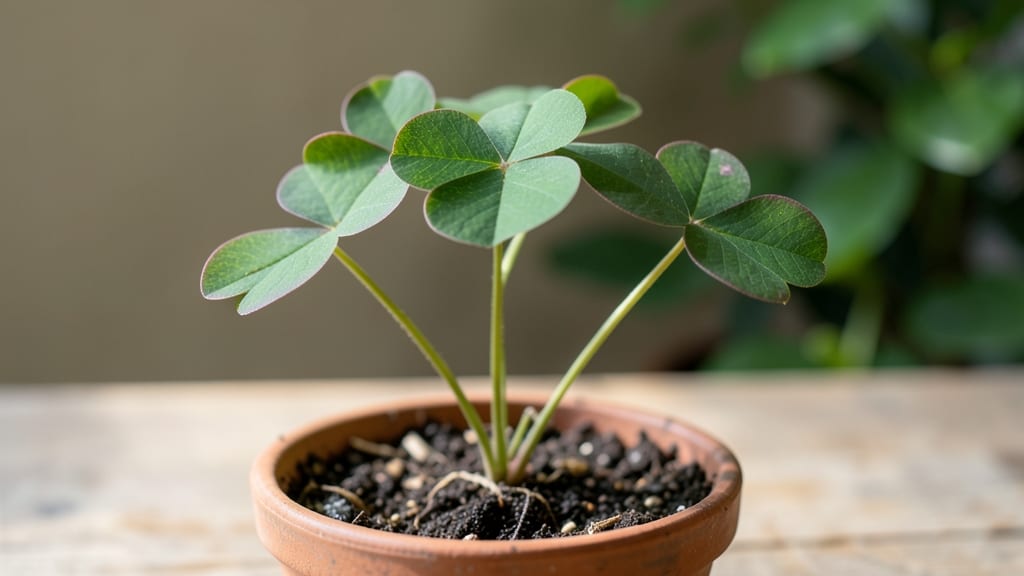
Yes, five-leaf clovers are real but extremely rare botanical variations of the common four-leaf clover (Trifolium repens), created by spontaneous genetic mutations that add an extra leaflet. Unlike folklore suggests, they aren't a separate species but a prized horticultural curiosity with deep cultural symbolism.
These rare clovers form when chromosomal abnormalities during cell division produce an extra leaflet, typically occurring in just 1 in 10,000+ plants. 🌱 The extra leaflet doesn't follow the standard trifoliate pattern of three leaflets, making them visually distinct from both four-leaf and six-leaf variants.
While their rarity fuels superstitions about luck, botanists study them as living examples of natural genetic variation in plants.
Identifying them requires close inspection of the leaflet arrangement and stem structure - the fifth leaflet often appears smaller or differently shaped than the others.
Unlike their more common counterparts, five-leaf clovers don't form their own species but rather represent a fascinating mutation within the standard white clover species we see daily.
💡 In This Article
- The Science Behind Extra-Leaf Clover Mutations
- How to Grow and Identify Five-Leaf Clovers
The science behind extra-leaf clover mutations
Five-leaf clovers emerge from spontaneous genetic mutations in Trifolium repens, the white clover species. These mutations typically occur during meiosis when chromosomes fail to separate properly, creating an extra leaflet through a process called polyploidy.
Unlike standard clovers with three leaflets, these variants develop a fifth leaflet due to chromosomal duplication in the meristem cells responsible for leaf formation. 🌱 The mutation rate is staggering—only about 1 in 10,000 clovers naturally develop this variation, making them rarer than four-leaf clovers (1 in 10,000) and six-leaf clovers (1 in 1 million).
The fifth leaflet often appears smaller or asymmetrical compared to the others, disrupting the symmetrical trifoliate pattern. Botanists classify clovers by their compound leaves, where each leaf consists of multiple leaflets. A five-leaf clover maintains this compound structure but with an extra leaflet, creating a unique visual signature.
The mutation doesn't alter the plant's reproductive cycle, meaning it can still produce seeds—though these offspring rarely inherit the mutation.
Epigenetic factors also play a role in these mutations. Environmental stressors like UV radiation or soil composition can increase mutation rates, though the effect remains minimal. For example, clovers grown in nitrogen-rich soils may show slightly higher variability in leaflet count due to altered gene expression.
However, the primary driver remains random chromosomal errors during cell division, not environmental influence. 💡
What makes five-leaf clovers scientifically fascinating is how they challenge traditional plant taxonomy. While they share 99.9% of their DNA with standard clovers, the extra leaflet creates a distinct phenotype.
This variation helps botanists study genetic plasticity in plants—how small changes in DNA can produce visually striking differences without creating entirely new species. The mutation doesn't affect the plant's survival or reproduction, proving nature's capacity for subtle yet dramatic variations.
Comparing five-leaf clovers to their four-leaf counterparts reveals another layer of complexity. Four-leaf clovers result from a different chromosomal event where an extra leaflet forms during early development, but the fifth leaflet in five-leaf variants often appears later in growth.
This timing difference affects the leaflet's size and shape, making five-leaf clovers even rarer to spot in the wild. 🌿
For those curious about the mechanics, the mutation occurs in the shoot apical meristem—the growth region at the plant's tip. When cells here divide abnormally, they can produce an extra leaflet primordium (the early leaf structure).
This process is similar to how some flowers develop extra petals, but in clovers, it manifests as an additional leaflet rather than floral modification.
The rarity of five-leaf clovers isn't just about chance—it's about the precision required for chromosomal stability. Most mutations are harmful or lethal, but this particular variation is benign, allowing the plant to thrive while bearing its unique trait.
This balance between genetic stability and occasional variation is what makes five-leaf clovers a living example of evolutionary adaptability in action. 🔬