
Pruning
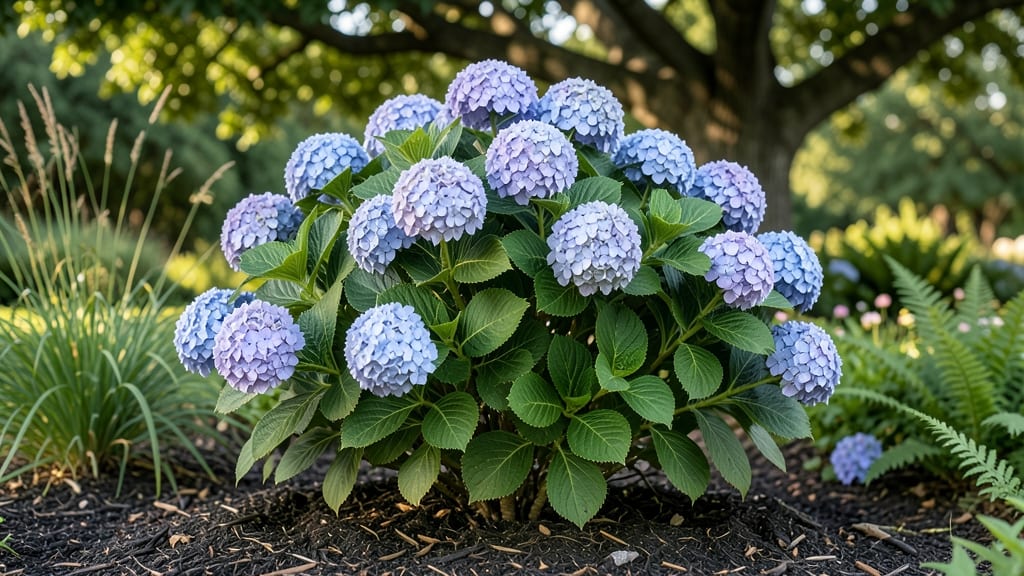
Bigleaf hydrangeas turn your garden into a living watercolor palette—when you prune them right. ✨ I’ve turned my overgrown bush into a vibrant, blooming powerhouse by mastering the timing and technique, and I’ll show you how to do the same without cutting off next year’s flowers.
The secret starts with the right location: morning sun and afternoon shade, plus soil that’s rich but well-draining. These bushes thrive in partial shade, especially in hotter climates, and their blooms last longer when they’re not stressed.
Water consistently—1-2 inches per week—and mulch to keep roots cool.
Pruning in late winter or early spring (before buds swell) is key. Cut back old wood to encourage new growth, but leave some last year’s stems—they’ll produce the biggest blooms.
For blue flowers, add aluminum sulfate to acidic soil; for pink, keep it neutral. Container gardening works too if you choose compact varieties.
Mistakes like pruning too late or cutting into last year’s blooms will leave you with sparse flowers. But once you get the rhythm, your hydrangea will reward you with bold, long-lasting blooms from summer through fall. Ready to transform your bush?
📚 In This Guide
- What you need
- Instructions
- Tips and common mistakes
- Wrapping up and next steps
What you need
- ● Pruning shears: Sharp, bypass-style shears (for clean cuts on stems up to ½ inch thick). Quantity: 1 pair.
- ○ Loppers: For thicker stems (½ to 1½ inches). Quantity: 1 pair (optional if shears handle thicker stems).
- ● Hand pruners: For precision cuts on small branches. Quantity: 1 pair.
- ● Garden gloves: Heavy-duty, cut-resistant gloves (to protect hands from thorns and sap). Quantity: 1 pair.
- ● Disinfectant (70% isopropyl alcohol or bleach solution): To sterilize tools between cuts and prevent disease spread.
- ○ Pruning sealant (optional): For larger cuts (1 inch or thicker) to prevent moisture loss.
- ● Garden twine or zip ties: To secure branches during pruning (if needed). Quantity: Small roll.
- ● Bucket or bag: For collecting pruned branches. Quantity: 1 (1-2 gallon size).
- ● Timing: Prune in late winter or early spring (before new growth starts) or right after flowering (for summer-blooming varieties).
- ● Weather: Choose a dry, overcast day to avoid stressing the plant.
- ● Safety gear: Safety glasses (to protect from debris).
- ● Plant health check: Inspect the bush for diseased or dead branches before pruning.
Step-by-Step instructions for pruning bigleaf hydrangeas
Here's my tested method to transform your hydrangea into a blooming powerhouse—without sacrificing next year's flowers.
✂️ Step 1: Time Your Pruning for Maximum Impact
Bigleaf hydrangeas bloom on old wood, meaning last year's growth produces this year's flowers. The best time to prune is late winter or early spring, just as new buds begin to swell but before any growth appears. This ensures you don't accidentally remove next year's blooms.
I know it seems counterintuitive to wait, but pruning too early risks cutting off dormant buds that haven't yet shown themselves. If you missed the window, don't panic—you can still prune in early summer after flowering, but expect fewer blooms the following year. Watch for swollen buds along the stems; those are your signal to hold off.
✂️ Step 2: Remove Dead, Diseased, or Weak Growth First
Start by identifying and cutting out any dead, diseased, or crossing branches. Use clean, sharp pruners to make 45-degree cuts just above a leaf node or outward-facing bud. This prevents water from pooling and reduces disease risk. I always remove branches that rub against others—they create wounds that attract pests.
Look for stems that are hollow, discolored, or oozing sap—these are red flags for disease. Cut these back to healthy wood immediately. You'll also spot branches growing straight up or inward; these compete with your plant's energy and should go. Aim to open up the center of the bush for better airflow and light penetration.
✂️ Step 3: Shape the Bush for Airflow and Light
Now focus on shaping the bush to encourage strong, outward growth. Bigleaf hydrangeas respond well to a rounded, open shape that allows sunlight to reach the center. Start by trimming back the longest branches to 12-18 inches from the ground, cutting just above a bud that faces outward.
I like to visualize the bush as a dome—this prevents a "lollipop" shape where flowers cluster only at the top. Step back occasionally to check your progress. You'll see the plant's natural structure emerge as you remove overcrowded branches. Never cut more than 1/3 of the plant's total growth in one season; this stresses the bush and reduces flowering.
🌿 Step 4: Encourage Future Blooms with Strategic Cuts
For established bushes, focus on renewal cuts—trimming back the oldest stems to 2-3 feet tall. These stems are often woody and produce fewer blooms, so cutting them back stimulates new growth from the base. Look for stems that are thicker than a pencil; these are prime candidates for renewal cuts.
Leave the thinner, newer stems untouched—they'll produce next year's flowers. I always make my cuts just above a set of leaves or a bud that points in the direction I want the branch to grow. This ensures the plant knows where to focus its energy. After pruning, the bush should look balanced and full, not stripped down.
💧 Step 5: Post-Pruning Care for a Strong Recovery
Water the bush deeply after pruning to help it recover. Bigleaf hydrangeas need 1-1.5 inches of water weekly, especially during dry spells. I like to mulch around the base with 2-3 inches of organic mulch to retain moisture and protect roots. Avoid piling mulch against the stem—keep it 3 inches away to prevent rot.
Fertilize lightly with a balanced, acid-loving plant fertilizer (like 10-10-10) in early spring to support new growth. You'll see fresh, vibrant leaves emerge within 2-3 weeks, signaling the plant is recovering well. Avoid heavy fertilization after pruning—it can encourage leafy growth at the expense of flowers.
Tips & tricks for pruning bigleaf hydrangeas
These game-changing insights will help you avoid common pitfalls and transform your hydrangea into a blooming powerhouse.
Timing is Everything: The late winter/early spring window is critical because bigleaf hydrangeas bloom on old wood. If you're unsure about the exact timing, look for swollen buds along the stems—this is your plant's way of telling you it's ready. I've learned the hard way that pruning too early can remove next year's flower buds before they've even formed. For those who miss the ideal window, early summer pruning after flowering is still better than nothing, though you'll sacrifice some blooms the following year.
Precision Cuts Matter: When making those 45-degree cuts in Step 2, aim just above a leaf node or outward-facing bud. This isn't just about aesthetics—it's about directing the plant's energy where you want it to go. I always visualize the cut as creating a tiny roof that will protect the bud from rain and snow. For renewal cuts in Step 4, focus on stems thicker than a pencil—these are your plant's workhorses that need rejuvenation. Remember, you're sculpting, not hacking.
Shape with Purpose: The dome shape in Step 3 isn't arbitrary—it's about creating a balanced silhouette that allows sunlight to penetrate to the center of the bush. Step back every few cuts to check your progress. I've seen too many hydrangeas develop that unfortunate "lollipop" shape where all the flowers cluster at the top. The goal is to create a full, rounded bush that looks lush from every angle. And remember, never remove more than 1/3 of the plant's growth in one season—this is a marathon, not a sprint.
Post-Pruning Recovery Secrets: After all that work, proper recovery care makes all the difference. That 1-1.5 inches of weekly water is non-negotiable, especially during dry spells. I've found that mulching with 2-3 inches of organic material creates the perfect microclimate for roots. Pro tip: Use a mulch rake to keep that mulch 3 inches away from the stem—this prevents rot that can creep up from overly moist soil. The 2-3 week window for new leaf growth is your plant's way of saying "thank you" for your careful pruning.
Pro Tips for Bigleaf Hydrangea Bush
- These game-changing insights will help you avoid common pitfalls and transform your hydrangea into a blooming powerhouse.
- Timing is Everything: The late winter/early spring window is critical because bigleaf hydrangeas bloom on old wood.
- Precision Cuts Matter: When making those 45-degree cuts in Step 2, aim just above a leaf node or outward-facing bud.
Frequently asked questions
Got questions about keeping your bigleaf hydrangea bush thriving? You’re not alone! Here are answers to the most common concerns—from pruning timing to troubleshooting—so you can enjoy those stunning blooms year after year.
When is the best time to prune my bigleaf hydrangea?
Prune after flowering in late summer or early fall (September–October). This ensures you don’t cut off next year’s blooms, which form on old wood. Avoid pruning in spring—you’ll risk sacrificing flowers for the season! Light shaping in winter (if needed) is fine, but wait until dormancy.
Can I prune bigleaf hydrangeas in spring?
Only lightly in spring—focus on removing dead or damaged branches. Heavy pruning in spring can strip away next year’s flower buds, which develop on last year’s growth. If you must prune more, do it right after blooming (late June–July) and leave at least ⅓ of the plant’s height intact.
What if my bigleaf hydrangea isn’t blooming?
Bloomless hydrangeas often need better sunlight (6+ hours/day) or balanced fertilizer (high in phosphorus). Check for over-pruning—if you’ve cut back too aggressively, it may take 1–2 years to rebound. Also, ensure consistent moisture (they hate drought!) and test soil pH (aim for 5.5–6.2 for blue blooms or 6.5–7.5 for pink).
How much can I trim back a mature bigleaf hydrangea?
For mature bushes, never remove more than ⅓ of the plant in one pruning. Focus on:
- Dead or crossing branches (cut to the base).
- Overcrowded stems (thin out to improve airflow).
- Leggy growth (shorten by up to half to encourage bushiness).
Are there alternatives to bigleaf hydrangeas for easier pruning?
Yes! If you want low-maintenance blooms, consider:
- Panicle hydrangeas (e.g., ‘Limelight’): Blooms on new wood, so prune in late winter/early spring.
- Oakleaf hydrangeas: Similar care but slightly more drought-tolerant.
- Smooth hydrangeas (e.g., ‘Annabelle’): Hardy and forgiving—prune in late winter.
Wrapping up and next steps
Pruning your bigleaf hydrangea bush doesn’t have to be intimidating—with the right timing, tools, and techniques, you’ll unlock stunning, long-lasting blooms year after year! 🌸 Whether you’re a seasoned gardener or just starting, these steps will help you keep your hydrangeas thriving and vibrant.
Now that you’re armed with knowledge, grab those shears and get pruning—your garden will thank you!
Next steps:
- Mark your calendar for late winter or early spring to prune next year.
- Observe your hydrangea’s growth and adjust pruning as needed.
- Share your progress with fellow plant lovers—happy gardening! 🌿