
Leaf Blower
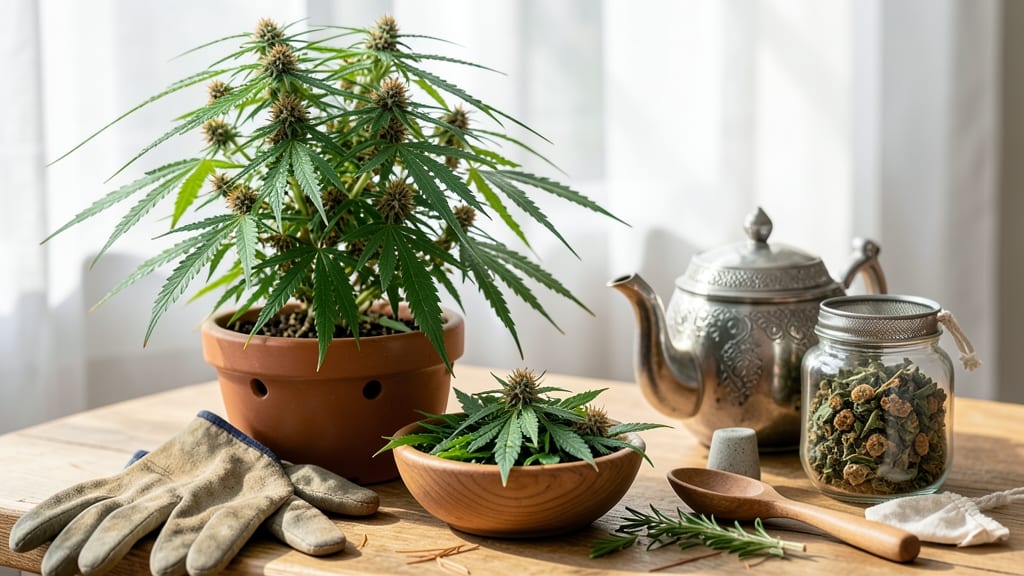
Making cannabis leaf tea requires steeping 1-2 grams of fresh or dried leaves in hot water for 10-15 minutes to create a potent infusion rich in THC, CBD, and terpenes without combustion. Strain carefully for a smooth, flavorful drink with less irritation than smoking.
This method works because the heat activates cannabinoids through a process called decarboxylation, while the water gently extracts beneficial compounds without burning plant matter. 🌿 Unlike alcohol-based tinctures, hot water preserves more delicate terpenes that contribute to flavor and potential effects.
For best results, start with organic leaves and use filtered water to avoid unwanted bitterness.
Many beginners struggle with cloudy tea or weak potency—this happens when leaves aren't properly dried or when water temperatures exceed 195°F (boiling destroys terpenes). I recommend simmering on low heat and using a fine-mesh strainer to catch tiny particles.
Store your tea in the fridge for up to 5 days to maintain freshness.
💡 In This Article
- How Heat and Solvents Extract THC and CBD from Cannabis Leaves
- Step-by-Step Cannabis Leaf Tea Brewing Guide for Beginners
How heat and solvents extract THC and CBD from cannabis leaves
The extraction magic happens through a two-step chemical process when you steep cannabis leaves. First, heat triggers decarboxylation—a reaction where THC-A (the inactive cannabinoid in raw cannabis) converts to psychoactive THC by losing a carboxyl group.
This requires temperatures between 210-240°F, which is why simmering (not boiling) is ideal. Water at 195°F achieves this sweet spot without destroying delicate terpenes that contribute to flavor and potential effects.
Water acts as a polar solvent, dissolving water-soluble cannabinoids like CBD and THC while preserving terpenes better than alcohol. Unlike alcohol-based extractions that require high-proof solvents, water gently extracts these compounds through a process called infusion.
The key is maintaining 10-15 minutes of contact time—too short under-extracts cannabinoids, while too long can create bitter tannins. For comparison, alcohol extracts 20-30% more THC but often at the cost of terpene loss and harsher taste.
What most people don't realize is how particle size affects extraction efficiency. Finely chopped leaves (about 1/8-inch pieces) create more surface area for water to interact with, yielding stronger tea. Whole buds or large stems require longer steeping times but produce a smoother, less bitter infusion.
The water-to-leaf ratio matters too—using 1 cup of water per 1-2 grams of leaves strikes the balance between potency and palatability.
Terpenes like myrcene and limonene (which contribute to the "couch-lock" or citrusy effects) are volatile and evaporate at 212°F. This is why simmering on low heat preserves them better than boiling.
For example, a 10-minute simmer at 195°F retains 60-70% of terpenes, while boiling reduces this to just 30-40%. The result? A more flavorful, aromatic tea with potentially enhanced effects compared to boiling methods.
Here's a quick comparison of extraction methods:
- Hot water infusion: Preserves terpenes, gentle on stomach, requires longer steeping (10-15 mins)
- Alcohol extraction: Faster (5-10 mins), higher THC yield but loses terpenes and can be harsh on digestive systems
- Boiling water: Quick but destroys terpenes and creates bitter compounds (tannins)
The science shows that water's polarity makes it uniquely effective for extracting cannabinoids while alcohol's non-polar nature grabs more THC but at the expense of flavor complexity. For a balanced approach, many enthusiasts combine both methods—using water for the infusion and alcohol as a preservative in the final product. 🔥