
Pruning
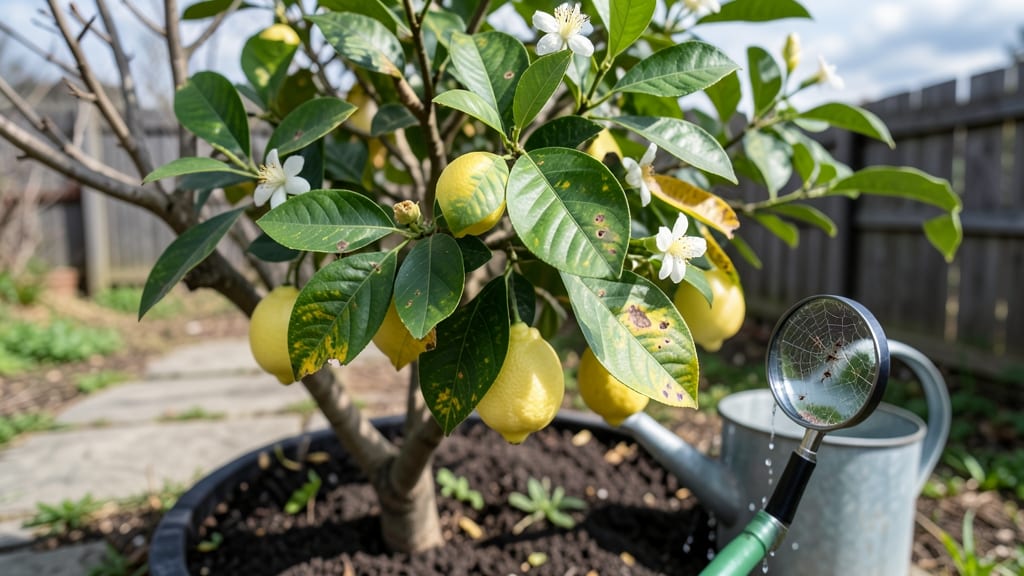
Citrus tree leaf problems with yellowing, spotted, or curling leaves are screaming for help—often before you notice the damage. 🌿 I’ve watched my own lemon tree go from lush and green to a sad, sparse silhouette in just a few weeks, and I learned the hard way that early action is everything. The good news? Most leaf problems have simple fixes if you catch them before they spread.
Fungal infections like citrus greening or melanose leave behind telltale signs—dark spots, oily patches, or leaves that drop too soon. Pests like aphids and mites, meanwhile, suck the life out of leaves, leaving behind sticky residue or webbing that’s impossible to miss.
Environmental stress—like overwatering, underwatering, or sudden temperature swings—can mimic these issues, so don’t jump to conclusions without checking the roots (literally).
Once you identify the problem, the solutions are straightforward: prune infected branches, apply the right fungicide or insecticide, and adjust your care routine. I’ve saved trees from total collapse with just a few targeted sprays and a little patience.
The key is acting fast—before the whole tree starts looking like it’s in distress.
Whether you’re dealing with a single branch or the whole tree, this guide breaks down the most common issues and how to fix them—without needing a degree in horticulture. Let’s get those leaves healthy again.
Root Causes Behind Leaf Troubles
Understanding why your citrus tree’s leaves are under attack is the first step toward restoring its health. Citrus trees are resilient, but their leaves are vulnerable to a mix of environmental stressors, microbial invaders, and pest pressures.
Below, we break down the most common culprits behind leaf discoloration, spots, curling, or drop—along with the science behind their damage.
Citrus trees thrive in warm climates, but extreme conditions—whether too hot, too cold, or improperly watered—can trigger leaf problems that mimic disease or pest damage.
- Heat Stress & Sunburn - Why it happens: Citrus leaves are adapted to bright, indirect sunlight.
When temperatures exceed 90°F (32°C) with intense direct sun, chlorophyll breaks down, leading to bleached or crispy patches (often on leaf edges or tips). - Scientific twist: High heat accelerates transpiration (water loss), causing cellular dehydration.
The leaf’s protective waxy cuticle can’t keep up, leading to oxidative damage from excess sunlight. - Actionable clue: Look for white or yellow patches that feel dry to the touch, often on leaves exposed to western or southern sun.
- Cold Damage & Frostbite - Why it happens: Most citrus varieties (like lemons, oranges, and limes) are semi-tropical and can’t tolerate temperatures below 28°F (-2°C).
Freezing causes ice crystal formation in leaf cells, rupturing membranes and leading to brown, water-soaked spots or blackened edges. - Scientific twist: Cold stress triggers lipid peroxidation—a chain reaction where cell membranes degrade, releasing toxins that kill tissue. - Actionable clue: Damage often appears 1–3 days after frost, starting on older leaves first.
- Overwatering & Poor Drainage - Why it happens: Citrus trees hate soggy roots. Overwatering or compacted soil leads to root asphyxiation, starving leaves of oxygen.
This causes yellowing between veins (chlorosis) or black, mushy spots from fungal infections like Phytophthora. - Scientific twist: Anaerobic conditions (low oxygen) force roots to switch to fermentation, producing ethanol—a plant poison that travels to leaves. - Actionable clue: Check for yellowing leaves with green veins (classic chlorosis) or leaves that drop suddenly after heavy rain.
- Underwatering & Drought - Why it happens: While citrus trees are drought-tolerant, prolonged dryness forces them to conserve water by dropping leaves or developing crispy, curled edges.
Severe drought can lead to leaf scorch (brown, papery edges). - Scientific twist: Water loss triggers abscisic acid (ABA) production, a hormone that signals leaves to detach to preserve the tree’s core. - Actionable clue: Leaves may curl upward or feel dry and brittle to the touch.
Fungi thrive in warm, humid conditions and often enter through wounds, stomata (leaf pores), or weak spots caused by stress. Here’s how they hijack your citrus tree:
- Citrus Canker (Xanthomonas citri) - Why it happens: This bacterial-like pathogen (technically a bacterium) spreads via wind, rain, or contaminated tools.
It invades through hydathodes (water pores on leaves) or injuries, multiplying in leaf tissues and clogging vascular systems. - Scientific twist: It secretes enzymes that degrade pectin (the "glue" holding plant cells together), causing raised, water-soaked lesions that ooze yellow fluid. - Actionable clue: Look for raised, scab-like bumps with yellow halos—especially on younger leaves.
- Melanose (Diplodia natalensis) - Why it happens: A fungal disease that thrives in high humidity (75%+) and warm temperatures (77–86°F / 25–30°C).
It enters through lenticels (pores on stems/leaves) or injured bark. - Scientific twist: The fungus produces toxic metabolites that disrupt photosynthesis, leading to dark, sunken spots with reddish-brown margins. - Actionable clue: Spots start as tiny purple specks that expand into large, dead patches with a target-like pattern.
- Anthracnose (Colletotrichum spp.) - Why it happens: This fungus infects young, tender leaves and fruit, causing dark, sunken lesions that ooze.
It spreads via splashing water or contaminated pruning tools. - Scientific twist: It produces appressoria—tiny suction cups that pierce leaf cells—releasing cellulolytic enzymes to break down tissue. - Actionable clue: Leaves develop irregular, brown-to-black spots with yellow borders, often near the edges.
- Leaf Spot Fungi (Alternaria, Cercospora) - Why it happens: These saprophytic fungi (they feed on dead organic matter) exploit weakened leaves from stress or injury.
They thrive in shady, humid conditions and poor air circulation. - Scientific twist: They release spores that germinate on leaf surfaces, producing toxins that trigger cell death in concentric rings. - Actionable clue: Look for small, circular spots with dark centers and lighter edges—often with tiny black specks (fungal spores).
Insects and mites feed on leaf sap, pierce cells, or lay eggs in tissues, triggering discoloration, curling, or stunted growth. Here’s how they wreak havoc:
- Citrus Leafminers (Phyllocnistis citrella) - Why it happens: These larvae (caterpillars) tunnel between leaf layers, creating serpentine white trails as they feed.
Adult moths lay eggs on new growth, and larvae hatch in 3–5 days. - Scientific twist: Their mouthparts inject saliva that disrupts chlorophyll production, causing yellow blotches along their feeding paths. - Actionable clue: Leaves develop blistered, white, winding patterns—like tiny highways under the surface.
- Scale Insects (Diaspididae family) - Why it happens: These sap-sucking pests attach to leaf undersides or stems, secreting a protective waxy shield.
They weaken leaves by removing nutrients and excreting honeydew (a sticky substance that attracts sooty mold). - Scientific twist: Their stylets (mouthparts) pierce phloem cells, disrupting sugar transport and causing yellowing or premature leaf drop. - Actionable clue: Look for small, bumpy, brown/white dots (like tiny shells) on leaves or stems.
- Spider Mites (Tetranychus spp.) - Why it happens: These microscopic arachnids thrive in dry, hot conditions and spin fine webs on leaf undersides.
They pierce cells to suck out chloroplast-rich sap, leaving stippled, yellow patches. - Scientific twist: Their saliva contains enzymes that disrupt photosynthesis, causing bronzing (silver-gray speckling) before leaves turn crispy. - Actionable clue: Check for fine webbing on leaf undersides and tiny moving dots when leaves are shaken.
- Aphids (Aphis spp.)
- Scientific twist: Their saliva contains proteins that alter plant hormones, leading to abnormal growth (e.g., "witches' broom" clusters).
- Actionable clue: Leaves may curl upward or sticky residue (aphid trails) will attract ants.
Even the hard
Quick Fixes for Citrus Tree Leaves
Reviving your citrus tree’s health starts with targeted action—whether it’s a fungal infection, pest invasion, or nutrient deficiency. Below are practical, step-by-step solutions for each common issue, plus prevention tips to keep your tree thriving. Let’s get those leaves back to their vibrant best! 🍋✨
1. Fixing Powdery Mildew or Rust
🔥 Step 1: Prune Infected Leaves
- Use sterilized pruners (wipe with rubbing alcohol) to remove all yellow, brown, or powdery-coated leaves.
- Dispose of them in the trash—do not compost—to prevent spread.
🍳 Step 2: Apply Fungicide
- Neem oil solution (1 tbsp neem oil + 1 tsp mild soap + 1 quart water) is a natural, effective spray.
- Commercial fungicides like copper-based sprays or sulfur (for powdery mildew) work too.
- Spray thoroughly on both sides of leaves and the tree’s canopy. Repeat every 7–10 days until new growth appears.
👨🍳 Step 3: Improve Airflow & Light
- Thin out dense branches to allow sunlight and air to circulate.
- Space trees 6–8 feet apart if planting new citrus to reduce humidity buildup.
💡 Prevention Tip: ✅ Water at the base (avoid overhead spraying) and prune for airflow regularly.
2. Treating Root Rot or Stem Canker
🔪 Step 1: Assess the Damage
- If the trunk is soft, discolored, or oozing, root rot or canker may be fatal. Act fast!
- For early-stage canker, prune 1–2 inches below the infected area with sterilized tools.
🌡️ Step 2: Adjust Watering & Soil
- Stop overwatering—let the top 2–3 inches of soil dry between waterings.
- Improve drainage: Mix sand or perlite into heavy clay soil, or plant in a raised bed.
- Fungicide soil drench: Use hydrogen peroxide (3%) or mycorrhizal fungi to promote healthy roots.
🎯 Step 3: Protect the Tree Long-Term
- Mulch with wood chips (keep 2–3 inches away from the trunk) to regulate moisture.
- Avoid wounding the trunk—use care when pruning to prevent entry points for fungi.
1. Eliminating Scale Insects
🍳 Step 1: Scrape Off Visible Infestations
- Use a soft brush or cloth dipped in soapy water to wipe off scale (they look like brown bumps on leaves/stems).
- Focus on new growth where they cluster.
🔥 Step 2: Apply Horticultural Oil or Insecticidal Soap
- Horticultural oil (like dormant oil) smothers scale eggs and adults. Apply early morning or late evening to avoid burning leaves.
- Insecticidal soap (1.5 tbsp per gallon of water) kills soft-bodied pests. Reapply every 5–7 days.
💡 Prevention Tip: ✅ Introduce beneficial insects like ladybugs or parasitic wasps to control scale naturally.
2. Battling Aphids & Spider Mites
🔪 Step 1: Blast Off Pests with Water
- Spray leaves with a strong jet of water (aphids hate this!) to dislodge them.
- For mites, use a hose-end sprayer for a thorough rinse.
🌡️ Step 2: Use Systemic or Contact Pesticides
- Neem oil (1% solution) disrupts mites’ life cycle—reapply weekly.
- Systemic pesticide (like imidacloprid) for severe aphid infestations (follow label instructions).
🎯 Step 3: Encourage Natural Predators
- Plant companion flowers (like marigolds or alyssum) to attract lacewings and ladybugs.
- Avoid broad-spectrum pesticides that kill beneficial bugs.
1. Fixing Iron or Nitrogen Deficiency
📊 Step 1: Test Your Soil
- Use a citrus-specific soil test kit to confirm deficiencies (iron chlorosis = yellow leaves with green veins; nitrogen = pale yellow leaves).
💪 Step 2: Amend Soil or Fertilize
- For iron: Apply chelated iron (like Ironite) or sulfur to acidic soil (citrus loves pH 6.0–7.0).
- For nitrogen: Use a balanced citrus fertilizer (like 6-6-6 or 8-3-9) in early spring.
🥗 Step 3: Improve Soil Health
- Add compost or worm castings to boost organic matter.
- Avoid overwatering—wet soil locks out iron for citrus roots.
✨ Pro Tip: 🌱 Mulch with citrus-specific mulch (like orange peel compost) to slowly release nutrients.
- Inspect leaves weekly for early signs of pests/disease. 🕵️♂️
- Keep trees healthy with regular pruning (remove dead wood in late winter/early spring).
- Rotate fungicides/pesticides to prevent resistance.
- Quarantine new plants for 2 weeks before adding them to your garden.
Your citrus tree’s recovery starts today! With these targeted fixes, you’ll see healthier leaves—and maybe even more fruit—before you know it. 🍊🌿
Frequently asked questions
Why do my citrus tree leaves turn yellow with green veins?
This classic symptom signals iron deficiency (chlorosis), common in alkaline soils. Citrus trees need pH 6.0–7.0 to absorb iron. Try applying chelated iron or sulfur to lower soil pH, and avoid overwatering—wet soil locks out nutrients. Yellowing between veins (not edges) confirms it’s not a pest issue.
Can I use household vinegar to treat fungal leaf spots?
While vinegar kills some fungi, it’s too harsh for citrus leaves—it can burn foliage. Instead, mix 1 quart water + 1 tbsp baking soda + 1 tsp dish soap for a safer spray. Apply in early morning and repeat weekly. For severe cases, use copper fungicide (follow label instructions).
How do I tell if my citrus tree has spider mites vs. aphids?
Spider mites leave tiny webbing on leaf undersides and cause stippled yellowing (like freckles). Aphids create sticky honeydew and curl leaves upward. Shake leaves over white paper—mites scatter like dots, while aphids are visible clusters. Neem oil works for both, but mites need weekly treatment.
Is it safe to prune infected leaves during rainy season?
No—wait for dry weather to prune. Wet conditions spread fungal spores and bacterial infections like citrus canker. Sterilize tools with rubbing alcohol, and dispose of infected leaves in sealed bags. Prune in late morning to let wounds dry before evening dew sets in.
Will my citrus tree recover if most leaves are damaged?
Yes, but act fast! Citrus trees regrow leaves from buds. Prune only severely damaged branches (never more than 25% of the tree). Focus on fixing the root cause—whether it’s pests, disease, or poor soil. Healthy roots will sprout new growth in 4–6 weeks with proper care.