
Vegetables
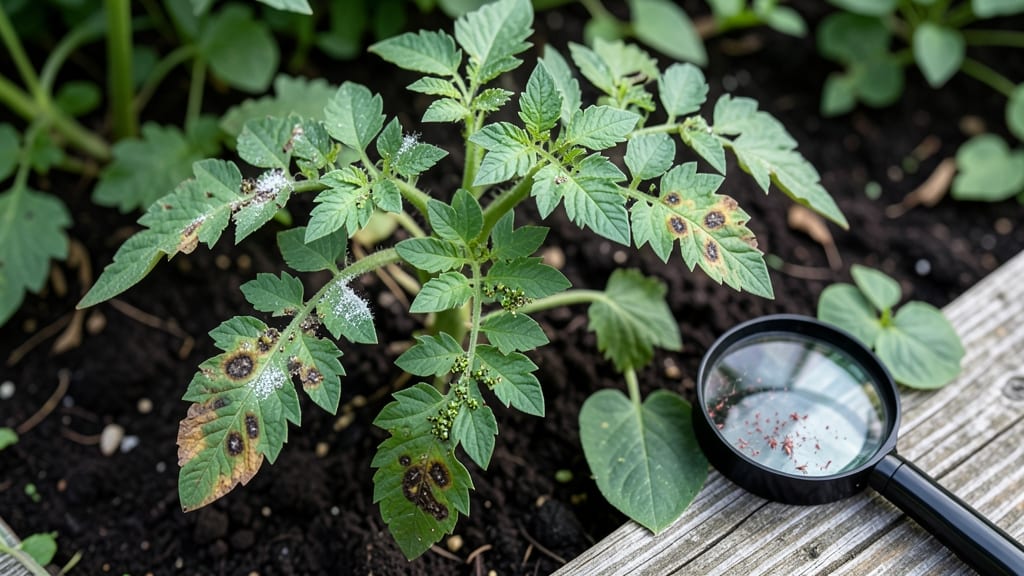
Your tomato plants are screaming for help—literally, with those mysterious tomato leaf problems you’re seeing in pictures. 🌱 Those suspicious spots, yellowing edges, or curled leaves aren’t just cosmetic; they’re warning signs your tomatoes are fighting for their lives.
This guide shows you exactly what each problem looks like (with photos) and how to stop it before your harvest disappears.
I’ve lost entire plants to early blight, spider mites, and nutrient starvation—until I learned to spot the symptoms fast. The key is acting within 24-48 hours of noticing trouble, whether it’s fungal spots, chewed leaves, or strange discoloration.
You’ll see side-by-side comparisons of healthy vs. diseased leaves so you never guess wrong again.
By the end, you’ll diagnose problems faster than a plant doctor and save your tomatoes with simple, organic fixes—no chemistry degree required. Think of it as a field guide for your garden’s emergency room.
Works for backyard gardens, containers, and even balcony setups. Let’s turn those sad leaves into thriving plants before it’s too late.
Root causes of tomato leaf issues
Understanding why tomato leaves develop problems is half the battle in saving your plants. These issues rarely appear out of nowhere—they’re usually a response to environmental stress, pest invasions, or nutrient imbalances.
Let’s break down the real culprits behind those unsightly (and often alarming) leaf symptoms, so you can address the root cause—not just the symptoms.
Fungi thrive in humid, stagnant conditions, and tomato leaves become their perfect buffet.
The most common fungal foes include: - Early Blight (Alternaria solani): Thrives in warm, wet weather and causes concentric brown spots with yellow halos. - Late Blight (Phytophthora infestans): Spreads rapidly in cool, damp climates (yes, the same pathogen that caused the Irish potato famine). - Powdery Mildew (Oidium spp.): Appears as white, powdery patches on upper leaves, blocking sunlight and stunting growth.
Why it happens: Fungal spores land on leaves from soil, wind, or infected plants, then germinate when conditions are ideal—high humidity (above 75%), poor airflow, and overhead watering. Weakened plants (from stress or poor nutrition) are especially vulnerable.
Bacteria like moisture and open wounds (think pruning cuts or hail damage). Two notorious offenders:
- Bacterial Spot (Xanthomonas perforans): Creates tiny, water-soaked spots that turn brown and crusty.
- Bacterial Speck (Pseudomonas syringae): Produces olive-green to black specks with yellow halos.
Why it happens: Bacteria hitchhike on water splashes (from rain or irrigation) or contaminated tools. They enter through stomata (leaf pores) or injuries. Unlike fungi, bacteria don’t need humidity to spread—they thrive in warm, wet conditions and can survive in soil or plant debris for years.
Viruses are the sneakiest pests—they can’t be cured, only managed. Common tomato viruses include:
- Tobacco Mosaic Virus (TMV): Causes mosaic patterns (light/dark green patches) and stunted growth.
- Tomato Yellow Leaf Curl Virus (TYLCV): Leaves cup upward, yellow, and become brittle.
Why it happens: Viruses spread via infected seeds, contaminated tools, or sap-sucking insects (like aphids). They replicate inside plant cells, disrupting nutrient flow and photosynthesis. Weak plants or those under stress (drought, poor soil) are more susceptible.
Pests don’t just nibble—they inject toxins, spread diseases, or suck sap, weakening leaves.
Key offenders: - Aphids: Leave sticky honeydew and curled, yellowed leaves. - Spider Mites: Cause tiny yellow dots and webbing, thriving in dry heat. - Whiteflies: Excrete honeydew, leading to sooty mold (black fungal growth).
Why it happens: Pests target stressed plants (drought, nutrient deficiency) or crowded gardens with poor airflow. They multiply fast in hot, dry conditions (mites) or humid, sheltered spots (aphids). Some, like whiteflies, are attracted to yellow sticky traps or bright-colored flowers nearby.
Tomatoes are heavy feeders, and deficiencies show up as leaf discoloration or deformities:
- Nitrogen (N) Deficiency: Yellow lower leaves (oldest first) but green veins.
- Potassium (K) Deficiency: Brown, crispy leaf edges (scorch) or weak stems.
- Magnesium (Mg) Deficiency: Interveinal chlorosis (yellow between veins) on older leaves.
- Iron (Fe) Deficiency: Young leaves turn yellow (but veins stay green).
Why it happens:
- Poor soil: Compacted, sandy, or acidic soil locks out nutrients.
- Overwatering: Leaches nutrients from the root zone.
- Imbalanced fertilizers: Too much nitrogen (burns roots) or lack of micronutrients (like zinc or manganese).
- pH issues: Tomatoes prefer 6.0–6.8 pH; outside this range, nutrients become unavailable.
Tomatoes are sensitive to extremes, and leaves react visibly:
- Heat Stress: Scorched edges or wilting in afternoon heat (above 90°F/32°C).
- Cold Damage: Blackened, mushy leaves after frost or night temps below 50°F (10°C).
- Wind Burn: Brown, papery patches on exposed leaves.
- Hail or Physical Damage: Ripped or bruised leaves, inviting infections.
Why it happens:
- Temperature swings: Tomatoes can’t handle sudden drops or spikes.
- Poor airflow: Trapped humidity (from mulch or dense foliage) encourages disease.
- Salinity: Over-fertilizing or poor-quality water burns roots, causing leaf stress.
Both overwatering and underwatering trigger leaf problems:
- Overwatering: Yellowing leaves, wilting, or root rot (from oxygen-starved roots).
- Underwatering: Drooping, crispy edges, or leaf curl (plant conserves water).
- Inconsistent watering: Blossom end rot (black, sunken spots on fruits) or cracked stems.
Why it happens:
- Shallow roots: Tomatoes need deep, consistent moisture (1–2 inches per week).
- Clay soil: Holds too much water, suffocating roots.
- Drip irrigation issues: Uneven watering stresses plants.
Mistakes with fertilizers, herbicides, or pesticides can fry leaves in days:
- Fertilizer burn: Brown, crunchy leaf tips (too much salt).
- Herbicide drift: Bleached or distorted leaves (glyphosate is notorious).
- Pesticide residue: White or gray leaf spots (from fungicides like copper or sulfur).
Why it happens:
- Over-application: High salt concentrations in soil or on leaves.
- Wrong timing: Spraying pesticides/fungicides in direct sun (causes burns).
- Residue buildup: Reusing containers or applying chemicals to wet foliage.
Quick Fixes For Troubled Tomato Leaves
When your tomato plants start showing signs of distress, acting fast can save your harvest—and your sanity. Below are practical, step-by-step solutions for the most common tomato leaf problems, paired with prevention tips to keep your plants thriving. Think of this as your emergency guidebook for a healthier garden! 🚨🌱
🔥 Cause: Fungal infection (Alternaria solani) thrives in warm, wet conditions. 🛠️ Fix:1️⃣
Remove infected leaves immediately—don’t compost them! Toss them in the trash to prevent spores from lingering. ⚠️ Pro tip: Wear gloves to avoid spreading spores to healthy plants.2️⃣
Improve airflow—prune lower leaves (those touching the soil) and space plants 18–24 inches apart. Use stakes or cages to keep foliage upright.3️⃣
Apply copper fungicide (like Bonide Copper Fungicide) every 7–10 days during wet spells. For organic gardens, mix 1 tbsp baking soda + 1 quart water + a few drops of dish soap and spray on leaves.4️⃣
Mulch properly—use straw or black plastic mulch (not grass clippings) to keep soil dry and reduce splashing spores onto leaves. 💡 Prevention:- Rotate crops yearly (don’t plant tomatoes or potatoes in the same spot).
- Water at the base in the morning to let foliage dry quickly.
1️⃣
Isolate infected plants—late blight spreads like wildfire. Move them to a shaded area or remove them entirely if the infection is severe.2️⃣
Spray with a fungicide—use chlorothalonil (like Daconil) or a serenade garden spray (organic). Reapply every 5–7 days or after rain.3️⃣
Adjust watering habits—water deeply but infrequently (1–2 inches per week) and avoid overhead watering.4️⃣
Boost plant health—feed with compost tea or fish emulsion to strengthen defenses. 💡 Prevention:- Plant resistant varieties like ‘Mountain Merit’ or ‘Defiant PhR’.
- Remove all tomato debris from last season’s garden.
1️⃣
Blast them off—spray plants with a strong stream of water (early morning or evening) to knock mites off leaves.2️⃣
Use insecticidal soap—mix 2.5 tbsp castile soap + 1 quart water and spray undersides of leaves where mites hide.3️⃣
Introduce predator bugs—ladybugs and lacewings eat spider mites. Buy them online or attract them with dill or fennel in your garden.4️⃣
Increase humidity—mites love dry air. Use a hose to mist plants or place a tray of water near them. 💡 Prevention:- Avoid over-fertilizing with nitrogen (weakens plants).
- Keep weeds down—mites love them too!
1️⃣
Provide shade—use shade cloth (30–50%) or row covers during peak heat (10 AM–4 PM).2️⃣
Water deeply and early—soak the root zone 1–2 inches per week (morning watering prevents evaporation).3️⃣
Mulch heavily—use straw or wood chips to retain moisture and cool roots.4️⃣
Harvest ripe tomatoes—overripe fruit stresses the plant. Pick them to encourage new growth. 💡 Prevention:- Plant heat-tolerant varieties like ‘Heatmaster’ or ‘Solar Fire’.
- Start seeds indoors 6–8 weeks before the last frost for a head start.
1️⃣
Check soil moisture—stick your finger 1–2 inches deep. Water only if it’s dry.2️⃣
Improve drainage—amend soil with compost or perlite if it’s clay-heavy. Raise beds or use containers with drainage holes.3️⃣
Adjust watering—water deeply 2–3 times per week (not daily). Use a soaker hose to target roots.4️⃣
Prune affected leaves—remove yellowed or mushy leaves to redirect energy to healthy growth. 💡 Prevention:- Use a
Use this quick-reference table to diagnose and treat:
| Symptom | Likely Deficiency | Solution |
|---|---|---|
| Yellow lower leaves (veins stay green) | Nitrogen (N) | Apply blood meal or fish emulsion (high in N). |
| Yellow edges/brown spots | Potassium (K) | Use wood ash or banana peels (composted). |
| Yellow between veins (like a mosaic) | Magnesium (Mg) | Spray with Epsom salt solution (1 tbsp/gallon water). |
| Purple stems/leaves | Phosphorus (P) | Add bone meal or compost. |
- Test soil every 2–3 years and amend as needed.
- Use a
Most tomato leaf problems are manageable with early action and a little TLC. 🌟 The key is observation + consistency—check your plants weekly, remove trouble spots fast, and keep them happy with the right care.
Before you know it, you’ll be feasting on juicy, disease-free tomatoes all season long! 🍅😎
Frequently asked questions
How can I tell if my tomato leaf spots are fungal or bacterial?
Check the edges: fungal spots like early blight have concentric rings with yellow halos, while bacterial spots appear water-soaked first then turn crusty. Fungi thrive in humidity, while bacteria spread in warm, wet conditions. Use a magnifying glass—fungal spots often have fuzzy edges, while bacterial spots look greasy.
Why do my tomato leaves turn yellow only between the veins?
This classic symptom signals a magnesium deficiency (called interveinal chlorosis). It starts on older leaves because the plant moves magnesium to new growth first. Fix it by spraying leaves with 1 tablespoon Epsom salt per gallon of water every 2 weeks. Check your soil pH—tomatoes need 6.0–6.8 for magnesium uptake.
Can I save my tomato plant if spider mites have already webbed the leaves?
Yes, but act fast! First, blast off mites with a strong water spray, then apply neem oil (2 teaspoons per quart of water) every 5–7 days. Increase humidity by misting plants daily—mites hate moisture. For severe cases, release predatory mites (like Phytoseiulus persimilis) from garden centers.
What’s the fastest way to stop tomato leaf curl from heat stress?
Provide immediate shade with 30–50% shade cloth during peak sun (10 AM–4 PM). Water deeply at the root zone in the morning (1–2 inches per week), and mulch with straw to retain moisture. Harvest ripe tomatoes immediately—they stress the plant less than overripe fruit. Heat-tolerant varieties like ‘Heatmaster’ recover faster.
Are my tomato leaf problems from overwatering or underwatering?
Check the soil: if it’s soggy and smells rotten, you’re overwatering (causing root rot and yellow leaves). If the soil is dry and crumbly with crispy edges, you’re underwatering. The fix? Water deeply 2–3 times per week (not daily) and improve drainage with compost or raised beds.