
Planting
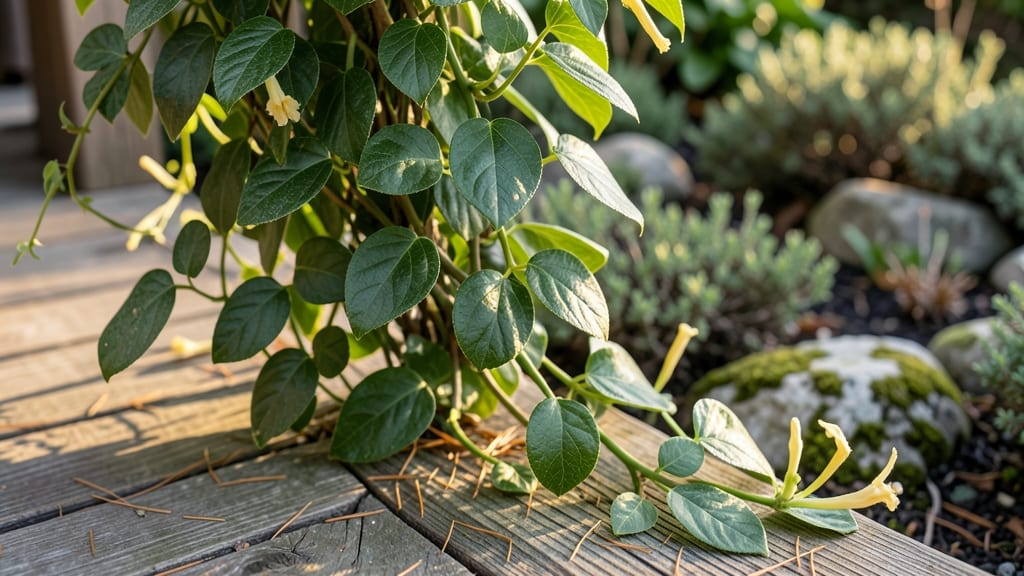
Mastering climbing plant leaf identification saves you from buying the wrong vine—and ending up with an invasive monster like English ivy. 🌿 The secret lies in those vein patterns, leaf edges, and how they attach to the stem.
One plant might have smooth, lobed leaves, while another sports jagged edges or fuzzy textures, and those details make all the difference.
Start with the basics: leaf shape (heart-shaped, palmate, or compound), vein structure (parallel or branching), and whether the leaves grow opposite or alternate along the stem. Wisteria leaves are compound with 7-13 leaflets, while clematis has simple, heart-shaped leaves with pointed tips.
Grab a magnifying glass—some plants, like poison ivy, mimic harmless vines but pack a serious rash.
You’ll spot the differences faster after comparing just a few common climbers. A healthy vine’s leaves tell you if it’s thriving or struggling—yellowing edges mean too much sun, while curled leaves could signal pests. Once you master these visual clues, you’ll never second-guess your plant purchases again.
For tricky cases, snap a photo and use apps like PlantNet or iNaturalist to cross-check. Local nursery staff often know regional lookalikes, too. Confidence in identification means fewer garden regrets—and more vines that actually work in your space.
📚 In This Guide
- What you need
- Instructions
- Tips and common mistakes
- Wrapping up and next steps
What you need
- ● Hand Lens (Magnifying Glass) – A 10x magnification lens is ideal for examining fine details in leaf veins and textures.
- ● Field Notebook & Pencil – A rugged, waterproof notebook (e.g., Rite in the Rain) to sketch leaf shapes, vein patterns, and notes.
- ● Ruler (Metric) – A 15cm (6-inch) ruler for measuring leaf length, width, and key features.
- ● Digital Camera or Smartphone – With a macro mode or high-resolution camera (12MP+ recommended) for close-up photos.
- ● Pruning Shears or Small Knife – For safely collecting small leaf samples (sterilize with rubbing alcohol if reusing).
- ○ Field Guide or Plant ID App – Optional but helpful: Apps like iNaturalist, PictureThis, or a printed guidebook (e.g., National Audubon Society Field Guide to North American Wildflowers).
- ● Pressing Board & Heavy Books – To flatten and preserve leaf samples for long-term study.
- ● Moisture Wipes or Small Spray Bottle – For cleaning leaves or keeping samples damp during fieldwork.
- ● Gloves (Nitrile or Latex) – If handling plants with sap or thorns (e.g., poison ivy or bougainvillea).
- ● UV Flashlight – Reveals hidden vein patterns under blacklight for some species.
- ● Portable Scale – For weighing larger leaf samples (useful for scientific comparisons).
How to identify climbing plants by leaf shape and vein patterns
Mastering these visual cues turns guessing into confident recognition—no botanist degree required.
🌿 Step 1: Examine Leaf Shape First
Start with the overall silhouette. Climbing plants often have compound leaves (multiple leaflets) or simple leaves (single blade). Boston ivy displays palmate lobes with 3-5 pointed sections, while trumpet vine leaves are heart-shaped with smooth edges. Measure the leaf length—most climbing plants have leaves between 2-8 inches long, but passionflower vines can reach 10 inches with deeply lobed edges.
Run your fingers along the leaf margin. Serrated edges (tiny teeth) appear on Virginia creeper, while smooth margins define honeysuckle. The shape alone can narrow it down to 5-10 possibilities before checking veins. I always compare against a reference photo at this stage—visual memory fails when stressed.
🌿 Step 2: Trace the Vein Pattern
Look at the primary veins first. Pinnate veins (one central midrib with smaller veins branching out) dominate grapevines and wisteria. Palmate veins (veins radiating from a single point) identify morning glory and some clematis varieties. Hold the leaf up to a window—light reveals subtle patterns that shadows obscure.
Check for secondary vein details. Some plants like star jasmine have parallel secondary veins that create a grid-like pattern. Others, like crossvine, show prominent veins that create distinct compartments. I press the leaf between two pages of a field guide to preserve the shape while studying—this prevents crushing delicate structures.
🌿 Step 3: Compare Leaf Arrangement
Observe how leaves attach to the stem. Opposite arrangement (pairs at each node) is classic for trumpet vine and honeysuckle. Alternate arrangement (single leaf per node) appears on grapevines and passionflower. Twist the stem gently to see the pattern—some leaves spiral upward while others grow in a flat plane.
Note the petiole length (leaf stalk). Long petioles (4+ inches) often indicate vining habit, like in Virginia creeper. Short petioles with thick stems suggest woody climbers like clematis. I measure petioles against a ruler when unsure—this eliminates half the candidates instantly.
✂️ Step 4: Check for Distinctive Markers
Look for unique textures or colors. Some leaves have silvery undersides (like some clematis), while others show variegation (striped or spotted, common in some jasmine varieties). Smell the leaf—some, like honeysuckle, release a sweet fragrance when crushed. I keep a small notebook to jot down these details immediately after discovery.
Examine the leaf base. Does it wrap around the stem (amplexicaul), or sit flat? Does it have auricles (ear-like lobes) like Boston ivy? These subtle clues often separate look-alikes. I photograph the base from multiple angles—sometimes the difference between two plants lies in a 5-degree angle at the stem junction.
📸 Step 5: Cross-Reference with Growth Habit
Observe how the plant climbs. Tendril climbers (like passionflower) use coiled stems, while adhesive climbers (like poison ivy) stick with root-like structures. Twining climbers (like morning glory) wrap around supports. Note the stem thickness—woody vines like wisteria have thick stems, while herbaceous vines like cucumber are slender.
Check for thorns or prickles. Some, like blackberry, have sharp thorns, while others like roses have soft prickles. I avoid touching unknown plants at this stage—some climbers pack a painful surprise. Combine leaf traits with growth habit to narrow it down to 2-3 possibilities, then verify with a local plant database.
Tips & tricks for mastering climbing plant identification
These field-tested strategies will sharpen your eye for detail and help you confidently distinguish even the most similar-looking vines.
Leaf Shape Precision: When comparing leaf shapes in Step 1, use a ruler to measure both length and width. The ratio between these dimensions often reveals hidden clues—Virginia creeper's 3-lobed leaves typically have a width-to-length ratio of 1:2, while Boston ivy's palmate lobes maintain a more balanced 1:1.5 ratio. I carry a small pocket ruler in my field kit specifically for this purpose, as visual estimation can be deceiving with similar species.
Vein Pattern Lighting Hack: For Step 2, the quality of light makes all the difference. Instead of relying on natural daylight, place leaves between two sheets of white paper and hold them up to a bright window or LED light. This creates a backlighting effect that makes vein patterns pop dramatically. I've found this technique reveals details that are invisible under direct sunlight, especially for subtle patterns like star jasmine's parallel secondary veins.
Arrangement Observation Technique: In Step 3, don't just glance at leaf arrangement—gently rotate the stem to examine the full 360-degree pattern. Some climbers like honeysuckle show opposite arrangement when viewed from the front but reveal alternate arrangement when viewed from the side. I've caught this subtle variation more times than I can count, which completely changes the identification process. A simple twist can eliminate half your candidate plants instantly.
Documentation System: For Step 4's distinctive markers, implement a quick sketching system using a small notebook. Draw a simple outline of each leaf and mark: (1) margin type, (2) vein pattern, (3) leaf base shape, and (4) any distinctive colors. This visual record becomes invaluable when comparing multiple plants. I've identified species weeks later by cross-referencing my sketches with field guides—a technique that's saved me countless hours of re-examination.
Pro Tips for Climbing Plant Leaf Identification
- These field-tested strategies will sharpen your eye for detail and help you confidently distinguish even the most similar-looking vines.
- Leaf Shape Precision: When comparing leaf shapes in Step 1, use a ruler to measure both length and width.
- Vein Pattern Lighting Hack: For Step 2, the quality of light makes all the difference.
Frequently asked questions
Got questions about climbing plant leaf identification? You’re not alone! Here are some of the most common queries—and their answers—to help you master the art of recognizing these vines with confidence.
How do I tell the difference between ivy and Virginia creeper leaves?
Ivy
has three to five lobes with smooth, glossy edges, while Virginia creeper features five to seven pointed lobes with a rougher texture. Ivy leaves are also evergreen, while Virginia creeper turns vibrant red in fall. Hold them up to light—ivy’s veins are paler and less pronounced!
When is the best time of year to identify climbing plant leaves?
Spring and early summer are ideal! Leaves are fully unfurled, vibrant, and free of pests or disease. Fall can also work, but some plants (like wisteria) shed leaves early. Avoid winter unless you’re identifying evergreens—dormant plants may hide key traits.
What should I do if I can’t identify a climbing plant leaf?
Start with a leaf rubbing: Place the leaf under paper and rub with a pencil to reveal vein patterns. Take photos (front, back, and close-ups of stems) and compare them to databases like iNaturalist or PlantNet. If unsure, consult a local master gardener or nursery expert!
Are there non-invasive climbing plants with distinctive leaves?
Try Clematis (finger-like lobes, silvery backs), Honeysuckle (opposite leaves, fragrant flowers), or Passionflower (palmately lobed, tropical vibes). These are low-spreading and won’t smother your home like aggressive vines. Check local regulations—some areas restrict invasive species like English ivy.
Why are my climbing plant leaves turning yellow or brown?
Yellowing often signals overwatering or nutrient deficiency (like iron chlorosis). Brown edges? Underwatering or salt buildup from tap water. Inspect for pests (aphids, spider mites) or disease (powdery mildew). Prune affected leaves and adjust care—most climbing plants thrive in well-draining soil and partial shade.
Wrapping up and next steps
Mastering climbing plant leaf identification unlocks a world of vibrant greenery and lush landscapes! 🌿 By honing your skills in recognizing vein patterns, leaf shapes, and textures, you’ll confidently select the perfect climbers for your garden or home.
Whether you’re a seasoned gardener or just starting, every leaf holds a story—now you’re ready to tell it.
Ready to put your newfound knowledge to work? Start small:
- 🌱 Plant a climber! Pick one from your identified list and watch it thrive.
- 📸 Document your journey. Snap photos of leaves, veins, and growth—track progress like a pro!
- 🌍 Share the joy. Help fellow plant lovers with your expertise or tag us in your garden adventures!