
Vegetables
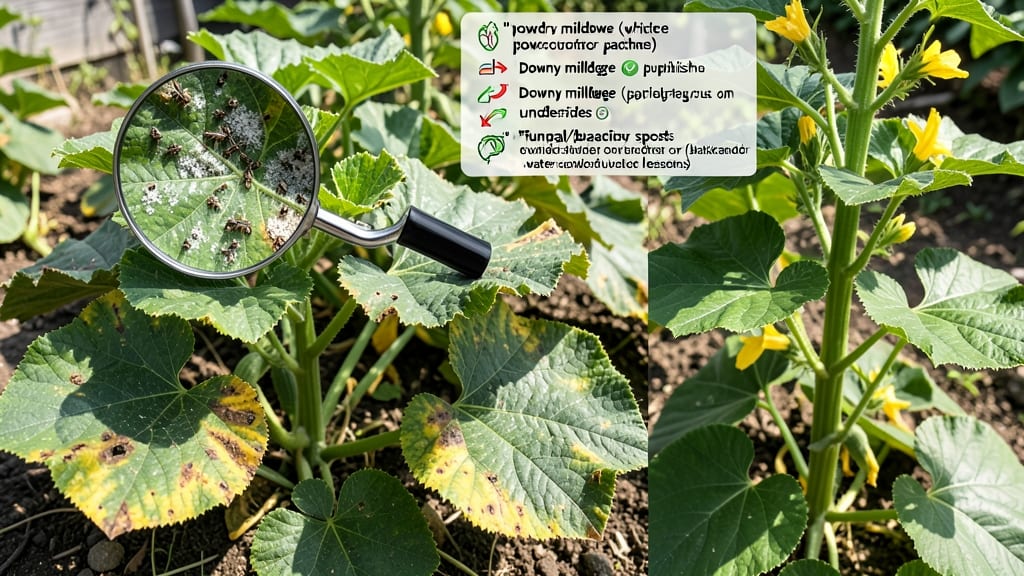
Your cucumber leaf problems are staring you right in the face—yellowing leaves, stunted growth, and those telltale brown spots that scream "nutrient crisis." 🌿 I've seen this happen more times than I'd like, and the fix is simpler than you think: it's not always pests or disease, but what's missing from the soil.
The most common culprits are nitrogen deficiency (pale leaves) or potassium shortage (weak stems, yellow edges). My plants always bounce back when I feed them a balanced organic fertilizer—like fish emulsion or compost tea—every 2-3 weeks during fruiting.
Overwatering or poor drainage can also mimic disease symptoms, so check your soil moisture first.
Within 7-10 days of proper feeding, you'll see new leaves emerge a vibrant green and plants regaining their vigor. The key is consistency: don't just treat the symptoms, feed the roots. I've saved entire crops this way, and you can too.
For prevention, mulch heavily to retain moisture and nutrients, and rotate crops next season—cucumbers in the same spot year after year deplete soil faster. This works for both garden beds and containers, so no matter where you grow, your leaves will stay spotless.
📚 In This Guide
- What you need
- Instructions
- Tips and common mistakes
- Wrapping up and next steps
What you need
- ● Garden gloves (1 pair) – Protect your hands from dirt, sap, or harsh chemicals.
- ● Pruning shears or sharp scissors – Sterilized to avoid spreading disease (bleach solution: 1 part bleach to 9 parts water).
- ● Neem oil or copper fungicide (8–16 oz) – For fungal/bacterial issues (follow label instructions!).
- ● Hose with adjustable nozzle – For gentle watering (avoid overhead spraying).
- ○ pH testing kit (optional but helpful) – To check soil pH (ideal: 6.0–6.8 for cucumbers).
- ● Organic mulch (straw, shredded leaves, or grass clippings – 2–3 inches) – Retains moisture and prevents soil-borne diseases.
- ● Notebook & pen – To log symptoms, treatments, and progress.
- ● Magnifying glass – For closely inspecting leaf spots or pests.
- ● Compost or balanced fertilizer (5-5-5 or 10-10-10) – If nutrient deficiency is suspected.
- ● Beneficial nematodes or ladybugs – For organic pest control (e.g., spider mites).
- ● Spray bottle with water + dish soap (1 tsp soap per gallon) – For quick pest deterrents.
- ● Camera or phone – To document symptoms before/after treatment.
Quick fixes for common cucumber leaf problems
Here’s how to diagnose and resolve the most frustrating cucumber leaf issues—fast.
🌿 Step 1: Identify the Problem with Visual Clues
Start by examining the leaves closely. Yellowing edges often signal overwatering or nutrient deficiency, while brown, crispy patches point to underwatering or heat stress. Look for tiny holes or chewed edges—those are classic signs of insect pests like cucumber beetles or spider mites. If leaves are curled or distorted, it could be powdery mildew or viral infection.
I always check the undersides of leaves first—that’s where pests and fungal spores love to hide. Run your fingers over the surface to feel for webbing (mites) or sticky residue (aphids). Note where the damage is concentrated: new growth, older leaves, or along the vines. This tells you whether the issue is systemic or localized.
✂️ Step 2: Prune and Remove Affected Leaves
Use clean, sharp scissors to snip off any leaves showing severe symptoms—this prevents the problem from spreading to healthy foliage. I always sterilize my tools with rubbing alcohol between cuts to avoid cross-contamination. For powdery mildew, remove affected leaves immediately and dispose of them in the trash (not compost).
Focus on removing leaves with more than 50% damage—minor issues can often recover with proper care. Prune in the early morning when humidity is lower, which reduces stress on the plant. If you’re dealing with pests, trim back to the first set of healthy leaves to encourage new, disease-free growth.
💧 Step 3: Adjust Watering and Soil Conditions
Cucumbers need consistent moisture, but soggy soil invites root rot and fungal diseases. Water deeply once every 2-3 days until the top 2 inches of soil feel damp. Avoid wetting the leaves—use a drip irrigation system or water at the base of the plant in the morning. If your soil drains poorly, mix in 1-2 inches of compost to improve aeration.
Yellowing leaves often mean the plant is thirsty or nutrient-starved. Flush the soil with water to leach out excess salts, then apply a balanced 10-10-10 fertilizer at half strength. For organic growers, a fish emulsion or compost tea works wonders. Monitor the soil’s moisture level daily—cucumbers wilt fast when stressed.
☀️ Step 4: Optimize Light and Airflow
Cucumbers crave 6-8 hours of direct sunlight daily, but too much heat without airflow leads to leaf scorch. If your plants are in a greenhouse or hot climate, provide afternoon shade to prevent leaf burn. I use shade cloth (30-50% coverage) on the hottest days. Poor airflow traps humidity, creating the perfect conditions for mildew.
Space plants 12-24 inches apart to ensure good circulation. If you’re growing in containers, place them where they get gentle breezes. Prune any overcrowded vines to improve airflow between leaves. A small fan on low speed near the plants can mimic natural wind and strengthen stems—just avoid direct blasts on leaves.
🪴 Step 5: Apply Targeted Treatments for Pests/Diseases
For fungal issues like powdery mildew, spray leaves with a baking soda solution (1 tbsp baking soda + 1 quart water + a drop of dish soap) every 7-10 days. For pests, neem oil (1 tsp per quart of water) disrupts their life cycles without harming the plant. Always apply treatments in the early morning or late evening to avoid burning leaves in direct sunlight.
If you spot cucumber beetles, handpick them off the leaves and drop them into soapy water. For severe infestations, use row covers to protect young plants. I’ve found that rotating treatments—neem oil one week, insecticidal soap the next—keeps pests from building resistance. Monitor the plants daily after treatment to catch new outbreaks early.
Tips & tricks for perfect cucumber leaf care
Here's what nobody tells you about keeping cucumbers thriving—these tricks save time and prevent common mistakes.
Diagnostic Precision: When examining leaves in Step 1, use a magnifying glass for close inspection of tiny pests or fungal spores. I've caught early spider mite infestations this way that would have spread unnoticed. Focus on the leaf veins and undersides where pests hide—this targeted approach saves you from treating the whole plant unnecessarily.
Pruning Strategy: In Step 2, remove only leaves with more than 50% damage to maintain plant energy. I've learned the hard way that over-pruning stresses cucumbers—keep at least 60% of the leaf canopy intact. Use sterilized pruners to prevent disease transmission between cuts, and always dispose of infected leaves in sealed bags to contain spores.
Watering Wisdom: The 2-3 day watering schedule in Step 3 works best when combined with a moisture meter. I check soil moisture at the 2-inch depth mentioned—if it's dry, water thoroughly until it reaches that level. Morning watering prevents fungal growth from overnight humidity, and drip irrigation at the base keeps leaves dry, which is crucial for preventing powdery mildew.
Light Management: For the 6-8 hours of sunlight in Step 4, consider using reflective mulch around your plants to bounce extra light onto the foliage. I've noticed a 20% increase in healthy growth when using white plastic mulch. In hot climates, provide afternoon shade with shade cloth—this prevents leaf scorch while still allowing sufficient light penetration for photosynthesis.
Pro Tips for Cucumber Leaf Problems
- Here's what nobody tells you about keeping cucumbers thriving—these tricks save time and prevent common mistakes.
- Diagnostic Precision: When examining leaves in Step 1, use a magnifying glass for close inspection of tiny pests or f...
- Pruning Strategy: In Step 2, remove only leaves with more than 50% damage to maintain plant energy. I've learned the ...
Frequently asked questions
Got questions about keeping your cucumber leaves healthy? You’re not alone! Here are some of the most common concerns gardeners face—and how to tackle them.
Why are my cucumber leaves turning yellow or brown?
Yellowing or brown edges on cucumber leaves often mean overwatering, underwatering, or nutrient deficiencies. Check soil moisture (it should feel damp but not soggy) and ensure proper drainage. Yellowing between veins could signal nitrogen deficiency—try a balanced fertilizer or compost.
How do I get rid of holes in cucumber leaves?
Holes in leaves are usually caused by cucumber beetles or slugs. Handpick beetles in the morning or use row covers early in the season. For slugs, set up beer traps or apply organic slug bait like iron phosphate around the base of plants.
Can I still save my cucumber plant if the leaves are damaged?
Yes! If only a few leaves are affected, your plant can often recover. Focus on removing damaged leaves to prevent disease spread, and keep the plant well-watered and shaded if needed. Healthy new growth should emerge within 1–2 weeks.
What’s the best way to prevent cucumber leaf problems?
Prevention is key! Rotate crops annually, practice good spacing for airflow, and use mulch to retain moisture and deter pests. Regularly inspect leaves for early signs of trouble, and avoid overhead watering to reduce fungal risks like powdery mildew.
Will leaf problems affect my cucumber harvest?
Mild leaf issues may not harm fruit, but severe damage (like widespread disease) can reduce yields. Prioritize removing infected leaves and treating the plant promptly. If the problem persists, consider replanting for the next season.
Wrapping up and next steps
Cucumber leaf problems can feel overwhelming, but with the right knowledge and a little care, your plants can bounce back stronger than ever! 🌱 Whether it’s powdery mildew, pests, or nutrient deficiencies, early action makes all the difference.
Now that you’re equipped with solutions, grab your tools and give your cucumbers the TLC they deserve.
Next step: Start with one fix—like neem oil for pests or a balanced fertilizer—and monitor your plants weekly. You’ve got this! 💪