
Plants
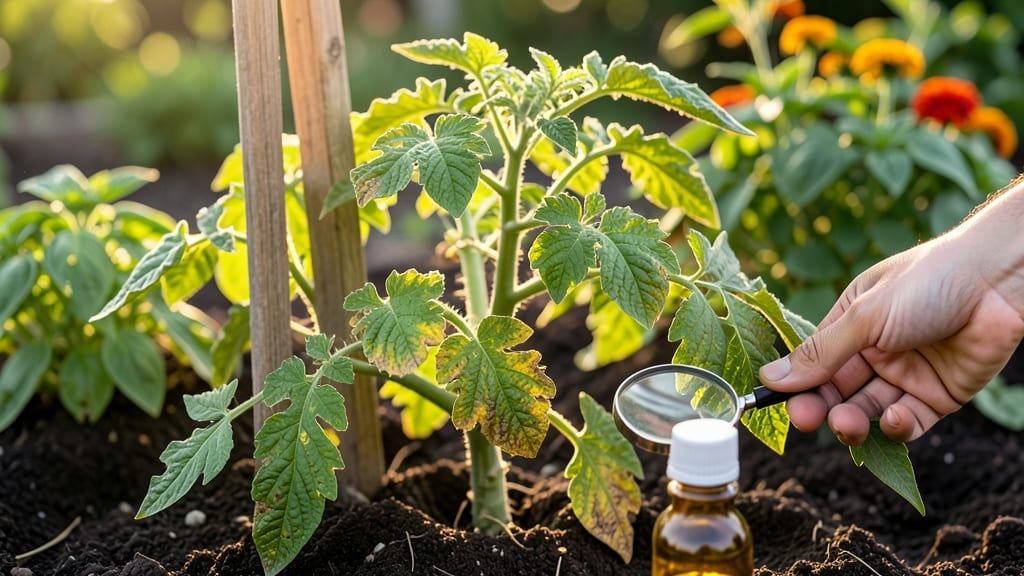
Your tomato plants' leaves curling like a bad hair day? 🌱 That’s curly leaf disease—and it’s often caused by viruses like tomato mosaic or environmental stress. The good news? You can still save your harvest with the right steps. I’ve battled this before, and early action makes all the difference.
First, spot the signs: leaves curling upward, yellowing, or stunted growth. Viruses spread through infected plants or pests, while stress comes from heat, drought, or poor soil.
The key is acting fast—remove infected leaves immediately and isolate affected plants to prevent spreading. Organic neem oil sprays can help deter pests carrying viruses.
For long-term protection, rotate crops yearly, keep your garden clean, and test soil pH to avoid stress. Even if some plants are lost, healthy ones will rebound. With these steps, you’ll keep your tomatoes thriving—no more sad, curled leaves ruining your harvest.
This works for home gardens, containers, or raised beds. Prevention is easier than cure, but even late intervention can save part of your crop. Let’s get those plants back on track!
Root Causes Behind Tomato Leaf Distortion
Curly leaf disease in tomato plants isn’t just a random quirk of nature—it’s a clear signal that something’s disrupting your plants’ health. Understanding the why behind the symptoms is the first step to fixing the problem.
Below, we break down the most common culprits, from microscopic invaders to environmental stressors, with science-backed explanations to help you diagnose the issue accurately.
Viruses are the most frequent cause of curly leaf disease, and they’re particularly sneaky because they can’t be treated with pesticides or fungicides. Here’s how they hijack your tomato plants:
- Tomato Leaf Curl Virus (ToLCV): Spread by whiteflies (tiny, winged insects), this virus attacks the plant’s phloem (the vascular system that transports nutrients). It triggers abnormal cell growth, causing leaves to curl, thicken, and develop a bushy, distorted appearance.
Symptoms often appear as yellowing veins (vein clearing) and stunted growth. - Why it spreads so fast: Whiteflies excrete a sticky substance called honeydew, which can transmit the virus while feeding. Once infected, a plant stays infected for life—there’s no cure.
- Tomato Yellow Leaf Curl Virus (TYLCV): Another whitefly-borne virus, this one disrupts auxin hormone production (a growth regulator), leading to upward-curling leaves, thickened stems, and reduced fruit set. Infected plants may also show silvering or yellowing on the undersides of leaves.
- How to confirm: Look for whiteflies on the undersides of leaves (use a magnifying glass) and check for symptoms on young leaves first. Viral infections often start at the top of the plant and work downward.
Not all curly leaves mean a virus—sometimes, your tomatoes are just overheated or stressed. High temperatures and poor growing conditions can mimic viral symptoms, especially in greenhouse or container-grown plants.
- Heat Stress: Tomatoes thrive in 70–85°F (21–29°C).
Above 90°F (32°C), they struggle to photosynthesize efficiently, leading to: - Leaf curling (a protective response to reduce water loss). - Stunted growth (cells can’t divide properly in extreme heat). - Premature fruit drop (hormonal imbalances). - Pro tip: 🌡️ If your area hits consistent 90°F+ days, provide shade cloth (30–50% coverage) or mulch heavily to keep roots cool.
- Wind & Physical Damage: Strong winds or mechanical stress (like rough handling during transplanting) can cause leaves to curl as a defense mechanism.
Check for: - Uneven curling (not uniform like a virus). - No other symptoms (e.g., spots, discoloration). - Fix it: Use windbreaks or stake plants early to prevent damage.
- Water Stress:
- Underwatering: Leaves curl downward to conserve moisture.
- Overwatering: Roots suffocate, leading to yellowing and upward curling (often with mushy stems).
- Actionable fix: 💧 Water deeply 1–2 times per week (check soil moisture 2 inches down—it should be damp, not soggy).
Some pests don’t just feed—they inject toxins or disrupt plant hormones, leading to curly leaves. Here’s how they do it:
- Whiteflies: As mentioned, they spread viruses, but they also sap nutrients from leaves, causing:
- Sticky honeydew residue (leads to sooty mold).
- Yellowing and curling as the plant weakens.
- How to spot them: Shake the plant over a white sheet—flying whiteflies will reveal themselves.
- Spider Mites: These tiny arachnids (not insects!) thrive in hot, dry conditions and pierce leaf cells, sucking out chlorophyll.
Their feeding causes: - Curling, bronzing, or stippling (tiny white/yellow dots). - Webbing on leaf undersides (a dead giveaway). - Quick fix: 🕷️ Blast leaves with water (mites hate humidity) or use neem oil (1 tsp per quart of water, spray every 5–7 days).
- Aphids: These sap-sucking insects excrete honeydew, which can lead to fungal infections and leaf curl.
They cluster on new growth, causing: - Sticky leaves + curling. - Distorted, underdeveloped leaves. - Remove them: 🚿 Spray with soapy water (1 tsp mild soap per quart) or introduce ladybugs (natural predators).
Sometimes, curly leaves are a cry for help from the soil. Tomatoes need a balanced diet, and deficiencies can cause distortion:
- Potassium Deficiency: Leaves may curl upward with yellowing edges (a classic sign). Potassium helps regulate water and nutrient movement—without it, cells can’t maintain turgor pressure.
- Fix it: 🍠 Add potassium-rich fertilizers (like banana peel tea or greensand) or wood ash (sprinkle lightly around the base).
- Nitrogen Imbalance:
- Too much nitrogen → Soft, dark green leaves that curl (excess growth dilutes cell strength).
- Too little nitrogen → Pale, yellowing leaves (can’t produce enough chlorophyll).
- Balance it: Use a slow-release fertilizer (like 10-10-10) and side-dress with compost mid-season.
- Compacted or Poor Soil: Roots struggling in clay-heavy or waterlogged soil can’t absorb nutrients, leading to:
- Stunted growth + curling from stress.
- Solution: 🏗️ Amend soil with compost or perlite to improve drainage and aeration.
Less common but still possible, certain fungal infections or chemical burns can cause curling:
- Early Blight or Septoria Leaf Spot: While these usually cause spots, severe infections can lead to leaf curling and necrosis (dead tissue).
Look for: - Concentric rings on leaves. - Yellow halos around spots. - Prevent it: 🍄 Rotate crops, avoid overhead watering, and apply copper fungicide preventatively.
- Herbicide Drift: If you (or a neighbor) sprayed glyphosate (Roundup) or 2,4-D, wind can carry residues to your tomatoes, causing:
- Cupping or curling of leaves.
- Stunted growth (hormone disruption).
- Avoid it: Use barrier crops (like marigolds) and stick to organic sprays if herbicides are nearby.
Not sure what’s causing the curl? Run through this symptom flowchart:
| Symptom | Likely Cause | Next Steps |
|---|---|---|
| Curling + whiteflies | Tomato Leaf Curl Virus | Remove infected plants, use yellow sticky traps |
| Curling + sticky leaves | Aphids/Whiteflies | Spray soapy water or neem oil |
| Curling + bronzing | Spider mites | Increase humidity, apply neem oil |
| Curling + yellow edges | Potassium deficiency | Fertilize with potassium-rich amendments |
| Curling + heatwave | Heat stress | Provide shade, mulch heavily |
| Curling + spots | Fungal disease | Prune infected leaves, use fungicide |
How to Fix Wrinkled Tomato Leaves
Curly, puckered tomato leaves don’t have to mean the end of your harvest—with the right steps, you can nurse your plants back to health and even prevent future outbreaks. The key is identifying the root cause (whether it’s pests, viruses, or environmental stress) and applying targeted fixes.
Below, we break down practical solutions for each common trigger, plus proactive tips to keep your tomatoes thriving.
If your tomato leaves are curling and showing yellowing, brown spots, or oily patches, a pathogen is likely to blame.
🍳 Remove Infected Plant Parts
- Snip off curled or spotted leaves with clean pruners (sterilize with rubbing alcohol between cuts).
- Dispose of infected foliage in the trash—never compost it to avoid spreading spores.
- Pro tip: 💡 If the disease is severe, remove the entire plant and burn it (if possible) to prevent contamination.
👨🍳 Apply Fungicidal Sprays
- Copper-based sprays (like copper sulfate) or neem oil (1 tsp per quart of water + a drop of dish soap) can help combat early-stage fungal/bacterial infections.
- Reapply every 7–10 days until new growth appears healthy.
- For stubborn cases, use a registered fungicide (e.g., chlorothalonil or mancozeb) following label instructions.
🥘 Boost Plant Immunity
- Water at the base (avoid wetting leaves) to reduce humidity, which fungi love.
- Improve airflow by pruning crowded branches and spacing plants 18–24 inches apart.
- Fertilize lightly with a balanced organic fertilizer (10-10-10) to strengthen roots—over-fertilizing stresses plants.
Extreme temperatures can cause leaves to pucker or curl as a protective response.
🎯 Adjust Growing Conditions
- Shade cloth (30–50%) can protect plants from heat stress (especially in afternoon sun).
- Row covers or cold frames shield tomatoes from frost or chilly nights (aim for temps above 50°F/10°C).
- Mulch heavily (straw or grass clippings) to regulate soil temperature and retain moisture.
💡 Hydration Hacks
- Water deeply in the morning (1–1.5 inches per week) to prevent wilting.
- Avoid overhead watering—it can cool leaves too quickly, shocking them.
- Use drip irrigation to keep soil consistently moist without stressing roots.
Sap-sucking pests like spider mites, aphids, or whiteflies can distort leaves by draining nutrients.
🔪 Blast Pests Off
- Spray plants with a strong stream of water to dislodge mites/aphids.
- Neem oil spray (1 tbsp per gallon of water) smothers pests and disrupts their life cycle.
- Insecticidal soap (mix 2 tbsp soap + 1 quart water) works for soft-bodied bugs—test on a small leaf first.
🕷️ Introduce Beneficial Predators
- Ladybugs, lacewings, or parasitic wasps (available at garden centers) eat aphids and mites naturally.
- Plant companion crops like marigolds or basil to repel pests.
🌿 Quarantine New Plants
- Inspect every new tomato plant before bringing it home—quarantine for 2 weeks to spot hitchhiking pests.
Once your tomatoes recover, break the cycle with these habits:
- Rotate crops—don’t plant tomatoes (or nightshades like peppers/eggplants) in the same spot for 3 years to starve soil-borne pathogens.
- Solarize soil in late summer: Cover beds with clear plastic for 4–6 weeks to kill fungal spores.
- Start with resistant varieties like ‘Heatmaster’ or ‘Mountain Merit’—they tolerate stress better.
- Monitor regularly—catch curling early by checking undersides of leaves (pests love to hide there).
Remember: Some leaf curl is normal (e.g., young plants stretching or heat acclimating), but persistent curling paired with other symptoms means action is needed. With these fixes, your tomato plants can bounce back—and next season, you’ll be one step ahead! 🍅🌿
Frequently asked questions
Can curly leaf disease spread to other plants in my garden?
Yes, especially if it's caused by viruses like tomato mosaic or whitefly-transmitted strains. These pathogens spread through sap, tools, or pests. Isolate infected plants immediately and disinfect pruners with rubbing alcohol. Avoid composting infected foliage to prevent contamination of healthy plants.
What's the difference between viral curly leaf and heat stress?
Viral infections cause uniform upward curling with yellowing veins, while heat stress produces uneven curling that often appears downward during extreme heat. Check for whiteflies (viral indicator) or provide shade if temperatures exceed 90°F (32°C). Viral symptoms worsen over time; heat stress improves with cooler conditions.
Will pruning help save my tomato plants?
Yes, but only if you remove only infected leaves—never prune healthy growth. Sterilize tools between cuts to prevent spreading pathogens. Focus on removing curled leaves from the top and sides first, as viruses often spread downward. For severe cases, prune back to healthy green leaves to redirect energy.
Can I still harvest tomatoes from infected plants?
You can harvest existing fruit from infected plants, but avoid eating leaves or stems. The virus doesn't spread through fruit, but severely affected plants may produce smaller yields. Remove all infected foliage before harvesting to prevent cross-contamination. For future seasons, choose disease-resistant varieties like 'Mountain Merit' or 'Defiant PhR'.
How long does it take to see improvement after treatment?
For pest-related curling, you may see improvement in 3-5 days with neem oil or insecticidal soap. Viral infections show no cure—treatments only slow progression. Environmental fixes (like shade or proper watering) can show results in 1-2 weeks if the root cause is addressed. Monitor plants daily and adjust treatments as needed.