
How To
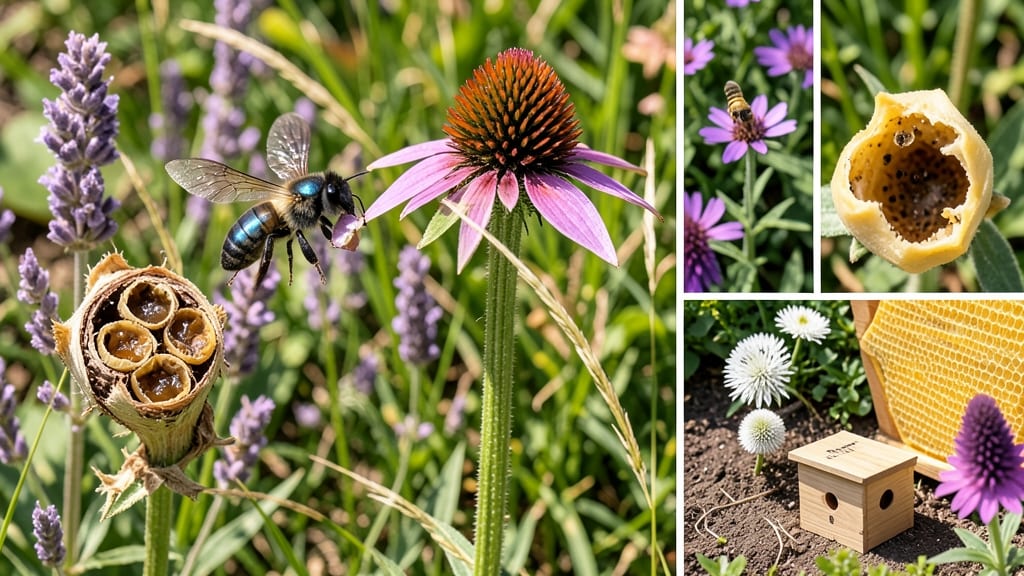
Leaf cutter bees do not make honey; instead, they collect pollen and nectar to provision their nests with a gel-like substance for feeding larvae, playing a vital role in pollination for plants like fruits and vegetables.
Leaf cutter bees focus entirely on pollination rather than honey production, making them nature's unsung heroes for many crops. 🌿 Unlike honeybees, which store nectar as honey, these solitary bees gather pollen to create a nutrient-rich paste for their offspring.
Their unique nesting habits—cutting precise leaf sections to build nests—also make them incredibly efficient pollinators for plants like tomatoes and blueberries, often outperforming honeybees in confined spaces.
What sets them apart is their precision: they pollinate while foraging, transferring pollen directly to flowers as they collect it. This makes them especially valuable for gardeners and farmers looking to boost yields in crops that honeybees might overlook.
Their solitary nature also means they don't swarm, reducing competition with other pollinators.
💡 In This Article
- How Leaf Cutter Bees Pollinate Plants Differently Than Honeybees
- Attracting Leaf Cutter Bees to Your Garden for Better Pollination
How leaf cutter bees pollinate plants differently than honeybees
Leaf cutter bees operate on a completely different biological mission than honeybees. While honeybees collect nectar to produce honey—a sugary energy reserve—their leaf-cutting cousins focus solely on gathering pollen and nectar to create a protein-rich gel for their larvae.
This gel is a high-energy food paste made by mixing pollen with nectar and salivary enzymes, creating a texture similar to thick peanut butter. 🌿 The process is far more efficient for pollination because these bees carry pollen on specialized hairs covering their entire bodies, not just on their legs like honeybees.
Their pollination method is also more precise due to their solitary nature. Leaf cutter bees enter flowers head-first, brushing against both male and female reproductive parts in a way that ensures thorough pollen transfer.
Studies show they can pollinate up to 95% of flowers they visit, compared to honeybees' average of 50-70%. This makes them particularly valuable for crops like tomatoes, blueberries, and alfalfa, where every pollination event matters.
Their smaller size also allows them to access flowers that honeybees can't reach, like those in dense plantings or small greenhouse conditions.
Another key difference lies in their nesting behavior. Leaf cutter bees don't live in hives—they're solitary insects that cut perfect circular sections from leaves (typically rose or raspberry leaves) to line their nests in pre-existing cavities. This behavior creates a clean, organized environment that minimizes disease risk.
Unlike honeybee colonies, which can collapse from pests or diseases, leaf cutter bee populations remain stable because each female provisions her own nest independently. 🐝 Their nesting habits also make them easier to attract with simple garden modifications, like providing drilled wooden blocks or hollow stems.
Leaf cutter bees also exhibit different foraging patterns. While honeybees work in coordinated groups covering large territories, leaf cutter bees operate individually within a 30-50 foot radius of their nest site. This localized foraging means they're more likely to repeatedly visit the same plants, increasing pollination efficiency for gardeners.
Their activity peaks during warm, sunny days between 10 AM and 4 PM, making them predictable and reliable pollinators for home gardens when conditions are right.
What truly sets them apart is their crop specialization. Leaf cutter bees have a particular affinity for plants with open, accessible flowers like tomatoes, squash, and various berries.
Research from the University of California shows they can increase tomato yields by up to 30% in greenhouse settings where honeybees struggle to navigate. Their gentle foraging also reduces flower damage compared to heavier honeybee activity, which can sometimes bruise delicate blossoms. 🌱
Understanding these differences helps explain why gardeners and farmers are increasingly turning to leaf cutter bee conservation. While honeybees remain essential for large-scale agriculture, leaf cutter bees fill critical pollination gaps in smaller, more specialized crops.
Their absence would leave many garden varieties under-pollinated, leading to lower fruit sets and reduced harvests. The key to maximizing their benefits lies in creating environments that support their unique nesting and foraging behaviors.