
Propagation
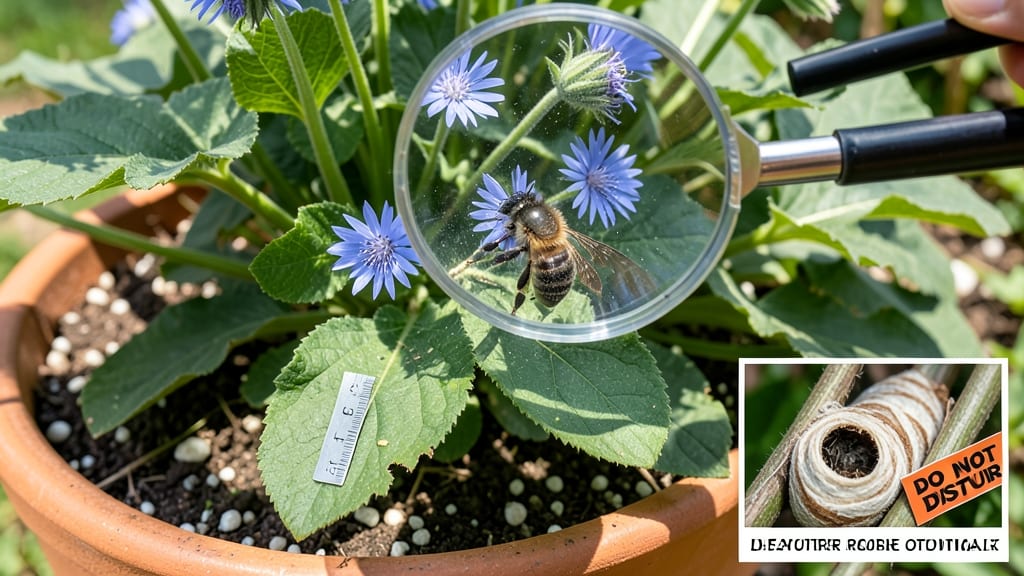
Leaf cutting bees do not sting humans, since they lack a stinger entirely and are naturally non-aggressive. Their solitary lifestyle means they focus solely on gathering leaves for nesting rather than defending territory.
These bees are often mistaken for wasps due to their black-and-yellow striped appearance, but their docile nature makes them completely harmless. 🌿 Unlike honeybees or bumblebees, they don't swarm or become aggressive when disturbed—they simply continue their leaf-cutting work.
In fact, their pollination benefits far outweigh any potential concerns, as they're excellent at pollinating crops like tomatoes and blueberries while leaving humans completely unharmed.
What sets them apart biologically is their lack of both a stinger and the defensive instincts found in other bee species. Their solitary nature means they don't form colonies or protect hives, so there's no need for aggressive behavior.
This makes them perfect garden allies—just look for their distinctive leaf-cutting patterns on plants and you'll know they're hard at work improving your pollination rates.
💡 In This Article
- Why Leaf Cutting Bees Rarely Sting or Bite
- How to Identify and Encourage Leaf Cutting Bees in Your Garden
Why leaf cutting bees rarely sting or bite
Leaf cutting bees belong to the genus Megachile, and their biology explains why they pose zero threat to humans.
Unlike honeybees or wasps, these solitary insects lack a functional stinger entirely—what appears to be a stinger is actually a smooth, non-functional structure called an ovipositor, used only for egg-laying.
Their bodies are also 0.5-1 inch long, making them too small to deliver any meaningful sting even if they wanted to. This absence of a stinger isn't just a coincidence; it's an evolutionary adaptation tied to their peaceful lifestyle.
Their docility stems from their solitary nature and nesting habits. While honeybees defend hives and wasps protect territories, leaf cutting bees work alone in small, individual nests. Each female collects circular pieces of leaf (about 0.25-0.5 inches wide) to line her nesting tunnels in wood or hollow stems.
This solitary focus means they have no need to defend colonies or swarm when threatened. 🌿 Even when handled carefully, they'll simply drop their leaf pieces and fly away rather than attempt to bite or sting.
What makes them even more beneficial is their pollination efficiency. As they collect nectar and pollen from flowers like tomatoes, blueberries, and raspberries, their dense, fuzzy bodies pick up and transfer pollen more effectively than many other bee species.
Studies show they can pollinate up to 95% of flowers they visit, compared to honeybees' average of 50-70%. Their leaf-cutting behavior also creates tiny wounds on leaves, which some plants actually use as natural pruning points to stimulate new growth.
Comparing them to more familiar bees reveals striking differences. Honeybees have stingers and can deliver venom when provoked, while leaf cutting bees have no such capability. Wasps, with their smooth bodies and aggressive territorial behavior, are entirely different creatures.
The key distinction lies in their mouthparts: leaf cutters use their mandibles to precisely cut leaves (like tiny scissors), while other bees use them for gathering pollen or defending themselves. This specialized adaptation for leaf-cutting explains why they've evolved away from aggressive behaviors entirely.
Even their nesting sites reflect their peaceful nature. Unlike honeybee hives that require complex social structures and defense mechanisms, leaf cutting bees use simple pre-existing cavities in wood, stems, or even man-made nesting blocks.
A single block can house dozens of these gentle pollinators, each working independently without any need for group defense. 🐝 This makes them ideal candidates for urban gardens and small farms, where space and resources are limited.
What most people don't realize is how their behavior benefits gardeners. When you see perfect circles cut from leaves, it's actually a sign of healthy pollination activity. These bees prefer plants with open flowers like tomatoes and eggplants, making them excellent allies for vegetable gardens.
Their presence indicates a thriving ecosystem where other pollinators are likely active too, creating a positive feedback loop for plant health.