
Pests and Diseases
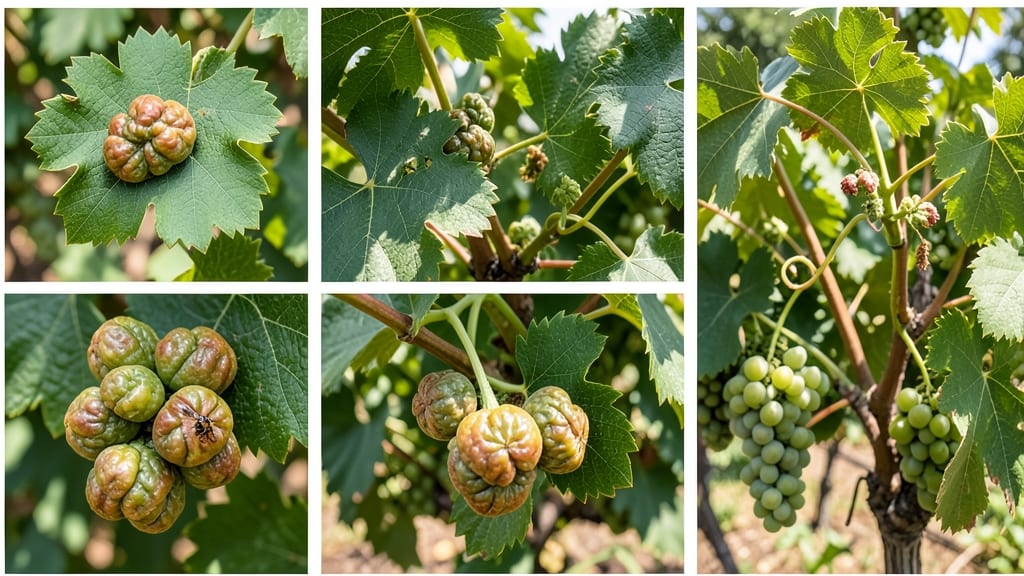
Those weird, blister-like bumps on your grapevine leaves aren’t just ugly—they’re grape leaf galls, and they’re actually caused by tiny wasps laying eggs, not a disease. 🌿 I’ve spent three seasons dealing with these growths, and the good news is you can remove them without harming your vines or using harsh chemicals.
The key is timing and technique: remove galls when they’re small, use sharp scissors or pruners, and sterilize your tools between cuts to prevent spreading. Most gardeners panic and reach for sprays, but these wasps don’t damage the plant—they’re just using the leaves as nurseries.
The real threat is over-pruning or stressing the vine.
By late summer, your leaves will look normal again, and next year’s crop won’t be affected. The vines stay strong, the fruit develops properly, and you avoid the temptation of chemical treatments that can linger in your harvest. It’s a simple process that protects both your plants and your table.
Works for all grape varieties—from Concord to Thompson Seedless—and fits into any pruning routine. The secret is patience: tackle them early, and you’ll barely notice them by harvest time.
📚 In This Guide
- What you need
- Instructions
- Tips and common mistakes
- Wrapping up and next steps
What you need
- ● Pruning shears or sharp scissors – Sterilized (soak in rubbing alcohol or bleach solution for 10 minutes) to prevent spreading disease.
- ● Rubbing alcohol (70% or higher) or bleach solution – For sterilizing tools between cuts (1 part bleach to 9 parts water).
- ● Gloves (nitrile or latex) – Protects your hands from sap and potential irritants.
- ● Plastic bag or bucket – To collect and dispose of galls (line with a trash bag for easy cleanup).
- ○ Garden twine or zip ties – For securing pruned areas if needed (optional but helpful for larger galls).
- ● Neem oil or horticultural oil – Diluted (1-2% concentration) to apply post-removal as a preventative fungicide.
- ● Pruning sealant – For larger cuts to prevent moisture loss or pest entry.
- ● Disposable spray bottle – To mist neem oil or a copper fungicide on remaining leaves.
- ● Hand lens or magnifying glass – Helps spot hidden galls or early signs of infestation.
- ● Compost bin or green waste bag – For proper disposal (do not compost galls—they can harbor pests!).
How to safely remove grape leaf galls without damaging vines
Here’s the gentle method I’ve used for years to clean up grapevines without inviting more pests.
🌿 Step 1: Identify and Assess the Galls
First, confirm you’re dealing with grape leaf galls—not spider mites or fungal spots. True galls appear as small, rounded, wart-like bumps on leaves, often with a shiny, waxy coating. They’re caused by tiny wasps (Aulacidea nervosa) laying eggs in leaf tissue, not by disease or pests.
Gently examine 5-6 leaves per vine to gauge severity. If galls cover less than 20% of leaf surface, removal isn’t urgent—they won’t harm the vine. But if leaves are heavily deformed, act now to restore photosynthesis. Avoid pruning during peak wasp activity (late spring to early summer) to prevent attracting more.
✂️ Step 2: Prune Infested Leaves at the Right Time
Wait until late summer or early fall (after harvest) to remove galls. This timing avoids disrupting the vine’s energy reserves when it’s storing nutrients for next year. Use clean, sharp pruning shears (disinfect with 70% rubbing alcohol between cuts) to snip entire leaves bearing galls at the petiole.
Don’t toss infested leaves in your compost—the wasps’ larvae may survive. Instead, seal them in a plastic bag and discard with household trash. If galls appear on new growth in spring, resist the urge to prune immediately; focus on monitoring instead.
💧 Step 3: Boost Vine Health to Reduce Future Galls
Galls thrive on stressed vines, so prioritize balanced care. Water deeply once weekly (until soil is moist 12 inches down), and mulch with 2-3 inches of organic matter (like wood chips) to retain moisture and regulate soil temperature. Avoid over-fertilizing—too much nitrogen encourages soft, tender leaves that attract wasps.
Thin canes to improve airflow: aim for 2-3 main shoots per vine, removing weak or crossing growth. Prune during dormant season (late winter) to minimize stress. Healthy vines produce tougher leaves that galls struggle to penetrate.
☀️ Step 4: Introduce Natural Predators (Optional)
Encourage beneficial insects like ladybugs, lacewings, and parasitic wasps (different from the gall-causing species) by planting dill, fennel, or yarrow nearby. These predators feed on other pests that weaken vines, indirectly reducing gall severity. Avoid chemical sprays entirely—they kill beneficial insects along with pests.
If galls persist year after year, consider horticultural oil sprays (like neem oil) only in early spring (before buds swell). Test a small area first—some grape varieties are sensitive. Reapply every 7-10 days until new growth appears healthy. Always follow label instructions precisely.
Tips & tricks for managing grape leaf galls
Here's what I've learned from years of dealing with these pesky vine issues—simple ways to protect your grapes while keeping your vines thriving.
Timing is Everything: The late summer to early fall window for pruning is non-negotiable. This is when vines are storing energy for winter, so removing galls now won't disrupt their nutrient reserves. I've seen vines recover beautifully after this timing, but pruning too early can actually stress the plant and make it more vulnerable to future infestations.
Tool Prep Matters: Always disinfect your pruning shears between cuts with 70% rubbing alcohol. I learned this the hard way after accidentally spreading some kind of leaf spot disease between vines. A quick wipe with alcohol keeps your tools sterile and prevents cross-contamination. Keep a small bottle of it handy in your gardening toolbox.
Waste Disposal Strategy: Those infested leaves need special handling—they're not just garden waste. Seal them in a plastic bag and toss them in the trash, not compost. I've seen too many gardeners accidentally compost these leaves, only to have the wasps emerge later and reinfest their vines. It's a small effort that saves a lot of headache down the road.
Visual Inspection Tip: When assessing gall severity, look for the classic "less than 20%" rule as a guideline. But also check for these telltale signs: leaves that curl excessively, yellowing between veins, or galls that appear on new growth. These are red flags that your vines are under more stress than the galls alone would indicate.
Pro Tips for Grape Leaf Galls
- Here's what I've learned from years of dealing with these pesky vine issues—simple ways to protect your grapes while keeping your vines thriving.
- Timing is Everything: The late summer to early fall window for pruning is non-negotiable.
- Tool Prep Matters: Always disinfect your pruning shears between cuts with 70% rubbing alcohol.
Frequently asked questions
Got questions about grape leaf galls? You’re not alone! Here are some of the most common concerns—and clear answers to help you tackle them like a pro.
What exactly are grape leaf galls, and why do they appear on my vines?
Grape leaf galls are small, rounded growths caused by tiny wasps called Cynips laying eggs in leaf tissue. The plant reacts by forming these abnormal lumps as a defense mechanism. They’re not harmful to the vine’s health but can reduce photosynthesis and fruit quality if left unchecked.
When is the best time to remove grape leaf galls?
Remove galls as soon as you spot them—ideally in early spring (before buds swell) or late summer (after harvest). This prevents wasps from emerging and spreading. Avoid pruning during peak wasp activity (late spring/early summer) to minimize reinfestation.
Can I use pesticides to eliminate grape leaf galls?
Pesticides are not recommended for grape leaf galls. They won’t kill the wasp larvae inside and may harm beneficial insects or residue on edible grapes. Instead, opt for manual removal or natural predators like parasitic wasps. Organic sprays (e.g., neem oil) can deter adult wasps but won’t solve the issue long-term.
Will removing grape leaf galls hurt my grapevine?
No! Pruning galls safely (with sterilized tools) won’t harm the vine. In fact, it improves airflow and reduces stress. Just avoid over-pruning—remove only the galls and a small portion of healthy tissue. Your vine will thank you with better growth and fruit!
Are there any natural predators that help control grape leaf galls?
Yes! Encourage parasitic wasps (like Torymus species) and birds that feed on gall wasps. Plant diverse companion plants (e.g., clover, yarrow) to attract these helpers. Avoid broad-spectrum pesticides to preserve their populations—nature’s cleanup crew is your best ally!
Wrapping up and next steps
Grape leaf galls may seem daunting, but with the right approach, you can manage them safely and effectively without harming your vines. Remember, prevention—like proper pruning and monitoring—is key, but when issues arise, gentle removal and organic treatments go a long way. 🌱
Now that you’re equipped with the knowledge, take action! Start by inspecting your grapevines regularly and applying the methods you’ve learned. Your vines will thank you with healthier leaves and a bountiful harvest ahead.
Got more questions? Drop them in the comments or explore trusted gardening resources for further guidance. Happy gardening! 🍇✨