
Container Gardens
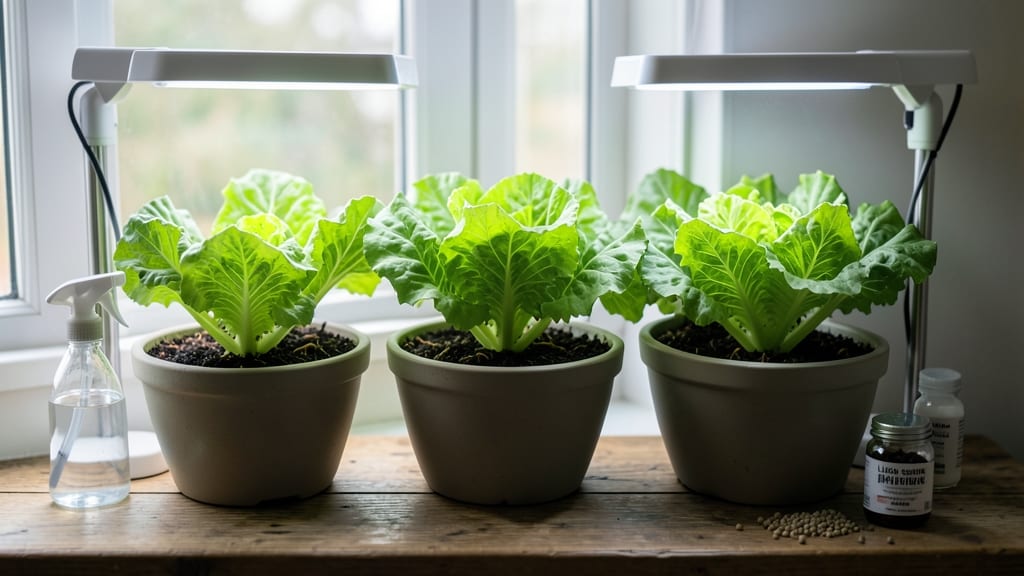
Growing leafy greens indoors isn't just possible—it's the fastest way to fresh salads year-round. 🌱 I've turned my kitchen windowsill into a mini farm that produces crisp lettuce and tender spinach in just 3 weeks, even when it's snowing outside.
The secret? A mix of the right varieties, smart lighting, and a watering routine that keeps roots happy without drowning them.
Start with varieties bred for quick harvests: buttercrunch lettuce, baby spinach, or baby kale. They thrive in containers as small as 6 inches wide, so space isn't the limiting factor.
For light, a south-facing window works for 4-6 hours of sunlight, but most days we supplement with a basic LED grow light for 12-14 hours. The soil stays moist but never soggy—think damp sponge, not swamp.
Within 21 days, you'll be harvesting enough greens for 3-4 salads, and the plants keep producing for weeks. The texture stays crisp, the flavor sweeter than store-bought, and you avoid the $4 price tag for a single bag.
Even my black thumb can't kill these—once you master the light and water balance, it's impossible to mess up.
Works for any indoor space, from bright living rooms to dim basements with grow lights. The same setup scales from a single pot to a full windowsill garden. Let's get those seeds sprouting!
Common Causes Of Indoor Leafy Green Struggles
Growing leafy greens indoors can be a rewarding experience, but sometimes your plants don’t thrive as expected. Understanding why this happens is the first step to fixing it. Below, we break down the most common culprits—backed by science—and explain how they sabotage your indoor harvest.
Leafy greens like spinach, kale, and lettuce are phototropic, meaning they rely heavily on light for photosynthesis. Without enough light—or the right spectrum—they’ll grow weak, leggy, or pale.
- Why it happens: Indoor light sources (like standard bulbs) often lack the blue (400–500 nm) and red (600–700 nm) wavelengths that greens need for optimal growth. Natural sunlight is the gold standard, but artificial light can fall short.
- Actionable fix:
- Use full-spectrum LED grow lights (12–16 hours/day) or supplement with sunlight near a south-facing window.
- Keep plants 6–12 inches away from light sources to avoid leaf burn.
Water is the lifeblood of your greens, but too much or too little can stunt growth or invite disease.
Why it happens:
Issue
Cause
Result
Overwatering
Poor drainage, compacted soil, or excessive moisture
Root rot, yellowing leaves, and fungal infections
Underwatering
Infrequent watering or dry soil
Wilting, crispy edges, and stunted growth
Actionable fix:
- Use well-draining soil (mix in perlite or coco coir) and pots with drainage holes.
- Water when the top inch of soil feels dry—stick your finger in to check!
- Avoid soggy soil by letting excess water drain away after watering.
Leafy greens thrive in specific temperature and humidity ranges. Stray too far, and they’ll struggle.
- Why it happens:
- Cold drafts (below 50°F/10°C) slow metabolism, leading to pale, slow-growing leaves.
- Heat stress (above 85°F/29°C) causes wilting and bolting (premature flowering).
- Low humidity (<40%) dries out leaves, making them crispy or prone to pests.
- Actionable fix:
- Keep temps between 60–75°F (15–24°C)—use a small fan or heater if needed.
- Increase humidity with a pebble tray or misting (avoid soggy leaves).
- Avoid placing plants near AC vents or radiators.
Leafy greens are heavy feeders and need a balanced diet of nitrogen (N), phosphorus (P), and potassium (K), plus micronutrients like magnesium and iron.
- Why it happens:
- Nitrogen deficiency (yellowing lower leaves) occurs if soil lacks organic matter or fertilizer.
- Over-fertilizing (burnt leaf edges) happens when salt buildup disrupts root function.
- pH imbalances (too acidic or alkaline) lock out essential nutrients like iron or calcium.
- Actionable fix:
- Use a balanced liquid fertilizer (e.g., 5-5-5 or fish emulsion) every 2–3 weeks.
- Test soil pH—aim for 6.0–7.0 for most greens (adjust with lime or sulfur if needed).
- Rotate crops or refresh soil every 3–4 months to prevent nutrient depletion.
Indoor gardens aren’t pest-proof! Common issues include aphids, spider mites, powdery mildew, and bacterial spots.
- Why it happens:
- High humidity creates ideal conditions for fungal diseases like downy mildew.
- Weak plants (from poor light or nutrients) attract pests like aphids or whiteflies.
- Cross-contamination happens if tools or hands spread pathogens between plants.
- Actionable fix:
- Inspect leaves weekly for signs of pests (sticky residue, webs, or holes).
- Use neem oil or insecticidal soap for mild infestations.
- Space plants for airflow (reduces humidity-related diseases).
- Quarantine new plants for 1–2 weeks before introducing them to your garden.
Now that you know the root causes, you’re ready to diagnose and fix issues fast! Next, we’ll cover how to optimize your indoor setup for fast, lush growth in just 3 weeks.
Quick fixes for indoor green problems
Struggling with leggy stems, yellowing leaves, or pests in your indoor leafy greens? Don’t toss your plants—most issues have simple, effective solutions. Below, we’ve mapped common problems to easy fixes, plus prevention tips to keep your greens thriving. Let’s turn those woes into wins!
Fix: Boost light exposure immediately and adjust growing habits.
- 🔥 Move closer to the light source – Place your greens within 6–12 inches of a bright window (south-facing is ideal) or under a grow light (LED or fluorescent) for 12–16 hours daily. If using natural light, rotate the pot quarter-turns every few days to prevent uneven growth.
- 🍳 Supplement with artificial light – If natural light is insufficient (common in north-facing windows), add a full-spectrum grow bulb 6–12 inches above the plants. Keep it on a timer for consistency.
- 👨🍳 Prune and harvest strategically – Snip the top 2–3 inches of stems to encourage bushier growth. Harvest outer leaves first to avoid overcrowding, which weakens stems.
💡 Prevention Tips:
- Invest in a light meter ($10–$20) to check light intensity—aim for 10,000–15,000 lux for leafy greens.
- Use reflective surfaces like aluminum foil or white walls to bounce light around.
- Choose compact varieties like ‘Baby Leaf’ lettuce, ‘Outredgeous’ red kale, or ‘Tatsoi’—they tolerate lower light better than tall varieties like romaine.
Fix: Diagnose the cause and adjust care routines.
- 🌡️ Overwatering? – Let the top 1–2 inches of soil dry out between waterings. Use pots with drainage holes and a cache pot (tray with pebbles) to prevent root rot.
- 💧 Underwatering? – Water deeply until it drains from the bottom, then empty the cache pot. Stick your finger 1 inch into the soil—if it’s dry, water again.
- 📊 Nutrient deficiency? – Switch to a balanced liquid fertilizer (like 5-5-5 or fish emulsion) every 2–4 weeks. For yellow lower leaves, it’s often nitrogen deficiency (use a high-nitrogen fertilizer). For yellowing with brown edges, it’s usually over-fertilization—flush the soil with water.
🎯 Prevention Tips:
- Use well-draining soil – Mix 50% potting mix + 50% perlite or coco coir for aeration.
- Water in the morning to reduce evaporation and fungal risks.
- Rotate fertilizers – Alternate between fish emulsion (nitrogen-heavy) and kelp extract (micronutrients).
Fix: Isolate, treat, and prevent future outbreaks.
- 🔪 Aphids or spider mites? – Spray with neem oil solution (1 tsp neem oil + 1 tsp mild soap + 1 quart water) every 3–4 days until gone. For severe cases, use insecticidal soap (follow label instructions).
- 🍳 Fungus gnats? – Let the soil dry slightly between waterings. Place yellow sticky traps near the plants to catch adults. Add a thin layer of sand or diatomaceous earth on top of the soil as a barrier.
- 🌿 Mold or powdery mildew? – Improve airflow with a small fan (run for 1–2 hours daily). Spray plants with a baking soda solution (1 tsp baking soda + 1 quart water + a drop of soap) weekly.
✨ Prevention Tips:
- Quarantine new plants for 1–2 weeks before introducing them to your garden.
- Inspect leaves weekly – Early detection = easier fixes!
- Encourage beneficial insects – Release ladybugs or lacewings (available online) to prey on pests naturally.
Fix: Adjust environmental conditions and feeding habits.
- 🌡️ Low humidity? – Place a humidifier nearby or group plants together. For extra moisture, mist leaves lightly in the morning (avoid evening misting to prevent fungal growth).
- 📊 Over-fertilized? – Flush the soil with plain water to leach excess salts. Reduce fertilizer to half-strength for 2–4 weeks.
- 💧 Underwatered? – Check soil moisture and water slowly until it drains from the bottom.
💡 Prevention Tips:
- Group plants together to create a microclimate with higher humidity.
- Avoid cold drafts (e.g., near AC vents) or direct heat sources (e.g., radiators).
- Use a moisture meter to track soil conditions accurately.
With these fixes, your indoor leafy greens should bounce back in no time—and with a little prevention, you’ll enjoy lush, pest-free harvests in just 3 weeks! 🌿✨
Frequently asked questions
What are the fastest-growing leafy greens for indoor containers?
For quick results, choose baby spinach (ready in 3-4 weeks), buttercrunch lettuce (3-4 weeks), or tatsoi (4-5 weeks). These varieties thrive in small spaces and don't need deep soil. Avoid slow growers like full-size romaine or Swiss chard for your first indoor harvest.
Can I use regular potting soil for indoor leafy greens?
Regular potting soil works but may compact over time. For better drainage and aeration, mix it with 30% perlite or coco coir. This prevents root rot and keeps moisture consistent. A lightweight blend also helps prevent leggy growth by encouraging stronger root systems.
How do I know if my indoor greens are getting enough light?
Check for leggy stems (stretching toward light) or pale yellow leaves—these are clear signs of insufficient light. Place your greens within 6-12 inches of a south-facing window or under a grow light for 12-14 hours daily. Rotate containers weekly for even growth.
What's the best way to harvest without killing the plant?
For continuous harvests, use the "cut-and-come-again" method: Snip outer leaves when they reach 3-4 inches, leaving the inner growth intact. Avoid cutting more than 1/3 of the plant at once. This encourages bushier regrowth and extends your harvest by 4-6 weeks.
Can I grow leafy greens indoors without natural sunlight?
Yes! Use a full-spectrum LED grow light (like a 20W bulb) placed 6-12 inches above plants for 14-16 hours daily. Position lights on timers for consistency. For best results, combine with a reflective surface (like aluminum foil) to maximize light distribution.