
Size
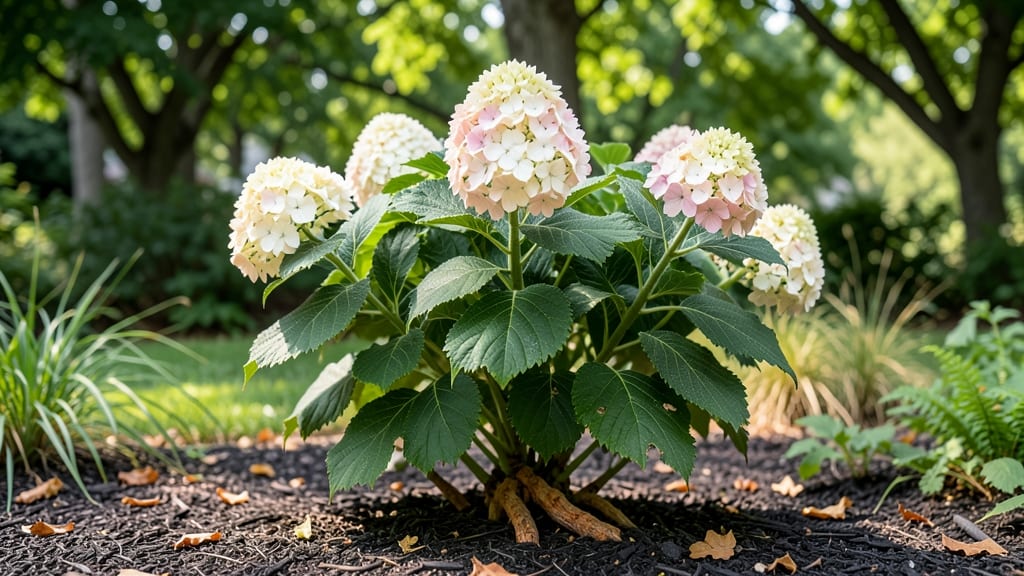
If you're dreaming of a stunning, low-maintenance shrub with fiery fall foliage and fragrant summer blooms, oak leaf hydrangeas could be your perfect match—but first, you need to know their mature height ranges to plan your garden space wisely.
Standard varieties like 'Snow Queen' reach 8 feet or taller, while dwarf types such as 'Pee Wee' stay compact at just 3 to 4 feet. Even the tallest varieties grow slowly, taking 3 to 5 years to reach full size.
Learn how sunlight, soil, and pruning habits influence their height—and discover the best varieties for small spaces or bold garden statements.

Mature height ranges of oak leaf hydrangeas: variety-specific growth charts
Choosing the right oak leaf hydrangea (Hydrangea quercifolia) for your garden starts with understanding their mature height ranges. These stunning shrubs offer vibrant fall foliage and fragrant summer blooms, but their size varies dramatically by variety.
Knowing these dimensions helps you select the perfect fit for your landscape—whether you have a cozy container garden or a sprawling backyard.
Oak leaf hydrangeas typically reach maturity between 3 to 10 years, with growth rates of 12 to 24 inches per year. Their final height depends on both genetics and your pruning practices.
Below, we break down the most popular varieties so you can plan your garden layout with confidence—no more guessing whether that stunning shrub will outgrow its space!
If you're planning your garden layout, mature height is just one piece of the puzzle. The spread of these shrubs also matters—especially for varieties like 'Snow Queen,' which can reach 7 feet wide.
Place taller varieties like 'Annabelle' or 'Amethyst Falls' toward the back of borders or against fences to create a stunning vertical backdrop.
For small gardens or containers, dwarf varieties like 'Pee Wee' or 'Little Lime' are game-changers. These compact options thrive in 15-gallon pots and add year-round interest without overwhelming your space. Just ensure they get well-draining soil and partial shade to prevent stress from afternoon sun.
One of the biggest misconceptions about oak leaf hydrangeas is that they all grow into towering shrubs. In reality, dwarf varieties can stay under 4 feet tall with proper pruning. If you're unsure about a variety's growth potential, check the nursery tag—it often lists mature dimensions.
This small step saves you from future headaches of overgrown shrubs blocking walkways or crowding other plants.
Light conditions also influence height. While oak leaf hydrangeas tolerate partial shade, those in full sun may grow slightly taller and produce more blooms. However, their fall foliage will be most vibrant with morning sun and afternoon shade.
For shadier spots, growth may be slower but still lush.
Pro tip: If you're growing oak leaf hydrangeas in containers, choose a variety like 'Skeeter' and prune regularly to keep it compact and bushy.
Containers dry out faster, so water deeply 2–3 times per week during summer. Mulch around the base to retain moisture and protect roots from temperature swings.
Ready to plan? Use this chart as your guide, then explore our garden design tips to place your oak leaf hydrangea where it will shine—whether as a standalone specimen or part
How to control oak leaf hydrangea height: pruning tips for compact growth
Oak leaf hydrangeas (Hydrangea quercifolia) can grow 6 to 8 feet tall if left unpruned, but with the right techniques, you can easily shape them into a compact, manageable shrub.
The key is understanding when and how to prune to encourage bushier growth while maintaining their stunning foliage and blooms. Pruning also helps prevent overcrowding and keeps your plant healthy for years.
Timing is everything when pruning oak leaf hydrangeas. Unlike some hydrangeas, these beauties bloom on old wood, meaning last year's growth produces this year's flowers. If you prune too late, you risk cutting off next year's blooms.
The best time to prune is late winter or early spring, just as new growth begins to appear. This gives your plant time to develop fresh blooms for the season.
Here’s a simple step-by-step guide to pruning for compact growth while keeping your oak leaf hydrangea thriving:
- Inspect your hydrangea for dead, diseased, or crossing branches. These should be removed first to improve airflow and plant health.
- Look for overly long stems that are spoiling your desired shape. These are prime candidates for trimming.
- Use clean, sharp pruners to cut back 1/3 of the oldest stems at the base. This encourages new growth and keeps your plant fuller.
- Trim newer stems lightly to promote branching. Aim for a rounded, natural shape rather than a flat top.
- Avoid heavy pruning of flowering stems—only trim back to the first set of leaves below the blooms to preserve next year’s flowers.
- Remove spent blooms in late summer to redirect energy to foliage and next year’s buds.
- After flowering, lightly prune to shape but avoid cutting back more than 20% of the plant to maintain next year’s blooms.
- Apply a 2-3 inch layer of mulch around the base to protect roots and retain moisture, especially in hot climates.
For dwarf varieties like 'Pee Wee' or 'Little Lime,' pruning is even simpler. These stay 3 to 5 feet tall naturally, so a light trim to remove dead wood and shape is all you need.
Focus on keeping them bushy and proportional to their mature size. If your oak leaf hydrangea is in a container, prune more aggressively in early spring to control height and encourage compact growth.
Remember, patience is key—oak leaf hydrangeas respond well to gradual pruning. Over-pruning can stress the plant and reduce flowering. With consistent care, you’ll enjoy a lush, manageable shrub that fits perfectly in your garden design. Happy pruning! ✂️🌿