
How To
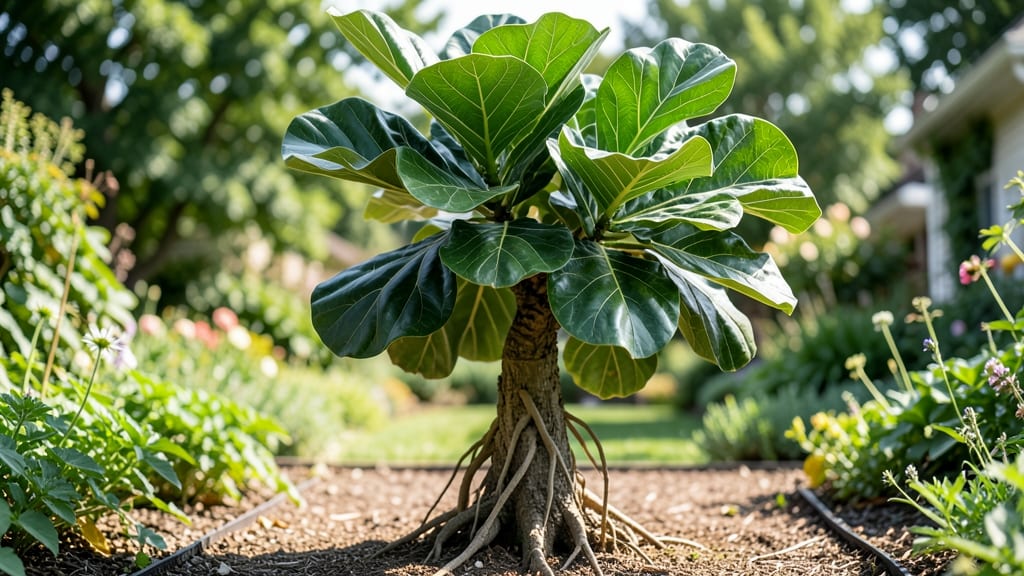
A fiddle leaf fig 🌿 can grow between 3 and 10 feet tall—depending on its variety, care, and how much you’re willing to prune.
If you’ve ever eyed one in a nursery and wondered whether it’ll stretch toward your ceiling or stay manageable on a shelf, the answer depends on a few key factors.
Picture this: a 10-foot-tall statement plant in your living room, its broad leaves filtering sunlight like a tropical canopy—until you realize it’s now blocking the hallway. Or, on the flip side, a compact 3-foot version that fits perfectly on your desk but never reaches its full potential.
The difference? Light, pot size, and pruning habits.
Most fiddle leaf figs hit 6 to 8 feet indoors with standard care, but some varieties like ‘Bradford’ lean toward the taller end, while others stay shorter with consistent pruning.
The good news? You’re not stuck with whatever height your plant chooses—with the right techniques, you can shape its growth to fit your space.
In this guide, I’ll break down the height ranges by variety, share pro tips to control growth, and reveal the common mistakes that either stunt or skyrocket your fiddle leaf fig’s size.
By the end, you’ll know exactly how to keep it at your ideal height—whether that’s a floor-filling giant or a compact desk buddy.

Fiddle leaf fig height by variety: from compact to towering giants
If you’ve ever wondered, "How tall does a fiddle leaf fig grow?" the answer depends entirely on the variety you choose and how you care for it. Some varieties stay under 5 feet, while others can reach 10 feet indoors—yes, even in your living room!
The key lies in genetics and environmental factors like light, pot size, and pruning habits.
Fiddle leaf figs (Ficus lyrata) are naturally tropical trees, and their growth potential is hardwired into their variety. For example, the ‘Bradford’ variety is known for its bold, upright growth, while ‘Ruby’ tends to stay slightly more compact.
Even within the same species, dwarf varieties (like those propagated from lower branches) can stay under 6 feet, while standard types may stretch toward 10 feet if given ideal conditions.
Here’s the game-changer: Genetics control the ceiling, but your care sets the floor. A fiddle leaf fig in a small pot with low light will grow slower, while one in a large container with bright, indirect light will shoot up faster.
Even pruning habits play a role—regular trimming keeps plants bushier and shorter, while neglect can lead to leggy, towering stems.
The ‘Bradford’ variety is the tallest of the bunch, often reaching 10 feet indoors with proper care. This makes it a showstopper for large rooms or even as a small tree in a spacious home.
If you’re working with limited ceiling height, the ‘Ruby’ or ‘Tiny’ dwarf varieties are excellent choices, staying under 6 feet even with aggressive growth conditions.
But here’s where it gets interesting: Even the same variety can grow differently based on how you prune it.
For example, a ‘Bradford’ left unpruned might shoot up to 10 feet, but if you pinch back the top growth regularly, it’ll branch out and stay shorter and bushier. This is why many gardeners prune their fiddle leaf figs not just for shape, but to control height entirely.
Light is another critical factor. A fiddle leaf fig in a south-facing window with bright, indirect light will grow faster and taller than one in a north-facing room.
If you notice your plant stretching toward the light with long, spindly stems, it’s a sign it’s reaching for more light—and that’s when it’ll grow the fastest vertically. To combat this, rotate your plant every few weeks or supplement with a grow light to encourage balanced growth.
Pot size also plays a role. Fiddle leaf figs hate being root-bound, and when their roots are cramped, they focus on leaf production rather than height. Upgrading to a larger pot (1–2 inches wider than the current one) can boost vertical growth significantly.
However, if you want to keep your plant compact, a smaller pot will naturally slow its upward growth—just be prepared for more frequent watering since smaller pots dry out faster.
One common misconception is that all fiddle leaf figs grow the same. In reality, propagation method matters. Plants grown from cuttings (especially lower branches) tend to stay shorter and bushier, while those grown from seed or higher branches may grow taller and leggier.
If you’re buying a fiddle leaf fig and want a compact version, ask the nursery about propagation source—lower-branch cuttings are your best bet for dwarf-like growth.
Finally, don’t forget that seasonal changes affect growth too. In spring and summer, your fiddle leaf fig will grow the fastest, adding 6–12 inches in ideal conditions. During fall and winter, growth slows down dramatically, sometimes to just a few inches.
This is why many gardeners prune in late winter or early spring—right before the growth spurt begins.
How to control fiddle leaf fig height: pruning, light, and growth hacks
Your fiddle leaf fig’s height isn’t just a matter of luck—it’s all about light exposure, pruning techniques, and seasonal adjustments. With the right approach, you can keep your plant at a manageable 3-6 feet or encourage it to reach its full 8-10-foot potential.
The key is understanding how these factors interact to shape growth patterns.
First, let’s tackle the biggest lever: light conditions. Fiddle leaf figs thrive in bright, indirect light, which naturally slows vertical growth while encouraging bushier foliage. If your plant is stretching toward a window, it’s begging for more light—but not direct sun, which can scorch those stunning leaves.
Balancing light is the first step to controlling height.
Step-by-Step Growth Control
- Step 1: Prune strategically – Use clean, sharp pruning shears to trim back overgrown stems just above a leaf node. This encourages bushier growth and prevents vertical dominance.
- Step 2: Adjust light exposure – Rotate your plant quarter-turn weekly to ensure even growth. Place it 2-3 feet from an east or west window for optimal bright indirect light.
- Step 3: Repot for control – If your plant is top-heavy, choose a wider pot (not taller) to promote lateral growth. Use well-draining soil to prevent root-bound stress.
- Step 4: Fertilize seasonally – Feed with a balanced 10-10-10 fertilizer in spring and fall to support controlled growth. Avoid over-fertilizing, which can lead to rapid, weak stems.
- Step 5: Monitor humidity – Maintain 40-60% humidity to prevent leggy growth. Use a pebble tray or humidifier if your home is dry, especially in winter months.
Pruning is your best friend when it comes to shaping your fiddle leaf fig. The right time to prune is in spring or early summer, when the plant is entering its active growth phase.
Focus on removing long, leggy stems or branches that spoil the plant’s symmetry. You can even propagate these cuttings to grow new plants!
For those who want their fiddle leaf fig to reach its full height, focus on providing consistent care without pruning. Place it near a south-facing window (with filtered light) and ensure it gets 6+ hours of bright light daily.
Avoid overcrowding the pot, as root-bound plants grow taller to escape their confined space.
Seasonal care plays a huge role too. In winter months, growth naturally slows, so reduce watering and avoid fertilizing. This dormancy period helps reset your plant’s energy for the next growing season.
Meanwhile, summer heat can accelerate growth—keep an eye on your plant’s response and adjust light or water as needed.
Remember, every fiddle leaf fig has its own personality. Some varieties like 'Ruby' stay more compact, while others like 'Bradford' can grow taller. Pay attention to your plant’s growth habits and adjust your approach accordingly.
With these growth hacks, you’ll have a fiddle leaf fig that’s the perfect height for your space—whether that’s a countertop statement piece or a room-dividing giant.