
Pruning
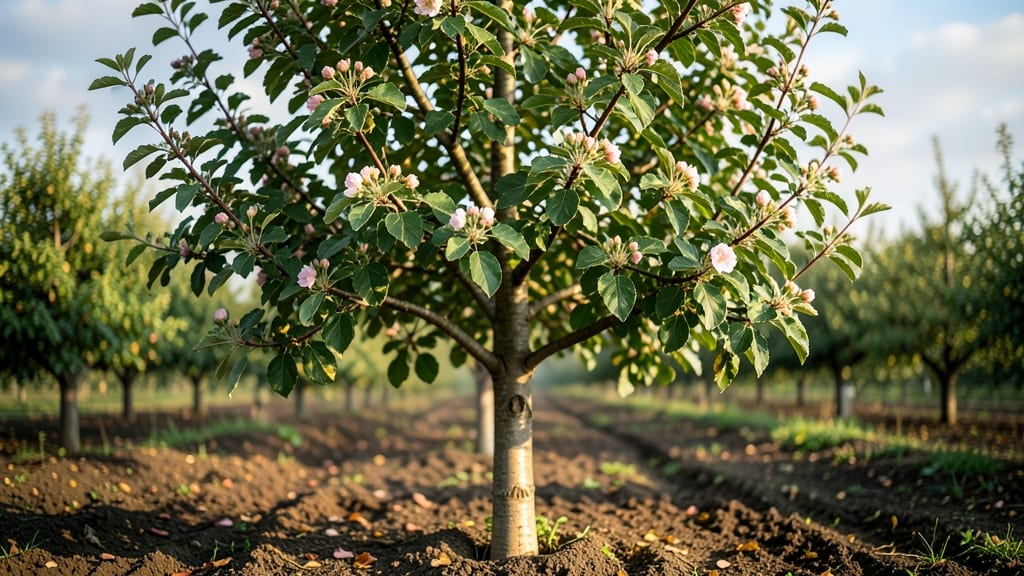
Identifying an apple tree by its leaves saves you from guessing—and my first attempt at this ended with me pruning a neighbor's crabapple by mistake. 🌿 The key lies in three details: leaf shape (oval with a pointed tip), serrated edges (like tiny teeth), and the way veins spread from the midrib like a fan.
Crabapples have finer teeth and more rounded leaves, while hawthorns sport sharper, more jagged edges.
Flip the leaf over and you’ll spot another clue: apple tree undersides are a soft, fuzzy green, not smooth or hairless. Pay attention to how leaves attach—apple tree leaves grow alternately along the branch, not in clusters like some fruit trees.
A quick bark check confirms it: apple bark is smooth and gray when young, developing rougher texture with age.
Still unsure? Wait for spring to see the flowers—apple blossoms are white with five petals in clusters, while crabapples often have pink tinges. Or, if you’re patient, check for fruit in fall: true apples are larger and less tart than crabapples.
This method works for young trees too, before fruit even appears.
For tricky cases, snap a photo and use apps like PlantNet or iNaturalist—upload the leaf details and let the community help. My go-to reference is the National Audubon Society Field Guide to North American Trees, but even a quick sketch of the leaf’s shape helps narrow it down.
No more pruning the wrong tree!
Nature’s Leaf Code Explained
Apple tree leaves don’t just look distinct—they’re packed with hidden clues shaped by biology, genetics, and environmental forces. Understanding why leaves vary helps you decode the species with precision. Here’s the science behind their unique signatures.
Every apple tree’s leaf is a direct reflection of its genetic lineage. Just like humans inherit eye color, apple trees pass down traits like:
- Serration depth: Some varieties (e.g., Malus domestica) have fine, saw-toothed edges due to dominant genes that control epidermal cell growth. Think of it like a DNA instruction to "cut here."
- Lobe formation: Lobed leaves (like those of Crabapple trees) result from homeobox genes, which dictate how leaf margins fold during development. These genes are ancient—shared with other rosaceous plants like pears.
- Leaf base symmetry: Asymmetrical bases (e.g., Granny Smith) often stem from asymmetrical leaf development genes (AS1/AS2), which disrupt uniform growth patterns.
Actionable tip: 🔍 Compare leaves from the same tree across seasons—genetic traits remain consistent, while environmental factors (like sunlight) may cause temporary variations.
Leaves aren’t static—they react to their surroundings. Three key environmental factors can alter their appearance, making identification tricky:
🌞 Sun vs. Shade: The Light Spectrum Trick
| Factor | Sun-Exposed Leaves | Shade-Grown Leaves |
|---|---|---|
| Size | Smaller, thicker (to reduce water loss) | Larger, thinner (maximizing light capture) |
| Color | Darker green (higher chlorophyll) | Lighter, sometimes reddish (anthocyanins act as sunscreen) |
| Edge Shape | More pronounced serrations (defensive adaptation) | Softer, rounded edges (less structural need) |
Why it matters: A Fuji apple tree’s leaves in full sun may look nothing like the same tree’s shade-dappled leaves. Always examine leaves from the same light condition for accurate ID.
💧 Water Woes: Drought or Overwatering
Water stress triggers abscisic acid (ABA), a plant hormone that forces leaves to:
- ✅ Curl or roll (to minimize water evaporation).
- ✅ Develop thicker cuticles (a waxy layer that changes leaf texture).
- ❌ Drop prematurely (if roots can’t supply enough H₂O).
Pro tip: 🌡️ If leaves feel leathery or have crispy edges, the tree might be thirsty—not a different species. Check soil moisture before assuming a new variety!
🌡️ Temperature Extremes: Heat and Cold Damage
Extreme temps can permanently alter leaf shape:
- Frost bite: Causes necrotic edges (dead, brown tips) or puckered surfaces due to cell rupture.
- Heat stress: Triggers chlorophyll breakdown, turning leaves yellow or white (a condition called bleaching).
Key difference: Damage from weather is random and patchy, while genetic traits are uniform across the tree. Look for consistent patterns.
Not all leaf changes are environmental—pathogens and insects can rewrite a tree’s appearance overnight. Common culprits include:
🐜 Sap-Sucking Insects: Aphids, Mites, and Scale
These pests inject toxins or steal nutrients, causing:
- ✅ Stunted growth (leaves stay small and cupped).
- ✅ Yellowing between veins (a sign of chlorosis, or nutrient theft).
- ✅ Sticky residue (honeydew) + sooty mold (black fungal growth).
How to spot it: Check the underside of leaves for tiny insects or webbing. Infested leaves may resemble a different species—but the damage is uneven.
🍄 Fungal Infections: Apple Scab and Powdery Mildew
Fungi like Venturia inaequalis (apple scab) distort leaf development, leading to:
- ✅ Oily, velvety spots that turn brown and crack (scab).
- ✅ White, powdery coatings (mildew) that alter leaf texture.
- ✅ Premature leaf drop (tree "gives up" on damaged foliage).
Red flag: If leaves look burned or melted, it’s likely fungal—not a new variety. Isolate the tree and treat with copper fungicide.
By separating genetic truth from environmental noise, you’ll sharpen your ability to read an apple tree’s leaf language. Next time you spot a mystery tree, ask: "Is this a trait or a trick?"
Quick Fixes for Leaf Confusion
When you’re staring at a leaf and wondering, "Is this an apple tree?"—or worse, trying to match it to a dozen similar-looking species—you need a foolproof method. Here’s how to turn uncertainty into confidence with simple, actionable steps.
Start with the three core traits that define an apple tree leaf:
- Shape: 🍎 Elliptical to oval, slightly wider at the base, with a pointed tip (not rounded like a cherry).
- Edges: 🌿 Serrated (saw-toothed) but not jagged—think fine teeth, not a shark’s fin.
- Size: 📏 2–4 inches long, with a leathery texture (rub one between your fingers—apple leaves feel sturdy, not papery).
❌ Common Mistake: Mistaking apple leaves for pear, hawthorn, or crabapple? Check the stem: Apple leaves have a short, stubby petiole (the leaf stalk) with tiny glandular dots near the base.
Apple tree leaves have distinctive vein patterns that set them apart:
- Primary Veins: 5–7 prominent pairs branching from the midrib (the central vein), fanning out like fingers.
- Surface: 🌡️ Dull green above, slightly hairy or downy below (especially on young leaves).
💡 Pro Tip: Hold the leaf up to light—apple leaves often have a slightly translucent quality, while maple leaves (another common lookalike) are fully opaque.
- Crush a leaf: Apple leaves release a mild, sweet-herbal scent (think faintly of apple peels).
- Check the underside: Look for tiny white or rust-colored spots (early signs of apple scab, a common disease—but still a clue!).
⚠️ Warning: If the leaf smells rotten or metallic, it’s likely infected (see prevention tips below).
Leaves alone can be tricky—combine clues for accuracy:
- Fruit: Are there small, hard apples (even unripe ones) on the tree? 🍏
- Bark: Young apple trees have smooth, gray bark; mature trees develop furrows or lenticels (tiny raised dots).
- Branches: Apple trees often have spread-out, horizontal branches (unlike vertical-growing pears).
- Label your trees: Use waterproof tags with the species name and planting date.
- Take photos: Snap a picture of the leaf + fruit + bark combo for your records.
- Learn the "lookalikes": Memorize pear, crabapple, and hawthorn leaves—apple leaves are longer, less lobed, and serrated differently.
- Seasonal check: In fall, apple leaves turn yellow-brown (not fiery red like maple).
🎯 Final Reality Check: If you’re still unsure, dig deeper:
- Root test: Apple trees have a fibrous root system (unlike oak’s deep taproot).
- Local nursery: Bring a leaf sample (in a bag) and ask for ID—many will confirm it on the spot.
Now you’ve got the leaf detective skills to ID an apple tree like a pro. 🕵️♂️🍏
Frequently asked questions
What’s the quickest way to tell an apple tree leaf from a crabapple leaf?
Look at the serrations—apple leaves have fine, regular teeth (like a saw blade), while crabapple leaves have coarser, more irregular edges. Also, apple leaves are 2–4 inches long with a pointed tip, while crabapple leaves are often smaller and more rounded.
Can I identify an apple tree in winter when there are no leaves?
Yes! Check the bark—young apple trees have smooth, gray bark, while mature trees develop horizontal lenticels (tiny raised dots). Also look for buds: Apple tree buds are oval-shaped with a pointed tip, arranged alternately along the branch.
Why do some apple tree leaves look different on the same branch?
This usually happens due to sun exposure—leaves in full sun are smaller and darker, while shade leaves are larger and lighter. Environmental stress (like drought or pests) can also cause variations, but genetic traits (like serrations) stay consistent across the tree.
What’s the best app for identifying apple tree leaves?
Try PlantNet or iNaturalist—upload a clear photo of the leaf + bark + fruit (if available), and the app will match it to known species. For a quick reference, the USDA Plants Database has detailed leaf comparisons.
Can I use leaf shape alone to confirm it’s an apple tree?
No—leaf shape is a starting point, but you should also check the stem (petiole), bark, and buds. For example, hawthorn leaves have jagged edges like apple leaves but grow in clusters, not alternately. Always cross-reference multiple traits!