
Companion Plants
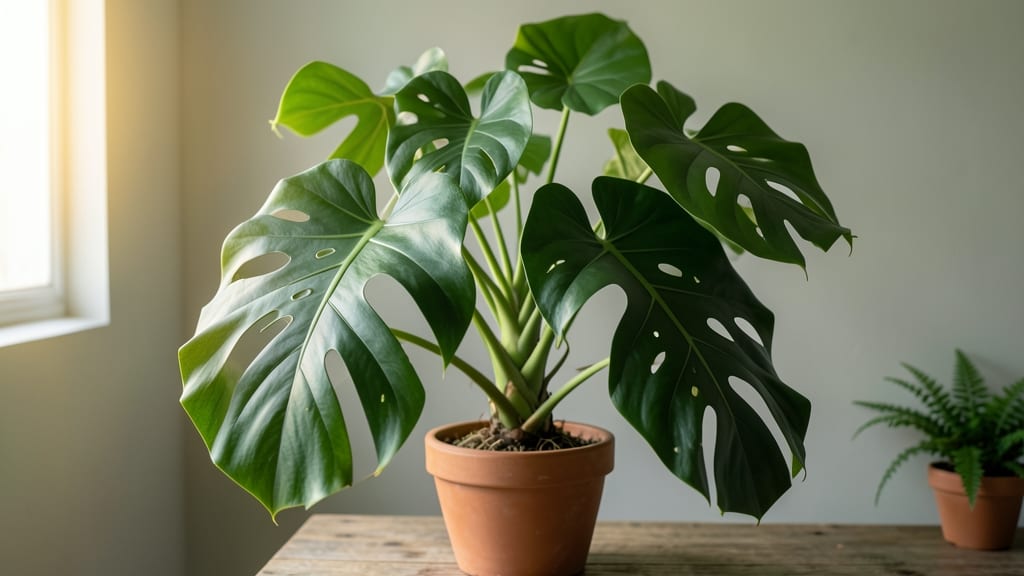
Spotting the difference between a Monstera and a banana plant can be tricky—until you know the secret visual clues in large big leaf plants identification. 🌿 I’ve spent years confusing houseplants with tropical trees, but these simple leaf traits make identification straightforward once you see them.
Look for split leaves (fenestrations) on Monsteras or the glossy, elongated leaves of banana plants. Some, like Philodendrons, have heart-shaped leaves with distinct veins, while others, like Caladiums, boast striking patterns. These traits aren’t just for show—they tell you whether a plant thrives indoors or needs outdoor warmth.
Once you master the basics, you’ll spot dramatic foliage like the elephant ear’s broad, arrow-shaped leaves or the bird-of-paradise’s bold, waxy blades. Each plant has its own care needs—some love shade, others crave sunlight—but the first step is always getting the ID right.
This guide bridges the gap between "what is it?" and "how do I keep it alive?" Let’s break it down.
📚 In This Guide
- What you need
- Instructions
- Tips and common mistakes
- Wrapping up and next steps
What you need
- ● Digital camera or smartphone – For capturing high-quality images of leaves (at least 12 MP for clarity).
- ● Ruler or measuring tape – To measure leaf size (preferably 12–36 inches for large leaves).
- ○ Magnifying glass (optional but helpful) – For examining leaf texture, veins, and fine details.
- ● Notebook or digital notes app – To jot down observations (leaf shape, color, arrangement, etc.).
- ● Plant identification guidebook or app – Examples: National Geographic Guide to Trees, iNaturalist, or PictureThis.
- ○ Gloves (optional but recommended) – To protect hands from prickly or rough leaves (e.g., Monstera deliciosa or Rhododendron).
- ● Pruning shears (small, sharp pair) – For safely collecting leaf samples if needed (sterilize with rubbing alcohol).
- ● Leaf press or heavy books – To preserve samples for later study (if you’re a plant nerd!).
- ● UV flashlight – Reveals hidden patterns in veins or leaf surfaces under blacklight.
- ● Field journal with waterproof pages – For outdoor note-taking in rain or shine.
- ● Plant DNA testing kit (e.g., Sprout or Growcer) – For the ultimate ID confirmation (fun for curious gardeners!).
Visual guide to identifying large big leaf plants
Here’s how to confidently distinguish common large-leafed plants by shape, texture, and growth patterns.
🌿 Step 1: Examine Leaf Shape and Venation
The first clue lies in the leaf’s overall form. Broadleaf plants like monstera have deeply lobed or fenestrated leaves with prominent veins radiating from a central stem. Look for heart-shaped leaves (philodendron) or oval, glossy leaves (rubber plant) with smooth edges. Monstera leaves often develop natural holes as they mature, while fiddle-leaf figs have deeply curved lobes resembling a violin.
Run your fingers along the veins—palmate venation (veins spreading from a single point) is common in rubber plants, while pinnate venation (parallel veins along the midrib) appears in peace lilies. This distinction alone narrows down the options significantly. I always check the underside of the leaf for hairy textures (common in calatheas) or smooth, waxy surfaces (typical of snake plants).
☀️ Step 2: Assess Growth Habit and Size
Large-leaf plants vary dramatically in growth patterns. Vining plants like pothos or philodendron grow long, trailing stems with leaves spaced 6–12 inches apart. In contrast, upright growers such as fiddle-leaf figs or rubber plants develop thick, woody stems with leaves clustered at the top. Measure the plant’s height—monsteras can reach 6–10 feet indoors, while snake plants stay 2–4 feet tall.
Observe how new leaves emerge. Monstera leaves unfurl horizontally before curling upward, while philodendron leaves grow vertically along the stem. If the plant has aerial roots (roots growing along the stem), it’s likely a monstera or philodendron. These roots help the plant climb in the wild, so they’re a dead giveaway for identification.
💧 Step 3: Check Leaf Texture and Color
Leaf texture reveals a lot. Glossy, leathery leaves belong to rubber plants or fiddle-leaf figs, while velvety or matte leaves are typical of calatheas or peace lilies. Run your thumb across the surface—smooth leaves (like those of a snake plant) feel almost plastic, whereas textured leaves (such as monstera) have a slightly rough, bumpy feel.
Color also plays a role. Deep green leaves with yellow or white variegation are common in philodendron ‘Brasil’ or monstera ‘Albo’. Meanwhile, dark green with lighter undersides (like a calathea) often indicates a tropical understory plant. If the leaves have purple or reddish hues, it’s likely a juvenile fiddle-leaf fig or red emerald philodendron.
✂️ Step 4: Inspect Stem and Root Structure
The stem tells the story of the plant’s identity. Monstera and philodendron stems are thick, hollow, and often woody with visible nodes where leaves and roots emerge. Snake plants have rigid, upright stems with sharp, sword-like leaves. If the plant has a bulbous base (like a peace lily), it’s likely an Araceae family member, which includes many large-leafed varieties.
Check the roots if possible—aerial roots (roots growing above soil) are a hallmark of monstera or philodendron, while thick, tuberous roots suggest a calathea or peace lily. If the plant is in a pot, gently lift it to see the root structure. Fibrous, white roots are common in rubber plants, while thick, fleshy roots indicate a snake plant or ZZ plant.
🌱 Step 5: Compare to Known Reference Points
Now that you’ve examined shape, growth, texture, and structure, cross-reference your findings with a visual guide or plant identification app. Hold the plant up to a monstera, fiddle-leaf fig, or rubber plant—the differences in leaf shape and growth habit become obvious. I keep a small notebook with sketches of key features (leaf shape, venation, and stem type) to compare against new plants.
If you’re still unsure, note the light conditions the plant thrives in. Low-light tolerant plants like snake plants or ZZ plants have thicker, waxy leaves, while bright-light lovers (like monstera or fiddle-leaf figs) develop larger, more dramatic foliage. This final clue often seals the identification.
Tips & tricks for mastering large-leaf plant identification
Confusion between monstera and fiddle-leaf figs? Here's how to sharpen your eye for those subtle distinctions that make all the difference.
Leaf Underside Inspection: Flip leaves to examine their undersides—this is where hidden clues reveal themselves. Calatheas often have fuzzy or hairy undersides, while snake plants feature smooth, almost waxy surfaces. I've caught more misidentifications by checking undersides than any other method. This simple step can distinguish between a peace lily (smooth, glossy underside) and a monstera (rougher texture with visible veins).
Growth Pattern Observation: Pay attention to how leaves emerge from the stem. Monstera leaves unfurl horizontally before curling upward—a process called "monstera leafing"—while philodendron leaves grow vertically along the stem. This growth habit is a dead giveaway when you're comparing similar-looking plants. I keep a small notebook with sketches of these patterns to reference when plants are in their early growth stages.
Root Structure Clues: If you can safely lift the plant, examine the roots—they often provide the final clue. Aerial roots (roots growing along the stem) are a hallmark of monstera and philodendron, while thick, tuberous roots suggest a calathea or peace lily. I've identified more plants correctly by root structure than by any other single characteristic. This is especially helpful when leaf shapes are similar between species.
Light Condition Correlation: Remember that light requirements often correlate with leaf characteristics. Bright-light plants like monstera or fiddle-leaf figs develop larger, more dramatic foliage with prominent venation, while low-light plants like snake plants have thicker, waxier leaves. I always note the plant's current light conditions alongside physical characteristics to narrow down possibilities.
Pro Tips for Large Big Leaf Plants Identification
- Confusion between monstera and fiddle-leaf figs?
- Leaf Underside Inspection: Flip leaves to examine their undersides—this is where hidden clues reveal themselves.
- Growth Pattern Observation: Pay attention to how leaves emerge from the stem.
Frequently asked questions
How do I tell the difference between a banana plant and a bird-of-paradise?
A banana plant has large, elongated, and slightly curved leaves that grow from a pseudostem, while bird-of-paradise (Strelitzia) features stiff, upright, and strap-like leaves with a distinct boat shape. Banana leaves are also more flexible and droop slightly, whereas bird-of-paradise leaves stand rigidly erect. Check for flower spikes—banana plants produce arching, banana-shaped blooms, while bird-of-paradise has bright orange and blue bird-like flowers.
Are big-leaf plants like monstera or philodendium toxic to pets?
Yes! Both Monstera deliciosa and many Philodendron species contain calcium oxalate crystals, which are toxic if ingested by cats, dogs, or small pets. Symptoms include drooling, vomiting, or mouth irritation. Opt for pet-safe alternatives like parlor palm (Chamaedorea elegans) or Boston fern (Nephrolepis exaltata) if you have furry friends at home.
How fast do large-leaf plants grow, and how often should I repot them?
Growth speed varies—Monstera and Philodendron can grow 1-2 feet per year, while bird-of-paradise grows slower (6-12 inches annually). Repot when roots emerge from drainage holes or every 2-3 years for mature plants. Use a pot 2-4 inches larger in diameter and ensure it has drainage to prevent root rot.
Why are the leaves on my big-leaf plant turning yellow or brown?
Yellowing leaves often signal overwatering (check soil moisture—it should dry 1-2 inches deep before watering), while brown edges or crispy tips usually mean underwatering or low humidity. Pests like spider mites can also cause browning. Adjust care by watering consistently, misting leaves, or wiping them down to remove dust. If pests are the issue, treat with neem oil or insecticidal soap.
What are some low-maintenance alternatives to high-growing big-leaf plants?
If you want large foliage without the upkeep, try:
- Cast iron plant (Aspidistra elatior) – Thrives in low light and neglect.
- ZZ plant (Zamioculcas zamiifolia) – Nearly indestructible and drought-tolerant.
- Rubber plant (Ficus elastica) – Grows fast but handles occasional missed waterings.
- Snake plant (Sansevieria) – Needs minimal water and purifies air.
Wrapping up and next steps
Identifying large big-leaf plants can feel like solving a puzzle—but now you’ve got the tools to crack it! 🌿 From the towering Monstera deliciosa to the velvety Philodendron bipinnatifidum, understanding leaf shape, texture, and growth habits makes the process easier than ever.
Whether you’re a plant parent or a gardening enthusiast, recognizing these beauties unlocks a world of greenery to enhance your space.
Ready to put your new knowledge to work? Start by snapping a photo of your mystery plant and comparing it to our visual guide. Still unsure? Try plant identification apps or consult local botanists—your green thumb is just a step away! 🌱