
Pests and Diseases
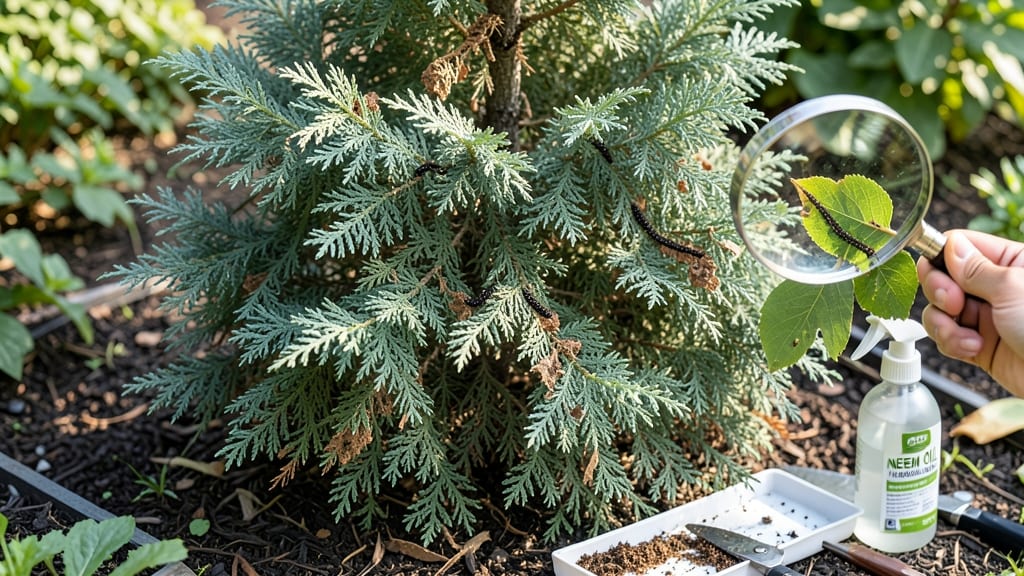
Leaf miner damage turns your arborvitae into a skeleton of brown needles before you know it. 🌿 I’ve seen healthy evergreens go from lush to lifeless in just a few weeks, and the key to stopping it is catching the serpentine mines early—before the larvae hollow out entire needles.
The good news? You can still save your trees with the right approach.
These tiny pests start as pale green larvae that chew through needle tissue, leaving behind telltale frass (waste) and winding tunnels. By the time you notice the damage, the larvae are already pupating in the soil, ready to emerge next year.
The damage isn’t just cosmetic—severe infestations weaken the tree, making it vulnerable to disease and winter burn.
You’ll learn how to spot the early signs, from the first pale blotches to the telltale serpentine mines, and how to treat it with organic sprays (like neem oil or horticultural oil) or chemical controls (if needed). The goal? Knock back the population before it spreads to your entire hedge.
Long-term care is about prevention—mulching, pruning for airflow, and monitoring for new mines in spring. With these steps, your arborvitae can bounce back stronger than ever. Let’s get started.
Hidden Invaders Behind the Damage
Leaf miners aren’t just a random nuisance—they’re tiny, precision-destroying pests that thrive under specific conditions. Understanding why they target your arborvitae is the first step to outsmarting them. Here’s a breakdown of the key triggers and how they create the perfect storm for infestation:
Most arborvitae leaf miners start their life cycle as eggs laid by adult fly species (like Cameraria or Phyllocnistis). These flies are drawn to:
- Healthy, lush foliage: Arborvitae with dense, vibrant green needles are prime real estate for egg-laying. Flies use visual cues (like color and texture) to identify weak spots where larvae can thrive.
- Warm, sunny conditions: Eggs hatch best in temperatures between 60–85°F (15–29°C). If your arborvitae is basking in full sun, you’re essentially rolling out the welcome mat for these pests.
- New growth: Young, tender needles are softer and easier for larvae to penetrate. Flies often target new shoots in spring or after pruning.
Pro Tip: 🌡️ Monitor your arborvitae’s microclimate—shady or windy areas can delay fly activity, giving you a window to intervene.
Stressed arborvitae are magnets for leaf miners because their weakened defenses make it easier for larvae to establish colonies. Common stressors include:
| Stressor | How It Attracts Miners |
|---|---|
| 💧 Over/Underwatering | Drought-stressed trees produce thicker, more nutrient-rich sap—larvae love the feast. Overwatering, meanwhile, creates soft, mushy tissue that’s easy to burrow into. |
| 🌡️ Poor Soil or Nutrients | Nitrogen-deficient or compacted soil makes arborvitae more susceptible to pests. Miners exploit trees that can’t mount a strong immune response. |
| ✂️ Recent Pruning or Trauma | Open wounds or fresh cuts expose unprotected tissue, signaling to flies that the tree is vulnerable. Even minor pruning can trigger an infestation if timing isn’t right. |
| 🦠 Existing Pests or Diseases | If your arborvitae is already battling spider mites, aphids, or fungal infections, leaf miners will see it as an easy target. |
Action Step: 💡 Conduct a soil test and adjust watering practices—consistent moisture (not soggy soil) is key to reducing stress.
Leaf miners don’t just appear—they’re opportunistic invaders that exploit specific environmental factors. Here’s what gives them the green light:
- Humidity: Larvae thrive in 40–60% humidity. If your arborvitae is in a shaded, damp area (like near a foundation or under eaves), you’re creating a miner’s paradise.
- Seasonal Timing:
- 🌱 Spring (April–June): Peak egg-laying season. Adult flies emerge as temperatures rise.
- 🍂 Fall (September–October): Larvae pupate and overwinter in leaf litter, ready to restart the cycle next year.
- Lack of Natural Predators: Birds, parasitic wasps, and beneficial nematodes normally keep miner populations in check. If your garden lacks biodiversity, miners multiply unchecked.
Quick Fix: ✨ Install birdhouses or insect hotels near your arborvitae to encourage natural predators.
Sometimes, we accidentally invite leaf miners to the party. Common human-caused triggers include:
- Moving Infested Plants: If you’ve recently added new arborvitae or evergreens from a nursery, they might already host miner eggs or larvae.
- Composting Leaf Litter: Overwintering pupae hide in fallen leaves. Don’t compost leaves from infested trees—burn or bag them instead.
- Ignoring Early Signs: Tiny serpentine trails or silvering on needles are red flags. Delaying action lets miners spread exponentially.
Prevention Tip: 🚫 Inspect new plants for signs of miners before bringing them home—quarantine them for 2 weeks to spot issues early.
Fixing Arborvitae Leaf Damage Fast
Once you’ve spotted the telltale signs of leaf miners chewing through your arborvitae, it’s time to act. These tiny pests may be small, but their damage adds up quickly—leaving your evergreen looking ragged and stressed. The good news?
With the right approach, you can stop the spread, revive your plant, and prevent future outbreaks. Below, we’ll break down targeted fixes based on the root cause of the problem, plus proactive prevention tips to keep your arborvitae thriving.
If you’ve confirmed leaf miner larvae are the culprit (look for serpentine trails or blistering leaves), act fast before they pupate and multiply. Here’s how:
🍳 Spray with Horticultural Oil or Insecticidal Soap
Why it works: These natural oils suffocate larvae on contact while being safe for plants and beneficial insects. How to do it:
- Mix 2.5 tbsp of horticultural oil or insecticidal soap per gallon of water.
- Spray thoroughly on both sides of leaves (focus on new growth where larvae hide).
- Best time: Early morning or late evening (avoid direct sunlight, which can burn leaves).
- Repeat every 5–7 days until new leaves emerge without damage (usually 2–3 weeks).
✨ Pro Tip: Add a drop of dish soap (like Dawn) to the mix for extra stickiness—it helps the solution cling to leaves longer.
👨🍳 Prune and Destroy Infested Branches
Why it works: Removing heavily damaged foliage stops the larvae from spreading to other parts of the plant. How to do it:
- Use clean, sharp pruners to trim branches with blistered or skeletonized leaves.
- Bag and dispose of clippings in the trash (not compost)—larvae can survive in soil.
- Prune in layers: Start with the most damaged branches, then check nearby foliage for signs of new activity.
💡 Prevention Hack: After pruning, sterilize your tools with rubbing alcohol to avoid cross-contamination.
If leaf miners have already weakened your arborvitae, fungal infections (like powdery mildew or needle blight) may move in. Here’s how to treat and protect:
🎯 Apply a Fungicide (Organic or Synthetic)
Why it works: Fungicides prevent spores from germinating and help the plant recover. How to do it:
- Choose a copper-based fungicide (organic) or neem oil blend for mild cases.
- For severe infections, use a broad-spectrum fungicide like chlorothalonil (follow label instructions).
- Spray evenly, including the undersides of leaves and branch crevices.
- Reapply every 7–14 days until new growth is healthy.
🔥 Emergency Fix: If you spot black sooty mold (a fungus fed by leaf miner honeydew), spray with water first to wash away residue, then apply fungicide.
🌿 Boost Plant Health with Fertilizer
Why it works: A stressed arborvitae is more vulnerable to pests and disease. Balanced fertilization helps it bounce back. How to do it:
- Use a slow-release, acid-loving plant fertilizer (like 10-10-10 or a pine-specific formula).
- Water deeply before and after applying to avoid root burn.
- Avoid over-fertilizing—stick to half-strength if your tree looks weak.
🌡️ Recovery Tip: If your arborvitae is severely defoliated, consider a root stimulator (like mycorrhizal fungi) to encourage new growth.
The best defense? Stopping larvae before they start. Use these proactive strategies to protect your arborvitae year-round.
🔪 Install Physical Barriers (For New Plantings)
Why it works: Young arborvitae are most vulnerable—a fine mesh barrier blocks adult flies from laying eggs. How to do it:
- Wrap the lower trunk and branches with floating row cover or fine netting (like tulle) in early spring.
- Secure with twist ties or clips—leave the top open for airflow.
- Remove after 6–8 weeks (once adult flies have emerged).
💡 Budget Fix: Use cheesecloth as a temporary barrier if netting isn’t available.
🌿 Encourage Natural Predators
Why it works: Birds, parasitic wasps, and ladybugs eat leaf miner larvae—attracting them reduces infestations naturally. How to do it:
- Install a birdhouse near your arborvitae to attract chickadees and wrens (they love leaf miners).
- Plant nearby flowers like dill, fennel, or marigolds to lure beneficial insects.
- Avoid broad-spectrum pesticides—they kill helpful bugs too!
🌡️ Maintain Optimal Growing Conditions
Why it works: A healthy arborvitae is less appealing to leaf miners.
Focus on: - Watering deeply (1–1.5 inches per week) but avoid soggy soil. - Mulching with pine bark or wood chips (2–3 inches deep) to retain moisture. - Pruning in late winter to improve airflow (leaf miners thrive in dense, shaded foliage).
✨ Golden Rule: Inspect your arborvitae every 2 weeks in spring/summer—early detection = easier fixes!
Final Reminder: Leaf miners are annual pests, but with consistent monitoring and these fixes, you can minimize damage year after year. Start with immediate control, then shift to prevention—your arborvitae will thank you with lush, green foliage for seasons to come!
Frequently asked questions
What do leaf miner damage on arborvitae look like in early stages?
Start by checking for tiny, pale green or yellow blotches on needles—these are early signs of larval feeding. Look closely for serpentine trails (winding brown lines) or silvering (white, blistered patches) along the needle surface. The larvae create these paths as they chew through tissue, leaving behind fine black frass (waste).
Can I use neem oil to treat arborvitae leaf miners?
Yes! Neem oil is an excellent organic option. Mix 1 teaspoon of neem oil per quart of water with a drop of dish soap as an emulsifier. Spray thoroughly on both sides of leaves in the evening (avoid direct sunlight for 24 hours after application). Repeat every 5-7 days for 2-3 weeks to suffocate larvae at all stages.
How long does it take to see results after treating leaf miners?
With consistent treatment (every 5-7 days), you should see new growth appearing within 2-3 weeks. The key is persistence—larvae continue feeding until they pupate (usually 3-4 weeks after hatching). Monitor for new damage and continue treatments until you see healthy, undamaged foliage emerging.
Will my arborvitae recover if most needles are already damaged?
Yes, but recovery depends on how much foliage remains. If more than 50% of needles are intact, your arborvitae can regrow new needles from dormant buds. Focus on removing all infested branches, applying fertilizer for evergreens, and maintaining proper watering. Severe cases may need 2-3 growing seasons to fully recover.
Are there any chemical treatments that work faster than organic options?
For faster results, use horticultural oil or insecticidal soap combined with Bacillus thuringiensis var. kurstaki (Btk), a biological pesticide that targets caterpillar-like larvae. For severe cases, spinosad (organic) or carbaryl (synthetic) can provide quicker knockdown—apply according to label instructions and reapply after rain.