
Companion Plants
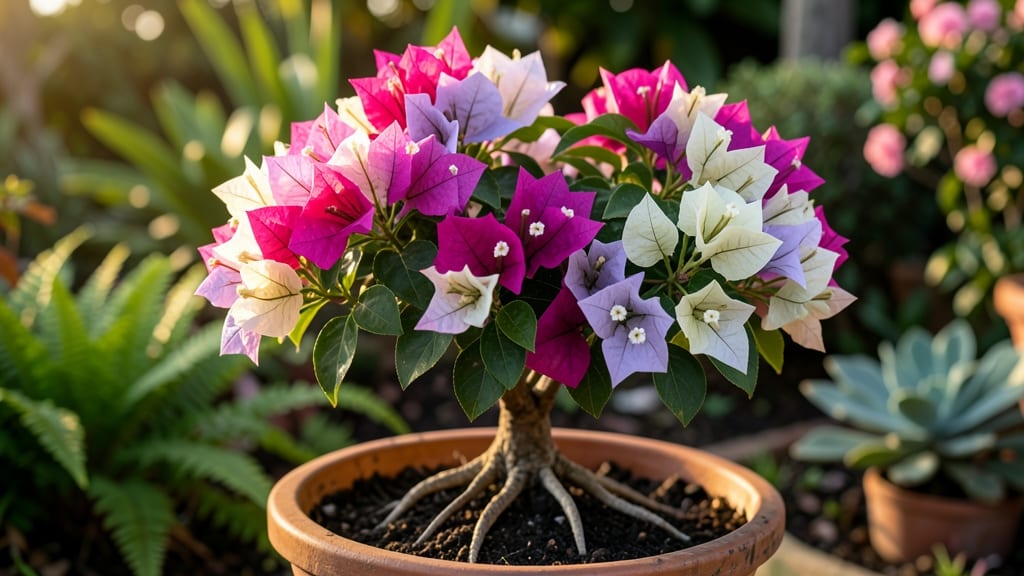
Leaf modifications in plants adapt for survival by transforming into spines, tendrils, or specialized structures like bracts, helping plants thrive in dry climates, defend against herbivores, or improve water retention.
These adaptations aren't random—they're the result of millions of years of evolutionary pressure.
For example, cacti replace leaves with spines to minimize water loss, while pitcher plants develop leaf-like traps to capture insects for nutrients. 🌵 In gardens, recognizing these modifications helps you choose plants that suit your climate or design needs, like drought-resistant succulents or climbing vines with tendrils for vertical spaces.
What's fascinating is how these changes often serve multiple purposes. A plant's spines might deter animals while reducing evaporation, and succulent leaves store water while still photosynthesizing efficiently.
Understanding these traits can even help you propagate plants more successfully—like using the modified leaves of a poison ivy to identify toxic plants or leveraging tendrils to guide vines along trellises.
💡 In This Article
- Types of Leaf Modifications and Their Survival Functions
- Identifying Common Leaf Modifications in Garden Plants
Types of leaf modifications and their survival functions
Leaf modifications are nature's ingenious solutions to environmental challenges. Take spines, for instance: these sharp, pointed structures replace leaves in plants like cacti, reducing surface area by up to 90% to slash water loss through transpiration.
The spines themselves are modified leaves or stipules (leaf-like appendages), often just 1-2 millimeters thick but packed with vascular bundles for structural strength. This adaptation allows cacti to thrive in deserts where rainfall is scarce, sometimes surviving for decades without significant water intake.
Another fascinating modification is tendrils, which are specialized leaves or leaf parts that twist and coil around supports. Think of grapevines or peas—these tendrils can exert forces of 0.5-2 pounds per square inch to climb trellises, giving plants access to sunlight in shaded environments.
The tendrils' sensitivity to touch triggers a growth response called thigmotropism, where cells on the shaded side elongate faster, creating the coiling motion. This adaptation isn't just for climbing; it also helps plants stabilize themselves in windy conditions, reducing mechanical stress on stems.
Succulent leaves take water storage to another level, evolving thick, fleshy structures packed with juicy parenchyma cells that can hold 80-90% water by volume. Plants like aloe vera or jade plants store water in these leaves during rainy seasons, using it during dry periods.
The leaves often have a waxy cuticle and sunken stomata (pores) to further minimize water loss. This modification is a perfect example of how plants balance two critical needs: photosynthesis (through their expanded surface area) and water conservation (through their thick, protective layers).
Then there are bracts, which are modified leaves that play roles beyond photosynthesis. In plants like poinsettias, bracts are the showy, colorful parts we associate with the flower, while the actual flowers are tiny and green.
These bracts attract pollinators with vibrant hues, often red or pink, while the true leaves remain small and green. This adaptation is a clever way to maximize reproductive success without diverting too much energy from other functions like water transport or nutrient storage.
What's truly remarkable is how these modifications often serve multiple functions simultaneously. For example, the pitcher plant's modified leaves form tubular traps lined with waxy, slippery surfaces and digestive enzymes.
These leaves not only capture insects for nutrients but also reduce water loss through their waxy coating—a dual-purpose adaptation that's both defensive and hydrating. The plant's ability to "recycle" nutrients from trapped insects gives it a competitive edge in nutrient-poor environments, like bogs or wetlands.
Understanding these adaptations reveals just how dynamic plant evolution can be. Many modifications arise from gene mutations that alter leaf development, followed by natural selection favoring traits that improve survival.
For example, the CRINKLY4 gene in Arabidopsis (a model plant) regulates leaf shape, and mutations here can lead to curled or lobed leaves—traits that might later evolve into tendrils or spines under the right environmental pressures. 🌱