
Shrubs
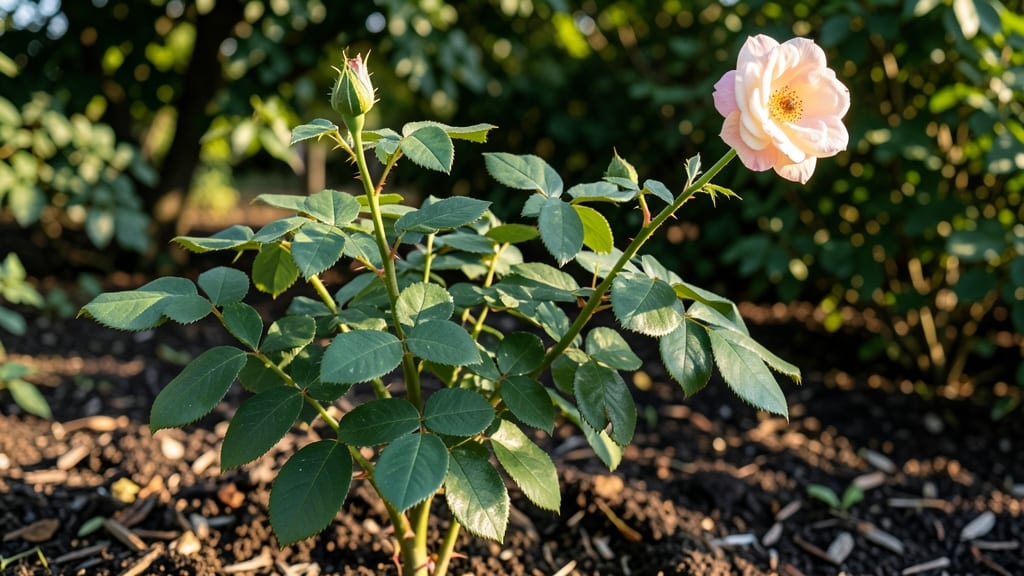
The leaf shape of rose varies dramatically by variety, ranging from simple elongated ovals with jagged edges to complex compound leaves with 3-7 leaflets. Hybrid teas showcase glossy, dark green foliage, while climbing roses often feature more deeply lobed or textured leaves that help gardeners identify them at a glance.
Understanding a rose's leaf structure is like reading its botanical fingerprint. 🌿 The serrations along the edges—whether fine or coarse—can reveal whether you're looking at a delicate tea rose or a hardy shrub variety.
For instance, climbing roses often have larger, more deeply divided leaves that maximize sunlight capture, while floribunda roses tend to show medium-sized leaves with moderate serration. Even the arrangement matters: some roses grow leaves in clusters where the central leaflet is larger, creating a fan-like pattern that's instantly recognizable.
What's fascinating is how leaf shape correlates with growth habits. Roses with smaller, simpler leaves often produce more flowers per stem, while those with larger compound leaves may focus energy on fewer, showier blooms.
This relationship between foliage and flower production is why experienced rosarians can often predict a plant's performance just by examining its leaves before any buds even appear.
💡 In This Article
- How Rose Leaf Morphology Differentiates Varieties
- Visual Guide to Common Rose Leaf Shapes by Type
How rose leaf morphology differentiates varieties
The intricate world of rose leaf shapes reveals a fascinating interplay between genetics and environment.
At the cellular level, leaf morphology is determined by meristematic activity—where specialized cells at the leaf tips and margins divide to create serrations or lobes. 🌱 For example, hybrid tea roses develop leaves with 5-7 finely serrated leaflets, while climbing roses often produce larger, 3-5 lobed leaves that can reach 3-5 inches long.
These differences aren't random; they're evolutionary adaptations that affect photosynthesis efficiency and water retention.
Leaflet arrangement follows precise botanical patterns too.
Most roses exhibit pinnate compound leaves, where leaflets radiate from a central stem (rachis), but the angle matters. Floribunda roses typically show 5-7 leaflets with shallow serrations, while wild species like Rosa rugosa develop deeply lobed leaves with wavy margins that can resemble maple foliage.
The vein patterns also serve as identification markers—hybrid roses often display prominent secondary veins forming a network, while older species may show more parallel venation.
Environmental factors further sculpt leaf morphology.
Roses growing in full sun develop leaves with thicker cuticles and deeper serrations to reduce water loss, while those in shade produce softer, broader leaves. 🌞 Temperature extremes can cause leaflet distortion—below 50°F triggers smaller, more compact leaves, while above 90°F may result in elongated, thinner foliage.
This adaptability explains why the same rose variety might show subtle leaf shape variations across different climates.
The practical value of understanding these differences lies in disease resistance. Roses with thicker, waxier leaves (common in climbing varieties) often handle fungal pressures better than delicate tea rose foliage.
The serration depth also affects how pests like aphids target plants—coarse serrations provide more hiding spots, while fine serrations deter some insects. For gardeners, recognizing these patterns helps predict which roses will thrive in specific microclimates.
Consider the Rosa chinensis as a case study. Its small, 3-5 leaflet clusters with shallow serrations represent an ancient adaptation for dense growth habits. In contrast, modern grandiflora roses (a hybrid tea/floribunda cross) showcase 7-9 leaflets with pronounced serrations, reflecting selective breeding for both floral display and structural integrity.
These variations create a visual language that lets experts identify roses even when flowers aren't present.
What most people overlook is how leaf shape correlates with growth vigor. Roses with larger surface area leaves (like climbers) produce more energy for vertical growth, while those with smaller leaves (like miniature roses) conserve resources for flower production.
This biological trade-off explains why some roses bloom continuously while others produce fewer, larger flowers. Understanding these relationships transforms leaf examination from simple identification into a predictive tool for plant performance.