
Pests and Diseases
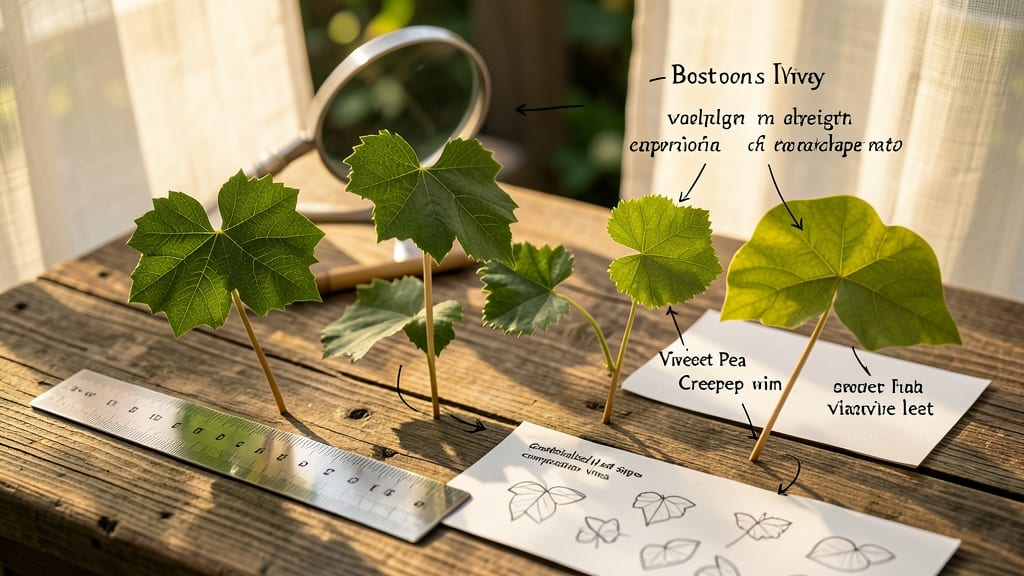
Leaf shape vine identification by leaf solves half the mystery before you even see the flowers. 🌿 I’ve spent years untangling vines from trellises and fences, and the first thing I check is the leaf—its shape, edges, and veins tell you everything. A single lobed leaf might mean poison ivy, while smooth-edged compound leaves could be wisteria or grapevines.
The key is noticing details most people overlook: whether the edges are serrated, lobed, or smooth, and if the leaves are simple or compound. My go-to trick? Hold the leaf up to a bright window—light reveals veins and textures that change everything.
Once you spot these clues, you’ll recognize vines on sight, even when they’re tangled in your yard.
You’ll quickly learn which vines thrive in your climate and which need pruning or removal. A grapevine’s five-lobed leaves mean it’s time to train it up a trellis, while poison ivy’s three-leaf clusters send you reaching for gloves.
This visual guide turns guesswork into confidence—no more second-guessing what’s climbing your fence.
For tricky cases, snap a photo and use a plant ID app like PlantNet or iNaturalist. The more you practice, the faster you’ll spot differences between similar vines, like Virginia creeper and Boston ivy. Soon, you’ll be the neighborhood vine detective—no more mysteries, just solutions.
Behind Leaf Shape Variations
Vines don’t just grow leaves—they craft them based on survival, reproduction, and environmental cues. The shape, size, and texture of a vine’s leaf aren’t random; they’re the result of evolutionary adaptations and biological responses.
Understanding why leaves take on specific forms helps gardeners and botanists decode which vine is which. Here’s the science behind those telltale leaf shapes.
Every vine’s leaf shape starts with its genetic inheritance. Just like humans have unique facial features passed down through generations, plants inherit leaf traits from their parents. Key genetic factors include:
- Leaf Morphology Genes: Specific genes like _KNOX_ (knotted-like homeobox) regulate leaf shape—controlling whether a leaf is lobed, serrated, or smooth-edged. Mutations in these genes can lead to dramatic differences, even between closely related vines.
- Pleiotropy: A single gene can influence multiple traits. For example, a gene that determines vine growth rate might also subtly alter leaf size or thickness, creating a distinct "signature" for identification.
- Hybridization: When two vine species crossbreed (e.g., Vitis vinifera and Vitis labrusca), their offspring may inherit a mosaic of leaf traits, blending characteristics like jagged edges or glossy surfaces.
Actionable Tip: 🔍 If you’re comparing two vines with similar leaves but one has slightly thicker veins or deeper serrations, genetics might be the culprit. Cross-referencing with a vine DNA database (like those used in grape breeding) can help narrow it down.
Leaves aren’t static—they adapt in real time to their surroundings. Environmental factors can warp, shrink, or distort a vine’s foliage, making identification tricky. Here’s how:
| Factor | Effect on Leaf Shape | Example |
|---|---|---|
| 💧 Water Scarcity | Leaves become smaller, thicker, and waxier to reduce water loss (a trait called xeromorphy). | Desert-adapted vines like Cissus incisa (grape ivy) develop leathery, oval leaves in arid climates. |
| ☀️ Intense Sunlight | Leaves may thicken, darken, or develop a rough texture to protect chlorophyll from UV damage. | Sun-exposed Passiflora edulis (passionfruit vine) leaves turn glossier and more lobed. |
| 🌀 Wind Exposure | Leaves grow smaller or more divided to minimize wind resistance (e.g., dissected leaves). | Coastal vines like Lonicera japonica (Japanese honeysuckle) develop finer, more delicate foliage. |
| 🌡️ Temperature Fluctuations | Cold snaps can cause stunted growth or curled edges, while heat stress may bleach or distort leaves. | Tropical vines like Mucuna pruriens (velvet bean) wilt or develop irregular shapes if exposed to frost. |
Pro Tip: 🌡️ If a vine’s leaves look unusually deformed (e.g., curled, spotted, or stunted), compare them to healthy specimens of the same species. Environmental stress often creates temporary changes, while genetic traits are permanent.
Not all leaf shape changes are natural—parasites and diseases can hijack a vine’s growth, producing bizarre or unnatural foliage. Here’s how:
- Fungal Infections (e.g., Powdery Mildew, Anthracnose):
Fungi like Uncinula necator (powdery mildew) cause leaves to pucker, distort, or develop white patches. Infected vines may produce abnormally small or malformed leaves as the plant diverts energy to fight the infection.
- Viral Diseases (e.g., Tomato Yellow Leaf Curl Virus):
Viruses can stunt leaf growth, cause yellowing (chlorosis), or trigger "cupping" (leaves curling upward). Some vines may even develop extra lobes or serrations as a misguided defense.
- Insect Damage (e.g., Spider Mites, Aphids):
Sap-sucking pests like Tetranychus urticae (spider mites) cause leaves to yellow, crinkle, or take on a "bronzed" appearance. Severe infestations can lead to premature leaf drop, altering the vine’s overall leaf shape.
- Nematode Attacks:
Root-knot nematodes (Meloidogyne spp.) stunt root growth, leading to smaller, underdeveloped leaves with irregular margins.
Red Flag: 🚨 If a vine’s leaves look unnaturally warped, check the undersides for pests or signs of fungus (e.g., mold, webbing). Healthy vines of the same species should have consistent leaf shapes.
A vine’s diet directly impacts its leaf development. Nutrient imbalances can create diagnostic leaf shapes that mimic (or mask) genetic traits:
| Deficiency | Leaf Shape Change | Vine Examples | ||||||||||||||||||||||||||||||
|---|---|---|---|---|---|---|---|---|---|---|---|---|---|---|---|---|---|---|---|---|---|---|---|---|---|---|---|---|---|---|---|---|
| ⚡ Nitrogen (N) | Leaves turn yellow (chlorosis) and become smaller, often with thin, fragile edges. | Grapevines (Vitis spp.) and wisteria (Wisteria sinensis) show stunted growth. | ||||||||||||||||||||||||||||||
| 🟠 Phosphorus (P) | Leaves develop a dark green, purplish tint and may appear thicker with reduced lobing. | Passionflower vines (Passiflora) show delayed leaf unfolding. | ||||||||||||||||||||||||||||||
| 🟢 Magnesium (Mg) | Interveinal chlorosis (yellowing between veins) causes leaves to look "striped" or irregularly lobed. | Morning glory (Ipomoea) leaves may develop jagged edges. | ||||||||||||||||||||||||||||||
| 🔴 Iron (Fe) | Young leaves stay yellow while veins remain green, leading to asymmetrical growth. | Clematis
Quick fixes for vine leaf ID confusionGot tangled in a garden maze of vines and can’t tell your grapevine from your poison ivy? Don’t worry—identifying vines by leaf shape doesn’t have to be a headache. Below are practical, step-by-step solutions to decode leaf patterns, avoid misidentification, and keep your garden thriving. Whether you’re dealing with fuzzy leaves, thorns, or just plain uncertainty, these fixes will help you name that vine like a pro in no time. Before diving into complex shapes, master the fundamentals of leaf anatomy. Most vine leaves share key features—focus on these first: - Leaf arrangement: Alternate (one leaf per node) or opposite (pairs at each node)? - Leaf edges: Smooth, serrated, lobed, or jagged? - Venation: Do veins run parallel, form a net, or branch like a feather? > 💡 Pro Tip: Snap a close-up photo of the leaf (front and back!) and compare it to a vine ID app like PictureThis or PlantNet. Tech does half the work for you! Stuck on a tricky leaf? Narrow it down by matching these top vine leaf shapes to your mystery plant:
> ⚠️ Warning: Poison Ivy and Virginia Creeper are often confused—remember the rhyme: "Leaves of three, let it be!" (Poison Ivy has 3 leaflets; Creeper has 5+ lobes.) Even experts mix up vines. Here’s how to avoid the most frequent errors: 🍃 Misidentifying thorns vs. prickles
🌿 Ignoring leaf backs and stems
🍇 Overlooking fruit or flowers
Once you’ve nailed the ID, keep your garden (and your sanity) organized with these long-term fixes:
You’ve got this! With these no-fuss strategies, you’ll go from "Is this a vine or a weed?" to "Ah, classic Bittersweet—time to prune!" in seconds. Now grab those pruners and happy identifying! 🌿✂️ Frequently asked questions
1
What's the quickest way to tell poison ivy from Virginia creeper?Use the \"leaves of three\" rule: poison ivy always has three leaflets per stem, while Virginia creeper has 5-7 lobes that look like tiny maple leaves. Also check for berries—Virginia creeper produces red clusters in fall, while poison ivy doesn't. Never touch unknown vines without gloves!
2
How do I identify a vine when I only see the leaves?Focus on these 3 key traits: leaf arrangement (alternate vs. opposite), edge type (smooth, serrated, or lobed), and vein pattern (palmate vs. pinnate). For example, grapevines have 5-lobed leaves with toothed edges, while wisteria has smooth, oval leaves with parallel veins. Use a plant ID app to cross-check your observations.
3
Why do some vine leaves change shape as they grow?Young leaves often look different from mature ones due to developmental changes. For example, grapevine leaves start lobed and fuzzy but become smoother with jagged edges as they age. This is normal—compare both young and old leaves when identifying. Environmental stress (like drought) can also distort leaf shapes temporarily.
4
Can I use leaf shape alone to identify edible vs. toxic vines?No—leaf shape is just the first clue! Always check for additional warning signs: white berries (like bittersweet nightshade) or milky sap (poison ivy) are red flags. When in doubt, avoid consuming any plant you haven't positively identified with a field guide or expert. Some edible vines (like wild grapes) have toxic look-alikes.
5
What should I do if I find an unknown vine in my garden?Take a photo and note these details: leaf shape, stem texture, and any flowers/fruit. Then research it using apps like PlantNet or consult local gardening groups. If it's invasive (like Japanese honeysuckle), remove it immediately—many spread aggressively. For poisonous vines, wear gloves and dispose of them carefully in sealed bags. |