
Pests and Diseases
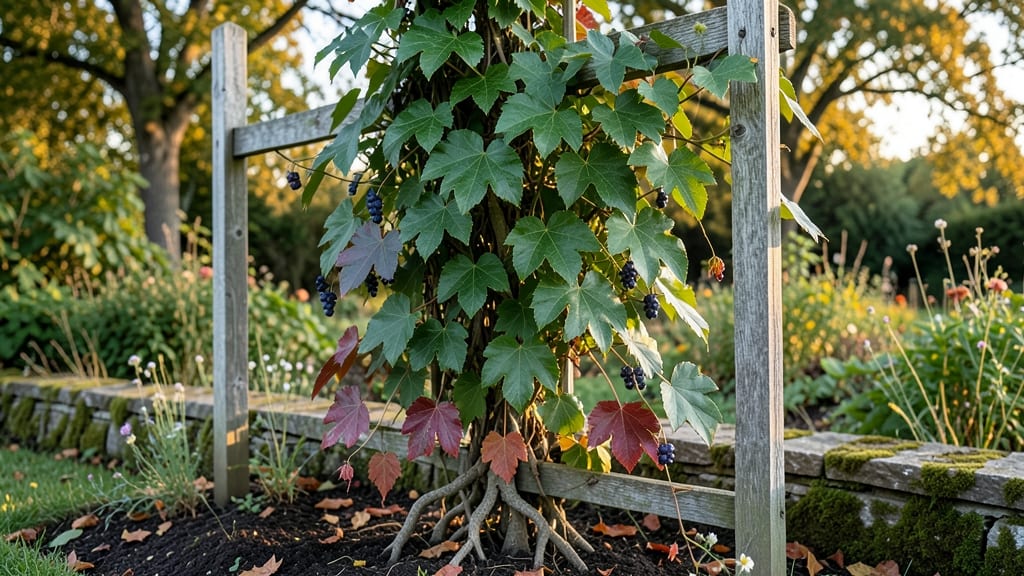
When comparing the Virginia creeper, five-leaf poison ivy, look for Virginia creeper's smooth-edged, pointed leaves, woody vine growth, and blue-black berries—while poison ivy displays rough, waxy leaves, spreads as a shrub or ground cover, and bears white berries. These visual cues let you distinguish them instantly.
These two plants might look similar at first glance, but their differences become obvious once you know what to look for. 🌿 Virginia creeper's leaves are thinner and smoother, almost like polished maple leaves, while poison ivy's leaves feel waxy to the touch—almost like they've been dusted with a fine powder.
The berries are another dead giveaway: Virginia creeper's dark purple-black berries stand out against its green foliage, whereas poison ivy's small white berries blend into the background.
I always check the leaf arrangement too—Virginia creeper's leaves grow in a more orderly spiral pattern, while poison ivy's are more clustered and irregular.
What's interesting is that both plants share the same leaf structure, which is why they're often confused. The key is paying attention to the finer details—the texture of the leaves, the way they grow, and the berries they produce.
If you're ever unsure, it's best to avoid touching either plant, as both can cause skin irritation, though poison ivy is far more notorious for its allergic reactions.
💡 In This Article
- Leaf and Stem Anatomy: Key Visual Clues
- Growth Habits and Berry Identification Guide
Leaf and stem anatomy: key visual clues
The most reliable way to distinguish Virginia creeper from poison ivy starts with leaf texture. Virginia creeper leaves are smooth to the touch with a thin, almost papery surface—like running your fingers over a fresh sheet of paper.
Under magnification, you'd see the leaf edges have tiny, evenly spaced serrations that are barely noticeable without close inspection. Poison ivy leaves, on the other hand, have a distinct waxy coating that feels slightly greasy or powdery, almost like the surface has been lightly dusted with talcum powder.
Look at the leaf arrangement too: Virginia creeper's leaves grow in a spiral pattern along the stem, with each leaf emerging at a 25-90° angle from the previous one. This creates a more orderly, symmetrical appearance.
Poison ivy leaves cluster more densely, often growing in groups of three at each node with a shallower angle (10-45°), giving it a bushier look.
The stems themselves tell the story—Virginia creeper has hairless, reddish-brown stems that develop woody, corky ridges as they mature, while poison ivy stems are green when young and often covered in fine hairs, especially near the leaf nodes.
Here's a pro tip: rub a leaf between your fingers. Virginia creeper leaves will feel silky-smooth with a slight crispness, while poison ivy leaves will have that waxy, almost sticky residue that's unmistakable. This tactile difference is why gardeners often describe Virginia creeper as "velvety" and poison ivy as "greasy."
The stem texture is equally telling—Virginia creeper's woody vines develop thick, corky bark over time, while poison ivy's stems remain thinner and more herbaceous, even as the plant ages.
The leaf edges reveal another critical difference. Virginia creeper's leaf margins have delicate, pointed serrations that taper to a fine point, while poison ivy's edges are more rounded with broader, blunter serrations. Think of it like comparing a maple leaf's sharp edges to a oak leaf's rounded lobes.
This edge difference becomes especially noticeable when leaves are young—Virginia creeper's new growth has bright red or purple hues along the edges, while poison ivy's young leaves are more uniformly green with subtle red veins.
One often-overlooked detail is the leaf vein pattern. Virginia creeper leaves have prominent, forked veins that create a web-like pattern, while poison ivy's veins are more parallel and less pronounced. Hold a leaf up to light—you'll see the contrast immediately.
This vein structure isn't just for show; it affects how each plant transports water and nutrients, contributing to their different growth habits. Virginia creeper's robust vein network supports its vigorous climbing, while poison ivy's more delicate veins suit its sprawling, ground-hugging growth.
For a final visual check, examine the leaf undersides. Virginia creeper's undersides are pale green and hairless, while poison ivy's often have fine, downy hairs along the veins.
This hairiness isn't just cosmetic—it helps poison ivy retain moisture in drier conditions, which is why you'll often find it thriving in sunnier, less humid environments compared to Virginia creeper.