
Pests and Diseases
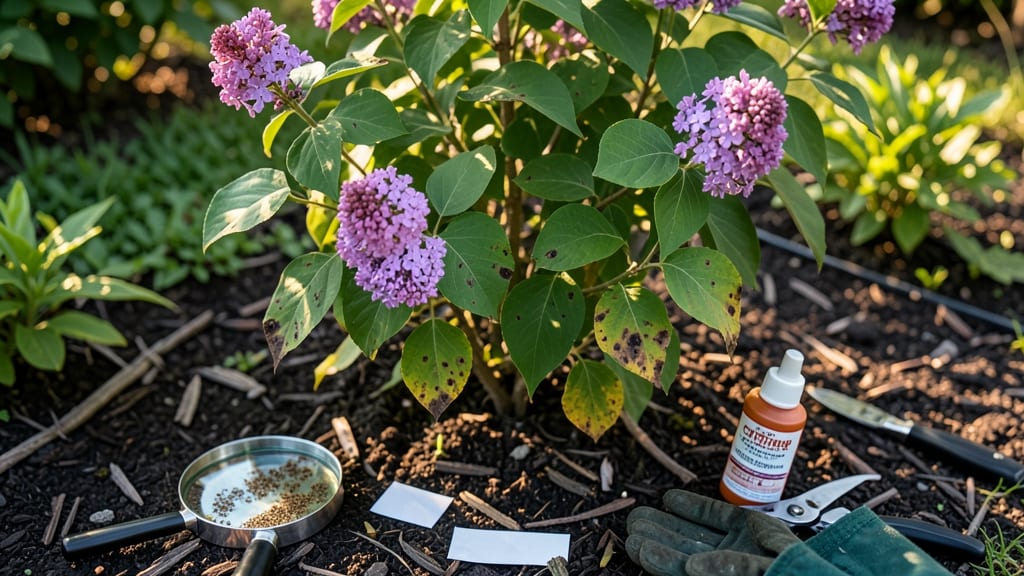
Your lilacs are turning into a leaf-spotted mess, and I get it—this fungal nightmare ruins the spring show. 🌿 Lilac leaf spot starts with tiny black or purple spots that multiply like weeds, turning leaves yellow and dropping them faster than you can say "pruning season."
The good news? You can stop it in its tracks with the right organic fixes and a little prevention.
First, confirm it's leaf spot (not mildew or disease) by checking for those signature spots on the upper leaves and black specks on the undersides. The fungus thrives in wet, shady conditions, so if your lilacs are in a low spot or get water splashed up, that's your culprit.
The key to fixing it? Prune infected branches first—sterilize your tools with rubbing alcohol, then cut out the worst stems before they spread.
For organic control, neem oil or copper fungicide sprays work best when applied every 10-14 days during wet weather. I’ve seen dramatic turnarounds in just two weeks with consistent spraying and removing fallen leaves (they’re fungal incubators!).
Resistant varieties like 'Bloomerang' lilacs also fight back better, so consider swapping out your old bushes if this keeps happening.
When to call in the pros? If more than 50% of the plant is infected or the spots keep coming back after treatment, a local arborist can assess whether systemic fungicides or soil amendments are needed.
Otherwise, with pruning and sprays, your lilacs can bounce back—just give them a fighting chance this season.
Root Causes Of Leaf Spots
Lilac leaf spot—those unsightly dark blemishes on your prized shrubs—isn’t just a random cosmetic flaw. It’s a clear signal that your lilacs are under siege by environmental stress, fungal invaders, or poor cultural practices.
Understanding the why behind these spots is the first step to stopping them in their tracks. Let’s break down the key culprits and their sneaky science.
Fungal pathogens like Septoria and Cercospora—the usual suspects behind leaf spots—thrive in damp conditions. When lilacs sit in soggy soil or get drenched by overhead watering or rain, their leaves stay wet for too long. This creates the perfect fungal buffet:
- Prolonged leaf wetness: Fungal spores germinate and infect within 6–12 hours of moisture. Heavy dew, rain, or even misting from sprinklers can trigger outbreaks.
- Compacted or waterlogged soil: Poor drainage prevents roots from breathing, weakening the plant’s defenses. Roots stressed by anaerobic conditions (lack of oxygen) can’t transport nutrients efficiently, making leaves more vulnerable.
- Overhead irrigation: Watering from above (especially late in the day) splashes spores onto leaves, spreading infection like wildfire.
Actionable fix: Improve drainage with organic matter (compost or perlite) and water at the base of the plant in the morning. Space lilacs 3–4 feet apart for airflow—fungi hate competition for real estate!
Leaf spot fungi are opportunistic hitchhikers. They lurk in soil, old plant debris, and even the wind, waiting for the right moment to strike. Here’s how they exploit your lilacs:
- Dormant spores: Many fungi survive winter in leaf litter or mulch. When spring arrives, warm temps and moisture wake them up—ready to infect fresh growth.
- Spores from nearby hosts: Lilacs aren’t picky eaters. Fungi that target roses, tulips, or other perennials can jump species, especially in crowded gardens.
- Warm, humid weather: Ideal fungal conditions are 60–80°F (15–27°C) with high humidity. That’s why outbreaks spike in late spring and summer.
Actionable fix: Remove all fallen leaves and debris in fall (before spores mature). Space plants for airflow and avoid mulching too close to stems—fungi love cozy, damp hideouts.
A lilac under stress is like an open invitation to fungi. When your shrub’s immune system is compromised, leaf spots spread faster and worse. Common stress triggers include:
- Nutrient deficiencies: Low nitrogen (_N_) or potassium (_K_) weakens cell walls, making leaves easier targets. Yellowing between veins? That’s often a magnesium (Mg) deficiency—fungi exploit these gaps.
- Physical damage: Pruning wounds, hail, or pest bites create entry points for spores. Even sunscald (from harsh afternoon sun) can stress leaves.
- Over-fertilizing: Too much synthetic nitrogen (especially ammonium forms) can burn roots, while excess phosphorus (_P_) promotes soft, fungal-loving tissue.
Actionable fix: Feed lilacs with balanced organic fertilizer (e.g., 5-5-5 or compost tea) in early spring. Prune in late winter/early spring (before buds swell) to avoid opening wounds during peak fungal season.
Pro tip: 🌡️ Monitor your microclimate. Use a hygrometer to track humidity—aim for below 70% around lilacs. A simple fan on low near susceptible plants can disrupt spore dispersal!
Revive Your Lilacs Naturally
Lilac leaf spot can turn your prized shrubs into a shadow of their former glory, but the good news? You can tackle it effectively with organic, garden-friendly solutions—no harsh chemicals required.
Below, we’ll break down the most common causes of leaf spot and pair them with practical fixes, plus prevention tips to keep your lilacs thriving.
Cause: Dense foliage traps moisture, creating the perfect breeding ground for fungal spores.
How to Fix It: 🔪 Prune strategically – Remove 1/3 of the oldest stems in early spring (before buds swell) to improve airflow. Cut back to healthy buds just above the leaf node. 🌿 Thin out branches – If your lilac is bushy, selectively prune to open the center, letting sunlight and air circulate. ⏰ Time it right – Prune after flowering (late spring to early summer) to avoid sacrificing next year’s blooms.
Prevention Tip: 💡 Space lilacs 3–6 feet apart when planting to reduce humidity buildup. If you’re working with mature shrubs, consider mulching with straw or pine needles (not wood chips) to keep roots dry.
Cause: Overwatering or soggy soil weakens lilacs, making them susceptible to fungal infections.
How to Fix It: 💧 Water deeply but less often – Aim for 1–1.5 inches of water per week (including rain). Water early in the day so leaves dry quickly. 🌱 Check soil drainage – If your lilac sits in a low spot, amend the soil with compost or sand to improve drainage. 🪴 Raise containers – If growing in pots, ensure they have drainage holes and elevate them to prevent waterlogging.
Prevention Tip: 🌡️ Avoid wetting foliage – Use a soaker hose or drip irrigation to deliver water at the base, not overhead.
Cause: Spores spread via wind, rain, or tools, especially in humid conditions.
How to Fix It: 🍄 Apply organic fungicides – Use neem oil, copper fungicide, or baking soda spray (1 tsp baking soda + 1 quart water + a drop of dish soap) every 7–10 days during wet seasons. 🧼 Clean tools & debris – Disinfect pruners with rubbing alcohol between cuts and remove fallen leaves to starve the fungus. 🌿 Mulch properly – Use 2–3 inches of organic mulch (like shredded bark) but keep it 2 inches away from the stem to prevent rot.
Prevention Tip: ✨ Plant resistant varieties – Some lilacs (like Syringa vulgaris ‘President Lincoln’) are less prone to leaf spot. Check local nurseries for disease-resistant options.
Cause: Weak plants struggle to fight infections—poor soil health makes lilacs more vulnerable.
How to Fix It: 🍽️ Fertilize lightly – Use a balanced, slow-release fertilizer (10-10-10) in early spring or a low-nitrogen organic option like fish emulsion. 🌱 Boost soil health – Mix compost or well-rotted manure into the soil annually to improve resilience. 💧 Test your soil – If your lilac is in acidic soil (pH <6.0), amend with lime to create a neutral pH (6.5–7.0), which fungi dislike.
Prevention Tip: 💡 Avoid fresh manure – It can burn roots and attract pests. Opt for aged compost instead.
If your lilac is heavily infected (more than 50% of leaves spotted), take emergency action: 🔥 Remove infected stems – Cut back severely damaged branches to healthy wood. 🍄 Apply a stronger organic spray – Try potassium bicarbonate (2 tbsp per gallon of water) for stubborn cases. 🌿 Isolate the plant – Keep it away from other lilacs or susceptible plants (like roses) until fully recovered.
✅ Prune annually to maintain airflow. ✅ Water at the base, not overhead. ✅ Monitor humidity—avoid planting in shaded, damp areas. ✅ Rotate organic fungicides to prevent resistance. ✅ Inspect leaves weekly in spring/summer for early signs.
With these steps, your lilacs can bounce back stronger—and next season, you’ll be the envy of the neighborhood with vibrant blooms and spotless leaves! 🌸💚
Frequently asked questions about lilac leaf spot
How do I tell if my lilac has leaf spot vs. powdery mildew?
Leaf spot shows up as dark purple or black spots with yellow halos on the upper leaf surface, while powdery mildew appears as white, powdery patches on both sides. Check the undersides of infected leaves—leaf spot often has tiny black specks (fungal spores), while mildew leaves a fuzzy coating.
Can I still prune my lilac if it has leaf spot?
Yes, but do it carefully! Prune only infected branches first, using sterilized tools (rubbing alcohol or bleach solution). Remove 1/3 of oldest stems in late winter/early spring to improve airflow. Avoid heavy pruning during active infections—wait until fall or winter for major shaping.
Will my lilac recover if I treat leaf spot early?
Early treatment with neem oil or copper fungicide (applied every 7-10 days) can stop spread and promote new growth. Remove all infected leaves/debris and improve airflow. With consistent care, lilacs often regrow healthy foliage within 4-6 weeks. Just keep monitoring for recurrence.
Are chemical fungicides better than organic options?
Not necessarily! Organic options like baking soda spray (1 tsp baking soda + 1 quart water) or potassium bicarbonate work well for mild cases. Chemical fungicides may offer faster results but can harm beneficial insects and require reapplication. For severe cases, consult a local extension service for targeted organic/chemical recommendations.
Can I save my lilac if most leaves are infected?
If over 50% of leaves are infected, act fast: prune back severely damaged branches to healthy wood, apply potassium bicarbonate spray, and isolate the plant. For extreme cases, consider removing the entire shrub to prevent soil-borne spores from reinfecting. Start fresh with a resistant variety in a well-drained location.