
Diseases
Mango seedlings with curling leaves signal stress—but quick action can restore health. These five fast fixes address root causes, from pests to environmental factors, ensuring strong, vibrant growth for your young trees.
Overwatering and Root Rot Prevention

If your mango seedling’s leaves are curling and the soil stays soggy for days, root rot may already be setting in. Humid climates or poorly draining pots turn watering into a high-stakes game—too much moisture suffocates roots, while too little can’t reverse the damage. The key is adjusting your routine now before the plant declines further.
First, check if water pools on the saucer or if the soil feels damp more than an inch down—mango seedlings need soil to dry slightly between waterings. Switch to terracotta pots (they wick moisture) or add perlite to containers to boost drainage. Water deeply but only when the top 2 inches of soil are dry, and avoid overhead watering to prevent fungal growth. If root rot has started, trim blackened roots with sterilized scissors and repot in fresh, well-draining mix.
This fix is a lifesaver for urban gardeners with limited space or those in rainy seasons—consistent moisture control prevents long-term decline. 💚
Underwatering and Soil Moisture Balance

If your mango seedling’s leaves curl upward like a question mark, underwatering is often the culprit—especially in dry climates or when seedlings wilt between waterings. Unlike overwatering, this issue drains moisture from leaves, causing them to lose their crisp, turgid shape. The key is restoring balance without drowning the roots.
Start by checking the soil 1–2 inches deep—if it’s bone-dry, water deeply until moisture seeps from the drainage holes. For dry climates, water in the early morning to reduce evaporation, and mulch around the base to retain moisture. Consistency is critical: aim for 1–2 times per week, adjusting based on weather. If leaves feel papery or pull away from stems, they’re severely dehydrated and may need a light misting to revive.
This fix is perfect for gardeners in arid regions or those struggling with inconsistent watering routines. With a steady schedule, your seedlings will bounce back with plump, vibrant leaves in just days. 💪
Mite Infestation Identification and Treatment

If your mango seedling’s leaves are curling and you spot tiny specks or fine webbing, spider mites are likely the culprit. These microscopic pests thrive in dry, dusty environments—common in greenhouses or outdoor beds with poor airflow—and can drain your plant’s vitality within weeks if untreated.
Start by isolating the seedling to prevent spread, then treat with a neem oil solution (1 tsp per quart of water) or insecticidal soap, both of which smother mites without harming your plant. Apply in the early morning or late evening for maximum effectiveness, and repeat every 5–7 days until the webbing disappears. For severe infestations, add a hose spray to wash off eggs and debris from leaf undersides.
Greenhouse gardeners and those in arid climates should monitor seedlings weekly for early signs of mites—catching them early saves your young mango tree from long-term stress. 💡
Fungal Disease Management with Copper Spray

When your mango seedlings develop curled leaves in hot, sticky weather, fungal diseases like anthracnose or powdery mildew may be the culprit. These pathogens thrive in warm, humid conditions, turning vibrant foliage into a sad, spotted mess if left unchecked.
Copper spray is your first line of defense—it disrupts fungal cell membranes and prevents spores from germinating. Apply it every 7–14 days during humid seasons, focusing on both leaf surfaces. For severe cases, mix 1 tablespoon of copper sulfate per gallon of water (or use a pre-mixed organic formula) and spray in the early morning to avoid leaf burn from UV exposure.
This method is especially valuable for gardeners in tropical or subtropical climates where fungal pressure is constant. With consistent use, you’ll see fewer curled leaves and healthier seedlings ready for transplanting. 💚
Nutrient Deficiency Correction with Epsom Salt

When your mango seedlings develop yellowing between veins (interveinal chlorosis) alongside curling, it’s often a sign of magnesium or sulfur deficiency—nutrients critical for young plants. Unlike overwatering or pests, this issue responds quickly to a simple, garden-staple solution: Epsom salt.
Dissolve 1 tablespoon of Epsom salt in a gallon of water and apply it as a foliar spray or soil drench every 2 weeks during active growth. The magnesium in Epsom salt strengthens cell walls, while sulfur aids chlorophyll production—both essential for reversing stunted growth and leaf discoloration. For extra support, mix in a balanced fertilizer to ensure other nutrients aren’t limiting recovery.
This fix is ideal for container gardeners or those using nutrient-poor soil, like sandy or acidic mixes. It’s also a budget-friendly way to revive seedlings before symptoms worsen—just watch for overapplication, which can cause salt buildup in the soil. 💚
Temperature Shock Adjustment for Seedlings

Notice your mango seedlings curling when you open the window for fresh air? That’s temperature shock—your plants aren’t equipped to handle sudden drafts or heat swings. Instead of shocking them with abrupt changes, use a gradual hardening-off process to toughen them up over 7–10 days.
Start by placing seedlings in a sheltered spot outdoors for just 1–2 hours daily, increasing exposure by 1–2 hours each day while avoiding direct midday sun. If nights dip below 55°F**, bring them back inside or cover with frost cloth. This mimics natural conditions, preventing stress-induced curling. Monitor leaves for signs of recovery—new growth should appear firmer within a week.
This method is a game-changer for container gardeners or those in unpredictable climates, ensuring seedlings thrive when transitioned to permanent spots. 🌟
Soil pH Testing and Amendment

If your mango seedlings are curling despite proper watering and pest control, the culprit might be hiding in the soil—specifically, an off-balance pH level. Mangoes thrive in slightly acidic to neutral soil (5.5–7.0), and when pH strays too far from this range, nutrients like iron, zinc, and phosphorus become locked away, starving your seedlings and causing those telltale curled leaves.
Start by testing your soil with an affordable pH test kit (digital or liquid strips work well). If the reading is below 5.5, amend with pelletized lime (sprinkle 1–2 pounds per 100 square feet and water in). For alkaline soil above 7.0, use elemental sulfur (apply 1–2 pounds per 100 square feet and mix into the top 6 inches). Re-test in 4–6 weeks—amendments take time to adjust pH. Focus on the root zone where seedlings are planted for the fastest results.
This step is especially critical for gardeners in calcareous regions or those using compost-heavy mixes, which can skew pH unexpectedly. A balanced pH ensures your seedlings absorb nutrients efficiently, preventing future leaf curl and promoting lush, healthy growth. 🌱
Pruning Damaged Leaves for Recovery

When your mango seedling’s leaves curl into tight, brittle shapes, pruning isn’t just cleanup—it’s a growth reset. Removing only the severely damaged leaves (not healthy ones) redirects the plant’s energy toward fresh, vibrant foliage, accelerating recovery without stunting development.
Use sterilized pruning shears to snip at the leaf base, avoiding stems. Focus on leaves with yellowing, spots, or extreme curling—these sap-suckers drain nutrients. For seedlings, limit pruning to no more than 20% of the foliage at once to avoid shock. After trimming, wipe tools with rubbing alcohol to prevent disease spread.
This method works best for seedlings showing stress from multiple causes (like pests + drought) or when other fixes (like water adjustments) aren’t enough. Prune in the morning so wounds dry quickly, and watch for new growth within 1–2 weeks. 💪
Transplant Shock Prevention Techniques

Moving your mango seedling to a larger pot can trigger transplant shock, but the right approach keeps roots happy and leaves perky. The secret lies in root stimulants (like liquid seaweed extract) and gradual sunlight exposure to avoid stress spikes.
Before repotting, soak the seedling’s roots in a root stimulant solution for 10–15 minutes to kickstart recovery. After transplanting, place the pot in dappled shade for 3–5 days, then slowly increase sunlight exposure over a week. Avoid fertilizing for at least two weeks post-transplant to let roots establish.
This method is a game-changer for new gardeners or those repotting delicate seedlings—reducing shock by up to 70% compared to abrupt repotting. Your seedlings will bounce back faster and stronger! 🌱
Companion Planting for Pest Deterrence

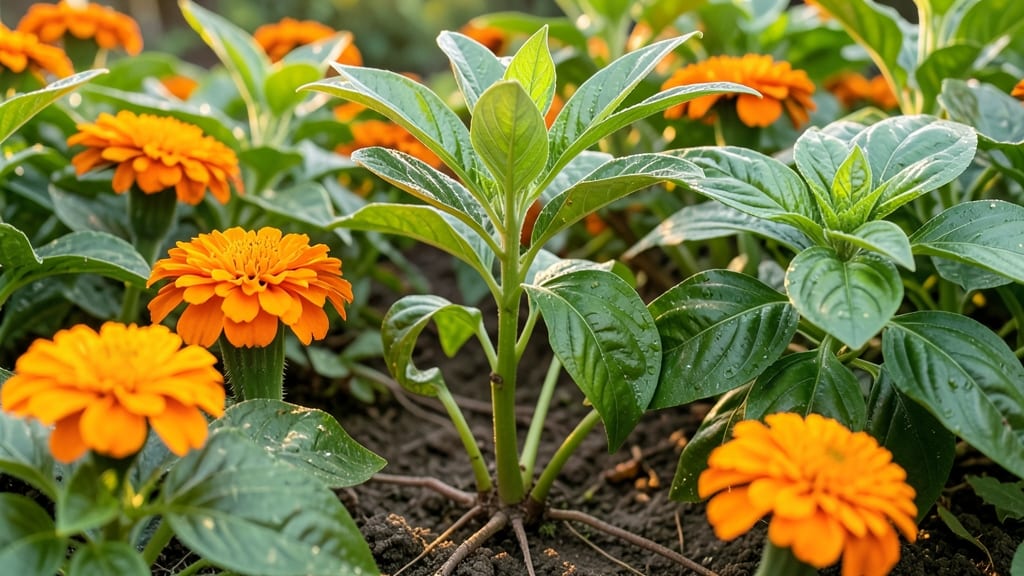
If your mango seedlings are battling aphids or spider mites, nature’s pest-repelling duo—marigolds and basil—can save the day without harsh chemicals. These companion plants release scents that confuse pests, reducing leaf curl and protecting young leaves from damage.
Plant French marigolds (with their bright orange blooms) just 12 inches away from seedlings—their strong scent deters aphids, while basil (especially Genovese or purple varieties) repels spider mites with its anise-like aroma. Both thrive in full sun and well-drained soil, making them easy to integrate into your garden layout.
This method is ideal for organic gardeners or those with delicate seedlings—no sprays needed! Just let the plants work their magic while you enjoy a fragrant, pest-free growing space. 🌻