
Diseases
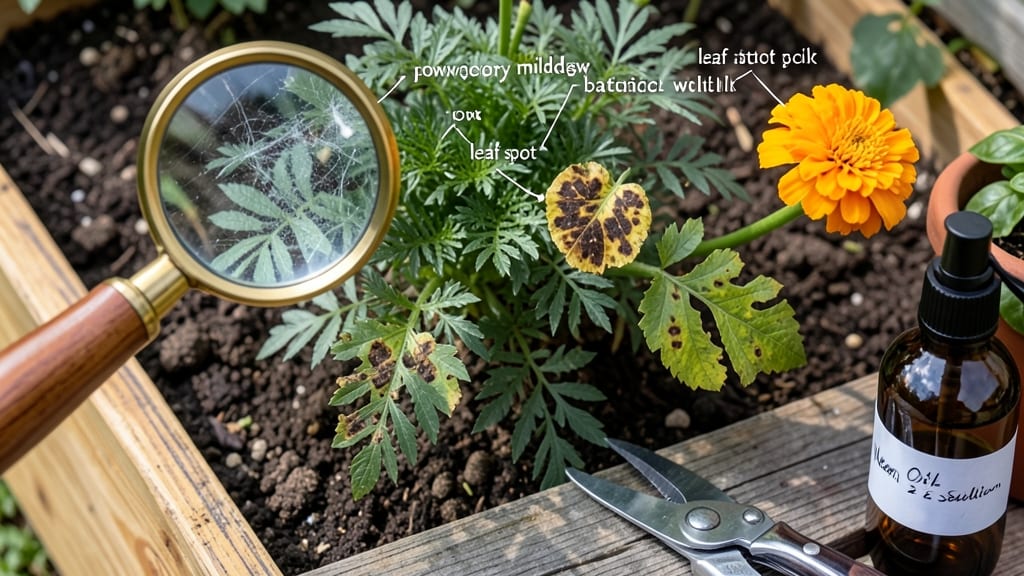
Marigold leaf diseases turn those cheerful golden blooms into sad, spotted messes—fast. 🌼 I’ve seen powdery white fuzz, blackened patches, and leaves that curl up like burnt parchment, and I’ll show you how to stop them before they ruin your season.
The key is catching these issues early, when a quick spray or tweak can save your plants instead of replacing them.
Most problems start with too much moisture or poor airflow—think crowded plants or watering at the wrong time. Powdery mildew loves shady spots, while bacterial leaf spot thrives when leaves stay wet overnight.
The good news? Organic fixes like neem oil, baking soda sprays, and proper spacing work better than you’d think, and they won’t harm bees or your soil.
You’ll spot the difference in just a few days: leaves stay crisp, flowers keep blooming, and your marigolds look like the bright, happy stars they’re meant to be. The secret is acting fast—once those spots spread, even organic treatments take longer to reverse the damage.
Works for all marigold types—French, African, or those tiny Signet varieties—and even saves your other plants if you catch the disease early. Let’s get those leaves healthy again before the next downpour hits.
Root Causes Behind Leaf Troubles
Marigold leaves don’t just develop diseases out of thin air—there’s always a trigger, whether it’s lurking in the soil, hiding on the plant, or creeping in from the environment. Understanding these root causes is half the battle in keeping your marigolds vibrant and healthy.
Let’s break down the science behind why your marigold leaves might be throwing up red flags.
Fungi are the #1 culprit behind marigold leaf diseases, and they thrive in the right conditions like a bad reality show. These microscopic organisms often hitch a ride on seeds, tools, or even the wind, waiting for the perfect moment to strike.
- Overcrowded Plants: Poor air circulation (thanks to tightly packed foliage) creates a humid microclimate—fungi’s dream environment. Alternaria and powdery mildew love this setup, spreading spores like confetti at a parade.
- Wet Leaves: Water sitting on leaves for too long (especially at night) gives fungi a free pass to germinate. Downy mildew and leaf spot are notorious for turning up when marigolds are watered from above.
- Old Debris: Leaving infected leaves or stems in the soil? You’re basically rolling out the welcome mat for fungi. Spores can survive in organic matter for years, waiting to reinfect.
💡 Pro Tip: Space plants 12–18 inches apart and water at the base to keep leaves dry. Remove and dispose of infected foliage immediately—do not compost it!
Unlike fungi, bacteria move quickly and often cause sudden damage. They enter through wounds (like pruning cuts or insect bites) and multiply in warm, moist conditions. Bacterial leaf spot and wilt are classic examples, turning leaves into a sad, mushy mess.
- Contaminated Tools: Pruners, gloves, or even your hands can transfer bacteria from one plant to another. If you’ve been working with infected marigolds, sanitize tools with a 10% bleach solution (1 part bleach to 9 parts water).
- Heavy Rain or Overwatering: Excess moisture stresses plants, weakening their defenses. Bacteria seize the opportunity, especially in tropical or humid climates where marigolds are common.
- Poor Drainage: Waterlogged soil doesn’t just drown roots—it creates the perfect breeding ground for bacteria. If your marigolds are in containers, ensure pots have drainage holes.
✨ Quick Fix: If you spot bacterial ooze (yellow or white gunk), prune infected areas immediately and treat with a copper-based bactericide (like copper soap) to slow the spread.
Not all leaf diseases are caused by pathogens—sometimes, pests are the real troublemakers. Insects like aphids, spider mites, and whiteflies don’t just suck sap; they damage tissue and create entry points for diseases. Their sticky residue (honeydew) also fosters sooty mold, turning leaves into black, crumbly messes.
- Aphids & Whiteflies: These sap-suckers weaken plants, making them susceptible to secondary infections. Their honeydew attracts fungi like sooty mold, which coats leaves in a velvety black layer.
- Spider Mites: In dry conditions, these tiny arachnids puncture leaves, causing stippling (tiny white/yellow dots) and yellowing. Stressed plants are less resistant to diseases like powdery mildew.
- Thrips: These striped pests scratch leaves while feeding, creating wounds that invite bacterial or fungal invaders.
🎯 Prevention Tip: Use neem oil or insecticidal soap to knock out pests before they cause a party. Ladybugs and lacewings are natural allies—encourage them with companion planting!
Marigolds are tough, but they’re not invincible. Extreme temperatures, poor nutrition, or sudden changes can weaken their immune system, making them easy targets for diseases. Think of it like a person with a cold—stress makes them more vulnerable to infections.
| Stressor | How It Weakens Plants | Diseases It Invites |
|---|---|---|
| ❄️ Cold Snaps | Slows growth, reduces photosynthesis, and damages cell walls. | Gray mold, damping-off (in seedlings) |
| ☀️ Intense Heat | Causes water stress, wilting, and nutrient deficiencies. | Leaf scorch, powdery mildew (heat + humidity) |
| 💧 Nutrient Deficiencies | Lack of nitrogen, potassium, or magnesium weakens cell structure. | Bacterial wilt, fungal rots (roots can’t fight back) |
| 🌀 Poor Airflow | Traps moisture, preventing leaves from drying quickly. | Downy mildew, Alternaria leaf spot |
🔥 Action Step: Monitor your marigolds’ growing conditions. Use mulch to regulate soil temperature, balance fertilizer (avoid overdoing nitrogen), and prune to improve airflow.
Now that you know why marigold leaf diseases strike, the next step is how to stop them in their tracks—without harsh chemicals. Stay tuned!
Quick Fixes for Healthy Marigold Leaves
Marigold leaves can develop diseases, but with the right care, you can restore their vibrancy and prevent further damage. Below are practical, organic solutions tailored to common causes—from fungal infections to nutrient deficiencies—along with prevention tips to keep your plants thriving.
Cause: Overcrowding, high humidity, or poor airflow traps moisture, inviting fungal spores.
How to Fix It: 🔥 Remove Infected Leaves – Snip off yellowed or spotted leaves with clean pruners and dispose of them in the trash (not compost). This stops the spread. 🍳 Apply Baking Soda Spray – Mix 1 teaspoon baking soda + 1 quart water + a few drops of dish soap (as a surfactant). Spray on leaves every 7–10 days until symptoms fade. Why it works: Baking soda raises the pH, making it inhospitable for fungi. 👨🍳 Neem Oil Treatment – Combine 1 tablespoon neem oil + 1 teaspoon mild soap + 1 quart water. Spray early in the morning (avoid direct sun) once a week for 2–3 weeks. Pro tip: Shake well before each use—neem oil separates! 🥘 Improve Airflow – Space plants 6–12 inches apart and prune nearby foliage blocking airflow. Use a small fan on low setting near plants if humidity is high. ⏰ Water at the Base – Avoid overhead watering; use a drip irrigation system or watering can with a spout to keep leaves dry.
Prevention: ✔ Space plants properly to reduce humidity pockets. ✔ Water in the early morning so leaves dry quickly. ✔ Rotate crops—don’t plant marigolds in the same spot yearly. ✔ Use mulch (straw or grass clippings) to prevent soil-borne fungi from splashing onto leaves.
Cause: Intense afternoon sun or sudden heat waves without acclimation.
How to Fix It: 🌡️ Provide Afternoon Shade – Use lightweight shade cloth (30–50%) or move pots to a spot with partial shade (e.g., under a patio umbrella) for 2–4 hours daily during peak heat. 💡 Mulch the Soil – Apply 2–3 inches of organic mulch (straw, wood chips) to keep roots cool and retain moisture. 🥗 Boost Hydration – Water deeply 1–2 times a week (check soil moisture 1 inch below the surface—if dry, water). Use drip irrigation to avoid wetting leaves. 🎯 Gradual Sun Exposure – If transplanting, acclimate plants by exposing them to 1–2 hours of sun daily, increasing by 1 hour every 2–3 days.
Prevention: ✔ Choose heat-tolerant varieties like ‘French Marigold’ or ‘African Marigold’ (they handle sun better). ✔ Avoid fertilizing during heatwaves—focus on watering instead. ✔ Group plants together to create a microclimate with shared shade.
Cause: Poor soil quality, over/under-fertilizing, or compacted roots.
How to Fix It: 📊 Test Your Soil – Use a DIY soil test kit (available at garden centers) to check pH (ideal: 6.0–7.0 for marigolds) and nutrient levels. 💪 Add Organic Amendments –
- For nitrogen deficiency (yellow lower leaves): Mix 1 cup compost + 1 tablespoon blood meal into the top 2 inches of soil.
- For phosphorus deficiency (purple stems): Use bone meal (1 tablespoon per plant).
- For potassium deficiency (weak stems): Add 1 tablespoon wood ash (sparingly—test pH first!).
🥗 Use Liquid Fertilizer – Brew compost tea (steep compost in water for 24 hours, strain) or use fish emulsion (1 tbsp/gal water) every 2–3 weeks during growing season. 🌱 Loosen Compacted Soil – Gently fork the soil around roots to improve aeration and drainage.
Prevention: ✔ Fertilize lightly—marigolds need low to moderate nutrients. Overdoing it burns roots! ✔ Rotate crops to avoid nutrient depletion. ✔ Top-dress with compost every spring to replenish soil.
Cause: Weak plants attract pests, which sap nutrients and spread disease.
How to Fix It: 🔪 Blast Off Pests – Spray plants with a strong stream of water to dislodge aphids or spider mites. Repeat every 2–3 days until gone. 🌿 Introduce Beneficial Insects – Release ladybugs or lacewings (available at garden centers) to eat pests naturally. 🍎 Soap Spray Recipe – Mix 1 tablespoon castile soap + 1 quart water. Spray directly on pests (avoid beneficial insects by applying in early morning). ✨ Neem Oil Barrier – Spray neem oil solution (as above) weekly to deter future infestations.
Prevention: ✔ Inspect new plants before bringing them home. ✔ Encourage biodiversity—plant basil, garlic, or nasturtiums nearby to repel pests. ✔ Remove debris where pests hide (e.g., old leaves, weeds).
- Prune for Airflow: Trim 1/3 of the plant to encourage bushier, healthier growth.
- Revitalize with Compost Tea: Water plants with compost tea to boost immunity.
- Quarantine New Plants: Keep recently purchased marigolds separate for 2 weeks to avoid introducing diseases.
Remember: Consistency is key! Check plants weekly for early signs of stress, and act fast—most issues are easier to fix when caught early. 🌟
Frequently asked questions about marigold leaf diseases
What are the most common signs of fungal diseases on marigold leaves?
Look for white powdery patches (powdery mildew), dark brown/black spots with yellow halos (leaf spot), or gray fuzzy growth (Botrytis). These appear on both upper and lower leaf surfaces. Fungal diseases often start on older leaves and spread to younger ones if untreated.
How can I tell if my marigold has bacterial leaf spot vs. fungal issues?
Bacterial leaf spot causes water-soaked spots that turn yellow/brown with ragged edges, often with oily-looking lesions. Fungal spots usually have defined borders and may develop spores (powdery or fuzzy textures). Bacterial infections often appear suddenly after rain or overwatering.
Can I still use my marigolds for cooking if they have leaf diseases?
Only harvest leaves from healthy, disease-free plants for culinary use. Diseased leaves may contain harmful bacteria or fungi. For ornamental purposes, remove infected foliage immediately to prevent spread. French marigold leaves are safest for cooking when completely free of spots or discoloration.
Will copper-based sprays harm beneficial insects like bees?
Copper sprays are generally safe for bees when applied after sunset and only when flowers aren't open. The active ingredient targets bacteria, not insects. For extra protection, apply in the evening when bees aren't foraging, and avoid spraying directly on blooms.
How do I know when to replace a severely diseased marigold plant?
Remove the plant if more than 50% of leaves are infected, the stem shows dark lesions, or the plant wilts despite treatment. Diseased marigolds can't recover fully and may reinfect nearby plants. Always sterilize your tools and dispose of infected plants in sealed bags, not compost.