
Pests and Diseases
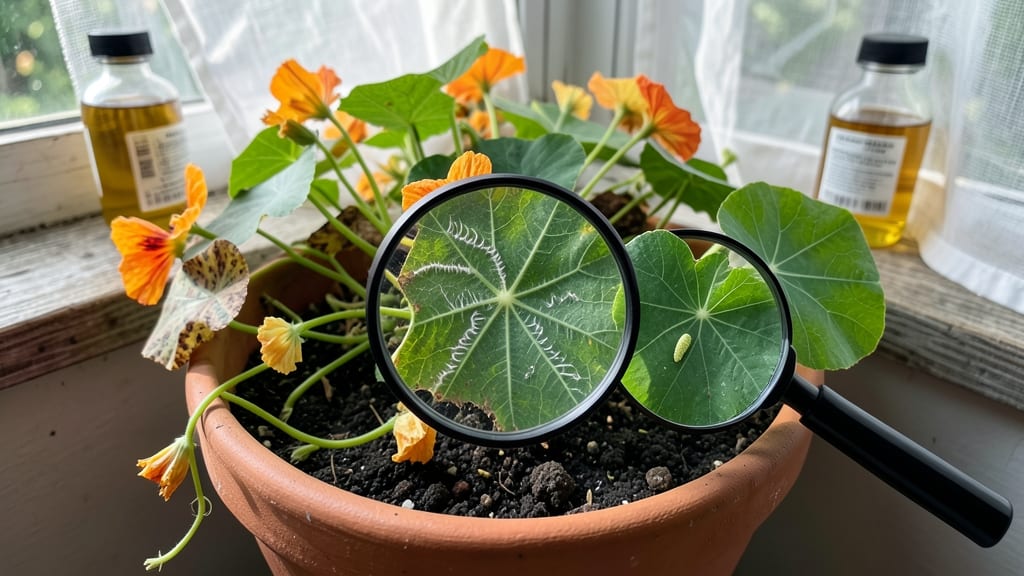
Those serpentine mines in nasturtium leaves aren’t just unsightly—they’re a sign of leaf miners silently feeding on your plants. 🌿 I’ve battled these tiny pests in my garden, and what I learned changed how I protect my nasturtiums for good.
The key? Catching them early before they turn your vibrant blooms into a skeleton of leaves.
Leaf miners start as nearly invisible larvae that chew between leaf layers, leaving behind winding trails of damage. By the time you spot the mines, the damage is already done—and the larvae are pupating in the soil, ready to return next season.
The good news? You can outsmart them with simple, organic methods that work without harsh chemicals.
With the right traps, sprays, and cultural fixes, you’ll stop new infestations before they start. I’ll show you how to monitor plants weekly, use companion plants like dill or fennel to distract pests, and apply homemade sprays that actually work—no guesswork, just results.
Whether you’re growing nasturtiums for their edible flowers or just their cheerful blooms, this guide keeps your plants thriving all season. Let’s get those mines under control for good.
The Hidden Culprits Behind Leaf Damage
When your vibrant nasturtium plants start showing signs of wilting, discolored leaves, or serpentine tunnels beneath the surface, the culprit is likely Phytomyza rorquini—the leaf miner fly larva. But why do these tiny pests target your plants in the first place?
Understanding the root causes helps you disrupt their lifecycle and protect your garden. Here’s what’s really going on:
The leaf miner fly is drawn to thick, tender, and nutrient-rich leaves—especially those of young, fast-growing plants like nasturtiums. Here’s why:
- Nutrient Density: Nasturtiums are packed with nitrogen, which makes their leaves an irresistible buffet for leaf miner larvae. The higher the nutrient content, the more appealing the plant becomes to adult flies seeking a place to lay eggs.
- Soft Tissue: Young, succulent leaves are easier for larvae to penetrate and feed on. Older, tougher leaves offer more resistance, making them less desirable.
- Scent Signals: Plants under stress (from overwatering, poor drainage, or fertilizer burns) emit volatile organic compounds (VOCs) that attract leaf miner flies. These pests use scent trails to locate weakened hosts.
Actionable Insight: If your nasturtiums are over-fertilized or overwatered, they’ll send out distress signals. Let the soil dry slightly between waterings and use a balanced, organic fertilizer (like compost tea) to avoid nutrient spikes.
Leaf miners don’t appear out of nowhere—they follow a precise annual lifecycle that aligns with your garden’s growing season:
| Stage | When It Happens | Why It Matters |
|---|---|---|
| 🌿 Adult Emergence | Late spring to early summer (when soil warms to 60°F+) | Adult flies emerge from pupae in the soil, seeking fresh host plants to lay eggs. |
| 🥚 Egg Laying | May–June (peak activity) | Females deposit eggs on the underside of leaves, timing it with new leaf growth. |
| 🐛 Larval Feeding | June–August (larvae hatch and mine leaves) | Larvae burrow into leaves, creating visible damage. They pupate in the soil by late summer. |
| 🌱 Overwintering | Fall–winter (pupae survive in soil) | Pupae remain dormant until spring, then emerge as adults to restart the cycle. |
Actionable Insight: Disrupt their timeline by removing heavily infested leaves before larvae pupate (late summer). Solarizing soil in fall (covering it with clear plastic for 4–6 weeks) can kill overwintering pupae.
Leaf miners thrive in specific conditions that many gardeners unintentionally create:
- Warm, Humid Microclimates: These pests love shady, moist areas where air doesn’t circulate well. If your nasturtiums are planted under dense foliage or in low-lying spots, humidity rises, creating a perfect breeding ground.
- Poor Airflow: Stagnant air traps heat and moisture, slowing leaf drying after rain. Wet leaves = easier egg-laying for adult flies.
- Late Plantings: Nasturtiums sown in late spring or early summer (after the first wave of adult flies emerges) become prime targets because they’re already lush and vulnerable.
Actionable Insight:
- 🌡️ Space plants 3–6 inches apart for airflow and sunlight penetration.
- 💦 Water in the morning so leaves dry quickly.
- ⏳ Start seeds indoors 4–6 weeks before last frost to establish plants before peak fly activity.
Stressed plants are magnets for pests. When nasturtiums struggle, they become easier targets for leaf miners:
- Compacted or Waterlogged Soil: Roots can’t absorb nutrients efficiently, leading to weak growth. Leaf miners detect this vulnerability.
- Nutrient Imbalances: Too much nitrogen (common in synthetic fertilizers) produces soft, sappy leaves—leaf miner heaven. Too little phosphorus or potassium weakens structural defenses.
- Disease Pressure: Fungal or bacterial infections (like downy mildew) create entry points for miners and attract flies.
Actionable Insight: Boost plant resilience with:
- 🌱 Compost or worm castings for balanced nutrition.
- 💧 Well-draining soil (amend clay soil with perlite or sand).
- 🌿 Neem oil spray (1% solution) every 7–10 days to deter flies and prevent secondary infections.
Quick Fixes for Chewed Nasturtium Leaves
When those pesky leaf miners strike, your nasturtiums may look like Swiss cheese—but don’t panic! These practical, organic solutions will help you reclaim your plants without harsh chemicals. Below, we’ve mapped the most common causes to easy fixes, plus prevention tips to keep your nasturtiums thriving.
Cause: Heavy infestation or late-stage damage Fix:
- 🍳 Snip and toss severely affected leaves (wear gloves—larvae can irritate skin).
- 👨🍳 Inspect stems for tiny white maggots (leaf miner larvae). Use a damp paper towel to gently scrape them off.
- 🔪 Prune back weak growth to improve airflow—this discourages further egg-laying.
Pro Tip: 💡 Drop infested leaves into soapy water (1 tbsp dish soap per gallon) to kill larvae on contact.
Cause: Eggs or early larvae hiding in foliage Fix:
- 🍎 Yellow sticky traps: Hang them near plants to catch adult flies before they lay eggs.
- 🌡️ Row covers: Use lightweight fabric to physically block flies from reaching plants (remove during pollination if growing for seeds).
- ✨ Kaolin clay spray: Apply a thin layer to leaves to create a barrier that confuses and repels adults.
Pro Tip: 🎯 Reapply traps every 2–3 weeks or after rain to maintain effectiveness.
Cause: Persistent infestation despite traps Fix:
- 🌿 Neem oil spray: Mix 1 tbsp neem oil + 1 tsp mild soap in 1 quart water. Spray early morning or evening to avoid harming bees.
- 🍅 Spinosad (organic bacterial spray): Targets larvae directly—follow label rates for safety.
- 🌿 Garlic/chili pepper spray: Blend 1 garlic bulb + 1 tbsp cayenne + 1 quart water. Strain and spray to deter flies.
Pro Tip: 🔥 Always test sprays on a small leaf first—some nasturtium varieties are sensitive to oils.
Cause: Weak plants attract more pests Fix:
- 💪 Water deeply but infrequently (overwatering stresses roots).
- 🥗 Feed with compost tea or fish emulsion (avoid high-nitrogen fertilizers—they encourage soft, pest-loved growth).
- 🌱 Rotate crops—don’t plant nasturtiums in the same spot yearly.
Pro Tip: 🌡️ Healthy nasturtiums grow fast! Pinch back tips to encourage bushier growth, making it harder for flies to hide.
✅ Monitor plants weekly—catch infestations early. ✅ Encourage beneficial insects like ladybugs and parasitic wasps (they eat leaf miner eggs!). ✅ Clean up debris in fall to remove overwintering larvae. ✅ Interplant with basil or dill—their scents repel leaf miners naturally.
Remember: Patience is key! With these steps, your nasturtiums will bounce back—and next season, you’ll be ahead of the game. 🌱✨
Frequently asked questions
What do nasturtium leaf miner tunnels look like?
Leaf miner damage appears as winding, brown or grayish serpentine trails between leaf layers. These tunnels start small but expand as larvae feed, eventually causing entire sections of the leaf to dry out and die. Check the underside of leaves for tiny white maggots moving along the trails.
How fast do nasturtium leaf miners spread?
Once adult flies lay eggs, larvae hatch in 3-5 days and begin feeding immediately. A single infestation can become severe within 2-3 weeks, especially in warm, humid conditions. Regular inspections (every 5-7 days) are key to catching it early.
Can I save nasturtium plants already heavily infested?
Yes, but act fast! Remove all severely damaged leaves and prune back weak growth to improve airflow. Apply neem oil spray (1% solution) and introduce beneficial insects like ladybugs. For advanced cases, consider replanting new seedlings while treating the soil with solarization.
Are nasturtium leaf miners harmful to humans?
No, they pose no direct threat to humans. However, the larvae can cause skin irritation if handled without gloves. The real concern is the damage they do to your plants, which can reduce yields and make them more susceptible to disease.
What's the best time of year to prevent leaf miners?
Focus on prevention during late spring to early summer when adult flies emerge. This is when they lay eggs on new growth. Start with yellow sticky traps in May, apply kaolin clay spray in June, and maintain good garden hygiene by removing plant debris in fall.