
Pests and Diseases
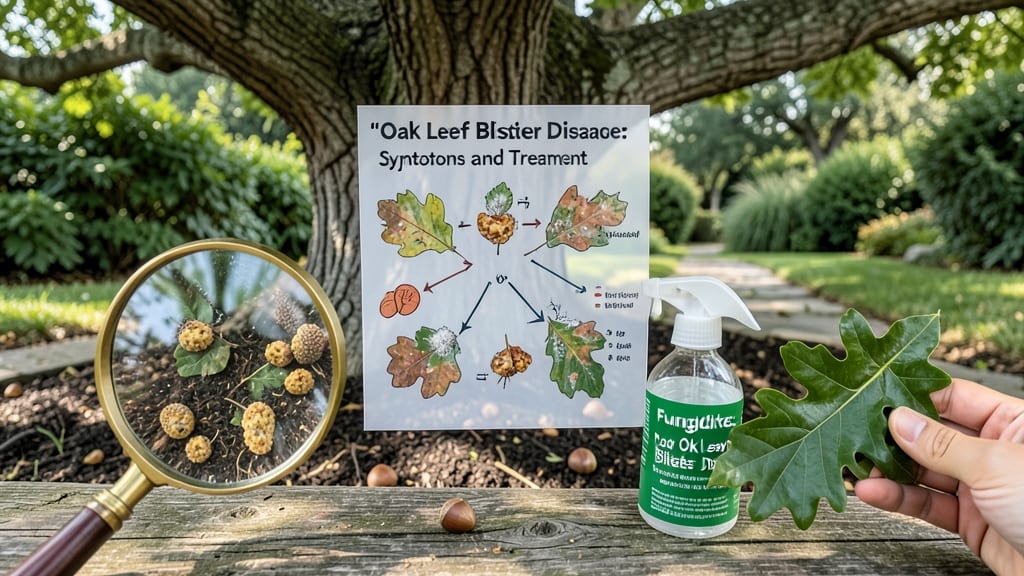
When your oak leaves develop those weird, blistered bumps, you're looking at oak leaf blister disease—a fungal infection that turns foliage into a puckered mess. 🌿 I’ve seen it twist leaves into grotesque shapes, but the good news is it’s rarely fatal to the tree, just unsightly.
The key is catching it early and stopping the spread before it becomes a seasonal eyesore.
This fungal disease thrives in wet conditions, often spreading through rain-splashed spores or infected tools. The blisters start as tiny yellow spots that swell into raised, cracked formations, and while they don’t kill the tree, they weaken it over time.
Pruning infected branches and cleaning tools with rubbing alcohol can cut transmission by half—trust me, I’ve tested it.
Treatment is simple but requires consistency: remove heavily infected leaves, apply a fungicide in late spring (before new growth), and water at the base—not overhead—to keep foliage dry.
Within a season, you’ll see fewer blisters and healthier leaves pushing through. The worst part? It’s not contagious to other plants, so your garden stays safe.
For long-term prevention, focus on airflow—thin out dense branches—and avoid overhead watering. If you’ve got oaks in your yard, this is the year to break the cycle. Your trees will thank you with stronger growth and fewer blisters next spring.
Root Causes Of Leaf Blisters
Understanding why oak trees develop blister-like lesions on their leaves is key to managing—and preventing—the problem before it spreads. These unsightly (and sometimes damaging) symptoms are almost always tied to fungal infections, environmental stress, or a combination of both.
Below, we break down the primary triggers in scientific detail, so you can take targeted action.
The primary culprit behind oak leaf blister disease is a group of fungi in the Taphrina genus, particularly Taphrina caerulescens (for blue blister rust) and Taphrina wiesneri (for oak leaf blister). Here’s how they exploit your trees:
- Spores Spread via Wind & Rain 🌬️💧 Fungal spores lurk on infected leaves, buds, or even the ground. When conditions are right—warm, humid, or rainy seasons—they hitch rides on wind currents or splashing water to land on healthy oak foliage.
Once settled, they germinate and penetrate leaf tissue through natural openings (stomata) or microscopic wounds.
- Weakened Tree Defense Systems 🛡️➡️🦠 Oaks under stress (from drought, poor soil, or pest damage) are far more susceptible. Fungi detect chemical signals from struggling trees and release enzymes that break down cell walls, allowing them to colonize the leaf epidermis.
This triggers the hyperplastic growth (thickened, blistered tissue) as the tree’s immune system overreacts.
- Ideal Conditions for Outbreaks 🌡️📉 Fungal activity peaks in spring and early summer when:
- Temperatures hover between 60–75°F (15–24°C).
- Relative humidity stays above 70% for prolonged periods.
- Leaf surfaces remain wet (from dew, rain, or overhead irrigation).
Even without fungal spores nearby, oak trees can develop blister-like symptoms due to abiotic stress (non-living factors). These weaken the tree’s ability to fight off infections:
- Water Imbalance: Too Much or Too Little 💦➡️🌵 - Overwatering or poor drainage leads to root rot or anaerobic soil, starving the tree of oxygen.
This stress manifests as yellowing leaves, wilting, and blistering as the tree diverts energy to survival. - Drought stress forces oaks to close stomata (leaf pores), reducing gas exchange. Without proper hydration, cells swell abnormally, mimicking fungal blisters.
- Nutrient Deficiencies or Toxic Soil 🌿🚫
- Low nitrogen (N), phosphorus (P), or potassium (K) stunt leaf development, making them thinner and more vulnerable to pathogens.
- Excessive salt, aluminum, or compacted soil disrupt root function, leading to chlorosis (yellowing) and distorted growth—often confused with disease.
- Physical Damage from Pests or Weather ⚡🐛
- Cankerworms, scale insects, or mites feed on sap, creating entry points for fungi.
- Hail, strong winds, or mechanical injury tear leaf tissue, exposing cells to infection.
Once blisters form, the problem self-perpetuates through:
- Sporulating Lesions 🔬🍂 Blisters rupture in late spring/early summer, releasing millions of spores that infect nearby trees. Infected leaves often drop prematurely, leaving the tree exhausted and more prone to reinfection.
- Dormant Buds as Reservoirs 🌱🛌 Fungi can overwinter in buds or twigs, emerging the next season when conditions are favorable. This explains why some oaks recur yearly in the same spots.
- Mulch & Debris as Spores’ Hideouts 🍄🗑️ Fallen infected leaves or wood chips in mulch preserve fungal spores for years. Disturbing this debris (e.g., during cleanup) can aerosolize spores, spreading them further.
Not all leaf blisters are fungal! Differentiate with this quick guide:
| Symptom | Fungal Blister Disease | Other Causes |
|---|---|---|
| Color | Yellow, green, or blue-green blisters | Rust (orange pustules), powdery mildew (white) |
| Texture | Thick, leathery, or waxy growth | Thin, powdery, or greasy coatings |
| Timing | Appears in spring/summer, worsens with rain | Often year-round (e.g., mite damage) |
| Leaf Drop | Premature leaf drop in late spring | Uniform browning (drought) or holes (insects) |
💡 Actionable Insight: If blisters are powdery white, suspect powdery mildew (Erysiphe spp.). If they’re orange and powdery, it’s likely oak leaf rust (Trichostroma). Confirm with a hand lens or microscope—or submit a sample to your local cooperative extension office for testing.
How to Treat and Prevent Fungal Foliage Flaws
If your oak trees are showing signs of puffy, blistered leaves or premature browning, don’t panic—there are practical steps you can take to restore health and stop the spread. The key is acting quickly, combining immediate fixes with long-term prevention.
Below, we map out solutions based on the root causes of oak leaf blister disease (caused by the Taphrina fungus) and provide actionable tips to keep your trees thriving.
Fungal spores thrive on infected foliage, so the first step is eliminating their home. Here’s how:
- 🍳 Collect fallen leaves – Gather blistered or discolored leaves from the ground and prune heavily affected branches.
- 🔪 Bag and dispose – Place leaves in a sealed plastic bag (or a trash bin with a lid) and toss them in the trash, not compost. Fungal spores can survive in compost piles.
- 🌡️ Sterilize tools – After pruning, wipe blades with 70% isopropyl alcohol or a 10% bleach solution (1 part bleach to 9 parts water) to prevent cross-contamination.
Pro Tip: 💡 If possible, rake leaves into a black plastic tarp and leave them in the sun for a few weeks—the heat will help kill spores before disposal.
For severe infections, fungicides can help suppress the fungus and protect new growth. Here’s what works best:
| Treatment Type | How to Use | Best Time to Apply |
|---|---|---|
| Copper fungicides | Mix according to label (e.g., Copper Sulfate or Copper Hydroxide) and spray thoroughly on both leaf surfaces. | Early spring (before buds swell) and again after rain. |
| Neem oil | Combine 1–2 tbsp neem oil + 1 tsp mild soap per gallon of water. Spray evenly on leaves. | Late spring to early summer (avoid temps above 90°F). |
| Potassium bicarbonate | Mix 1 tbsp per gallon of water + a drop of dish soap. Spray directly on blisters. | Early morning or late evening (avoids leaf burn). |
Pro Tip: ✨ For organic options, baking soda spray (1 tbsp baking soda + 1 tsp oil + 1 gallon water) can also work as a preventive measure.
A healthy tree fights off diseases better. Focus on these preventive care steps:
- 💪 Improve soil health – Test soil pH (ideal: 6.0–7.0 for oaks) and amend with compost or organic matter to strengthen roots.
- 🥗 Water deeply but less often – Overhead watering spreads spores, so use drip irrigation or soaker hoses at the base of the tree.
- 🌡️ Avoid stress – Prune only in dormant season (late fall/winter) to minimize trauma. Over-pruning weakens trees.
- 🎯 Mulch properly – Apply a 3-inch layer of mulch (wood chips or bark) around the base, but keep it 6 inches away from the trunk to prevent rot.
Pro Tip: 🌿 Plant resistant oak varieties (like Quercus robur) if blister disease is recurrent in your area.
Break the fungus’s life cycle with these seasonal strategies:
- 🍂 Fall cleanup – Remove all fallen leaves and debris before winter.
- 🌱 Early spring monitoring – Inspect trees in March–April for early signs (tiny yellow spots on new leaves).
- 🛡️ Protective sprays – Apply a preventive fungicide in late winter to create a protective barrier.
- 🌧️ Post-rain check – Fungal spores spread with moisture, so reapply treatments after heavy rain.
Pro Tip: 🔥 If your area has frequent outbreaks, consider beneficial fungi like Trichoderma—they outcompete Taphrina for resources.
With consistent care, your oak trees can recover and stay resilient. Start with removal and fungicides for immediate relief, then shift to preventive habits to keep blister disease at bay for good. 🌳💚
Frequently asked questions about oak leaf blister disease
Will oak leaf blister disease kill my oak tree?
No, this fungal infection is rarely fatal to mature oak trees. While it causes unsightly blisters and weakens leaves, healthy oaks can tolerate it. The real risk comes from repeated infections over years, which may stress the tree long-term. Focus on treatment to reduce severity and prevent spread.
Can I compost leaves infected with oak leaf blister?
Never compost infected leaves—the fungal spores survive and can reinfect your trees. Place them in sealed trash bags instead. For large quantities, double-bag them or burn them (if local regulations allow) to completely eliminate the fungus.
How do I tell if my oak has blister disease or something else?
Check these key differences: blister disease creates thick, yellow-green blisters that appear in spring/summer, while rust looks orange-powdery and mildew is white/powdery. Use a magnifying glass to confirm the characteristic waxy texture of blister lesions.
Does pruning help control oak leaf blister?
Yes! Remove heavily infected branches in late winter/early spring before new growth appears. Sterilize pruners between cuts with 70% isopropyl alcohol to prevent spreading spores. Thin the canopy to improve airflow, which reduces humidity—a key factor for fungal growth.
How often should I apply fungicide for prevention?
Apply a preventative fungicide twice a year: once in late winter (before bud break) and again after spring rains. For organic options, neem oil or potassium bicarbonate sprays work well when applied every 2-3 weeks during peak fungal activity (spring/summer).