
Aphids
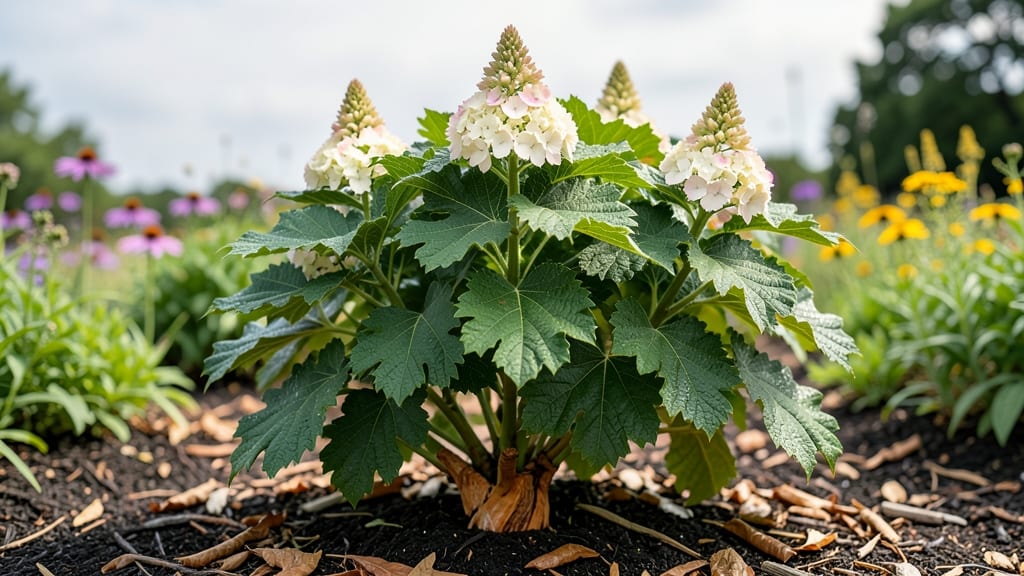
Oakleaf hydrangea (Hydrangea quercifolia) turns shade gardens into lush, ever-changing canvases. 🌿 I fell in love with its oak-shaped leaves that blaze in fall and its delicate blooms that last from summer into frost.
Unlike fussy hydrangeas, this one thrives where others struggle—partial shade, rocky soil, even dry spells. The secret to its success is simple: plant it where it gets morning sun and afternoon shade, in well-draining soil with plenty of organic matter.
Space plants 5-6 feet apart to give their roots room to spread, and watch as they grow into 8-10 foot shrubs that outshine anything in the neighborhood. Water deeply once a week, and you'll rarely need to worry about wilting.
What makes this hydrangea truly special is its year-round interest—deep green leaves in spring, white lacecap flowers in summer, fiery red foliage in fall, and even winter charm with exfoliating bark. Prune lightly in late winter to shape it, and you'll have a shade-loving powerhouse that never disappoints.
Perfect for foundation plantings, woodland gardens, or as a statement piece under trees. Once established, it's drought-tolerant and deer-resistant, making it the ultimate low-maintenance beauty. Let's get yours growing!
📚 In This Guide
- What you need
- Instructions
- Tips and common mistakes
- Wrapping up and next steps
What you need
- ● Oakleaf Hydrangea Plants: 1-3 nursery-grown specimens (choose ‘Snow Queen’, ‘Pee Wee’, or ‘Alice’ for variety).
- ● Well-draining potting mix: 5-10 gallons (for containers) or amended garden soil (for in-ground planting). Mix in compost (20-30%) for nutrients.
- ● Organic mulch: 2-3 inches of pine bark or shredded leaves to retain moisture and regulate soil temperature.
- ● Slow-release fertilizer: 10-10-10 or balanced organic fertilizer (e.g., fish emulsion or bone meal).
- ● Pruning shears: Sharp, clean pair (sterilize with rubbing alcohol between cuts).
- ● Garden gloves: Heavy-duty for protection while handling soil or thorns.
- ● Watering can or hose with a gentle nozzle: Hydrangeas need consistent moisture, especially in their first year.
- ● Epsom salt: 1 tbsp per plant annually in spring to boost magnesium (great for vibrant foliage!).
- ● Container with drainage holes: 15-20 gallon size if planting in pots (ensure it’s at least 12 inches deep).
- ● Soil pH test kit: To monitor acidity (Oakleaf Hydrangeas prefer pH 5.0–6.0 for blue blooms).
- ● Pest control: Neem oil or insecticidal soap (for aphids or spider mites).
- ● Stake or support: For young plants in windy areas (though they’re generally sturdy!).
Step-by-step guide to planting and caring for oakleaf hydrangea quercifolia
This shade-loving beauty delivers stunning foliage year-round—here's how to establish it for long-term success.
🌱 Step 1: Choose the Perfect Planting Site and Prepare the Soil
Oakleaf hydrangeas thrive in partial shade to full shade (3-6 hours of sunlight daily), making them ideal for understory plantings or northern exposures. I always scout the site first—look for areas where other shade-loving plants already flourish, as this indicates proper moisture retention and light conditions. The soil should drain well but retain moisture; hydrangeas despise soggy roots but need consistent moisture to support their large leaves.
Amend the soil with 2-3 inches of organic matter (like compost or well-rotted leaf mold) mixed into the top 12 inches of soil. Oakleaf hydrangeas prefer slightly acidic to neutral soil (pH 5.5-6.5). Test your soil's pH before planting—if it's alkaline, add sulfur or peat moss to lower the pH gradually. Work the amendments into the soil until it's loose and crumbly, breaking up any compacted layers that could restrict root growth.
🪴 Step 2: Plant at the Right Time and Depth for Strong Establishment
Plant your oakleaf hydrangea in early spring or early fall when temperatures are mild—this gives roots time to establish before summer heat or winter cold. Dig a hole twice as wide as the root ball but no deeper; the top of the root ball should sit 1 inch above ground level to prevent rot. This slight elevation encourages proper drainage while keeping the plant stable.
Gently remove the plant from its container and loosen any circling roots with your fingers. Place it in the hole so the root flare (where roots meet the trunk) is visible above the soil line. Backfill with the amended soil, tamping lightly to eliminate air pockets. Water deeply to settle the soil—you'll know it's right when the surface looks slightly firm but not compacted. Mulch with 2-3 inches of organic mulch (like shredded bark or pine needles) to retain moisture and regulate soil temperature.
☀️ Step 3: Water Consistently and Monitor for Stress Signs
Keep the soil evenly moist but not waterlogged for the first 6-8 weeks after planting. Water deeply 2-3 times per week, aiming for 1-1.5 inches of water per session. Young hydrangeas need consistent moisture to develop strong root systems—let the top 2 inches of soil dry out between waterings to avoid overwatering, but never let the roots dry completely. You'll see healthy growth when new leaves emerge bright green and slightly glossy.
Watch for signs of stress: yellowing leaves often indicate overwatering or poor drainage, while wilting or crispy edges signal underwatering. If leaves develop brown tips or edges, it could mean the soil is too alkaline—test the pH again and adjust with chelated iron or aluminum sulfate if needed. Oakleaf hydrangeas are forgiving, but they reward attentive care with lush, vibrant foliage.
✂️ Step 4: Prune Strategically to Encourage Full, Bushy Growth
Prune your oakleaf hydrangea in late winter or early spring, just as new growth begins to emerge. Remove dead, diseased, or crossing branches first—these compete for energy and can spread problems. Then, cut back last year's stems by 1/3 to 1/2 to encourage bushier growth. The goal is to shape the plant while preserving its natural form; oakleaf hydrangeas have stunning exfoliating bark, so avoid heavy pruning that removes too many stems.
Never prune in fall—this encourages new growth that won’t harden off before winter, leading to frost damage. After pruning, apply a balanced fertilizer (10-10-10) around the base to support new growth. You'll notice fresh, vibrant shoots within 2-3 weeks, signaling the plant is recovering well. Avoid heavy fertilization in the first year; focus on root establishment before pushing foliage growth.
🌿 Step 5: Maintain Year-Round with Seasonal Adjustments
In spring, remove any winter-damaged leaves and add a 2-inch layer of fresh mulch to protect roots from temperature swings. In summer, water deeply once a week if rainfall is minimal, aiming for 1-2 inches of water per session. Oakleaf hydrangeas are drought-tolerant once established, but their foliage will wilt under extreme dryness—this is your cue to water immediately.
In fall, reduce watering gradually to harden off the plant for winter. Apply a thin layer of mulch (1 inch) to insulate roots from freezing temperatures. The plant’s deep green leaves will turn bronze or purple in fall, adding seasonal interest. Prune lightly in late winter to remove any dead stems, but avoid heavy cuts—oakleaf hydrangeas bloom on old wood, so aggressive pruning reduces next year’s flowers.
Tips & tricks for perfect oakleaf hydrangea planting and care
Between us, these little details make all the difference when establishing your oakleaf hydrangea for long-term success.
Soil Preparation Insight: Don't just eyeball that 2-3 inches of organic matter—use a trowel to create precise trenches at 12 inches deep before mixing. I learned this the hard way after planting in unevenly amended soil that led to root stress. For alkaline soils, test pH with a reliable kit before adding amendments—some garden centers sell affordable digital meters that give instant readings. The goal is 5.5-6.5 pH, and you can't overdo the sulfur or peat moss once you've identified the problem.
Planting Depth Secret: That 1 inch elevation above ground level isn't just about drainage—it's about creating an air gap that prevents rot. Use a level to ensure the root flare sits perfectly horizontal. I've seen many gardeners plant too deep, which suffocates the roots. After planting, press soil firmly around the base to eliminate air pockets, but don't compact it like you're building a foundation—keep it loose and crumbly for easy root penetration.
Watering Technique: The 2-3 times per week guideline assumes average rainfall. In hot summers, you might need daily watering—check soil moisture by sticking your finger 2 inches down. If it's dry, water until moisture reaches 6 inches deep. For the first 6-8 weeks, I use a soaker hose set on low to deliver consistent moisture without disturbing the soil surface. This mimics natural rainfall patterns and prevents stress from uneven watering.
Pruning Precision: When cutting back last year's stems by 1/3 to 1/2, make clean cuts just above a leaf node or outward-facing bud. Never leave stubs—they invite disease. I use sharp bypass pruners and disinfect them with rubbing alcohol between cuts. The 2-3 weeks for new growth to appear is your confirmation that the plant is recovering well. If you see no new shoots after this time, check for root rot or pests that might be inhibiting growth.
Pro Tips for Oakleaf Hydrangea Hydrangea Quercifolia
- Between us, these little details make all the difference when establishing your oakleaf hydrangea for long-term success.
- Soil Preparation Insight: Don't just eyeball that 2-3 inches of organic matter—use a trowel to create precise trenches at 12 inches deep before mixing.
- Planting Depth Secret: That 1 inch elevation above ground level isn't just about drainage—it's about creating an air gap that prevents rot.
Frequently asked questions
Got questions about Hydrangea quercifolia? You’re not alone!
Here are the most common queries gardeners have about this stunning, shade-loving shrub—plus straightforward answers to keep your oakleaf hydrangea thriving.
How fast does oakleaf hydrangea grow, and how big will it get?
Hydrangea quercifolia grows at a moderate pace—about 12–24 inches per year under ideal conditions. Mature plants typically reach 6–10 feet tall and wide, though some varieties (like ‘Snow Queen’) stay smaller. Give it space, as it spreads slowly but steadily over time. Prune in late winter to shape it without sacrificing blooms!
Is oakleaf hydrangea cold-hardy, and how do I protect it in winter?
Yes! This hydrangea is highly cold-hardy (zones 5–9), but young plants may need winter protection in colder climates. Mulch heavily (3–4 inches) around the base after the ground freezes, and avoid pruning until late winter. Evergreen foliage can scorch in harsh sun, so light pruning in early spring helps refresh growth.
Can oakleaf hydrangea grow in full shade, or does it need some sun?
While it tolerates partial shade (4–6 hours of sun daily), oakleaf hydrangea thrives with morning sun and afternoon shade—especially in hotter zones. Full shade may reduce blooms, but it’ll still produce lush foliage. Test your spot: If leaves stay dark green and blooms are sparse, add a few hours of filtered light.
Why are my oakleaf hydrangea leaves curling or yellowing?
Curling/yellowing leaves often signal aphids, mites, or fungal issues (like powdery mildew). Inspect undersides for pests—blast off with water or use neem oil. Yellowing can also mean overwatering or poor drainage. Ensure soil drains well and water at the base (not leaves) to prevent fungal spread. Pro tip: Prune affected branches to improve airflow!
When and how should I prune oakleaf hydrangea for best blooms?
Prune late winter or early spring (before buds swell) to remove dead wood and shape the plant. Avoid summer pruning—it cuts off next year’s blooms! For older plants, thin out crowded stems to encourage larger flowers. Never prune into “old wood” (last year’s growth), as blooms form on new wood.
What are some great alternatives if oakleaf hydrangea isn’t right for my garden?
If you love shade-loving shrubs with year-round interest, try:
- Oakleaf maple (Acer griseum) – Striking exfoliating bark and fall color.
- Japanese pieris (Pieris japonica) – Evergreen with spring blooms and red new growth.
- Inkberry holly (Ilex glabra) – Low-maintenance, drought-tolerant, and berry-producing.
- Mountain laurel (Kalmia latifolia) – Showy spring flowers and glossy leaves.
Wrapping up and next steps
The oakleaf hydrangea (Hydrangea quercifolia) is a stunning, low-maintenance plant that delivers year-round beauty with its vibrant foliage, seasonal blooms, and graceful fall colors. Whether you're a seasoned gardener or just starting, this shade-loving shrub is a game-changer for adding texture and elegance to your garden. 🌿
Ready to transform your space? Start by selecting the perfect spot, gathering your supplies, and planting with confidence. Your oakleaf hydrangea journey begins now—watch it thrive!