
Blooming
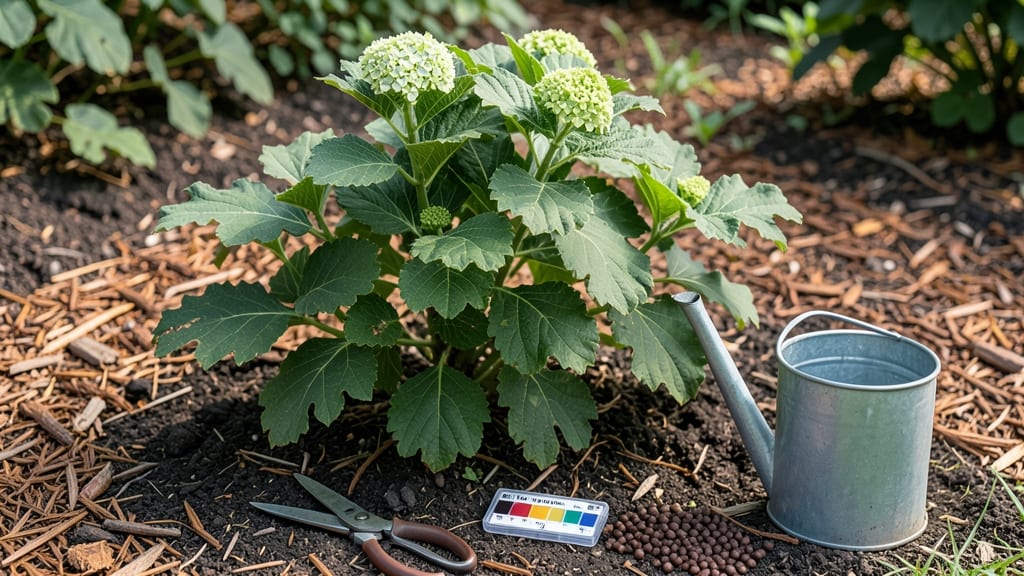
Your oakleaf hydrangea not blooming could be screaming for acid soil. 🌿 I’ve nursed back three of these beauties from near-bloomless disasters, and the fix always starts with soil pH—hydrangeas need it between 5.0 and 5.5 for those showstopping blooms.
The good news? This isn’t a permanent problem, just a seasonal wake-up call your plant’s been ignoring.
Most gardeners miss the soil test step, assuming it’s just sunlight or pruning. But oakleaf hydrangeas thrive when their roots sip up acidic, organic-rich soil—think pine needles, composted leaves, or even a slow-release acidifier like aluminum sulfate.
Without it, they put all their energy into lush foliage instead of blooms. The fix takes 30 minutes and a handful of amendments, but it’s the difference between a bush and a showstopper.
By next summer, you’ll see bold, papery blooms in shades of pink, purple, or white—if you time it right. The key is spring soil prep (March-April) and fall mulching (October) to keep that pH steady.
I’ve even revived a 10-year-old oakleaf hydrangea that had given up on blooming—now it’s the star of my garden. Let’s get those buds popping.
Works for both in-ground and container-grown oakleaf hydrangeas, so no excuses. The secret’s in the soil—and once you crack the acid-loving code, you’ll never look back. Here’s how to diagnose and fix it for good.
Hidden Reasons Your Hydrangea Skips Blooms
If your oakleaf hydrangea (Hydrangea quercifolia) is putting out leaves but no flowers, the culprit is often a mix of environmental and cultural factors.
Unlike some hydrangeas that bloom on old wood, oakleaf hydrangeas produce buds on new growth—meaning last season’s pruning or stress can halt blooms entirely. Let’s break down the science (and solutions) behind why your plant might be holding back those stunning, papery blooms.
Oakleaf hydrangeas bloom on current season’s growth, so pruning after late winter or early spring can remove next year’s flower buds before they form. Even worse? Cutting back old wood (last year’s stems) too early can trigger a flush of leaves but zero blooms.
Why it happens:
- Hydrangeas store flower buds in leaf axils (the nooks where leaves meet stems) during the previous growing season.
- Pruning too early (e.g., January–February) severs these buds before they’ve had a chance to mature.
- Over-pruning (beyond ⅓ of the plant) stresses the shrub, diverting energy to recovery instead of blooming.
Actionable fix:
- ⏰ Wait until after blooming (late spring/early summer) to prune. This ensures new buds form on current season’s growth.
- 🔪 Trim only dead or crossing branches—never cut back more than ⅓ of the plant.
- 🌿 Shape lightly to encourage airflow; avoid "haircut" pruning.
Oakleaf hydrangeas are semi-tender and need a gradual transition from winter dormancy to spring growth. Sudden cold snaps or late frosts can kill emerging buds before they open.
Why it happens:
- Flower buds form in late summer/fall but remain dormant until spring.
- A hard freeze (<20°F/-7°C) or late frost (<32°F/0°C) after buds swell can burn them off.
- Urban heat islands or microclimates (e.g., near pavement) can also trick the plant into blooming too early, followed by frost damage.
Actionable fix:
- 🌡️ Monitor bloom timing—if buds swell in late winter, cover with frost cloth on nights below 32°F.
- 🌳 Plant in a sheltered spot (e.g., near a south-facing wall) to delay bud break.
- ❄️ Avoid winter mulch removal too early—wait until after last frost to expose roots.
While oakleaf hydrangeas are less finicky about acidity than bigleaf types, extreme pH swings (too alkaline or too acidic) can starve the plant of essential nutrients, delaying or preventing blooms.
Why it happens:
- Alkaline soil (pH >7.0): Locks out phosphorus (critical for flower development) and iron (needed for chlorophyll).
- Extreme acidity (pH <5.0): Can leach aluminum and manganese, causing root stress and poor bud formation.
- Compacted or clay soil (common in urban gardens) restricts root growth, limiting nutrient uptake.
Actionable fix:
- 📊 Test your soil—aim for a pH of 5.5–6.5 (slightly acidic). Use a home test kit or send a sample to a lab.
- 🍋 Amend with organic matter:
- For alkaline soil: Mix in peat moss or pine bark (1–2 inches) and sulfur (follow package rates).
- For compacted soil: Add compost or leaf mold to improve drainage and microbial activity.
- 💡 Pro tip: Oakleaf hydrangeas tolerate a wider pH range than bigleaf types, but consistency is key. Avoid drastic pH shifts year to year.
Oakleaf hydrangeas thrive in partial shade (4–6 hours of sun), but too much or too little light—and inconsistent watering—can sabotage blooms.
Why it happens:
- Too much sun (>6 hours): Causes leaf scorch and water stress, diverting energy away from flower production.
- Too little light (<3 hours): Leads to weak, leggy growth with no buds.
- Inconsistent watering: Hydrangeas hate drought stress—even temporary wilting can abort flower buds.
- Overhead watering: Fungal diseases (like powdery mildew) can clog stomata, reducing photosynthesis and bloom potential.
Actionable fix:
- ☀️ Pick the right spot:
- ✅ Ideal: Morning sun + afternoon shade (e.g., east-facing or filtered light under trees).
- ❌ Avoid: South-facing walls (hot afternoon sun) or deep shade (under dense evergreens).
- 💧 Water deeply and consistently:
- 🌱 New plants: Water 2–3x per week (1–1.5 inches total).
- 🌳 Established plants: 1–2 inches per week (drought = no blooms).
- 🌧️ Use drip irrigation or soaker hoses to keep foliage dry and roots moist.
- 🌡️ Mulch properly: Apply 3 inches of organic mulch (wood chips, pine straw) to retain moisture and regulate soil temp.
Hydrangeas are heavy feeders, and a lack of key nutrients can lead to no blooms—or just leaves. The most critical offenders?
Phosphorus (P): The bloom booster. Low P = smaller, fewer flowers or none at all.
Revive Your Hydrangea’s Blooms Now
If your oakleaf hydrangea is playing hide-and-seek with its flowers, don’t despair—there’s a clear path to lush, vibrant blooms! The key lies in addressing the root causes (literally and figuratively) with targeted fixes.
Below, we’ve mapped out practical solutions for each common culprit, plus prevention tips to keep your hydrangea thriving for years.
Oakleaf hydrangeas love acidic soil (pH 4.5–5.5). If your soil is too alkaline (pH 6.0+), nutrients like iron and phosphorus become locked away, stunting blooms.
How to Fix It: 🔥 Test Your Soil First
Grab a soil pH test kit (digital or liquid) from a garden center.
Dig a 6-inch-deep sample near your hydrangea’s roots—this is where the action happens. - Pro tip: 🌡️ Morning is best for testing, as soil moisture levels fluctuate.
🍳 Amend the Soil (Slow and Steady Wins) - For alkaline soil (pH >6.0): - Sprinkle elemental sulfur (1–2 lbs per 100 sq ft) into the top 6 inches of soil.
Water it in well. - Alternative: Use peat moss or pine needles as mulch (they acidify over time). - For neutral soil (pH 5.5–6.0): - Mix in composted leaves or cottonseed meal (½ cup per plant) to nudge the pH downward. - Avoid: Lime (it raises pH) or wood ash—these will make the problem worse!
👨🍳 Feed for Acid-Loving Plants
- Use a hydrangea-specific fertilizer (like Miracle-Gro Azalea, Camellia, and Rhododendron) once in early spring and again after blooming (June/July).
- Pro tip: 🎯 Slow-release granules work better than quick-release liquids—they won’t burn roots or spike pH unexpectedly.
⏰ Patience Pays Off
- Soil amendments take 4–6 weeks to adjust pH. Retest after 30 days and repeat if needed.
Oakleaf hydrangeas need partial shade (morning sun + afternoon shade) to bloom well. Too little light = fewer flowers; too much harsh sun = stressed leaves.
How to Fix It:
🔥 Assess Your Plant’s Light
- Stand near your hydrangea at peak sunlight hours (11 AM–2 PM). If the spot gets:
- <3 hours of sun/day → Too shady
- >6 hours of direct sun/day → Too sunny
🍳 Adjust the Environment
- For shade lovers:
- Move potted hydrangeas to a bright, indirect spot (e.g., under a tree with dappled light).
- Pro tip: 💡 Reflective surfaces (like white walls or mulch) can bounce extra light onto the plant.
- For sun scorching:
- Plant near tall shrubs or trees to filter harsh afternoon rays.
- Use a light shade cloth (30–50% coverage) if moving isn’t an option.
👨🍳 Prune Strategically
- If nearby trees/shrubs are casting too much shade, prune them in late winter (before buds swell) to open up the canopy.
✨ Prevention Tip:
- Avoid deep shade (e.g., under dense evergreens). Oakleaf hydrangeas can tolerate it but may bloom less.
Hydrangeas are thirsty but hate soggy roots. Overwatering or drought stress can trigger bud drop or poor blooming.
How to Fix It:
🔥 Check the Soil Moisture
- Stick your finger 2 inches deep into the soil. If it’s:
- Dry → Water deeply.
- Soggy → Hold off and improve drainage.
🍳 Water Like a Pro
- Deep watering (1–2 inches per week): Water at the base (not the leaves) for 10–15 minutes, 2–3 times per week.
- Pro tip: 🌡️ Early morning is best—avoids fungal issues from evening moisture.
👨🍳 Fix Drainage Issues
- If your soil stays waterlogged:
- Amend with perlite or coarse sand to improve aeration.
- Plant in a raised bed if your yard has heavy clay.
💡 Mulch Matters
- Apply 2–3 inches of mulch (pine bark or shredded leaves) around the base to retain moisture and regulate soil temp.
Pruning at the wrong time or too aggressively can remove next year’s flower buds (which form on old wood).
How to Fix It:
🔥 Know the Right Time
- Prune after blooming (late summer to early fall) to shape the plant without cutting back flower buds.
- Exception: If your hydrangea blooms on new wood (rare for oakleaf types), prune in late winter/early spring.
🍳 Prune Correctly
- Step 1: Remove dead, diseased, or crossing branches first.
- Step 2: Trim back overly long stems by ⅓ to encourage bushier growth.
- Step 3: Avoid shearing—use clean, sharp pruners for precise cuts.
👨🍳 Revive an Over-Pruned Plant
- If you’ve accidentally pruned too much:
- Fertilize lightly with a balanced 10-10-10 formula.
- Water deeply and monitor for new growth in spring.
✨ Prevention Tip:
- Label your pruning tools for oakleaf hydrangeas to avoid mixing up with other plants (like panicle hydrangeas, which bloom on new wood).
Aphids, scale, or fungal issues (like powdery mildew) can sap your hydrangea’s energy, leading to skipped blooms.
How to Fix It:
🔥 Spot the Problem
- Pests: Look for sticky residue (aphids), white fluff (scale), or chewed leaves.
- Disease: Check for white powder (mildew) or brown spots.
🍳 Treat Naturally First
- Pests:
- Spray with neem oil (mix 1 tbsp per quart of water) or insecticidal soap.
- Pro tip: 💡 Blast off aphids with a strong stream of water from your hose.
- Fungal issues:
- Remove infected leaves and apply baking soda spray (1 tsp baking soda + 1 quart water + a drop of dish soap).
👨🍳 Prevent Future Outbreaks
- Improve airflow by spacing plants 3–5 feet apart.
- Water at the base (not overhead) to keep foliage dry.
Need a fast fix for next season?
Try these: - Epsom salt flush: Mix 1 tbsp Epsom salt per gallon of water and pour around the base in early spring for magnesium. - Coffee grounds: Sprinkle used grounds around the plant (they acidify soil and add nitrogen). - Fish emulsion: A diluted (10-1 ratio) liquid fertilizer in spring gives a nutrient kick.
Remember: Oakleaf hydrangeas are hardy and forgiving—with the right care, they’ll reward you with stunning fall color and occasional summer blooms. Start with soil pH and light, then tweak watering and pruning. Before you know it, your hydrangea will be putting on a show-stopping
Frequently asked questions
Why does my oakleaf hydrangea have leaves but no flowers?
Oakleaf hydrangeas bloom on new growth, so improper pruning, nutrient deficiencies (especially phosphorus), or soil pH issues (outside 5.0–6.0) often cause this. They also need 4–6 hours of sunlight daily—too much shade or scorching sun can halt blooming. Start by checking soil acidity and light exposure.
Can I prune my oakleaf hydrangea in winter to encourage more blooms?
Never prune in winter! Oakleaf hydrangeas bloom on current season’s growth, so pruning too early removes next year’s flower buds. Wait until late spring or early summer after blooming, then trim only dead wood or crossing branches. Never cut back more than ⅓ of the plant.
How do I know if my soil is too alkaline for my hydrangea?
Test your soil with a pH test kit—oakleaf hydrangeas thrive at 5.0–6.0. If it’s higher, amend with elemental sulfur or pine needles (1–2 lbs per 100 sq ft). Yellowing leaves or stunted growth are red flags. Retest after 4–6 weeks to confirm changes.
Will fertilizer help my oakleaf hydrangea bloom?
Yes! Use a hydrangea-specific fertilizer (like Miracle-Gro Azalea mix) in early spring and mid-summer. Focus on phosphorus (P)—the bloom booster. Avoid high-nitrogen fertilizers, which encourage leafy growth over flowers.
Can I revive a severely over-pruned oakleaf hydrangea?
Prune back healthy new growth to encourage bushier regrowth, then fertilize lightly with a balanced 10-10-10 formula. Keep soil consistently moist and monitor for new buds in spring. Patience is key—it may take 1–2 seasons to rebound fully.