
Flowers
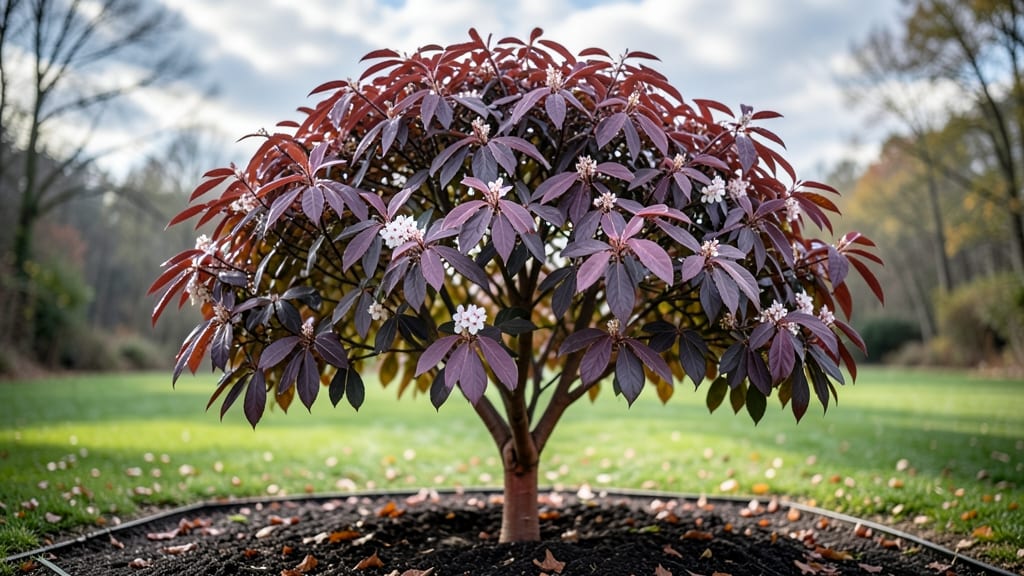
Growing plum purple leaf shrubs transforms your garden into a living masterpiece. 🌿 These hardy plants deliver year-round drama with their striking purple foliage that never fades—even in winter. The secret lies in their love for full sun and well-draining soil, which keeps their leaves vibrant and their growth vigorous.
You’ll need a spot with at least 6 hours of sunlight daily and soil that drains well but retains moisture. Amend heavy clay with compost to give roots the perfect balance.
Prune lightly in late winter to shape the shrub and encourage dense growth, but avoid heavy cuts that can stress the plant. By summer, you’ll see glossy purple leaves that turn even more intense in cooler weather.
The shrub’s compact size makes it perfect for hedges, borders, or as a standalone specimen. With minimal care, it becomes the garden’s standout feature. This shrub thrives in zones 4-8, making it versatile for most climates.
Whether you plant it as an ornamental or for its potential fruit (if variety allows), it’s a low-maintenance, high-impact addition that pays dividends year after year.
📚 In This Guide
- What you need
- Instructions
- Tips and common mistakes
- Wrapping up and next steps
What you need
- ● Plum Purple Leaf Plant: 1–3 nursery-grown Prunus cerasifera 'Atropurpurea' shrubs (3–6 ft tall, depending on desired size).
- ● OR seeds (if propagating from scratch—requires patience!).
- ● OR hardwood cuttings (4–6 inches long, ½-inch thick) for propagation.
- ● Soil: Well-draining, slightly acidic to neutral soil (pH 6.0–7.0). Amend heavy clay with compost or perlite.
- ● Fertilizer: Slow-release balanced fertilizer (10-10-10 or 20-20-20, 1–2 lbs per shrub).
- ● Mulch: 2–3 inches of organic mulch (wood chips, shredded bark) to retain moisture and suppress weeds.
- ● Garden trowel or shovel
- ● Pruning shears (sterilized with rubbing alcohol)
- ● Gloves (to protect from thorns and soil)
- ● Watering can or hose with a gentle spray nozzle
- ● Measuring tape or ruler (for spacing)
- ● Garden fork (for loosening soil)
- ● Epsom salt (1 tbsp per gallon of water for magnesium boost)
- ● Plant support stakes (if growing in windy areas)
- ● Soil pH test kit (to fine-tune growing conditions)
- ● Slow-release granular fertilizer (for long-term care)
- ● Decorative rocks or edging (to enhance garden aesthetics)
Step-by-step instructions for planting and caring for plum purple leaf
Here's how to establish this stunning shrub for vibrant color that lasts all season.
🌱 Step 1: Choose the Perfect Planting Location
Plum Purple Leaf thrives in full sun to partial shade—at least 4-6 hours of direct sunlight daily for the deepest purple foliage. I always pick a spot where it gets morning sun and afternoon shade if summers run hot in your area. The shrub handles urban pollution and reflected heat well, making it perfect for city landscapes.
Test the site by observing how sunlight moves across the area during different times of day. Look for well-drained soil—this shrub hates soggy roots. If your soil stays wet for more than 24 hours after rain, amend with 2-3 inches of compost to improve drainage before planting.
☀️ Step 2: Plant at the Right Time and Depth
Plant in early spring or fall when temperatures are mild (50-70°F). Dig a hole twice as wide as the root ball but only as deep as the container's base—planting too deep suffocates the roots. Gently remove the shrub from its container and loosen any circling roots with your fingers.
Place the shrub in the hole so the top of the root ball sits level with the surrounding soil. The stem flare (where roots meet trunk) should be visible above ground. Backfill with native soil mixed with 1 part compost to improve fertility. Water deeply to settle the soil and remove air pockets.
💧 Step 3: Water Deeply and Mulch Properly
Water once weekly for the first month until the soil is 6-8 inches deep and moist. Use a moisture meter or check by pushing your finger into the soil—it should feel damp but not soggy. After the first month, reduce watering to every 2-3 weeks unless your area experiences extreme heat or drought.
Spread 2-3 inches of mulch around the base, keeping it 3 inches away from the trunk to prevent rot. I use shredded bark mulch because it breaks down slowly and improves soil structure over time. Replenish mulch annually to maintain moisture and suppress weeds.
✂️ Step 4: Prune for Shape and Health
Prune in late winter or early spring before new growth appears. Remove 1/3 of the oldest stems at ground level to encourage fresh, vibrant growth. Cut back any dead, damaged, or crossing branches with clean, sharp pruners. I make cuts at a 45-degree angle just above an outward-facing bud.
Shape the shrub by trimming back any leggy growth that spoils the rounded form. Avoid heavy pruning in summer—it stimulates tender new growth that won't survive winter. After pruning, apply a balanced fertilizer (10-10-10) to support new foliage production.
🌿 Step 5: Maintain Year-Round Color and Health
Fertilize twice yearly—once in early spring and again in mid-summer—using a slow-release granular fertilizer. Water deeply after applying to help nutrients reach the roots. The rich purple foliage fades slightly in winter but remains attractive—never cut back stems until spring growth appears.
Watch for aphids or spider mites, which occasionally attack stressed plants. Spray with neem oil solution if you spot sticky residue on leaves or fine webbing. This shrub rarely has pest problems but may develop leaf spot in humid climates—remove affected leaves promptly to prevent spread.
Tips & tricks for perfect plum purple leaf planting
Here's what nobody tells you about getting that showstopping purple foliage every gardener dreams of.
Sunlight Strategy: That 4-6 hours of sunlight is non-negotiable for maximum purple intensity, but timing matters just as much. Morning sun (especially east-facing locations) gives you the perfect balance—it warms the leaves gently without scorching them during peak afternoon heat. If you're in a hot climate, afternoon shade becomes even more critical to prevent leaf burn that dulls the color.
Soil Test Before Planting: I learned this the hard way after ruining three plants in heavy clay soil. Before digging that hole twice as wide, do a simple soil test (kits are cheap at garden centers). If your soil stays wet beyond 24 hours after rain, mix in 2-3 inches of compost AND consider adding perlite or sand to improve drainage. The root ball needs to breathe—this shrub will reward you with vibrant growth for years if you get this right.
Pruning Precision: When you're removing that 1/3 of oldest stems in late winter, don't just hack away! Look for stems that are thinner than a pencil or have grayish bark—they're the oldest and need to go. Make your cuts at a 45-degree angle just above an outward-facing bud, and always sterilize your pruners with rubbing alcohol between cuts to prevent disease spread. This one small detail makes all the difference in how quickly your shrub recovers.
Fertilizer Timing: That twice-yearly fertilization schedule is perfect, but here's the secret: water deeply right after applying the 10-10-10 fertilizer. The roots need moisture to absorb nutrients effectively. I've seen plants where gardeners forget this step—leaves turn yellow because the fertilizer just sits on top of the soil instead of feeding the roots where they need it most.
Pro Tips for Plum Purple Leaf
- Here's what nobody tells you about getting that showstopping purple foliage every gardener dreams of.
- Sunlight Strategy: That 4-6 hours of sunlight is non-negotiable for maximum purple intensity, but timing matters just as much.
- Soil Test Before Planting: I learned this the hard way after ruining three plants in heavy clay soil.
Frequently asked questions
Got questions about Plum Purple Leaf? You're not alone!
Here are some common queries gardeners have about this stunning, low-maintenance shrub—plus quick answers to keep your plants thriving.
What’s the best way to prune Plum Purple Leaf for fuller growth?
Prune in late winter or early spring (before new growth starts) to shape the shrub and encourage dense foliage. Remove dead or crossing branches first, then trim back by 1/3 to promote bushiness. Avoid heavy pruning in fall—it can stunt winter hardiness!
Is Plum Purple Leaf truly cold-hardy? How do I protect it in harsh winters?
Yes! It thrives in USDA Zones 5–9 and handles frost like a champ. For extra protection in Zone 5, add a 2–3 inch layer of mulch around the base in late fall. Young plants may need burlap wraps in brutal winters, but mature shrubs rarely need help.
Why are my Plum Purple Leaf leaves turning brown or yellow?
Brown/yellow leaves usually signal overwatering, underwatering, or nutrient deficiencies. Check soil moisture—it should stay evenly moist but not soggy. Yellowing can also mean iron deficiency; apply a chelated iron supplement if needed. Fungal issues (like powdery mildew) may require neem oil treatment.
Does Plum Purple Leaf produce flowers or berries? Should I remove them?
It blooms with tiny, insignificant white flowers in spring, followed by small red berries (non-toxic but messy). While they’re not showstoppers, you can snip them off if you prefer focusing on foliage drama. Berries attract birds, so leave them if wildlife visits your garden!
Can I grow Plum Purple Leaf in containers? What’s the ideal pot size?
Use a large container (at least 20+ gallons) with drainage holes and well-draining soil. Repot every 2–3 years to refresh nutrients. Place in full sun to partial shade—containers dry out faster, so water 2x/week in summer and trim roots if growth gets cramped.
Wrapping up and next steps
Transforming your garden with plum purple leaf isn’t just about adding color—it’s about creating a statement that thrives year-round. This hardy shrub brings effortless drama, resilience, and a touch of elegance, making it a standout choice for any outdoor space.
Whether you’re a seasoned gardener or just starting, its low-maintenance charm and striking foliage prove that beauty doesn’t have to be complicated.
Ready to elevate your landscape? Start small—plant one as a focal point, mix it into a border, or even grow it in containers for a pop of color on patios. Watch as your garden becomes a showstopper with minimal effort! 🌿✨