
How To
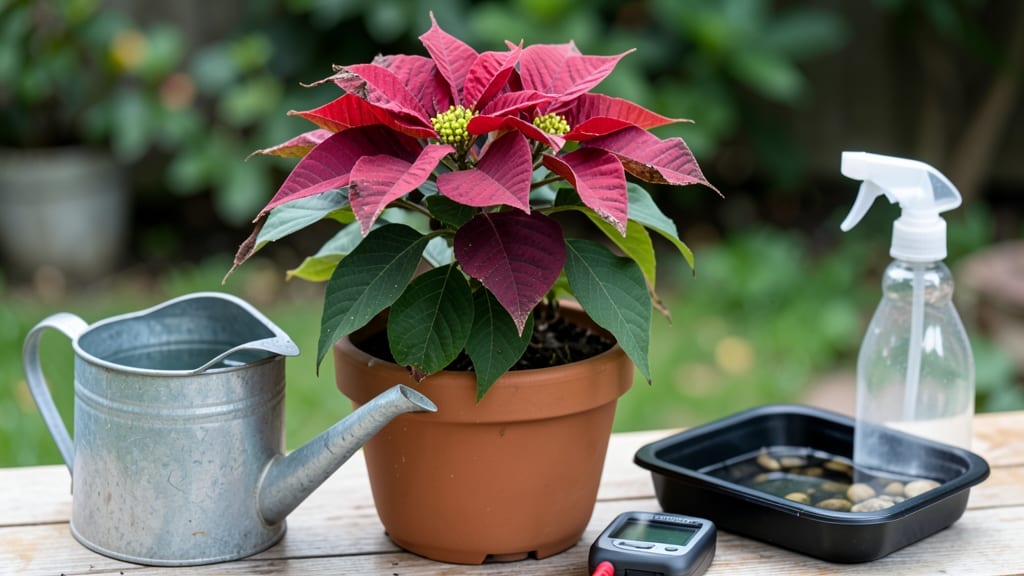
Poinsettia brown leaf tips can ruin your holiday cheer faster than you think. 🌿 The good news? Most cases are fixable with a few simple adjustments—no expensive treatments required.
I’ve nursed back more than my share of sad-looking poinsettias, and the key always starts with identifying why those crispy edges appeared.
Overwatering is the #1 culprit, but underwatering, low humidity, or even fluoride in tap water can trigger the same symptoms. Look for other clues: yellowing leaves or wilting stems point to water issues, while dry, papery edges suggest humidity problems.
The first step is always checking the soil—it should feel damp, not soggy or bone-dry.
Reviving your plant takes just 10 minutes of focused care: adjust your watering routine, boost humidity with a pebble tray, and avoid fertilizing until new growth appears. Within a week, you’ll see fresh green leaves pushing through, and your poinsettia will look like it did on Christmas morning.
This works for every variety—from classic reds to white or speckled poinsettias—so don’t toss that struggling plant. A few tweaks can turn those brown tips into vibrant holiday centerpiece real estate again.
The Hidden Triggers Behind Brown Tips
Poinsettias are the stars of the holiday season, but those unsightly brown leaf tips can turn your festive centerpiece into a sad, crispy mess.
Understanding the root causes is the first step to saving your plant—so let’s break down the science behind why those tips turn brown in the first place.
Poinsettias are tropical plants, but they hate soggy roots. When soil stays too wet, oxygen can’t reach the roots, leading to root rot—a silent killer that causes nutrient uptake to fail.
Without proper hydration, leaf edges dry out and turn brown, while the center stays green (a classic sign of overwatering).
Why it happens:
- Compacted or waterlogged soil traps excess moisture, suffocating roots.
- Lack of drainage holes in pots forces water to pool at the bottom.
- Overzealous watering (especially in winter when growth slows) overwhelms the plant’s ability to absorb water efficiently.
Actionable fix: ✅ Use well-draining soil mixed with perlite or orchid bark. ✅ Water only when the top 1–2 inches of soil are dry (stick your finger in to test!). ✅ Ensure pots have drainage holes—if not, repot or add a layer of gravel at the bottom.
Poinsettias thrive in stable, warm conditions (65–75°F) and moderate humidity (40–50%). When exposed to drafts, cold windows, or dry indoor air (thanks, heaters!), their leaves react by developing brown, crispy edges—a sign of transpiration stress.
Why it happens:
- Cold drafts (from AC vents, open windows, or doors) cause sudden temperature swings, shocking the plant.
- Low humidity (common in heated homes) forces leaves to lose moisture faster than roots can replace it.
- Direct heat sources (radiators, fireplaces) dry out leaf edges like a microwave on high.
Actionable fix: ✅ Keep poinsettias away from drafts, vents, and heating/cooling sources. ✅ Group plants together or use a humidifier near them (or place the pot on a tray of pebbles with water). ✅ Avoid placing them near glass windows in winter—temperature drops on the other side can stress them.
Poinsettias are light-sensitive—they need bright, indirect light to stay vibrant, but too much direct sun or insufficient light can both trigger brown tips.
Why it happens:
- Direct sunlight (especially southern/exposure windows) burns delicate leaves, causing them to crisp and brown at the edges.
- Low light (like a dim corner) weakens the plant, making it more susceptible to stress from other factors (like underwatering or pests).
Actionable fix: ✅ Place your poinsettia 3–6 feet from a south or west-facing window (or use a grow light if natural light is lacking). ✅ Rotate the pot weekly for even growth (prevents lopsided light exposure). ✅ If leaves are already scorched, move it to shadier conditions immediately.
Poinsettias are light feeders—too much fertilizer (especially high-salt varieties) can burn leaf edges, turning them brown and brittle. Even hard water (high in minerals like calcium and chlorine) can leave unsightly deposits that damage foliage over time.
Why it happens:
- Over-fertilizing disrupts the plant’s nutrient balance, causing salt buildup in the soil.
- Hard water leaves mineral residues on leaves, clogging stomata (pores) and preventing proper gas exchange.
- Using tap water frequently in hard-water areas can lead to fluoride or chlorine toxicity.
Actionable fix: ✅ Fertilize sparingly—only in spring/summer with a balanced, water-soluble fertilizer (diluted to half strength). ✅ Flush the soil every 2–3 months with distilled or rainwater to remove salt buildup. ✅ If using tap water, let it sit out for 24 hours before watering to allow chlorine to evaporate.
Brown leaf tips can also signal an underlying pest or disease problem. Spider mites, aphids, or fungal infections (like powdery mildew) drain the plant’s energy, leaving leaves vulnerable to drying out.
Why it happens:
- Spider mites suck sap from leaves, causing yellowing and browning at the edges.
- Aphids cluster on new growth, excreting sticky honeydew that attracts sooty mold (a black fungus).
- Fungal issues (like root rot or leaf spot) thrive in high humidity + poor airflow, leading to leaf discoloration.
Actionable fix: ✅ Inspect leaves daily for webs (mites), sticky residue (aphids), or dark spots (fungus). ✅ Wipe leaves with a damp cloth to remove pests or dust blocking stomata. ✅ Spray with neem oil (1 tsp per quart of water) if you spot pests or fungal signs.
Poinsettias are seasonal plants—their leaves naturally degrade after 6–8 weeks of peak blooming. Additionally, sudden changes (like moving from a store to a dark, dry home) can cause shock, leading to brown tips.
Why it happens:
- Older leaves senesce (age) and turn brown as the plant redirects energy to new growth.
- Transport stress (from cold trucks or fluctuating temperatures) weakens the plant before it even reaches your home.
- Florist treatments (like preservatives) can wear off, leaving the plant vulnerable.
Actionable fix: ✅ Trim brown leaves to encourage new growth (but don’t cut into healthy tissue). ✅ Give it time—if the rest of the plant is healthy, new leaves will replace the damaged ones. ✅ Avoid repotting unless necessary (stress from transplanting can worsen the issue).
Pro Tip: 💡 Most brown tips are reversible! Start with water, light, and humidity checks—these fix 80% of cases. If the problem persists, dig deeper into soil, pests, or fertilizer habits. Your poinsettia can bounce back with the right care!
Revive Your Poinsettia Now
Brown leaf tips on your poinsettia can be frustrating, especially when you’re trying to keep your holiday plant looking its best. The good news? Most causes have simple fixes—often requiring just a few adjustments to water, light, or care. Below, we’ve mapped out the most common issues and the quick, actionable solutions to bring your poinsettia back to vibrant health. Plus, we’ll share prevention tips to keep those tips lush and green all season long.
Signs: Yellowing leaves, mushy stems, brown edges that feel soggy to the touch.
How to Fix It: 🔥 Stop Watering Immediately – Let the top 1–2 inches of soil dry out completely before watering again. Stick your finger in the soil: if it’s damp past your first knuckle, wait a few more days. 🍳 Check Your Pot – Poinsettias hate "wet feet." Ensure your container has drainage holes. If it doesn’t, repot your plant into one that does (or add a layer of pebbles at the bottom to improve airflow). 👨🍳 Adjust Your Routine – Water only when the soil is dry to the touch. In winter, this might mean watering once every 7–10 days. Overwatering is the #1 killer of poinsettias! 🥘 Trim the Damage – Use clean, sharp scissors to snip off any brown, mushy leaves or stems. This helps the plant redirect energy to healthy growth.
Prevention Tips: ✨ Use Well-Draining Soil – Mix regular potting soil with perlite or orchid bark (20% perlite) to improve drainage. 🌡️ Avoid Ice Cubes – Some gardeners swear by placing ice cubes on the soil to cool roots, but this can lead to over-saturation. Skip it unless you’re in a very hot climate. 🎯 Group Plants Together – Humidity helps! Place your poinsettia near other houseplants to create a microclimate with balanced moisture.
Signs: Crispy, brown edges that feel dry; leaves curling or wilting.
How to Fix It: 🔥 Give It a Deep Watering – Soak the soil until water runs out the drainage holes. Empty the saucer afterward to prevent root rot. 🍳 Boost Humidity – Poinsettias love humidity levels around 50–60%. Place the pot on a tray of pebbles filled with water (ensure the pot isn’t sitting in water) or use a humidifier nearby. 👨🍳 Mist Gently – Lightly mist the leaves in the morning (avoid evening misting, which can encourage fungal issues). For extra care, group plants together to create a natural humid environment. 🥘 Adjust Light Exposure – If your poinsettia is near a heat vent or sunny window, move it to a spot with bright, indirect light (like an east- or north-facing window).
Prevention Tips: ✨ Use a Hygrometer – These inexpensive gadgets measure humidity so you can keep levels ideal. 💡 Rotate Your Plant – Every few days, turn the pot a quarter-turn to ensure even light exposure and prevent one side from drying out faster. 🌿 Avoid Drafts – Keep your poinsettia away from air conditioning vents, radiators, or cold windows in winter.
Signs: Brown tips, leaf drop, or a generally "stressed" appearance.
How to Fix It: 🔥 Find the Sweet Spot – Poinsettias thrive in temperatures between 65–75°F (18–24°C) during the day and no lower than 50°F (10°C) at night. 🍳 Move It Away from Drafts – Keep your poinsettia away from doors, windows (especially cold ones), and heating/cooling vents. 👨🍳 Use a Heat Mat (Optional) – If your home gets chilly at night, place the pot on a self-regulating heat mat (set to 60–65°F) to protect roots. 🥘 Acclimate Gradually – If you’re bringing your poinsettia indoors from outdoors (or vice versa), do it slowly over 3–5 days to avoid shock.
Prevention Tips: 🎯 Keep It Consistent – Avoid placing your poinsettia near fireplaces, AC units, or open windows. 💡 Use a Thermometer – Place a small thermometer near the plant to monitor temperature fluctuations. ✨ Insulate the Pot – In very cold rooms, wrap the pot (not the leaves) in bubble wrap or a cozy sleeve to retain warmth.
Signs: Brown, crispy tips that appear suddenly, even with proper watering.
How to Fix It: 🔥 Flush the Soil – Fill a sink or large container with room-temperature water and let the soil absorb it for 10–15 minutes. Repeat 2–3 times to rinse out excess salts or fluoride. 🍳 Use Filtered or Rainwater – If your tap water is hard or high in fluoride, switch to distilled, filtered, or collected rainwater. 👨🍳 Repot if Needed – If the damage is severe, gently remove the plant from its pot, rinse the roots, and repot it in fresh, well-draining soil. 🥘 Avoid Fertilizer for Now – Hold off on fertilizing until new growth appears. If you must feed it, use a diluted houseplant fertilizer (half the recommended strength).
Prevention Tips: 🌡️ Test Your Water – Pick up a water test kit from a garden center to check for high salt or fluoride levels. 💡 Fertilize Sparingly – Poinsettias don’t need much food. If you fertilize, do so only in spring or early summer (never in fall or winter). ✨ Use a Water Conditioner – Products like Sequestrene can help neutralize hard water minerals.
Signs: Sticky residue, tiny webs, holes in leaves, or a white powdery substance.
How to Fix It: 🔥 Identify the Culprit – Common pests include spider mites, aphids, or mealybugs. Shake the plant over a white sheet of paper to spot tiny insects. 🍳 Isolate the Plant – Move your poinsettia away from other houseplants to prevent spreading. 👨🍳 Treat with Neem Oil – Mix 1 tsp neem oil + 1 tsp mild soap + 1 quart water. Spray the leaves (including undersides) and repeat every 5–7 days until pests are gone. 🥘 Wipe Down Leaves – Use a damp cloth to gently remove pests or sticky residue from honeydew.
Prevention Tips: 🎯 Inspect New Plants – Always quarantine new houseplants for 2 weeks before introducing them to your collection. 💡 Encourage Beneficial Insects – Release ladybugs or lacewings near your plant to naturally control pests. ✨ Keep It Clean – Regularly dust leaves with a soft brush or microfiber cloth to remove pest hiding spots.
With these fixes, your poinsettia should bounce back in 1–2 weeks. Remember, consistency is key—small, regular adjustments work better than drastic changes. Once your plant recovers, follow the prevention tips to keep those leaves lush and green all season!
Frequently asked questions
Why do my poinsettia leaves turn brown only at the tips?
Brown leaf tips usually signal environmental stress—most commonly from low humidity or underwatering. Poinsettias thrive in 50-60% humidity, and dry indoor air (especially with heaters running) causes moisture loss at the edges. Check if the soil is dry 1-2 inches down—if so, water thoroughly and boost humidity with a pebble tray or humidifier.
Can I save my poinsettia if half the leaves are brown?
Yes! Trim the brown leaves with clean scissors (cut at a 45-degree angle just above healthy tissue) to encourage new growth. Focus on fixing the root cause—whether it's overwatering, drafts, or low light. With proper care, your poinsettia will grow fresh leaves within 2-3 weeks. Just avoid fertilizing until new growth appears.
Is tap water causing my poinsettia's brown tips?
Possibly! Hard water (high in fluoride, chlorine, or minerals) can build up in soil and burn leaf edges. Test your water or try distilled/rainwater for 2 weeks to see if the browning stops. If you can't switch water sources, flush the soil every 3 months by soaking the pot in water for 10 minutes to remove salt buildup.
Why does my poinsettia's soil feel dry but the leaves are still browning?
This often means root damage from overwatering in the past. Check for mushy stems or foul-smelling soil—if present, your plant may have root rot. Stop watering immediately and let the soil dry completely. Repot in fresh, well-draining soil if needed. If roots are healthy but dry, the issue might be low humidity or pests blocking water uptake.
Can I use coffee grounds to fix brown tips?
While coffee grounds add nutrients, they won't directly fix brown tips—and too much can raise soil acidity, harming your poinsettia. Instead, focus on the core issues: watering habits, humidity, and light exposure. If you want to amend soil, mix in perlite or orchid bark for better drainage. Save the coffee grounds for compost!