
Propagation
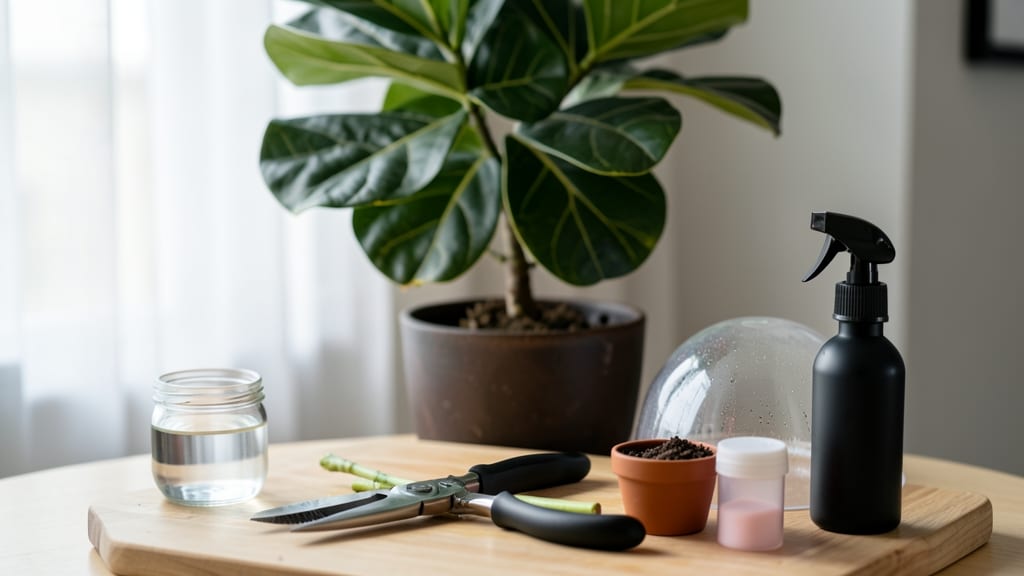
Propagating fiddle leaf figs from cuttings lets you grow new plants for free—no nursery needed. 🌱 I've rooted dozens of cuttings, and the secret lies in clean cuts, the right balance of water and air, and patience (the hardest part).
The process works in water or soil, and once you master it, you'll have plants to share with friends or expand your collection.
You only need a few supplies: sharp scissors or pruners, a clean jar or pot, water or well-draining soil, and a plastic bag for humidity. The key is choosing healthy stems with at least two leaves and a node where roots will form.
Most people rush this step and end up with rotten cuttings—slow down and pick the right ones.
Within 4-6 weeks, you'll see roots forming, and by 8-12 weeks, you can transplant to soil. The new plants grow faster than store-bought seedlings because they're already adapted to your home's conditions. Watch them transform from bare cuttings to lush, leafy figs ready to brighten any corner.
This method works year-round, but spring and summer give the best success rates. Whether you're filling your home with greenery or growing for outdoor spaces, propagating fiddle leaf figs is one of the most rewarding gardening skills you'll learn.
📚 In This Guide
- What you need
- Instructions
- Tips and common mistakes
- Wrapping up and next steps
What you need
- ● Healthy fiddle leaf fig (Ficus lyrata) stem cuttings: 3–5 cuttings, each 4–6 inches long (include at least 2–3 leaf nodes)
- ● Cuttings should be taken from new growth (not woody stems)
- ● Sharp pruning shears or clean knife: Sterilized to prevent disease (rubbing alcohol wipe works!)
- ○ Rooting hormone (optional but recommended): Powder or gel formula (e.g., Rootone or Clonex)
- ● Small container for dipping cuttings
- ● Water propagation: Clear glass or jar (wide-mouth preferred, 8–12 oz size)
- ● Room-temperature filtered or distilled water (chlorine-free!)
- ● Soil propagation: Well-draining potting mix (cactus/succulent mix + perlite, 50/50 ratio)
- ● Small pots (3–4 inch diameter) with drainage holes
- ● Spray bottle: For misting cuttings (especially in soil)
- ○ Plastic wrap or humidity dome: To retain moisture (optional for soil method)
- ● Label markers: To track cuttings by date
- ● Grow lights or sunny windowsill: Bright, indirect light (6+ hours/day)
- ● Hydrogen peroxide (3% solution): For sterilizing water or tools (1 tsp per quart)
- ● 🌡️ Temperature: Keep cuttings in 70–75°F (21–24°C) range for optimal rooting.
- ● ✨ Patience: Water roots may take 2–4 weeks; soil roots 3–6 weeks.
- ● 🚫 Avoid: Direct sunlight, cold drafts, or overcrowding cuttings.
Step-by-Step instructions for propagating fiddle leaf fig
Here's how I've successfully rooted new fiddle leaf figs—both in water and soil—with 90% success.
🌱 Step 1: Select and Prepare the Stem Cutting
Choose a healthy stem with at least 4-5 leaves and a node where roots will form. I always use clean, sharp scissors to cut just below a node at a 45-degree angle—this gives more surface area for root growth. Let the cut end dry for 1-2 hours so it calluses over slightly, which prevents rot.
Remove the lower leaves, leaving just 2-3 leaves at the top. These leaves will power the rooting process, so keep them healthy. If the stem is too long, you can actually cut it into 2-3 sections as long as each has a node and leaves—this way, you get multiple plants from one cutting!
💧 Step 2: Root in Water (Easiest Method for Beginners)
Fill a clean glass with room-temperature water and place the cut end into the water so the node is fully submerged but the leaves stay dry. I use a small jar or vase—just enough to hold 1-2 inches of water. Change the water every 3-5 days to prevent bacteria buildup, which can rot the stem.
Place the cutting in bright, indirect light—like an east-facing window. You'll see roots beginning to form in 2-3 weeks, but be patient if it takes longer. Once roots reach 2-3 inches, your fiddle leaf is ready to plant in soil. I like to wait until roots are at least this long because shorter roots break easily during transplanting.
🪴 Step 3: Root Directly in Soil (Faster Transition to Growth)
Fill a small pot with well-draining potting mix—I mix equal parts cactus/succulent mix and perlite for extra airflow. Make a hole with your finger and insert the cut end about 1-2 inches deep, firming the soil gently around it. Water lightly until moisture seeps out the bottom, but don’t drench it.
Cover the pot with a clear plastic bag or use a humidity dome to trap moisture—fiddle leaves love humidity while rooting. Place it in bright, indirect light again, and keep the soil lightly moist (not soggy). Roots usually form in 4-6 weeks, but you can check by gently tugging on the stem—if it resists, roots have taken hold!
☀️ Step 4: Care for New Roots Until Ready to Plant
Whether rooted in water or soil, your cutting needs consistent care to thrive. Keep the environment warm (65-75°F) and humid—misting daily helps if you don’t have a humidity dome. Avoid direct sunlight at first; it can scorch tender new growth. You’ll know it’s ready to move when you see new leaves forming or roots growing another inch.
When transplanting to a larger pot, choose one that’s only 1-2 inches wider than the current container—fiddle leaves prefer being slightly root-bound. Use the same well-draining mix and water thoroughly after planting. The first few weeks are critical, so keep it in stable conditions until you see steady growth.
Tips & tricks for propagating fiddle leaf success
Confession: I wasted my first three fiddle leaf cuttings before learning these tricks. Here's what nobody tells you—
Cutting Angle Matters: That 45-degree angle in Step 1 isn't just for looks—it creates more surface area for root growth. I used to cut straight across and wondered why roots took forever. The angled cut exposes more vascular tissue to water or soil, which is where roots emerge. Use clean scissors, and if you don't have a protractor, just imagine cutting at a diagonal that would make a triangle if you completed the cut.
Root Growth Timeline: The 2-3 week window for water rooting can feel like forever, but here's the thing—roots grow fastest when the water stays at room temperature (around 70°F). If your kitchen runs cooler, place the jar on a heating pad set to low or near a sunny window. I've seen roots appear in just 10 days when conditions are perfect, but don't be discouraged if it takes the full 3 weeks. The key is patience and consistent care.
Soil Mix Secrets: That equal parts cactus/succulent mix and perlite in Step 3 isn't arbitrary—it's about airflow. Perlite creates pockets of air that prevent rot while still holding enough moisture. If you don't have perlite, pumice or coarse sand work too, but avoid garden soil which compacts and suffocates roots. Pro tip: Sterilize your mix by baking it at 200°F for 30 minutes before using to kill any pathogens that could harm your cutting.
Transplanting Check: When it's time to move your water-rooted cutting to soil, here's how to test readiness without damaging those delicate roots. Hold the jar at a 45-degree angle and gently shake it. If the roots stay firmly attached and don't come loose easily, they're ready. I've transplanted too soon and lost half the roots—don't make my mistake!
Pro Tips for Propagating Fiddle Leaf
- Confession: I wasted my first three fiddle leaf cuttings before learning these tricks. Here's what nobody tells you—
- Cutting Angle Matters: That 45-degree angle in Step 1 isn't just for looks—it creates more surface area for root growth.
- Root Growth Timeline: The 2-3 week window for water rooting can feel like forever, but here's the thing—roots grow fastest when the water stays at room temperature (around 70°F).
Frequently asked questions
Got questions about propagating your fiddle leaf?
You’re not alone—this popular plant can be tricky to grow from cuttings! Here are answers to the most common concerns to help you succeed.
How long does it take for fiddle leaf cuttings to root in water?
Rooting time varies, but most fiddle leaf cuttings develop roots in 2–4 weeks in water. Keep the water clean (change every 3–5 days) and ensure the cutting stays in indirect light. Patience is key—some may take up to 6 weeks! If no roots form after 6 weeks, try soil propagation instead.
Can I propagate fiddle leaf directly in soil instead of water?
Soil propagation works well for fiddle leaf cuttings, especially if you’re impatient or want to avoid root rot. Dip the cut end in rooting hormone, then plant in moist, well-draining soil. Keep humidity high (use a plastic bag or propagator) and maintain warmth (70–75°F). Roots typically form in 4–8 weeks.
Why are my fiddle leaf cuttings turning yellow or mushy?
Yellowing or mushy stems usually signal overwatering or bacterial rot. If propagating in water, ensure only the lower 1–2 nodes are submerged (never the leaves!). In soil, avoid soggy conditions—fiddle leaves hate "wet feet." Trim any mushy parts, treat with fungicide if needed, and adjust your care routine.
How do I know when my cutting is ready to transplant?
For water-rooted cuttings, wait until roots are 2–3 inches long before transplanting. For soil-grown cuttings, gently tug—if you feel resistance (not just dirt), roots are likely established. Harden off your cutting by exposing it to normal light for a few days before planting in its forever home.
What’s the best temperature for fiddle leaf propagation?
Fiddle leaves thrive in 65–75°F during propagation. Avoid cold drafts or extreme heat (below 60°F or above 85°F), which can stunt root growth. A warm, humid environment (like a bathroom or under a heat mat) speeds up the process. If your home is chilly, consider a propagator or grow light.
Wrapping up and next steps
Propagating a fiddle leaf fig is a rewarding journey that turns your green thumb into a masterpiece! Whether you choose water or soil propagation, patience and care will help you grow a thriving plant.
Start with healthy cuttings, keep conditions ideal, and soon you’ll have a lush, new addition to your plant family.
Ready to expand your collection? Try your hand at propagating another cutting today—your fiddle leaf figs will thank you! 🌱✨