
Pruning
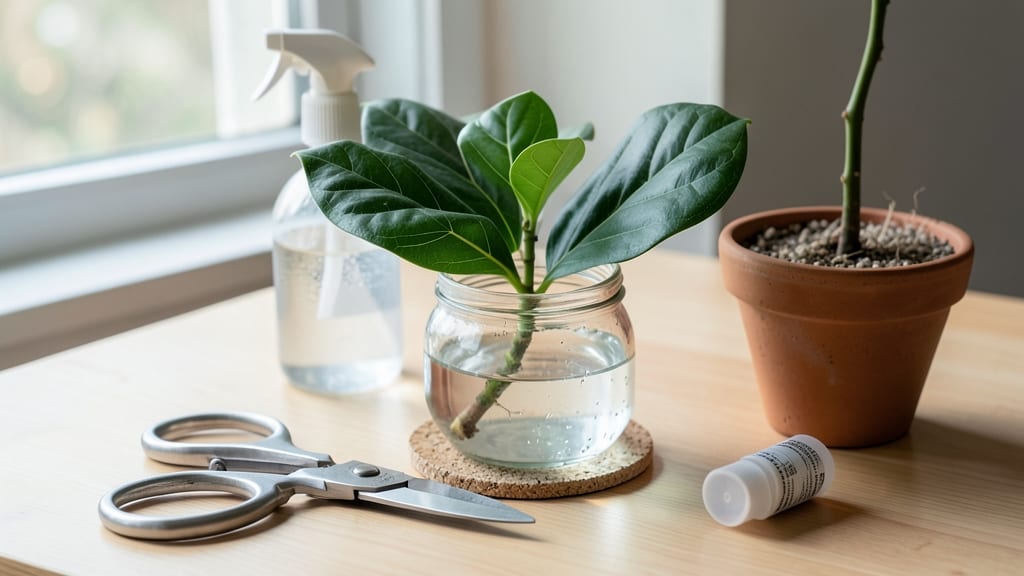
Propagating a fiddle leaf fig can multiply faster than you think—fast root growth in just 4-6 weeks with the right method. 🌱 I’ve propagated mine using both water and soil, and the soil method actually produces stronger plants that transition better. The key is timing: spring and early summer when the plant’s energy is high, not winter when it’s dormant.
You’ll need sharp scissors or pruning shears, rooting hormone (optional but helpful), a clean glass or pot for water propagation, and well-draining soil mix for soil propagation. Humidity is critical—cover cuttings with a plastic bag or use a humidity dome until roots form.
Most people mess up by overwatering or using dirty tools, so sterilize everything first and keep cuttings slightly damp, not soggy.
Within 3-4 weeks, you’ll see tiny white roots forming in water or new growth at the cut site in soil. Once roots are 2-3 inches long, transplant soil-grown cuttings into pots with fresh potting mix.
The first few leaves might yellow—that’s normal as the plant adjusts. Just keep the new plant in bright, indirect light and avoid cold drafts.
This method works year-round, but spring gives the best success rate. Whether you’re expanding your collection or sharing cuttings with friends, you’ll end up with healthier plants that grow faster than store-bought figs. The secret? Patience and keeping those cuttings happy until roots take hold.
📚 In This Guide
- What you need
- Instructions
- Tips and common mistakes
- Wrapping up and next steps
What you need
- ● Healthy parent plant: A mature Fiddle Leaf Fig with at least 3–4 leaves and a stem 4–6 inches long.
- ● Clean, sharp pruning shears: Sterilized (rubbing alcohol wipe) to prevent disease.
- ○ Rooting hormone (optional but recommended): A gel or powder (e.g., Rootone) to boost root growth.
- ● Water propagation: Clear glass or jar (8–12 oz, wide-mouth preferred).
- ● Room-temperature filtered or distilled water (chlorine-free).
- ○ Small pebbles or marbles (optional, to weigh down cuttings).
- ● Soil propagation: Well-draining potting mix (e.g., cactus/succulent mix + perlite, 50/50 ratio).
- ● 4–6" plastic pots with drainage holes (or a propagation tray).
- ● Spray bottle (for misting).
- ● Humidity dome or plastic bag: To retain moisture (for soil method).
- ● Labels & marker: Track cuttings by date and method.
- ● Patience! Roots take 4–8 weeks to form (water) or 6–12 weeks (soil).
- ● A bright, indirect-light spot (6+ hours/day) for cuttings.
- ● Consistent 65–75°F temperature range (avoid drafts!).
- ● Weekly water changes (if propagating in water).
Step-by-Step instructions for propagating fiddle leaf fig
Here's how to multiply your fiddle leaf fig collection quickly and reliably.
🌱 Step 1: Select Healthy Stems for Propagation
Choose stems with at least 4-5 mature leaves and a healthy, woody section between nodes. The best cuttings come from the lower half of the plant where stems are thicker. Avoid stems with yellowing leaves or signs of stress—they won't root as vigorously.
Use clean, sharp pruning shears to make a 45-degree angle cut just below a leaf node. This angled cut increases surface area for root development. Immediately place the cutting in a container of water or moist soil to prevent wilting. I like to work in the morning when temperatures are cooler and the plant has had time to hydrate overnight.
💧 Step 2: Prepare the Propagation Medium
For water propagation, use room-temperature, filtered water in a clean glass jar. Add a few drops of rooting hormone to the water to encourage faster root growth. Change the water every 3-5 days to prevent bacterial growth and keep it fresh. You'll see roots begin to form in as little as 2-4 weeks.
For soil propagation, mix a well-draining medium like perlite and peat moss in equal parts. Moisten it until it's damp but not soggy—you should be able to squeeze a handful without water dripping out. This ensures the cutting stays hydrated while roots establish. I prefer soil propagation for fiddle leaf figs because it mimics their natural growing conditions better.
✂️ Step 3: Plant the Cuttings and Maintain Humidity
For water propagation, place the cutting in the jar so only the bottom 1-2 nodes are submerged. Avoid submerging leaves—they'll rot in water. Use a clear jar so you can monitor root development without disturbing the cutting. Keep it in bright, indirect light to encourage root growth.
For soil propagation, insert the cutting 1-2 inches deep into the prepared medium. Gently firm the soil around the stem to secure it. Place a plastic bag over the pot to create a humid environment, tying it loosely at the top. Mist the leaves lightly every 2-3 days to maintain humidity. Roots should form in 4-8 weeks, depending on conditions.
☀️ Step 4: Provide Optimal Conditions for Root Growth
Keep the propagation area at a consistent temperature between 65-75°F. Avoid cold drafts or direct heat sources, which can stress the cutting and slow root development. A heat mat set to 70°F can speed up rooting time, especially in cooler climates.
Provide bright, indirect light for 12-14 hours daily. Too much direct sunlight can scorch the leaves, while too little light slows growth. You'll know the cutting is thriving when new leaves begin to form at the top. This is your signal that roots are actively developing below the soil or water line.
🪴 Step 5: Transition to Permanent Pots
Once roots reach 2-3 inches long in water or when new leaves appear in soil, it's time to transplant. For water-propagated cuttings, gently rinse off any algae and plant in a small pot with well-draining soil. For soil-propagated cuttings, carefully remove the plastic bag and gradually reduce humidity over 1 week to acclimate the plant.
Use a pot with drainage holes and a soil mix designed for fiddle leaf figs. Water lightly after transplanting to avoid shocking the roots. Keep the new plant in bright, indirect light for the first 2 weeks to help it adjust. You'll see steady growth within a few weeks—proof that your propagation was successful.
Tips & tricks for propagating fiddle leaf fig
Fast results start with these insider techniques that'll help your cuttings thrive twice as quickly.
Timing Secret: In Step 1, when selecting stems, look for ones with a slight woody texture—this indicates maturity and better rooting potential. The morning after watering is ideal because stems contain maximum moisture, reducing shock during cutting. I've found that stems from the lower half of the plant (closer to the base) root faster than upper stems, thanks to their thicker, more established structure.
Root Growth Accelerator: For water propagation in Step 2, add a few drops of rooting hormone to the water—this can cut root formation time from 4 weeks to just 2 weeks. If using soil, mix in a bit of perlite (up to 30% of the medium) to improve aeration, which speeds up root development. The key is maintaining consistent moisture without letting the medium dry out completely between mistings.
Lighting Strategy: In Step 4, bright indirect light is non-negotiable, but here's the trick: place your propagation setup near an east-facing window for morning sun exposure. This provides the ideal 12-14 hours of light without risking afternoon heat stress. If using artificial grow lights, position them 6-12 inches above the cuttings for consistent results.
Transplanting Transition: When moving water-propagated cuttings to soil in Step 5, gently rinse the roots to remove any algae buildup that might inhibit growth. For soil-propagated cuttings, reduce humidity gradually over that full week—this toughens the plant and prevents shock when you finally remove the plastic bag completely.
Pro Tips for Propogating Fiddle Leaf Fig
- Fast results start with these insider techniques that'll help your cuttings thrive twice as quickly.
- Timing Secret: In Step 1, when selecting stems, look for ones with a slight woody texture—this indicates maturity and better rooting potential.
- Root Growth Accelerator: For water propagation in Step 2, add a few drops of rooting hormone to the water—this can cut root formation time from 4 weeks to just 2 weeks.
Frequently asked questions
Got questions about propagating your fiddle leaf fig?
You’re not alone! Whether you’re a beginner or just looking for quick tips, here are answers to the most common queries to help your cuttings thrive.
Can I propagate a fiddle leaf fig from a single leaf?
Unfortunately, no—fiddle leaf figs cannot root from a single leaf cutting. You’ll need a stem with at least one node (the bump where leaves grow) and ideally a few leaves to support photosynthesis during rooting. Think of it like planting a tiny tree, not a leafy souvenir!
How long does it take for fiddle leaf fig cuttings to root?
Patience is key! In water, roots may appear in 2–4 weeks, while soil propagation can take 4–8 weeks. Keep the environment warm (70–75°F) and humid, and avoid disturbing the cutting. Pro tip: Place cuttings near a bright, indirect light source to speed up rooting.
Should I use water or soil to propagate my fiddle leaf fig?
Both work, but each has pros:
- Water: Lets you monitor root growth easily (great for beginners!). Change the water every few days to prevent bacteria.
- Soil: Mimics natural conditions and reduces transplant shock. Use a well-draining mix like perlite + peat.
Water is faster for checking progress, but soil often yields stronger roots long-term.
Why is my cutting rotting or turning yellow?
Yellowing or mushy stems usually mean overwatering or bacterial/fungal infection. If propagating in water, trim the rotten part and replant in fresh water or soil. For soil issues, ensure the medium is dry to the touch before watering again. Pro tip: Use a fungicide (like hydrogen peroxide, 3%) if rot persists.
Can I propagate a fiddle leaf fig from a store-bought plant?
Yes! Many nursery plants are grown from cuttings, so they’ll propagate just fine. Just ensure the plant is healthy (no pests or yellow leaves) and follow the same steps as above. Bonus: It’s a great way to clone your favorite fig’s exact look!
Wrapping up and next steps
Propagating your fiddle leaf fig is a rewarding way to expand your plant collection—or share the love with fellow plant parents! 🌱 Whether you choose water or soil propagation, the key lies in patience, consistency, and the right conditions.
With these tips, you’ll soon be watching roots sprout and new plants thrive.
Ready to turn your cutting into a flourishing fiddle leaf fig? Start with just one cutting today—your future jungle awaits! 🌿