
Diseases
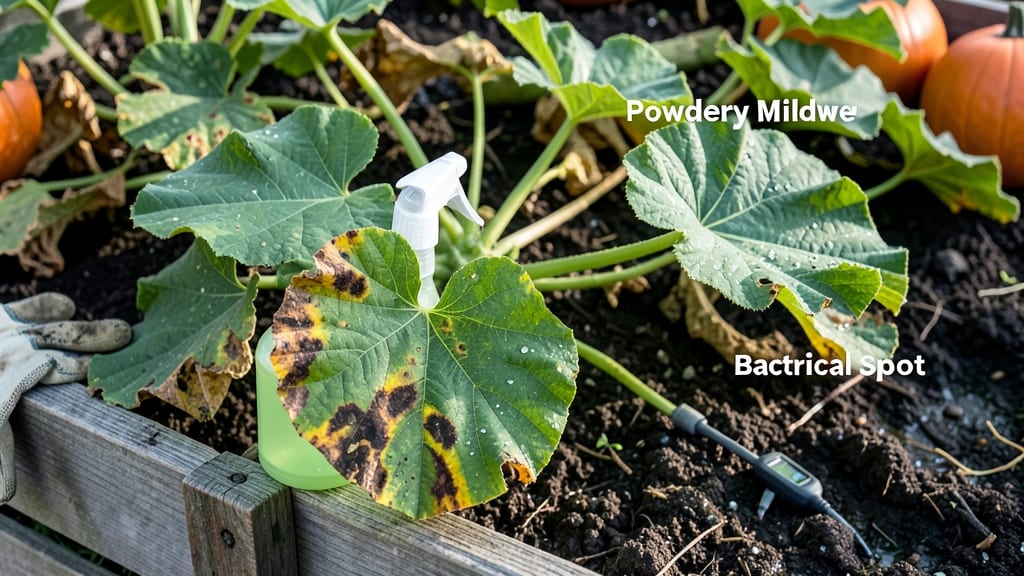
Identifying pumpkin leaf diseases can save your harvest before it even starts. 🌱 I’ve watched entire vines collapse from powdery mildew and bacterial spot—both of which start with small, easy-to-miss signs that growers often ignore until it’s too late.
The good news? Recognizing these symptoms early means you can act before your plants surrender.
Powdery mildew appears as a white, powdery coating on leaves, while downy mildew shows up as yellow patches with fuzzy, grayish growth on the undersides. Bacterial spot, on the other hand, leaves behind water-soaked brown or black spots with yellow halos.
Each disease weakens the plant differently, but the key to stopping them is catching them before they spread beyond a few leaves.
Once you spot the problem, you’ll need to act fast—prune infected leaves immediately, space plants properly for airflow, and consider organic sprays like neem oil or copper fungicide. For severe cases, removing entire plants might be necessary, but with the right prevention, you can protect your pumpkins all season long.
This isn’t just about saving a few leaves—it’s about ensuring your pumpkins grow strong, healthy, and free of disease. The sooner you recognize the signs, the sooner you can stop the spread and keep your garden thriving.
Root Causes Of Leaf Woes
Understanding why pumpkin leaves develop diseases starts with recognizing the perfect storm of environmental and biological factors that create ideal conditions for pathogens. These issues rarely happen in isolation—most often, they’re a mix of poor growing conditions, weak plant defenses, and opportunistic microbes.
Let’s break down the key culprits behind pumpkin leaf diseases and why they strike when they do.
Fungal pathogens like powdery mildew (Podosphaera xanthii) and downy mildew (Pseudoperonospora cubensis) thrive in stagnant, humid environments where water droplets linger on leaves. Here’s why this happens:
- Overcrowded Plants 🌿🔄 Pumpkins with leaves touching each other create a microclimate where moisture stays trapped.
Fungal spores splash from soil or infected plants onto leaves, germinating in 24–48 hours if humidity exceeds 75% for prolonged periods. - Actionable fix: Space vines 4–6 feet apart and prune lower leaves to improve airflow.
- Excessive Moisture from Watering 💦🚫 Overhead irrigation (especially in the evening) keeps leaves wet longer than necessary. Fungi like Alternaria (causing Alternaria leaf spot) need free water to spread.
- Pro tip: Use drip irrigation or soaker hoses to deliver water at the soil level.
- Nighttime Dew & High Humidity 🌙🌫️ Many fungal diseases peak in summer heat with high humidity (think: 80°F+ days and 90%+ humidity at night).
Dew forms, and fungal spores activate and infect within hours. - Solution: Choose resistant varieties (e.g., ‘Howden’ or ‘Jackpot’) or apply baking soda spray (1 tbsp per gallon of water) as a preventive fungicide.
Bacterial diseases like bacterial leaf spot (Xanthomonas campestris pv. cucurbitae) and bacterial wilt (Erwinia tracheiphila) exploit open wounds and splashing water to invade. Here’s how they gain entry:
- Injured Leaves from Hail or Tools ⚡🔪 Physical damage (e.g., hail, rough handling, or pruning cuts) creates entry points for bacteria.
Once inside, they multiply rapidly in warm, wet conditions. - Fix: Use sterilized pruners (rubbing alcohol wipe) and avoid working in the garden when leaves are wet.
- Contaminated Water or Soil 💧🌍 Irrigation water from ponds, puddles, or recycled water can carry bacterial pathogens. Even soil splashed onto leaves during heavy rain can introduce disease.
- Prevention: Test water sources for bacteria and disinfect tools between uses.
- Vector Spread by Insects 🐛🚀 Some bacteria (like those causing bacterial wilt) are spread by cucumber beetles, which feed on pumpkin leaves and transmit the pathogen as they move.
- Solution: Use row covers early in the season to block beetles and apply neem oil as a deterrent.
Viruses like cucumber mosaic virus (CMV) don’t spread on their own—they hitch rides on insects or infected plant material. Weak pumpkins are especially vulnerable:
- Aphid & Whitefly Feeding 🐝🦟 These sap-sucking insects inject viruses while feeding. A single aphid can transmit CMV in minutes, and the virus then spreads systemically through the plant.
- Control: Spray with soapy water (1 tsp mild soap per quart) or introduce ladybugs as natural predators.
- Infected Seed or Transplants 🌱🔄 If you start with contaminated seeds or nursery stock, viruses can be present from day one. There’s no cure—only prevention.
- Tip: Buy seeds from reputable suppliers and test new plants for symptoms before transplanting.
- Stressed Plants from Poor Nutrition 💀🌱 Pumpkins deficient in nitrogen, phosphorus, or potassium have weaker cell walls, making them easier targets for pathogens.
- Fix: Use a balanced fertilizer (10-10-10) and compost to boost immunity. Avoid over-fertilizing with nitrogen alone—it promotes leafy growth but weakens disease resistance.
Pumpkin leaves don’t just get sick—they succumb to stress from temperature swings, excessive rain, or drought, which lower their resistance:
- Sudden Temperature Shifts ❄️☀️ Cold nights followed by hot days (common in spring/fall) shock plants, making them susceptible to powdery mildew and downy mildew.
- Adaptation: Use mulch (straw or black plastic) to regulate soil temperature and shade cloth in extreme heat.
- Prolonged Rain or Flooding 🌧️💦 Waterlogged soil starves roots of oxygen, weakening the plant. Meanwhile, leaf surfaces stay wet, ideal for fungal spores.
- Drainage fix: Plant on mounds or in raised beds with sandy loam soil to prevent soggy conditions.
- Drought Stress 🏜️💧 While too much water causes rot, chronic drought also weakens pumpkins, making them prone to bacterial infections when rain finally returns.
- Balance: Water deeply 1–2 times per week (1–1.5 inches per week) rather than shallow daily doses.
Sometimes, the "treatment" becomes the problem. Residual herbicides or overuse of copper-based fungicides can burn leaves, creating entry points for disease:
- Drift from Glyphosate or 2,4-D 🚫🌿 Even minute amounts of herbicide drift can bleach pumpkin leaves, weakening their protective cuticle. This makes them 3x more likely to contract fungal/bacterial infections.
- Solution: Wait 30+ days after herbicide application before planting pumpkins nearby.
- Copper Spray Burn 🔥💧 While copper fungicides (like Bordeaux mixture) prevent disease, overapplying can scorch leaves, leaving them vulnerable to secondary infections.
- Safety tip: Follow label rates and apply in the morning so leaves dry quickly.
Diseases don’t disappear—they overwinter in plant debris, soil, or weeds, ready to strike again:
- Infected Plant Debris 🍂🔄 Leaving last year’s pumpkin vines, leaves, or fruit in the garden means fungal spores and bacterial cells survive the winter, reinfecting new plants.
- Cleanup: Remove all debris and rotate crops (don’t plant pumpkins, squash, or cucumbers in the same spot for 3+ years).
- Weed Hosts 🌿🚨 Weeds like morning glories, pigweed, and lambsquarters can harbor cucumber mosaic virus and powdery mildew, acting as reservoirs.
- Weed control: Keep the garden weed-free within a 10-foot radius of pumpkin patches.
Pumpkin leaf diseases don’t appear out of nowhere—they’re the result of weakened plants + perfect conditions for pathogens. By addressing airflow, water management, insect control, and soil health, you can starve out most problems before they start. 🚀
(Next: [How to Diagnose Specific Symptoms](#))
Fixing Fungal Foes on Pumpkin Leaves
Pumpkin leaves can fall prey to a variety of fungal diseases, but the good news is that most of these issues can be managed—or even prevented—with the right approach. Below, we break down practical solutions for the most common pumpkin leaf diseases, tailored to their root causes.
Whether you're dealing with unsightly spots, powdery coatings, or wilting foliage, these steps will help you restore your plants to health and keep them thriving.
Cause: Didymella bryoniae or Alternaria fungi thrive in warm, humid conditions, creating dark, water-soaked spots that expand rapidly.
How to Fix It:
- 🔥 Remove Infected Leaves Immediately
- Snip off and dispose of (not compost) leaves with spots to prevent spores from spreading. Wear gloves to avoid transferring pathogens.
- 🌡️ Improve Airflow & Reduce Moisture
- Space plants 12–18 inches apart to allow sunlight and air circulation.
- Water early in the day (before 10 AM) to let foliage dry quickly. Avoid overhead watering—use drip irrigation or soaker hoses instead.
- 💡 Fungicide Treatments (Organic & Chemical)
- Preventative spray: Mix 1 tbsp baking soda + 1 tsp dish soap + 1 gallon water and spray every 7–10 days.
- For severe cases: Use a copper-based fungicide (like Cupric Hydroxide) or neem oil (1% solution). Reapply after rain.
- 🌱 Rotate Crops & Sanitize Tools
- Avoid planting pumpkins in the same spot for 3+ years to break the fungus life cycle.
- Clean pruners with 70% rubbing alcohol or a 10% bleach solution between cuts.
Cause: Erysiphe cichoracearum or Sphaerotheca fuliginea fungi love shady, humid conditions, coating leaves in a chalky white film.
How to Fix It:
- 👨🍳 Prune for Sunlight
- Thin out crowded vines to increase sunlight exposure. Powdery mildew thrives in shade—starve it out!
- 🥘 Homemade Sprays for Fast Relief
- Milk spray: Mix 1 part milk + 9 parts water and spray every 3–5 days. The fatty acids inhibit fungal growth.
- Horticultural oil: Apply neem oil or sulfur-based spray (follow label rates) for severe cases.
- ⏰ Early Morning Maintenance
- Gently wipe leaves with a damp cloth (soapy water works) to remove mildew. Do this before 9 AM to avoid stressing the plant.
- 🌡️ Adjust Watering Habits
- Water at the base only and avoid wetting leaves. If mildew persists, consider a fan on low speed to improve airflow.
Cause: Pseudoperonospora cubensis causes yellowing on top leaves and fuzzy gray mold on the undersides—a classic sign of downy mildew.
How to Fix It:
- 🔪 Remove & Destroy Affected Leaves
- Clip off yellowing or moldy leaves and burn or trash them (do not compost). Spores can survive in soil.
- 🌿 Copper Fungicide (Most Effective)
- Spray copper fungicide (like Copper Sulfate) every 7–10 days for 3–4 weeks. Start at the first sign of yellowing.
- 🌡️ Boost Plant Resilience
- Fertilize lightly with a balanced 10-10-10 formula to strengthen vines.
- Avoid nitrogen-heavy fertilizers, which encourage soft, mildew-prone growth.
- 🎯 Preventative Planting Tricks
- Choose resistant varieties like ‘Howden’ or ‘Waltham Butternut’ if downy mildew is recurrent in your area.
- Plant in full sun (6+ hours daily) and space vines widely (3–4 feet apart).
Cause: Xanthomonas or Pseudomonas bacteria create watery, brown spots with yellow halos, often in wet conditions.
How to Fix It:
- 🚫 Stop Watering from Above
- Switch to drip irrigation or hand-watering at the base. No overhead watering until the disease is gone.
- 🧼 Copper or Antibacterial Sprays
- Use copper fungicide (effective against bacteria too) or a hydrogen peroxide spray (1 tbsp 3% H₂O₂ per gallon of water).
- 🔄 Crop Rotation & Soil Health
- Do not plant cucurbits (pumpkins, squash, melons) in the same bed for 2+ years.
- Add compost to improve soil drainage and plant health.
- 🌱 Sanitize Everything
- Sterilize tools with bleach between uses.
- Remove and destroy infected plants (do not compost).
- 🌞 Start with Healthy Starts: Use disease-free seeds or transplants from reputable nurseries. - 🌱 Companion Planting: Interplant with marigolds, basil, or nasturtiums to deter pests and improve airflow. - 🌡️ Monitor Weather: Avoid planting pumpkins in humid, rainy seasons if possible.
Use row covers for early growth. - 🔄 Test Soil pH: Aim for 6.0–6.8—fungi thrive in acidic or alkaline extremes. Adjust with lime (to raise pH) or sulfur (to lower pH).
If your pumpkin patch is severely infected (50%+ leaf loss) or diseases keep recurring:
- Consult your local cooperative extension service for soil tests and tailored advice.
- Consider biological controls like Trichoderma fungi or beneficial bacteria (Bacillus subtilis) for long-term prevention.
With these targeted fixes, your pumpkin leaves will bounce back stronger—and your harvest will thank you! 🎃💪
Frequently asked questions about pumpkin leaf diseases
What's the difference between powdery mildew and downy mildew on pumpkin leaves?
Powdery mildew appears as a white, powdery coating on leaf surfaces, while downy mildew shows yellow patches on top and fuzzy gray mold on undersides. Both thrive in humidity, but powdery mildew prefers shade while downy mildew needs moisture.
Can I still harvest pumpkins if the leaves have bacterial spots?
Yes, but only if the fruit itself is healthy. Bacterial leaf spot rarely spreads to pumpkins, so you can harvest unaffected fruit. Remove infected leaves immediately to prevent further spread. The key is monitoring the fruit's surface for any signs of infection.
How often should I apply copper fungicide for prevention?
Apply copper fungicide every 7-14 days during humid seasons or when you first spot symptoms. For organic prevention, try neem oil or baking soda spray every 10-14 days instead. Always follow label instructions for concentration and timing.
Will removing infected leaves really stop the disease from spreading?
Removing infected leaves eliminates the source of spores and prevents them from spreading to healthy foliage. Always dispose of infected plant material (don't compost) and sterilize pruners between cuts to stop cross-contamination.
Are there pumpkin varieties that naturally resist common leaf diseases?
Yes! Varieties like 'Howden' and 'Jackpot' show good resistance to powdery mildew and downy mildew. For bacterial spot, look for 'Waltham Butternut' or 'Cinderella'. Check seed catalogs for "disease-resistant" labels when selecting varieties.